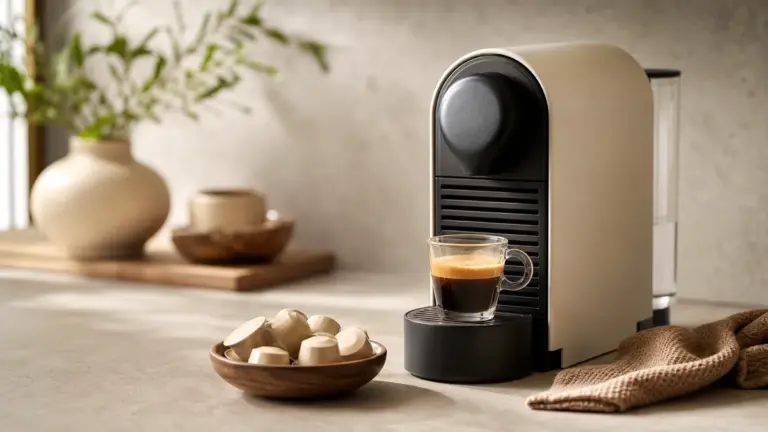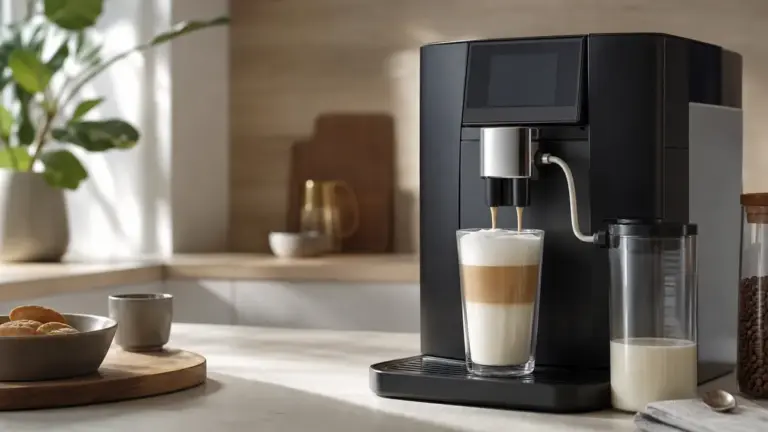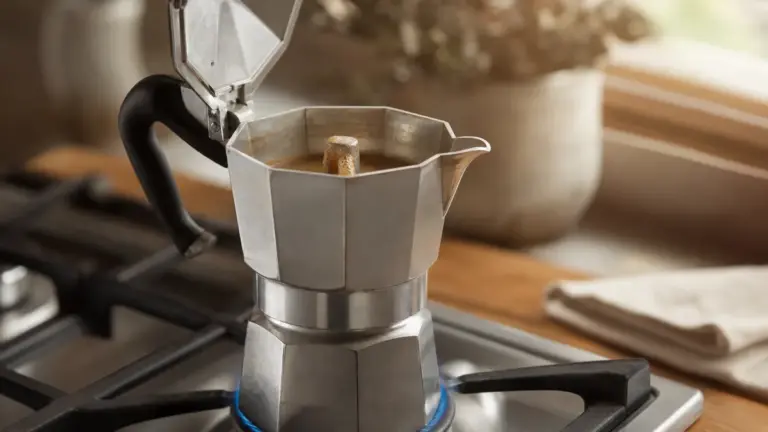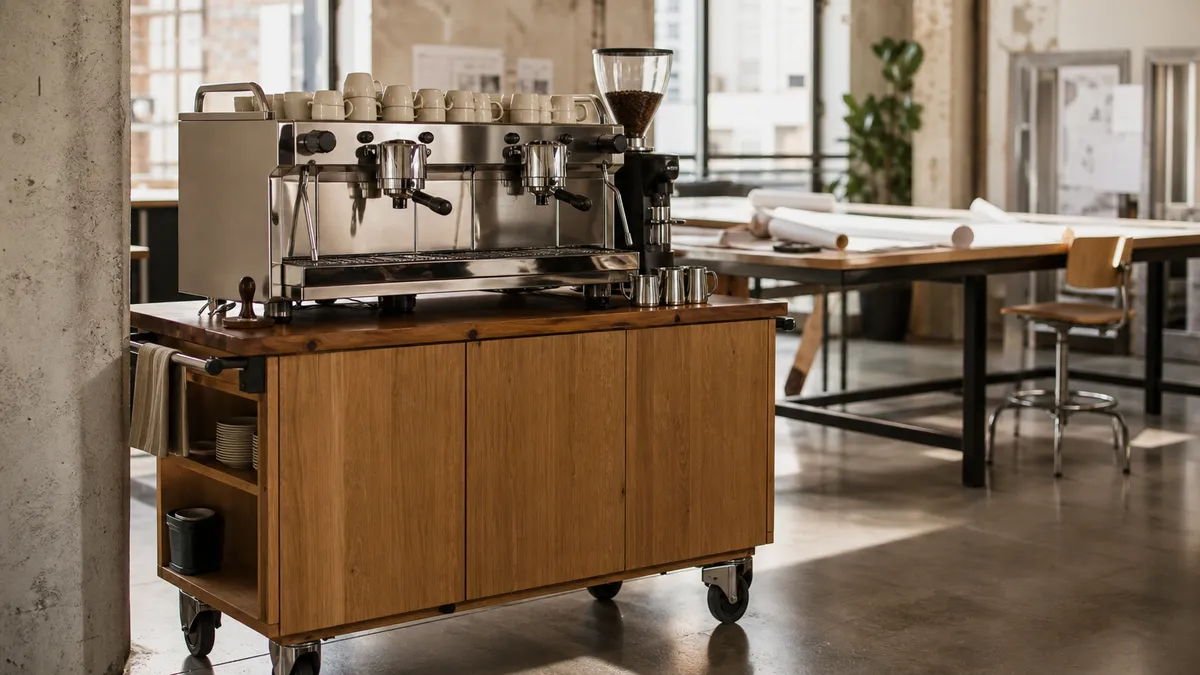
Commercial espresso machines suit businesses that want barista-made coffee and can provide trained operators, suitable utilities and planned maintenance. Choose for the busiest service period, not simply the daily cup total: group count, steam recovery, grinder capacity and staffing must work together.
In short
- A group is the brewing station where the portafilter locks in. More groups allow more simultaneous extractions, but do not guarantee a particular drinks-per-hour output.
- Compare steam boiler capacity and heating power together, then request a demonstration using your drink sizes and menu.
- Volumetric dosing measures brewing water; true gravimetric dosing uses scales to measure espresso output.
- Confirm the exact electrical configuration, water treatment, drainage and service access before ordering.
- In Great Britain, arrange a competent-person assessment of pressure-system duties before use. Routine servicing does not replace statutory examination.
Is a traditional commercial machine right for your business?
A traditional machine leaves grinding, dosing, tamping and milk steaming largely with the operator. The machine supplies controlled brewing water and steam; it is not an unattended drinks dispenser.
For cafés and staffed restaurant service, that division of work offers control over recipes and presentation. In a workplace, first decide who will operate it, clean it and maintain consistent drinks when the usual enthusiast is absent.
Our coffee machines guide covers the wider equipment choice. This article concentrates on specifying a traditional commercial installation, rather than repeating the brewing fundamentals in espresso machines.
Use these buying criteria, in order: peak demand, available operators, drink mix, installation feasibility, local engineering support, then advanced features. A complicated machine without trained cover is a poor operational fit, however impressive its specification.
Match group count to peak demand
A group head holds the portafilter, the handled basket containing ground coffee. Multiple groups let operators overlap extractions, but preparation, milk steaming and handing over drinks still take time.
The table below is an editorial shortlisting framework, not a manufacturer output rating.
| Group count | When to investigate it | What to establish in a demonstration |
|---|---|---|
| One | Staffed restaurant service or a modest, measured peak | Whether milk preparation and consecutive orders create a queue |
| Two | A café, restaurant or staffed workplace with overlapping orders | Whether the grinder, steam system and operators keep pace together |
| Three | Sustained peaks with space and staffing for parallel work | Whether the extra group is actually used during service |
| Four | A demonstrated need for several simultaneous extractions | Whether counter layout and staffing justify the footprint |
Ask suppliers to reproduce your busiest order sequence, including milk drinks, decaffeinated orders and hot-water use. Record completed drinks, queue length and recovery, rather than accepting an unexplained “cups per hour” claim.
For workplaces, headcount helps estimate demand but cannot determine machine size:
| People on site | Illustrative drinks per person daily | Calculated daily drinks | Additional information needed |
|---|---|---|---|
| 20 | 2 | 40 | Orders arriving together |
| 50 | 2 | 100 | Break-time concentration and milk-drink share |
| 100 | 2 | 200 | Staffing and simultaneous service points |
These are arithmetic examples, not consumption forecasts or capacity recommendations. Replace both assumptions with your own attendance and usage records.
Boiler sizes, recovery and temperature control
Compare the boiler system, not just litres
A heat-exchanger machine heats brewing water through a separate passage within the steam boiler. A dual-boiler machine separates coffee brewing from steam production; some multi-boiler designs provide an independently controlled brew boiler for each group.
That distinction matters when comparing specifications. A quoted boiler capacity might describe the steam boiler, a shared coffee boiler or an individual group boiler.
For a concrete example, La Marzocco’s published Linea PB brochure claims steam boiler capacities of 7, 11 and 15 litres for its two-, three- and four-group versions respectively. These are examples from one product family, checked in November 2026, not recommended capacities for every business.
Litres alone do not establish recovery. Ask how the heating system behaves when brewing, steaming and automatic boiler refilling overlap. A large boiler cannot compensate indefinitely for insufficient heating input or an unsuitable electrical supply.
What multi-boiler control adds
Separate brew and steam boilers allow their temperatures to be controlled independently. Independent group boilers add the ability to run different brewing temperatures on different groups, useful when coffees need different recipes.
PID control is electronic feedback control that adjusts heating towards a temperature set point. It is a control method, not proof that the water reaching the coffee remains perfectly stable under every workload.
Ask for evidence of temperature performance during repeated extractions and after idle periods. If a supplier cites certification, request the exact standard and certificate: the SCA lists a dedicated espresso-machine standard, SCA-350, separately from its home coffee-brewer standard.
Dosing, group heads and pumps
Volumetric versus gravimetric dosing
Volumetric dosing uses a flowmeter to stop delivery after a programmed quantity of brewing water. It does not directly weigh the espresso in the cup, so staff should still verify beverage yield.
Gravimetric dosing, also called brew-by-weight, uses scales to measure extraction output. It helps automate stopping at a target beverage mass, but does not remove the need for consistent ground-coffee dosing and grinder adjustment.
Check the mechanism carefully. Victoria Arduino distinguishes its scale-based Gravitech system from VIS, which estimates output in grams algorithmically without additional weighing hardware. A display showing grams does not necessarily mean the machine contains scales.
E61, saturated and digitally heated groups
These descriptions explain how a group is heated, not a simple ranking of quality:
- E61-style thermosyphon: circulating hot water keeps the group warm. Follow the particular machine’s operating procedure rather than assuming every E61-style installation needs identical flushing.
- Saturated group: the group is thermally integrated with the coffee boiler, using its water-filled construction to support temperature stability.
- Digitally heated group: a dedicated heating element and sensor help regulate the group body. Some designs combine this with an individual micro-boiler.
The categories can overlap. Ask what the operator can adjust, what requires an engineer, and how the system performs under your service pattern.
Rotary versus vibration pumps
A rotary pump can supply several groups with steady pressure. Vibration pumps build pressure differently and produce an audible vibration; neither pump label alone establishes the quality of the finished espresso.
For a busy installation, ask about simultaneous-group operation, inlet-water requirements and access for pump replacement. Request an operating demonstration if noise matters in an open-plan workplace.
Plumbing, power and water treatment
Confirm the installation before delivery
Obtain the installation drawing for the exact UK configuration being supplied. Commercial machines may be available in different single-phase and three-phase versions; do not assume that a model name identifies its electrical requirements or that an ordinary socket is suitable.
Have a qualified electrician confirm the supply, protective arrangements and isolation. Include grinders and other equipment in the site assessment.
Check potable-water provision, inlet requirements, isolation, drainage, ventilation and maintenance access. A cart-mounted machine still needs a safe, manufacturer-approved arrangement for water, waste and electricity.
In England and Wales, installations must comply with the Water Supply (Water Fittings) Regulations 1999, including suitable backflow protection. Scotland has water fittings byelaws and Northern Ireland has separate regulations. Ask the installer and local water supplier which protection arrangement the proposed installation needs.
Specify treatment from a water test
Start with your local water supplier’s published information, then test the actual machine supply. Thames Water, for example, provides postcode-based water-quality information; it is not a substitute for checking water after treatment.
Hardness concerns scale-forming minerals; alkalinity describes acid-buffering capacity. They are related but different measurements. Record the units and the manufacturer’s limits rather than describing water simply as “hard” or “soft”.
For illustration, La Marzocco’s published specification gives total hardness of 70 to 100 ppm and alkalinity of 40 to 80 ppm. Those are manufacturer-specific requirements, not universal espresso targets.
Specify treatment against the selected machine’s complete requirements, including corrosion-related parameters. A general drinking-water filter may not sufficiently change mineral content, while very low-mineral water can also be unsuitable. Require documented testing before and after treatment and a replacement plan based on the treatment supplier’s instructions.
PSSR checks in Great Britain
The Pressure Systems Safety Regulations 2000, usually shortened to PSSR, address risks from stored energy in workplace pressure systems. HSE includes steam at any pressure within its definition of a relevant fluid.
For qualifying equipment, HSE says a Written Scheme of Examination, or WSE, must be in place and an examination undertaken before use. The scheme must be drawn up or certified as suitable by a competent person.
Do not reduce this to “all commercial steam boilers always have identical requirements”. HSE’s Approved Code of Practice says each system should be considered individually, including applicable exceptions. For a conventional commercial espresso steam-boiler installation, arrange the assessment before commissioning rather than assuming the supplier’s ordinary service visit covers it.
Ask for written confirmation of:
- The assessment of PSSR applicability.
- The WSE and equipment identification, where required.
- Completion of the required examination before use.
- The examination interval and preparation requirements.
- Who will arrange subsequent examinations and retain reports.
Statutory examination and routine maintenance are separate tasks. The competent person determines the examination requirements; do not assume a universal annual interval. This section concerns Great Britain, so seek jurisdiction-specific advice for Northern Ireland.
Training, servicing and the full operating commitment
Commissioning should include practical training in grinder adjustment, consistent dosing, beverage yield, milk handling, cleaning and safe operation. The SCA’s Barista Skills curriculum covers these core areas, but staff also need instruction on the installed machine.
Nominate responsibility for opening checks, cleaning records, water-treatment monitoring and fault reporting. Keep operating recipes and cleaning instructions accessible, including when experienced staff are away.
For maintenance, obtain an itemised written service proposal stating:
- Planned tasks, visit arrangements and consumables included.
- Coverage hours and the distinction between response and repair commitments.
- Parts availability and arrangements during extended downtime.
- Water-related exclusions and warranty conditions.
- Whether pressure-system assessment and examination are included or arranged separately.
To compare the overall commitment, request itemised written quotations for the machine, grinders, installation, electrical and plumbing work, treatment, training, maintenance, examinations and consumables. Include electricity, cleaning materials, ingredients and staff time in your own calculation.
Add one-off and recurring expenditure over the same ownership period, then divide by expected drinks served if you need an internal per-drink comparison. State your attendance, usage, wastage and VAT assumptions explicitly.
A purchase made for business purposes is not automatically a consumer purchase under the Consumer Rights Act 2015. Check the written business terms rather than assuming consumer cancellation or refund protections apply.
FAQ
Should a restaurant buy a domestic espresso machine instead?
Do not assume a domestic machine is suitable for commercial service. Check the manufacturer’s permitted use, warranty conditions, installation requirements and ability to sustain your actual order pattern. A low daily total can still contain a demanding service peak. Ask the supplier to confirm suitability in writing and demonstrate the proposed machine against that peak.
Is a second grinder necessary for decaffeinated coffee?
A separate grinder is an operational choice, not a universal machine requirement. Ask your trainer to demonstrate a decaffeinated workflow, including accurate dosing, avoiding mix-ups and keeping the service area orderly. Assess it during the peak-demand demonstration rather than treating it as an afterthought once the main machine is installed.
Can the machine’s hot-water tap serve all the tea orders?
Only if the proposed system can support that demand alongside espresso and milk service. Include your actual tea and other hot-water orders in the demonstration, and ask how boiler refilling affects recovery. Consider a separate hot-water unit if the combined workload fails your service test, rather than choosing by steam boiler capacity alone.
Where to go next
Read Traditional Coffee Machines for the operator-led workflow, and Manual Lever Espresso Machines if you are considering lever operation. For a different way to handle concentrated demand for black coffee, see Drip Coffee Makers and Filter Coffee Machines before finalising your commercial espresso machines shortlist.
Sources
- HSE, Pressure Systems Safety Regulations 2000 (PSSR), current web guidance, undated. Explains relevant fluids and pre-use WSE and examination requirements. URL: https://www.hse.gov.uk/pressure-systems/pssr.htm.
- HSE, Safety of pressure systems, L122, second edition, 2014. System-specific assessment, competent persons and examination intervals. URL: https://www.hse.gov.uk/pubns/priced/l122.pdf.
- La Marzocco, Linea PB product brochure, undated, retrieved from the manufacturer’s April 2023 upload. Claimed boiler capacities, saturated groups and controls. URL: https://www.lamarzocco.com/tw/wp-content/uploads/2023/04/product_brochure_linea_pb_eng.pdf.
- La Marzocco, Linea PB operating manual, version 4.1, undated. Installation, dosing, cleaning and maintenance requirements. URL: https://lamarzoccousa.com/wp-content/uploads/2021/03/MAN.10.1.03_LINEAPB_EN_V4.1_ONLINE-1.pdf.
- Rancilio, Classe 20 catalogue, undated, retrieved from the manufacturer’s May 2021 upload. Heat-exchanger and independently heated micro-boiler designs. URL: https://www.ranciliogroupna.com/wp-content/uploads/2021/05/CLASSE-20_CATALOGUE_WEB_EN.pdf.
- Profitec, About us, technical explanations, undated. Thermosyphon groups, pump systems and dual boilers. URL: https://www.profitec-espresso.com/en/about-us.
- Victoria Arduino, Technologies, undated. Distinguishes scale-based Gravitech from algorithmic VIS estimation. URL: https://victoriaarduino.com/en/technologies/.
- La Marzocco, Water Specification, undated. Manufacturer-specific chemical limits. URL: https://lamarzoccousa.com/wp-content/uploads/2023/09/Water-Specifications.pdf.
- La Marzocco UK, La Marzocco Water Specifications, undated. Explains filtration limitations and risks from unsuitable low-mineral water. URL: https://www.lamarzocco.com/uk/en/technical-questions/la-marzocco-water-specifications/.
- Thames Water, Water quality, undated. Provides access to postcode-based local information. URL: https://www.thameswater.co.uk/help/water-and-waste-help/water-quality.
- Water Regs UK, What is a backflow prevention arrangement or device?, undated. Jurisdictional requirements and risk-appropriate protection. URL: https://www.waterregsuk.co.uk/topics/all-faqs/what-is-a-backflow-prevention-arrangement-or-device/.
- Specialty Coffee Association, Coffee Skills Program Course Catalog, August 2021. Barista training competencies. URL: https://education.sca.coffee/s/SCA-CSP-Course-Catalog.pdf.
- Specialty Coffee Association, Standards, current index, undated. Lists SCA-350 separately from SCA-310; no inaccessible test requirements have been reproduced. URL: https://sca.coffee/research/coffee-standards.
- UK Parliament, Consumer Rights Act 2015, section 2, 2015. Defines a consumer by the purpose of the transaction. URL: https://www.legislation.gov.uk/ukpga/2015/15/section/2.
This guide was researched using regulator guidance, legislation, SCA publications, water-industry guidance and manufacturers’ documentation; specifications are manufacturer claims, and the sizing frameworks are editorial planning aids rather than tested output ratings.
Last checked: November 2026