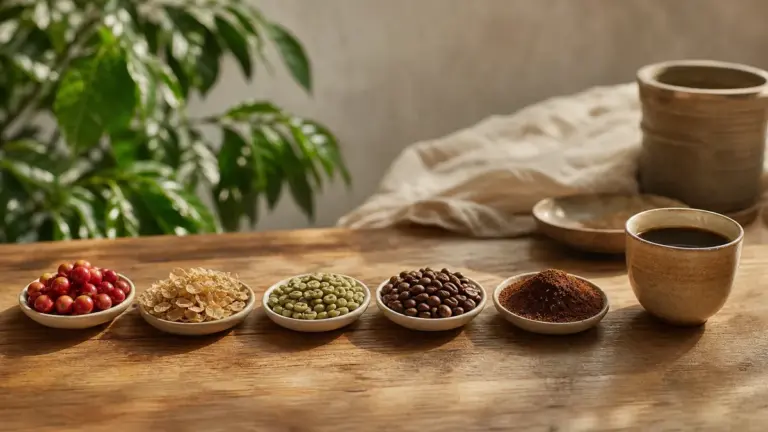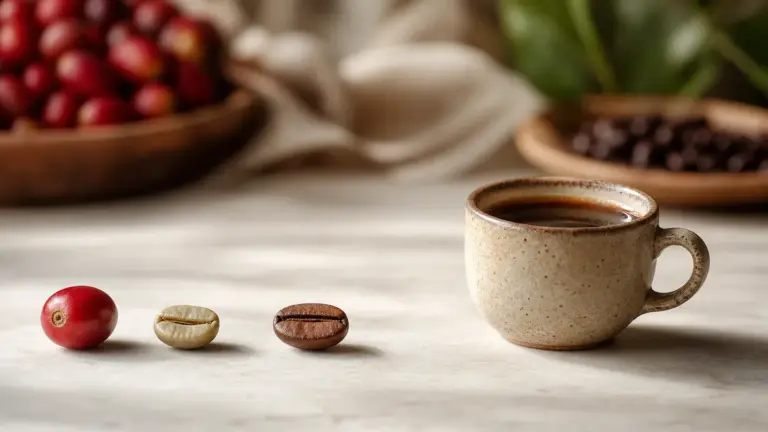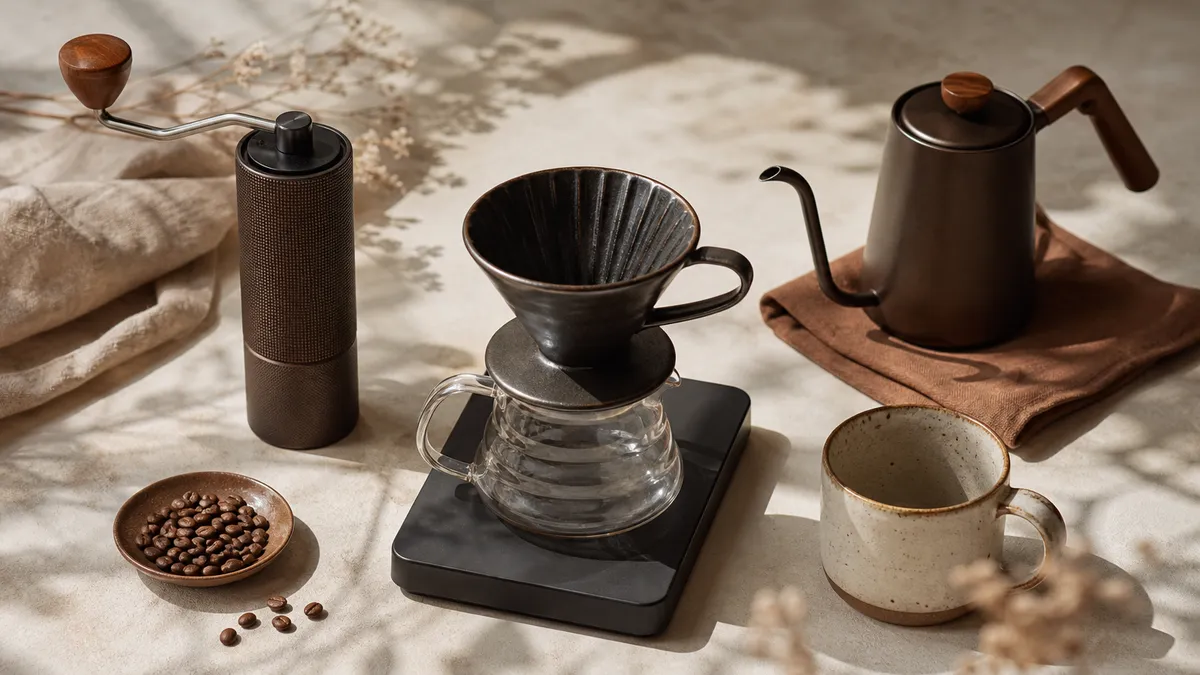
A home coffee starter kit needs coffee, a brewer, a suitable filter where required, hot water and a cup; scales make it easier to repeat a brew you enjoy. You can start with ready-ground coffee and an ordinary kettle, then add a burr grinder or more specialised equipment when you know what you want to improve.
In short
- Choose one brewing method first, then buy coffee ground for it or a grinder suited to it.
- The minimal kit can use your existing kettle, mug and kitchen scales, with no separate grinder.
- Include compatible paper filters if your brewer needs them. A standard mesh-filter cafetière does not require paper.
- Buy manageable quantities of coffee and keep them airtight, cool and away from light.
- The three kit levels below are equipment packages, reviewed in November 2026, not priced bundles.
Choose your home coffee starter kit by routine
Before choosing equipment, decide how much coffee you normally make, how much attention you want to give it and whether you enjoy hands-on preparation. Those criteria are more useful than the number of accessories in a gift box.
The comparison below uses four criteria: essential equipment, preparation effort, scope for adjustment and who each kit suits. These are editorial recommendations rather than results from comparative product testing.
| Kit level | What belongs in it | Effort and adjustment | Best suited to |
|---|---|---|---|
| Minimal | Cafetière, coffee ground for cafetière, ordinary kettle, existing mug; reuse kitchen scales if available | No grinding or controlled pouring; limited ability to change grind size | Someone who wants to start without a collection of equipment |
| Everyday | Cafetière or paper-filter immersion brewer, compatible filters if needed, adjustable burr grinder, scales, ordinary kettle, mug | Adds grinding and measurement; lets you adjust the coffee preparation | Someone making coffee regularly who wants a repeatable routine |
| Enthusiast | One chosen brewer, suitable burr grinder, responsive scales, compatible filters, kettle matched to the method, storage container and cups | More control, with more equipment to understand and maintain | Someone who enjoys experimenting and can identify what each addition will do |
All three levels also need drinking water and somewhere suitable to store the coffee. Work through the coffee beginner guides if the brewing terms are still unfamiliar.
Minimal: start without a grinder
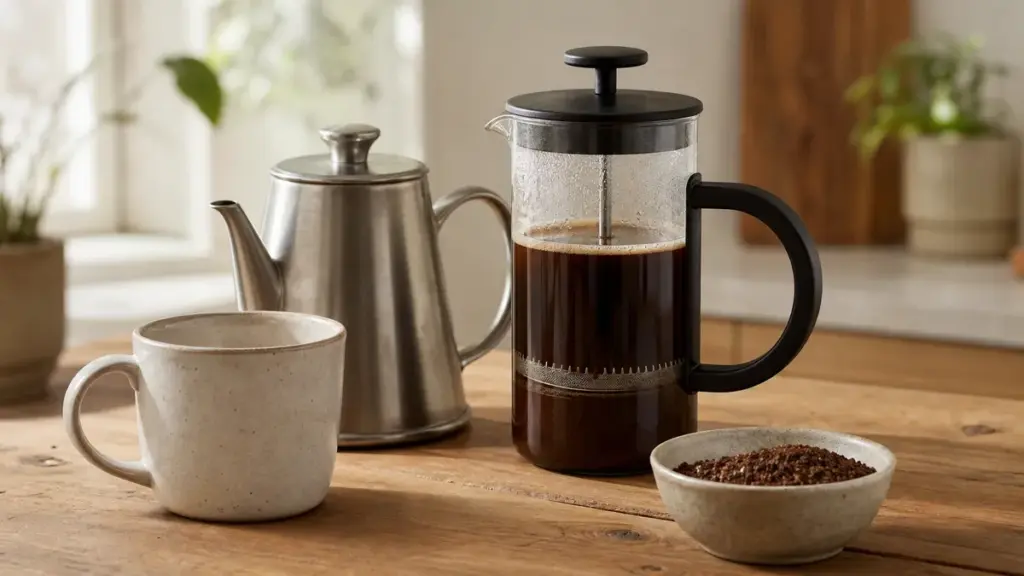
My recommendation for a genuinely minimal ground-coffee kit is a cafetière and coffee ground specifically for it. A cafetière is an immersion brewer: the grounds steep in the water before a mesh plunger separates most of them from the drink.
Use your existing kettle and mug. If you already have kitchen scales, bring them into the routine rather than immediately buying coffee-specific ones.
The compromise is that ready-ground coffee fixes the grind size before you brew. You can change the amount of coffee and water, but cannot make the grounds finer or coarser. Buy a manageable pack and tell the retailer how you will brew it.
Everyday: add control where it matters
The everyday kit adds an adjustable burr grinder and scales. Keep the ordinary kettle unless your chosen method gives you a clear reason to replace it.
Choose a cafetière if you enjoy its fuller texture and do not mind some sediment. Alternatively, consider a paper-filter immersion brewer, which steeps the coffee before releasing it through paper into a cup or server.
Check the filter requirement before ordering. For example, the large Clever Dripper described by its distributor uses number 4 paper filters. That is a product-specific requirement, not a size that fits every brewer.
Enthusiast: specialise rather than accumulate
An enthusiast kit should solve a particular problem. For hand-poured filter coffee, that might mean a gooseneck kettle and more responsive scales. For several morning drinks, it might mean an automatic filter brewer instead.
There is no requirement to progress towards espresso. Choose equipment for the drinks and preparation you enjoy, rather than treating a larger collection as the goal.
Buy the brewer, coffee and filters together
Choose the brewer around your serving
Start with the amount you actually want to drink. Check the manufacturer’s capacity in millilitres rather than relying only on a description such as “three cups”.
Also check how the brewer fits into your kitchen. Can it sit securely on your mug? Will you need a separate server? Is there room to remove the lid, fill it and wash its parts?
A cafetière, a paper-filter dripper and an automatic filter machine all make coffee, but ask different things of you. The automatic machine handles water delivery; a manual dripper leaves the pouring to you. Choose the routine before choosing its accessories.
Put coffee on the shopping list
A box of equipment without suitable coffee is not a complete starter kit. Buy whole beans if you have a grinder, or coffee ground for the exact brewing method if you do not.
Give the retailer useful information: your brewer, whether you drink the coffee black or with milk, and flavours you already enjoy. Asking for something chocolatey and rounded is more helpful than asking for “the best beans”.
You do not need to master origins and processing methods before making your first drink. Start with one coffee, learn how it behaves and change it when you have a reason.
Check the filter shape and size
For a paper-filter brewer, buy the manufacturer’s specified filter type alongside it. Similar-looking papers are not automatically interchangeable: the filter must fit the brewer properly.
Paper generally holds back more oils and sediment than metal mesh, producing a lighter-textured drink. A reusable metal filter therefore changes the result, not just the supply of consumables.
If the brewer’s instructions call for rinsing the paper, do so and discard that water before brewing. Keep spare papers somewhere clean and dry, so running out does not interrupt your new routine.
Choose a grinder and scales for useful control
Prefer adjustable burrs when buying a grinder
A burr grinder crushes beans between grinding surfaces. Compared with a spinning blade, it offers better control over grind size and a more consistent result.
Choose a hand grinder if turning the handle fits your routine. Choose an electric grinder if you would rather press a button. Neither format removes the need to check that the grinder supports your brewing method.
Before buying, look for:
- Clear grind adjustment and instructions for your method.
- Access for cleaning.
- A comfortable workflow for the quantity you prepare.
- UK support and available replacement parts.
- A size and shape that fit your storage space.
Do not assume that a grinder recommended for filter coffee will also meet your future espresso needs. Check its intended use rather than buying against a vague promise of versatility.
Burr grinders do not produce identical particles. Their useful advantage is a more predictable grind, not perfect uniformity.
Reuse kitchen scales before replacing them
Scales let you measure both coffee and brewing water by weight. That makes a recipe easier to repeat and gives you a record of what changed.
As a practical starting recommendation, reuse functioning kitchen scales that display whole grams. Before replacing them, check whether they register a small coffee dose reliably and can support the complete brewer, vessel and water.
For a dedicated purchase, prioritise a readable display, a tare button that resets the reading to zero, and a response you can follow while pouring. Check the automatic switch-off behaviour too. A built-in timer is convenient, but a phone timer can serve that purpose.
For context, Hario’s V60 guide uses 15 g of coffee and 250 g of brewing water, approximately a 1:16.7 coffee-to-water ratio by weight. This is one manufacturer’s starting recipe, not a universal rule. Its relevance here is simple: scales allow you to reproduce both quantities without guessing.
Keep the kettle, storage and cups simple
An ordinary kettle is enough to begin
You can use a standard electric or hob kettle for cafetière coffee. You can also make pour-over coffee with one, although controlling the stream may take more care.
A gooseneck kettle has a long, narrow spout that helps control water delivery. It earns its place when deliberate pouring is part of your chosen method, not simply because it appears in a starter-kit photograph.
Temperature control is another optional function. Follow the brewer’s guidance rather than buying a kettle because it offers the largest collection of settings.
Choose airtight storage, not display storage
Keep coffee in an airtight container in a cool, dark place, away from steam and heat. An opaque food-storage container you already own can do this job; a dedicated coffee canister is not compulsory.
Buy quantities that match your drinking habits. Avoid filling a large decorative jar merely to make the shelf look complete.
If you buy whole beans, grind the amount you need close to brewing. There is no need to grind the entire bag as part of setting up your kit.
Use comfortable, compatible cups
Start with mugs you enjoy using. Check that they hold your intended drink with room to carry it safely, and that a brewer intended to sit on the rim fits securely.
A separate server is useful when dividing a brew between people. Otherwise, it may be another vessel to wash.
Include cleaning in the plan. Follow the equipment instructions, and make sure you can reach and clean the parts that contact coffee. The most attractive brewer is a poor match if you dislike maintaining it.
What to skip, and when to upgrade
You can leave these out of a general filter-coffee starter kit:
- Espresso accessories without an espresso machine. Tampers and distribution tools have no job in a cafetière or ordinary filter dripper.
- Several brewers bought together. Learn one routine before adding another set of variables.
- A specialist kettle without a pouring problem. Use your existing kettle until you understand what it prevents you from doing.
- A dedicated storage gadget without a storage problem. Start with an appropriate airtight container.
- Large accessory bundles. Assess every item separately, including whether it fits your brewer and whether you will use it.
The useful upgrade question is: what limitation am I trying to remove?
If you cannot change grind size, a grinder adds that control. If you keep guessing quantities, scales help you repeat them. If an uncontrolled stream makes pour-over awkward, try a kettle designed for controlled pouring.
Change one part of the routine at a time and keep brief notes. See common beginner mistakes before assuming that an unfamiliar result means the equipment needs replacing.
If “stronger” is your main aim, first clarify whether you mean flavour intensity or caffeine in coffee strength versus caffeine. That distinction helps you ask the right question before adding equipment.
The best home coffee starter kit is the one whose contents all have a job in your daily routine.
FAQ
Is a ready-made coffee starter set a good choice?
A ready-made set can be useful if its contents match one complete brewing method. Check whether it includes coffee, the correct filters and a suitable drinking vessel, rather than assuming the box contains everything. Compare its contents with equipment you already own, and check whether replacement filters and parts are available.
What should I buy as a coffee gift if I do not know the recipient’s equipment?
Choose coffee only after checking whether the recipient needs beans or ground coffee and how they brew it. If you cannot establish that, avoid guessing at a grinder, filter size or brewer. A useful gift should fit an existing routine or introduce a complete, clearly explained one, rather than create a compatibility problem.
Should I replace my existing blade grinder immediately?
You do not have to replace a working blade grinder before making coffee. Use it while learning what you enjoy, recognising that grind size is harder to control than with adjustable burrs. When inconsistent grinding becomes a limitation you want to address, choose a burr grinder suited to your brewing method.
Where to go next
Read Coffee for Beginners for a route through the basic terms, then Common Beginner Mistakes to check your routine before changing equipment. Coffee Strength vs Caffeine is the useful next read if you want a more intense drink but are unsure which kind of strength you mean.
Sources
- National Coffee Association, “French press coffee”, undated, accessed November 2026. Standard kettles, ready-ground coffee, grinders, measurement and cleaning.
https://www.aboutcoffee.org/brewing/french-press-coffee/ - National Coffee Association, “Pour-over coffee”, undated, accessed November 2026. Filter compatibility, paper and metal filtration, kettles and scales.
https://www.aboutcoffee.org/brewing/pour-over-coffee/ - National Coffee Association, “Storage and shelf life”, undated, accessed November 2026. Airtight, opaque storage, smaller purchases and grinding before brewing.
https://www.aboutcoffee.org/beans/storage-and-shelf-life/ - National Coffee Association, “Drip coffee”, undated, accessed November 2026. Automatic brewing workflow, equipment selection and cleaning.
https://www.aboutcoffee.org/brewing/drip-coffee/ - Hario UK, “Expert V60 Brew Guide”, undated, accessed November 2026. Compatible equipment, filter rinsing and the manufacturer’s starting recipe.
https://www.hario.co.uk/pages/brew-guides-v60-expert - Clever Coffee Brewers, “CLEVER Dripper”, undated, accessed November 2026. Published distributor description of paper-filter immersion brewing and number 4 filter requirement.
https://cleverbrewing.coffee/collections/clever-manual-brewers/products/clever-dripper - Baratza, “Common Grinding Myths”, undated, accessed November 2026. Grind-particle variation and predictable adjustment.
https://www.baratza.com/en-au/blog/product-guides/common-grinding-myths
This article was researched using coffee-industry guidance and published equipment instructions; the kit levels and purchasing priorities are editorial recommendations, not first-hand product-test results.
Last checked: November 2026