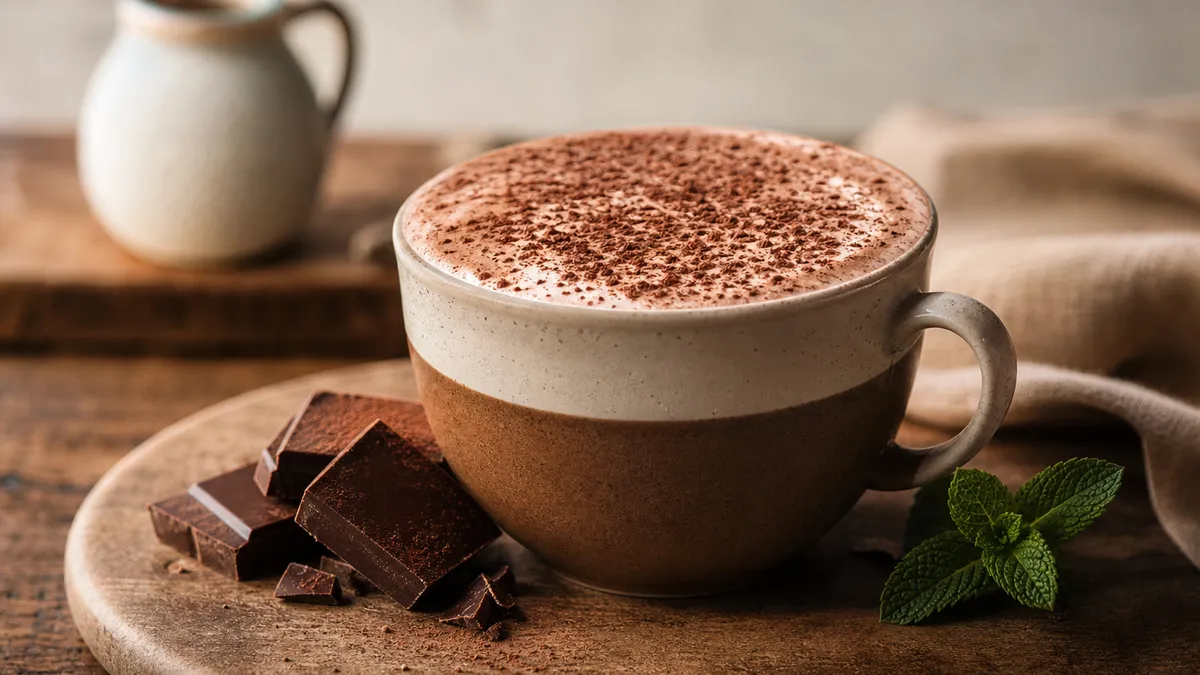
A mocha combines espresso, chocolate and warm milk: start with 40 ml espresso, 20 g dark chocolate and 150 ml milk for one serving. Stir the chocolate into the hot coffee before adding the milk, then adapt the same method for a white chocolate mocha or peppermint mocha.
In short
- Melt and mix the chocolate thoroughly before pouring in the milk.
- For dairy milk, aim for about 65 degrees Celsius, with a little fine foam rather than a stiff cap.
- Use unsweetened cocoa for control over sweetness, or chocolate sauce for straightforward mixing.
- For white chocolate mocha, begin with 20 g white chocolate and leave out additional sugar.
- For peppermint mocha, start with 5 ml peppermint coffee syrup and adjust only after tasting.
Classic mocha recipe
The quantities below are suggested starting proportions, not a formal brewing standard. Manufacturers’ recipes vary, so treat the balance of coffee, chocolate and milk as something to adjust to your taste.
This version uses chopped dark chocolate and keeps the coffee noticeable beneath the milk. Whipped cream is optional, not part of the basic method. For other drinks organised by ingredients and preparation, visit coffee recipes.
Recipe card
Serves: 1
Preparation: approximately 2 minutes
Heating and assembly: approximately 3 minutes
Total time: approximately 5 minutes, excluding machine warm-up
Ingredients
- 40 ml freshly brewed espresso
- 20 g dark chocolate, finely chopped
- 150 ml cold pasteurised milk
- Optional: 15 ml whipping cream, whipped separately
- Optional: 1 g cocoa powder for the topping
Equipment
- Espresso machine or capsule machine
- Kitchen scales and a measuring jug
- Heatproof mug, approximately 250 ml
- Spoon or small whisk
- Milk jug and steam wand, or a small saucepan
- Thermometer
- Optional handheld milk frother
Approximate caffeine: an illustrative capsule-based serving contains about 70 to 160 mg, before an optional cocoa topping. This assumes a 40 ml Nespresso Vertuo espresso, for which the manufacturer publishes 60 to 150 mg, plus approximately 10 mg from 20 g plain chocolate using EFSA’s reference value. It is not a measured range for every espresso machine or chocolate.
Pregnancy and sensitivity note: the NHS advises no more than 200 mg caffeine daily from all sources during pregnancy. Individual sensitivity varies; choose decaffeinated coffee if appropriate, while remembering that the chocolate still contributes caffeine.
Method
- Prepare the chocolate. Put the finely chopped chocolate in the mug. Have the milk measured and your heating equipment ready before brewing.
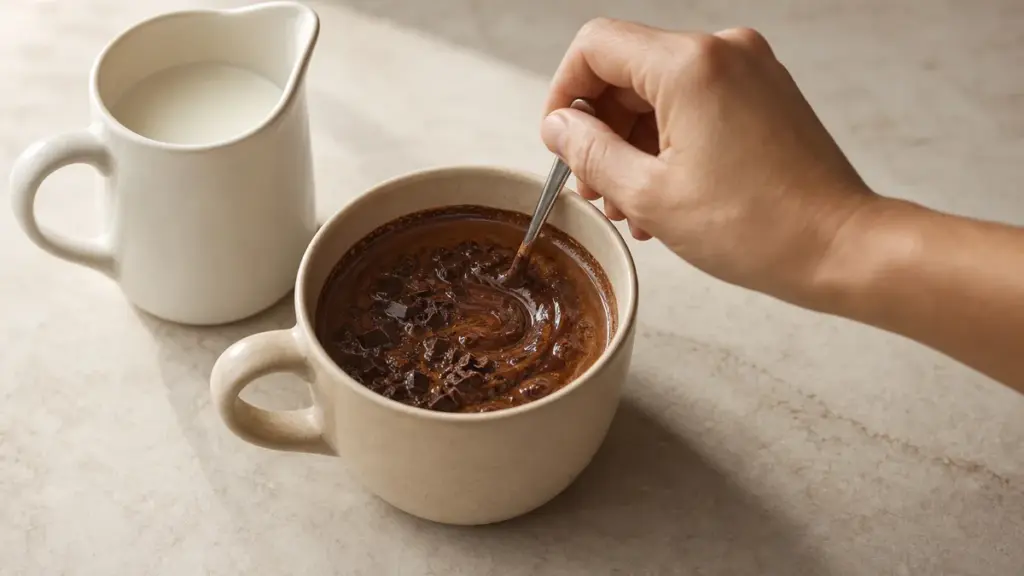
- Brew the espresso. Make 40 ml espresso according to your machine’s instructions, then pour it over the chocolate.
- Stir until smooth. Work the spoon around the bottom and sides of the mug until no pieces remain. If necessary, add a small splash from the measured milk once it is warm and continue stirring.
- Heat the milk. With a steam wand, introduce a little air, then keep the milk circulating until it reaches about 65 degrees Celsius. Alternatively, warm it gently in a saucepan, stirring and checking with a thermometer.
- Combine. Pour a little milk into the chocolate-coffee mixture and stir, then add the rest. Aim for a smooth drink with a light layer of fine foam.
- Finish and serve. Add the optional whipped cream or cocoa. Serve promptly, taking care with the hot mug and drink.
If using an electric milk frother, heat plain milk unless its instructions explicitly allow chocolate or sauce. Mix the chocolate in the serving mug instead of assuming that every frother can handle it.
Choosing chocolate for a mocha
Choose according to three things: how much sweetness you want, how pronounced the chocolate should be, and how much mixing you are prepared to do. The following quantities are alternatives for this recipe, not exact equivalents across brands.
| Chocolate choice | Suggested amount per serving | Best suited to | Adjustment |
|---|---|---|---|
| Dark chocolate | 20 g | A chocolate-forward mocha | Chop finely and stir thoroughly |
| Milk chocolate | 20 g | A sweeter starting point | Leave out extra sugar initially |
| Unsweetened cocoa powder | 5 g | Separate control of cocoa and sugar | Mix with 5 g sugar and a little hot espresso first |
| Chocolate drinking sauce | 15 g initially | Convenient mixing | Follow the product guidance and adjust after tasting |
My preference is dark chocolate for the first attempt because it makes the chocolate element easy to judge. That is a flavour preference, not a requirement: milk chocolate, cocoa and sauce are all useful routes.
With cocoa powder, make a smooth paste before adding the remaining espresso. Do not tip it onto a finished mug of milk and expect a brief stir to distribute it evenly. Check that the packet says unsweetened cocoa rather than a sweetened drinking-chocolate mixture, since the latter needs its own adjustment.
With sauce, weigh the serving rather than counting pumps. Pump sizes and product concentrations differ, so a measured amount is a more useful starting record.
Taste before adding another sweet ingredient. Chocolate, sauce, syrup and whipped toppings can overlap; using them all makes it harder to identify which one needs changing.
White Chocolate Mocha
For one white chocolate mocha, use 40 ml espresso, 20 g finely chopped white chocolate and 150 ml milk. Keep the equipment, approximate preparation time and serving size from the classic recipe.
- Put the white chocolate in the mug.
- Add the freshly brewed espresso and stir thoroughly.
- If pieces remain, stir in a little warm milk before proceeding.
- Add the remaining heated milk and a light layer of foam.
Do not add sugar at the start. Taste the assembled drink first, then decide whether it needs any further sweetness.
A white chocolate mocha has a different flavour direction from the dark-chocolate version. Expect a sweeter, creamier impression rather than a pronounced cocoa taste. White chocolate sauce is another option, but use its own serving guidance rather than assuming it is interchangeable gram for gram with a solid bar.
For a less sweet starting recipe, try 15 g white chocolate while leaving the coffee and milk unchanged. This changes one variable, making the next adjustment easier to judge.
Do not carry the classic recipe’s caffeine estimate straight across to this version. Use the caffeine information for your chosen coffee and any information available for the particular chocolate or sauce.
Peppermint Mocha
For one peppermint mocha, use the classic ingredients plus 5 ml peppermint syrup intended for food and drinks. Stir the syrup into the smooth chocolate-espresso mixture before pouring in the milk.
Taste the finished drink before increasing the peppermint. If you want more, add a further 2.5 ml, stir and taste again. These are deliberately modest starting quantities because peppermint syrups vary.
For a sweeter version, swap the dark chocolate for 20 g white chocolate, retaining the same initial 5 ml syrup. Leave out extra sugar until you have tasted it.
Use a syrup with clear food-use instructions. This recipe does not call for essential oil, and concentrated baking extracts should not be substituted millilitre for millilitre.
A peppermint leaf can be an optional garnish, but the measured syrup supplies the flavour in this recipe. Keep the garnish separate from your flavour adjustments so that the next drink is easy to reproduce.
For more ingredient-led variations beyond these two, browse specialty coffee recipes.
Getting the balance and texture right
Before changing the recipe, identify what is missing. A mocha that needs more coffee is not necessarily improved by adding more chocolate, and a drink that needs better mixing does not need more sugar.
Adjust one ingredient at a time
If the coffee seems lost, try reducing the milk from 150 ml to 125 ml on the next attempt. Keep the espresso and chocolate unchanged so you can judge the difference.
If the chocolate dominates, try reducing it from 20 g to 15 g. If you want more sweetness but are happy with the chocolate intensity, add sugar separately rather than automatically increasing the chocolate.
Record the ingredient weights and volumes once you find your preferred balance. “One square” or “a squeeze” is difficult to repeat when you change bars or bottles.
Keep the foam modest
Aim for pourable milk with small, closely packed bubbles. With a steam wand, the circulating motion helps combine the warmed milk and foam; with a saucepan, a brief whisk is sufficient for this recipe.
Do not keep heating simply to make the finished drink hotter. Decent Espresso’s manufacturer guidance recommends stopping milk steaming at about 65 degrees Celsius. Pre-warm the mug if necessary, then empty it before adding the chocolate.
Troubleshooting
| Symptom | Likely cause | Fix |
|---|---|---|
| Chocolate pieces at the bottom | Pieces too large or mixing incomplete | Chop more finely and finish mixing before adding all the milk |
| Cocoa lumps | Powder added directly to the full drink | Make a paste with a little espresso first |
| Coffee flavour disappears | The chosen balance favours milk and chocolate | Reduce one of those ingredients next time |
| Peppermint overwhelms everything | Too much syrup for that product | Start again with a smaller measured amount |
| Large bubbles and a dry foam cap | More air introduced than this recipe needs | Introduce less air and keep the milk circulating |
Caffeine and safe preparation
Milk does not remove the caffeine already supplied by the coffee. Changing the amount of milk changes the drink’s balance and dilution, not the amount of caffeine you poured into it.
The recipe-card estimate is deliberately tied to a named manufacturer’s espresso range. Do not use it to estimate a manually brewed double espresso, a different capsule system or an instant-coffee version. Chocolate also contributes caffeine, so a mocha made with decaffeinated coffee is not automatically caffeine-free.
EFSA’s 2015 scientific risk assessment found that single doses up to 200 mg and daily intakes up to 400 mg, spread across the day, raise no safety concerns for healthy non-pregnant adults. These are population benchmarks, not targets; EFSA also notes that 100 mg near bedtime may affect sleep in some adults.
During pregnancy, follow the NHS limit of 200 mg daily from all sources. Speak to a GP, pharmacist or midwife about personal circumstances, including medicines or particular sensitivity.
Keep milk and cream refrigerated at 5 degrees Celsius or below, minimise their time outside the fridge, and follow storage instructions and use-by dates. Prepare only the milk you need for the serving. Clean the jug and any milk-contact equipment after use according to the manufacturer’s instructions.
FAQ
Can I make a mocha without an espresso machine?
Yes, use concentrated instant coffee as the coffee base. As a suggested starting point, dissolve 2 g instant coffee in 40 ml hot water, then follow the chocolate and milk steps above. This is an alternative recipe, not an espresso equivalent, and the capsule-based caffeine estimate does not apply. Check the coffee manufacturer’s information where available.
Can I make an iced mocha?
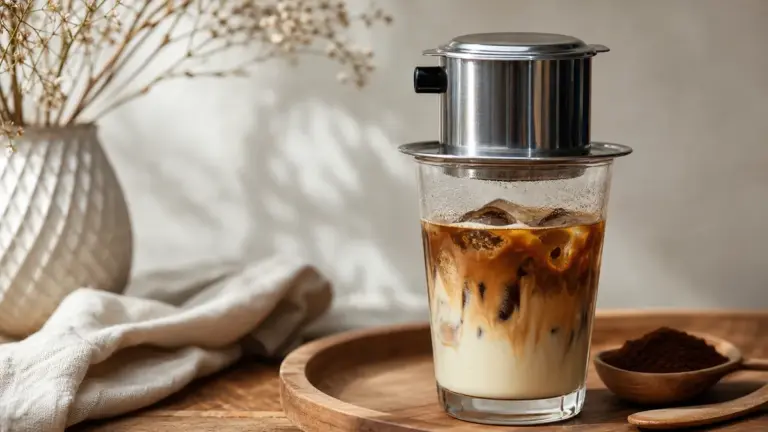
Yes, mix the chocolate with the hot coffee before adding cold milk and ice. For a suggested serving, use 40 ml espresso, 20 g chocolate, 150 ml cold milk and 100 g ice in a larger glass. Stir the chocolate base thoroughly first, then add the milk and ice. Use the coffee’s own caffeine information.
Does a mocha need whipped cream?
No, whipped cream is an optional topping. The basic drink needs only coffee, chocolate and milk, so leaving it off does not require another ingredient to replace it. Make the drink without cream first if you want to judge the balance clearly, then decide whether you prefer the richer finish.
Where to go next
Return to Coffee Recipes to choose your next drink, or read Specialty Coffee Recipes for further variations after mastering mocha. Try Affogato for an espresso dessert, or Irish Coffee for a different approach to combining coffee and cream.
Sources
-
Nespresso, Mocha, undated recipe sheet, accessed 2026. Coffee, chocolate and milk preparation, including a 20 g chocolate serving.
URL: https://www.nespresso.com/ncp/res/generated/recipes/23093MOC_en_INT.pdf -
Decent Espresso, DE1 Quickstart Guide, undated live guide, accessed 2026. Milk circulation, steaming and the recommendation to stop at about 65 degrees Celsius.
URL: https://decentespresso.com/docs/de1_quickstart_guide -
Nestlé, NESCAFÉ US, White Chocolate Mocha, undated recipe, accessed 2026. White chocolate, instant-coffee and saucepan preparation alternatives.
URL: https://www.nescafe.com/us/recipes/white-chocolate-mocha/ -
SharkNinja, Ninja Test Kitchen, Peppermint Mocha, recipe REC6366, undated, accessed 2026. Peppermint syrup and chocolate sauce as mocha ingredients.
URL: https://www.sharkninja.com/peppermint-mocha/REC6366.html -
Nespresso Hong Kong, Frequently Asked Questions: What is the caffeine content in each capsule?, undated live guidance, accessed 2026. Manufacturer-published Vertuo espresso caffeine range.
URL: https://www.contact.nespresso.com/faq-3/hk/en -
European Food Safety Authority, Caffeine, summarising the Scientific Opinion on the safety of caffeine, 2015. Scientific risk-assessment conclusions and illustrative chocolate caffeine content.
URL: https://www.efsa.europa.eu/en/topics/topic/caffeine -
NHS, Foods to avoid in pregnancy, reviewed 15 June 2026. Pregnancy caffeine guidance and recognition of chocolate as a caffeine source.
URL: https://www.nhs.uk/pregnancy/keeping-well/foods-to-avoid/ -
Food Standards Agency, Storing chilled foods at incorrect temperatures, October 2023. Household refrigeration and chilled-food handling guidance.
URL:
This article was researched from retrieved manufacturer recipes and instructions, EFSA’s scientific risk assessment, NHS guidance and FSA guidance; recipe adaptations are suggested proportions, not reported first-hand tests.
Last checked: November 2026