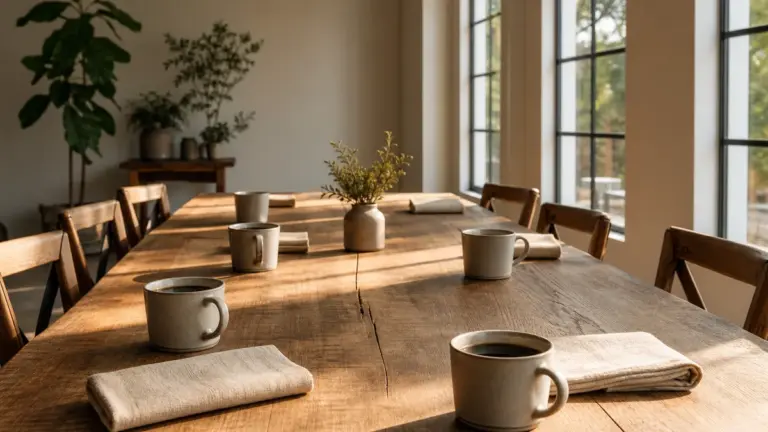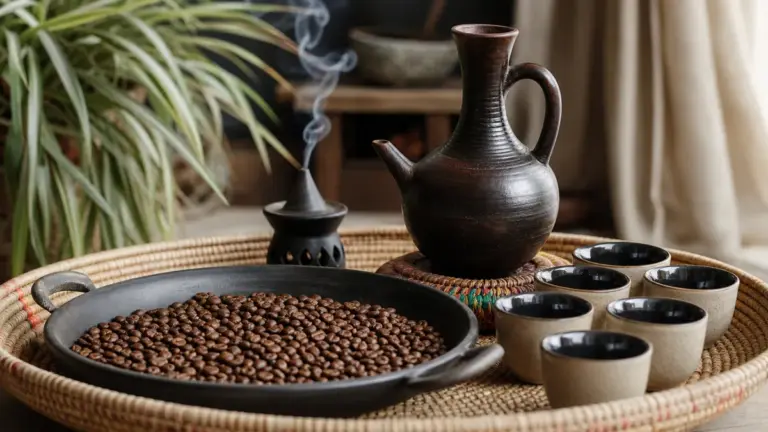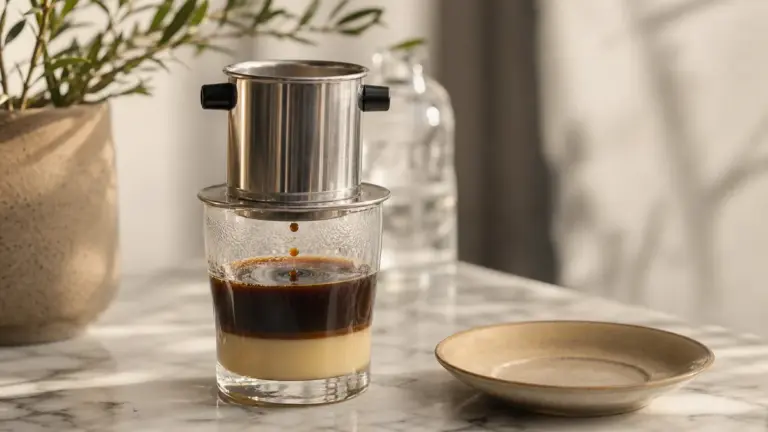
Viennese and French café cultures both make coffee an occasion to spend time in public, rather than simply a drink to take away. Vienna’s traditional coffee house centres on newspapers, conversation and an unhurried stay; the Parisian café adds the distinctive pleasure of a terrace open to street life. These are useful contrasts, not rigid rules about either city.
In short
- Viennese coffee house culture entered Austria’s national inventory of intangible cultural heritage in 2011, not UNESCO’s international Representative List.
- A Wiener Melange combines coffee, warm milk and milk foam; an Einspänner has a generous topping of whipped cream.
- Marble-topped tables, bentwood chairs, newspapers and coffee served with water are characteristic Viennese details.
- In a traditional Parisian café, un café normally means a small espresso, not a large filter coffee.
- Choose the setting as well as the drink: a quiet reading room, a conversational neighbourhood café or a terrace overlooking the pavement.
What makes a Viennese coffee house distinctive?
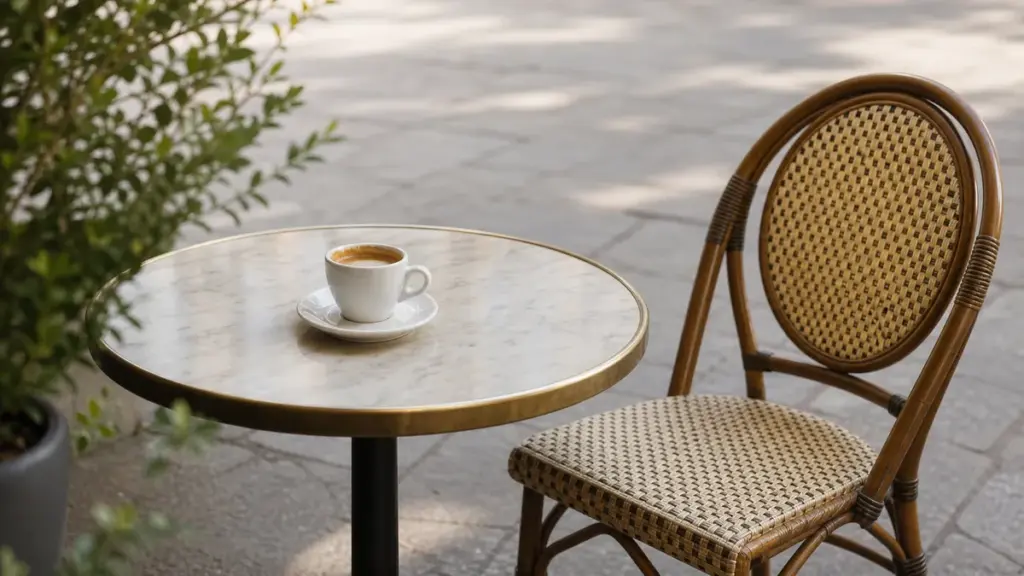
The traditional Viennese Kaffeehaus, or coffee house, is somewhere to settle. Small marble-topped tables, upholstered seating, Thonet bentwood chairs and newspapers help create a public room where being alone does not require being isolated. The Austrian UNESCO Commission identifies these furnishings and reading spaces as characteristic features of the tradition.
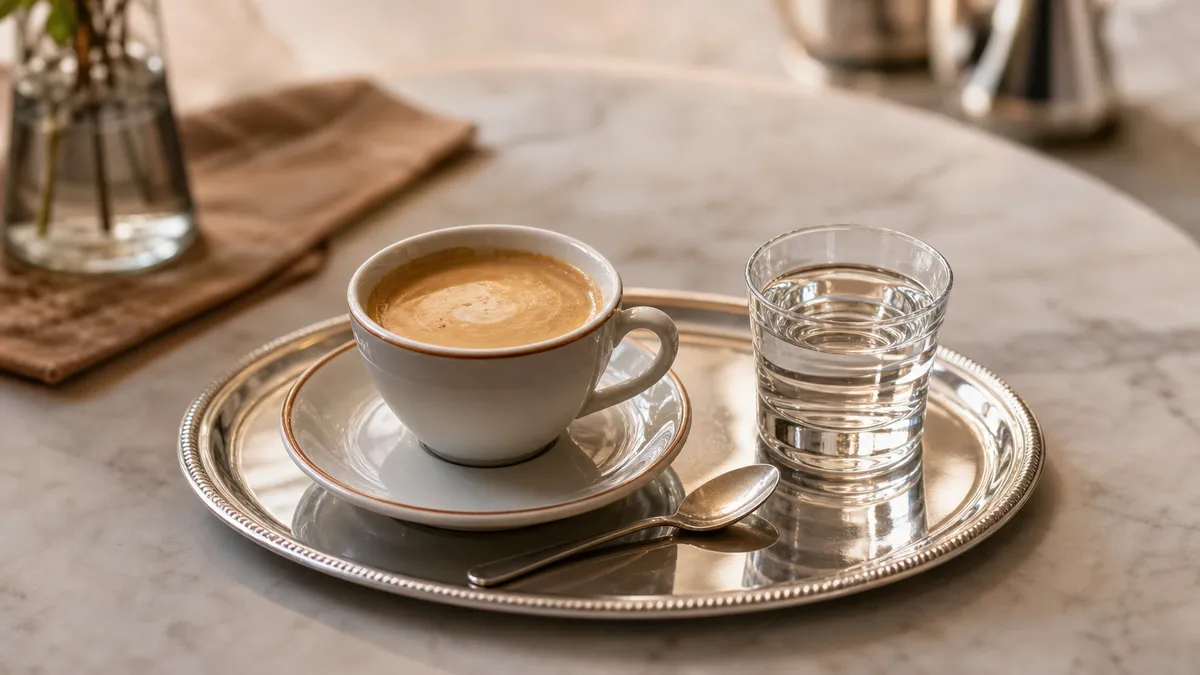
The table service is part of the experience. Coffee commonly arrives on a silver tray beside a small glass of water. That arrangement makes a modest order feel complete: a cup, a spoon, water and a place to sit, rather than a drink handed across a counter.
Newspapers are not merely decorative props. Reading belongs to the coffee house’s social purpose, alongside conversation, games and writing. Historical accounts describe patrons spending whole days in these rooms, sometimes playing chess or billiards, while artists and politically interested groups developed their own preferred meeting places.
Long stays remain part of the cultural ideal. The Viennese café operator Vollpension explicitly describes reading, working, sitting quietly and talking for hours as acceptable coffee house activities. Treat that as a tradition of hospitality, however, rather than permission to ignore a particular venue’s seating arrangements.
The waiter is another recognisable figure. The traditional term Ober refers to a waiter or headwaiter; Café Central’s own history remembers its celebrated Ober, Herr Jean. You do not need to perform an elaborate ritual as a visitor. A courteous greeting and a clear order are a better starting point than trying to imitate a theatrical version of local manners.
For a wider introduction before exploring individual traditions, start with our coffee culture guide.
What the UNESCO connection actually means
Viennese coffee house culture was added to Austria’s national inventory of intangible cultural heritage in 2011. The inventory is maintained by the Austrian UNESCO Commission, whose entry classifies it as a social practice in Vienna. This is national recognition, not an inscription on UNESCO’s international Representative List of the Intangible Cultural Heritage of Humanity.
The distinction matters because tourism descriptions sometimes shorten this to “UNESCO-listed”. The recognised element is the culture and its practices, not an international heritage designation awarded to every historic café building. When discussing its status, the national inventory entry is the more precise reference.
What to order in Vienna
A Wiener Melange is a useful first order if you enjoy coffee with milk. Vienna Tourist Board describes slightly lengthened espresso, warm milk and a topping of milk foam. Think of it as a local milk-coffee tradition, not a promise that it will reproduce your usual cappuccino exactly.
An Einspänner offers a more pronounced contrast between black coffee and whipped cream, traditionally served in a glass. A Franziskaner combines coffee, hot water and hot milk with whipped cream. The distinction to remember is the topping: milk foam on the Melange, whipped cream on these richer alternatives.
For something simpler, a kleiner Schwarzer is a small black espresso, also called a kleiner Mokka. A Verlängerter is espresso lengthened with hot water. In this context, Mokka does not automatically mean chocolate-flavoured coffee, so do not read it as the English-language drink name “mocha”.
Official descriptions themselves vary in how precisely they express the Melange’s proportions: Austrian National Tourist Office gives a half-coffee, half-milk description, while Vienna Tourist Board describes the ingredients and slight dilution. These are visitor guides rather than universal brewing specifications. Ask the café about its preparation if the amount of milk or the topping matters to you.
Parisian cafés and terrace culture
The classic Parisian terrace turns a café table towards the city. Its attraction is not simply outdoor seating, but the opportunity to pause while street life continues nearby. Paris’s official tourist office presents terraces as places to relax, meet friends and break a walk, ranging from prominent streets to tucked-away courtyards.
The boulevard terrace is the familiar image, but it is not the only version. A busy street-facing table and a sheltered neighbourhood square offer quite different experiences. Choose according to what you want to do: watch movement, talk without competing with traffic, or sit somewhere quieter. Paris’s terrace culture includes all of these settings.
Nor is the Parisian café necessarily a quick-stop alternative to Vienna. Paris by Mouth describes cafés as social spaces where people linger, with the counter offering another way to take a brief espresso. The contrast is therefore one of emphasis: Vienna’s reading-room atmosphere and Paris’s relationship with the street, rather than “slow” versus “fast”.
Literary associations are part of the appeal. Café de Flore and Les Deux Magots are prominent examples in Saint-Germain-des-Prés, linked with writers and artists in the official tourism account. Yet a famous name is not essential to the experience. For a first visit, consider giving an ordinary neighbourhood terrace as much attention as a celebrated address.
Paris should not stand in for every café in France. This guide uses its terraces and historic meeting places as a particular expression of French café culture, not a template that every French town or region must follow.
Understanding a French café order
In a traditional Parisian café, un café, un express or un café noir generally means espresso. You may also encounter petit noir, another name for a small black coffee. If you want a longer drink, specify it rather than expecting “coffee” to produce a mug-sized serving.
A café crème is a milk coffee, despite the name suggesting cream. France’s Institut national de la consommation describes espresso with milk; Paris by Mouth describes a milkier preparation. The useful ordering information is the same, but the exact balance is not guaranteed from one café to another.
A noisette is coffee with a small addition of milk, named for the resulting hazelnut-brown colour rather than a hazelnut flavouring. An allongé is a longer coffee; a déca is decaffeinated coffee. These words are more useful on a traditional menu than assuming that familiar international drink names describe identical recipes everywhere.
Café au lait is understandable, but it also carries associations with breakfast coffee at home, sometimes served in a bowl. For a milk coffee at a Parisian café, un café crème, s’il vous plaît is a practical starting phrase. Treat breakfast customs as context, not a rule forbidding you to order milk later.
A practical comparison
The criteria below are setting, use of time and a straightforward first order, not a ranking of coffee quality. The descriptions concern traditional establishments.
| Criterion | Viennese coffee house | Traditional Parisian café |
|---|---|---|
| Characteristic setting | Marble tables, bentwood chairs, reading spaces | Indoor tables, counter and often a terrace |
| Use of time | Reading, conversation, writing and an extended stay | A brief counter coffee or a lingering table visit |
| First milk-coffee order | Wiener Melange | Café crème |
| First black-coffee order | Kleiner Schwarzer | Un café or un express |
| Particularly suits | A reader wanting a settled indoor pause | Someone wanting conversation or a view of street life |
For either setting, use this simple visiting checklist:
- Decide what matters most. Choose the room or terrace before choosing a famous name.
- Explain your order plainly. Say whether you want black coffee, milk, milk foam or whipped cream.
- Ask when something matters. Check ingredients, seating arrangements or permission to work rather than assuming.
- Leave some time unplanned. Try reading or watching the street instead of treating the visit solely as a stop between sights.
The history behind the atmosphere
A short timeline helps separate documented developments from the impression that these cafés have always looked and behaved exactly as they do now.
- 1686: Le Procope dates its foundation in Paris to this year. Its own history associates the establishment with intellectual and literary company.
- 1720: According to the Austrian UNESCO Commission, Café Kramer became Vienna’s first coffee house to provide newspapers for customers.
- 1897: Café Griensteidl’s building was demolished, and its literary circle moved to nearby Café Central, according to the museum history The World of the Habsburgs.
- 2011: Viennese coffee house culture entered Austria’s national intangible cultural heritage inventory.
The deeper point is that cafés supplied more than refreshment. Shared tables, reading material and repeated encounters gave cultural groups somewhere to gather. Vienna’s literary circles and Paris’s celebrated café meeting places demonstrate that role, although neither should be romanticised as a space historically open to everyone on equal terms. The museum account of Vienna, for example, records the much smaller participation of women and separate ladies’ salons.
Tradition also coexists with change. Vienna Tourist Board distinguishes historic coffee houses from modern coffee bars, while Paris’s coffee scene includes specialist shops alongside traditional corner cafés. An old interior is not a brewing specification, and modern equipment does not prevent a sociable stay.
To explore other ways of making time for coffee, continue with Swedish fika or Australian café culture. Use these as comparisons, not as competing definitions of the “proper” coffee break.
FAQ
Is French café viennois the same as a Wiener Melange?
No. French café viennois generally means coffee topped generously with whipped cream, whereas a Wiener Melange is associated with warm milk and milk foam. The shared reference to Vienna can make the names confusing. Check the description rather than treating café viennois as a direct translation of Melange.
Can I visit a traditional coffee house on my own?
Yes. Reading, writing and sitting quietly are established parts of Viennese coffee house life, so company is not necessary to participate. A solo visit can be a useful way to notice the room and its rhythms. Choose a table that suits your purpose and respect any seating instructions from staff.
Does a historic café guarantee better coffee?
No. Historical significance tells you about a place’s cultural role, not how a particular cup will taste. Both cities have traditional establishments and specialist coffee shops. If preparation matters most to you, ask about the coffee and brewing method; if atmosphere matters most, choose the setting you want to spend time in.
Where to go next
For context around Viennese and French café culture, read Coffee Culture, then Swedish Fika and Nordic Coffee Culture for another approach to the coffee break. Japanese and Korean Coffee Culture and Australian and Melbourne Coffee Culture provide useful next comparisons of cafés, drinks and social habits.
Sources
-
Austrian UNESCO Commission, Viennese coffee house culture, inventory entry, inscribed 2011, undated webpage.
https://www.unesco.at/en/culture/intangible-cultural-heritage/inventory/element/article/viennese-coffee-house-culture -
Austrian National Tourist Office, Viennese Coffeehouse Culture, undated webpage, including coffee glossary.
https://www.austria.info/en-gb/inspiration/coffeehouse-culture/ -
Vienna Tourist Board, 10 amusing facts about the Viennese coffee house, undated webpage.
https://www.wien.info/en/dine-drink/coffeehouses/wiener-kaffeehaus-fun-facts-433242 -
Schönbrunn Group, The World of the Habsburgs, Julia Teresa Friehs, The Viennese coffee house, undated webpage.
https://www.habsburger.net/en/chapter/viennese-coffee-house -
Paris je t’aime, Paris Tourist Office, List of the best terraces in Paris, updated 15 June 2026.
https://parisjetaime.com/eng/article/sit-out-on-a-cafe-or-restaurant-terrace-a011 -
Institut national de la consommation, Tout ce que vous avez toujours voulu savoir sur le café, 7 March 2023. Drink definitions used, not its unrelated historical, statistical or health claims.
https://www.inc-conso.fr/content/tout-ce-que-vous-avez-toujours-voulu-savoir-sur-le-cafe -
Paris by Mouth, Ordering Coffee in Paris, 2013. Used for established ordering terminology and cultural context, not current availability claims.
https://parisbymouth.com/primer-ordering-coffee-in-paris/ -
Le Procope, Le Procope, undated official venue webpage.
https://www.procope.com/en/ -
Café Central, Café Central Wien seit 1876, undated official venue webpage. Historical material used, not opening arrangements.
https://cafecentral.wien/home/ -
Vollpension, Viennese Coffee House Etiquette for First-Time Visitors, undated official operator guide.
https://www.vollpension.wien/en/coffee-house-guide/etiquette/ -
Vienna Tourist Board, Viennese Cafés, undated overview of traditional and modern coffee houses.
https://www.wien.info/en/dine-drink/coffeehouses
Research combined the Austrian national heritage inventory, official tourism guidance, museum history, French consumer information and venue accounts, distinguishing historical customs from universal rules.
Last checked: November 2026