The Specialty Coffee Association (SCA) is a global, non-profit trade association that supports coffee through standards, education, research and events. It brings together people across the coffee industry, helping them develop shared ways to prepare, evaluate and discuss coffee.
In short
- The SCA formed in January 2017 through the unification of the American and European specialty coffee associations.
- Coffee Value Assessment (CVA) is its current framework for evaluating coffee, separating sensory description from judgements of quality.
- The SCA took over operation of the Q Grader programme from the Coffee Quality Institute on 1 October 2025.
- Its North American Specialty Coffee Expo adopted the World of Coffee name from 2026.
- The volunteer-led UK chapter represents UK-based members and organises national coffee championships.
What does the Specialty Coffee Association do?
Think of the SCA as a meeting point between coffee knowledge and professional practice. Its work includes technical standards, learning programmes, industry research and opportunities for people to meet and exchange ideas.
For a beginner, the useful distinction is that the SCA is an association, not a particular qualification. Joining it, completing one of its courses and holding an SCA-issued professional credential are different things.
Its reach also extends beyond baristas. Producers, traders, roasters, equipment businesses, educators and coffee enthusiasts all feature in its community. That breadth matters because decisions about coffee quality connect people who grow coffee with those who buy, roast and brew it.
If you are looking for a learning route rather than information about the organisation, start with our coffee education guide. Choose the skill you want to develop before choosing a certificate.
A short history: from SCAA and SCAE to SCA
The present association grew from two organisations on opposite sides of the Atlantic. The SCA’s own historical account gives this sequence:
- 1982: the Specialty Coffee Association of America (SCAA) was established by coffee professionals seeking a forum for discussion and quality standards.
- 1998: the Speciality Coffee Association of Europe (SCAE) formed at a meeting of European coffee representatives in London.
- January 2017: the two associations unified as the Specialty Coffee Association.
This explains why older books, brewing documents and equipment literature refer to SCAA or SCAE rather than SCA. Those initials can identify a predecessor organisation, not necessarily an unrelated authority.
However, an old document should not automatically be treated as the current standard. Check its publication date, purpose and whether a replacement exists, particularly when reading about coffee evaluation.
Standards: giving coffee a shared language
An industry standard is a documented set of requirements or guidelines that helps people perform a task consistently. The SCA publishes standards covering areas including coffee evaluation, brewing performance and professional competencies.
Their practical value is comparability. If two people assess coffee using different preparation and tasting procedures, it becomes harder to interpret their results. A shared procedure reduces avoidable differences in the method, even though it does not make every evaluator’s judgement identical.
Standards also make teaching more coherent. A trainer can explain a defined procedure, learners can practise it, and an assessment can test the relevant skills rather than rely entirely on an instructor’s personal preferences.
For readers, the useful question is not simply “Is this SCA approved?” Ask which standard, programme or certification is meant. Association membership, a course certificate and equipment certification provide different kinds of information.
The SCA separately lists certified home brewing equipment that has completed its testing requirements. That is a specific equipment programme, not a blanket endorsement of everything sold by the manufacturer.
Coffee Value Assessment: the current evaluation framework
Coffee Value Assessment, usually shortened to CVA, is the SCA’s current system for evaluating coffee. Instead of asking one score to communicate everything, it separates several kinds of information.
Its four complementary assessments address:
- Physical characteristics: properties of the coffee beans, including defects, size and moisture.
- Descriptive characteristics: the aromas, flavours, texture and aftertaste perceived by the evaluator.
- Affective judgement: the evaluator’s impression of quality, including preferences associated with a particular market.
- Extrinsic information: details beyond the sensory experience, such as traceability, processing information and certifications.
The crucial distinction is between describing something and valuing it. As an illustrative example, two tasters might agree that a coffee has a pronounced floral aroma but disagree about how desirable that character is.
Keeping those questions separate makes the disagreement clearer. Are the tasters perceiving different things, or do they prefer different things?
For the experienced reader, this is more useful than treating a tasting score as a complete description. CVA can bring together sensory observations and information about a coffee without pretending that they are interchangeable. The framework permits individual assessments or a combination, according to the information required.
Education: courses, diplomas and professional skills
The SCA’s education offering provides structured routes through different areas of coffee work. Its coffee skills courses include Introduction to Coffee and specialist study in Barista Skills, Brewing, Green Coffee, Roasting and Sensory Skills.
The specialist areas have progressive levels, allowing learners to build knowledge rather than begin with advanced assessment. The wider education offering also includes technical training for people working with coffee equipment.
The association provides the programme structure, while learners should check the particular course, trainer and delivery arrangements before enrolling. An introductory overview and a practical skills course serve different purposes, even when both belong to SCA education.
For home drinkers, a formal qualification is not automatically the best starting point. If your immediate goal is to improve a cafetière or filter brew, compare the learning objectives with those of home brewing workshops.
For professional development, separate a course certificate from a broader diploma pathway. Our guide to the SCA diploma covers that distinction without turning this organisational overview into a course catalogue.
Q Grader: what changed in 2025?
The SCA now operates the Q Grader programme. Management transferred from the Coffee Quality Institute (CQI) on 1 October 2025, with the evolved programme based on CVA.
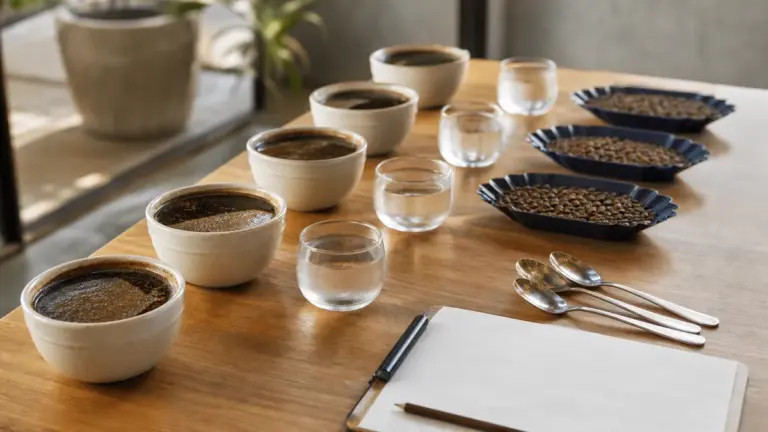
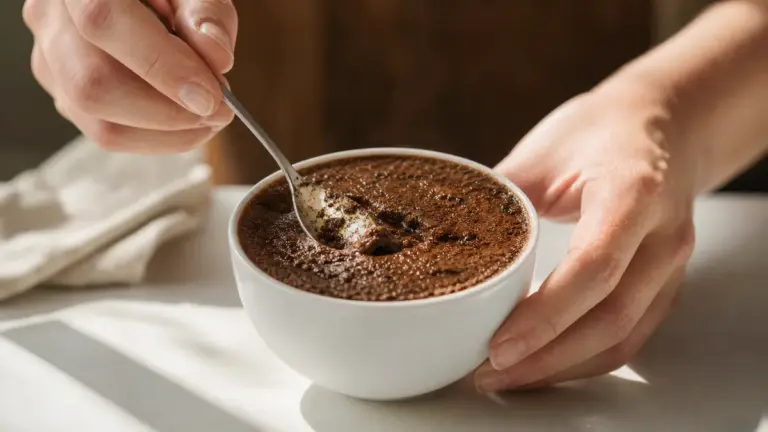
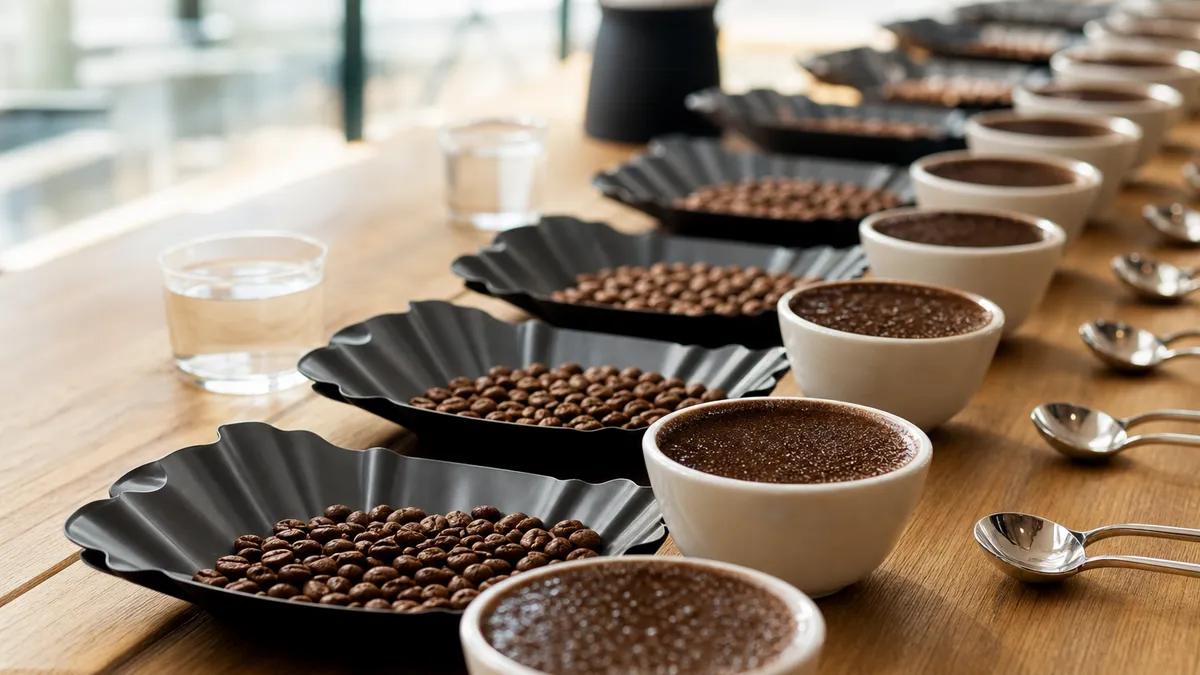
A Q Grader is a professional coffee evaluator, not simply someone who has attended an introductory tasting. The current SCA programme is aimed at people with experience in cupping, meaning structured coffee tasting, and sensory analysis.
The change concerns both administration and the framework taught. It should not be described merely as a new name for the same course, nor as the SCA taking over CQI as an organisation.
Older information can still explain the programme’s history, but prospective learners should use the current SCA requirements rather than assume that an older CQI course description remains applicable.
Events: World of Coffee and the former Expo
World of Coffee is the SCA’s international trade-show series. These events bring together businesses and professionals through exhibition stands, educational sessions, equipment demonstrations and coffee competitions.
The North American event previously called Specialty Coffee Expo adopted the World of Coffee name from 2026. The SCA’s rebranding announcement identified Houston in April 2025 as the final edition under the Expo name, followed by World of Coffee San Diego in April 2026.
This is a useful correction when reading older event listings: “Expo” and “World of Coffee” may refer to successive names for the North American show, rather than competing associations.
Before planning a visit, check the individual event’s programme and admission conditions. Decide whether your purpose is learning, meeting suppliers or watching a competition, then choose the sessions that support it.
Membership and the UK chapter
SCA membership is available to individuals and companies. Its current membership structure includes an Associate option, alongside other options with additional participation benefits.
Benefits vary by category. The SCA identifies research access, industry connections and, for eligible membership categories, voting rights among its offerings. Membership should not be confused with passing a professional assessment.
The SCA UK Chapter represents UK-based members. It is run by volunteers through an elected committee and a non-elected sub-committee.
Its stated primary activities include organising the UK national coffee championships, which lead into world championships, and sharing coffee knowledge. For UK readers, the chapter’s website, listed in Sources, is the direct starting point for its competition information and community updates.
Use the international SCA’s education resources when checking courses, and the UK chapter’s information when checking chapter activities. Keeping those routes separate helps avoid looking for a qualification in a competition listing.
How to use the SCA’s resources
Choose your starting point according to the question you need answered, not simply the visibility of an SCA badge.
| Your purpose | Useful starting point | What to check |
|---|---|---|
| Understand a technical procedure | Current SCA standards | Document title, date and scope |
| Develop a practical skill | SCA course information | Learning objectives, level and delivery |
| Explore professional evaluation | Current Q Grader information | Experience expected and assessment requirements |
| Meet industry businesses | Individual World of Coffee event | Exhibitors, sessions and admission conditions |
| Join UK chapter activities | SCA UK Chapter | Current announcements and participation rules |
Before relying on a claim such as “SCA trained”, ask what it means in full. Which course was completed, at what level, and what was assessed? Our guide to coffee certifications explains how to compare credentials.
The Specialty Coffee Association is most useful when you identify the particular resource behind its initials. A named standard, clearly described course or current event programme gives you something concrete to work with.
FAQ
Does SCA membership mean a business’s coffee is certified?
No. Membership and certification are different activities. Membership connects a person or business with the association and its relevant benefits; it does not, by itself, establish that a particular coffee has undergone a specified assessment. If a supplier makes a quality claim, ask which coffee, evaluation method and supporting record it concerns.
Do I need advanced tasting skills before studying with the SCA?
No, not for an introductory course. Introduction to Coffee provides a starting point, while specialist courses offer progressive study. Advanced professional evaluation is different: the SCA describes Q Grader as suitable for people with cupping and sensory experience. Match the starting level to your existing knowledge rather than the qualification you eventually want.
Why do some resources spell it “speciality” rather than “specialty”?
The current organisation uses “Specialty Coffee Association” as its official name, so that spelling is retained here. The former European association used “Speciality”, and the UK chapter’s website also uses that spelling in places. The difference in spelling alone does not establish whether a document is current or authoritative.
Where to go next
Read Coffee Education to choose a learning direction, then Coffee Certifications to understand what different credentials demonstrate. SCA Coffee Diploma explains the diploma route and how it differs from completing an individual course.
Sources
-
Specialty Coffee Association, “About the SCA”, undated, current page checked November 2026.
https://sca.coffee/about -
Specialty Coffee Association, “About SCA”, historical organisational account, undated, legacy SCA-hosted page.
https://sca.coffee/about -
Specialty Coffee Association, “Standards”, undated, current standards directory checked November 2026.
https://sca.coffee/research/coffee-standards -
Specialty Coffee Association, “Coffee Value Assessment”, undated, current framework overview checked November 2026.
https://sca.coffee/value-assessment -
Specialty Coffee Association, “Education: Courses”, undated, current course information checked November 2026.
https://sca.coffee/education/courses -
Specialty Coffee Association, “Education: Overview”, undated, current programme overview checked November 2026.
https://sca.coffee/education -
Specialty Coffee Association and Coffee Quality Institute, “The Specialty Coffee Association and the Coffee Quality Institute Announce Historic Partnership to Provide Better Support and Education to the Coffee Industry”, 24 April 2025, retrieved from the SCA’s hosted publishing platform.
https://tetra-pentagon-2dmy.squarespace.com/sca-news/2025/4/22/the-specialty-coffee-association-and-the-coffee-quality-institute-announce-historic-partnership-to-provide-better-support-and-education-to-the-coffee-industrynbsp-ng7ff -
Specialty Coffee Association, “Education: Q Grader”, undated, current programme checked November 2026.
https://sca.coffee/education/q-grader -
Specialty Coffee Association, “In 2026, Specialty Coffee Expo Will Rebrand as World of Coffee”, 8 April 2025.
https://sca.coffee/sca-news/2025/4/8/in-2026-specialty-coffee-expo-will-rebrand-as-world-of-coffee-in-2026-93zht -
Specialty Coffee Association, “Become a Member”, undated, current membership information checked November 2026.
https://sca.coffee/membership/about/ -
Specialty Coffee Association UK Chapter, “About Us”, undated, current chapter information checked November 2026.
https://scauk.coffee/pages/about-us -
Specialty Coffee Association, “SCA Certified Home Equipment”, undated, current certification directory checked November 2026.
https://sca.coffee/certified-home-brewer
This article was researched using retrieved SCA programme pages, its historical account, the SCA and CQI partnership announcement, and the UK chapter’s own information.
Last checked: November 2026