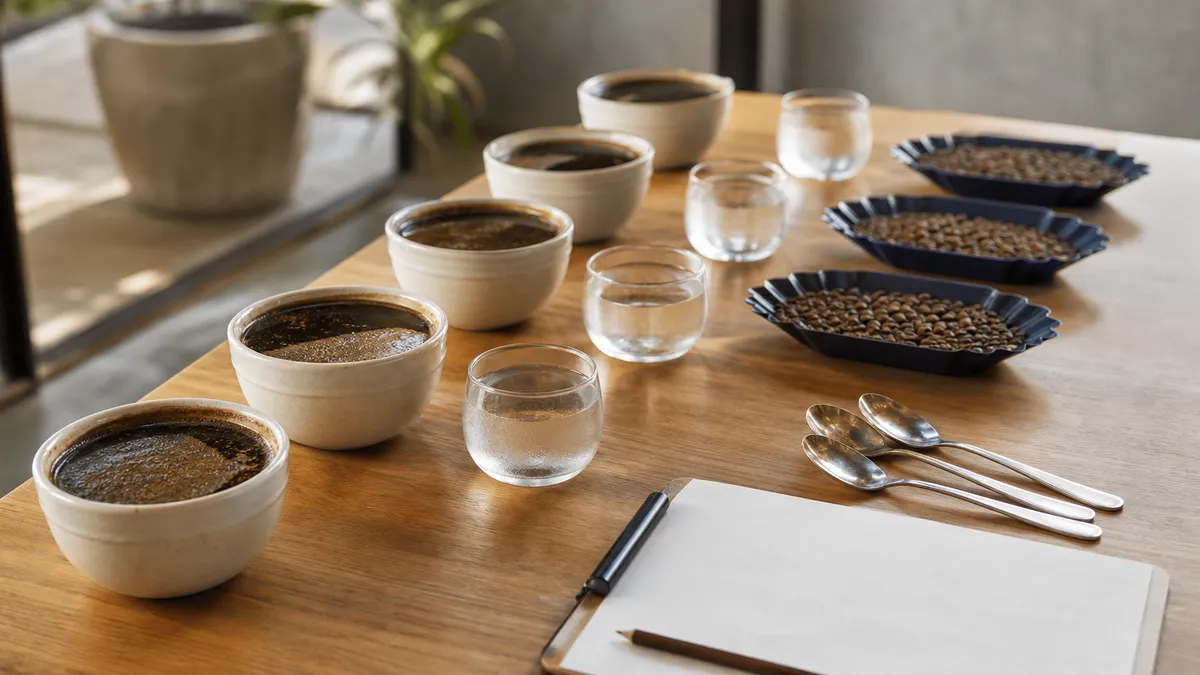
Coffee certifications include practical SCA certificates in barista work, brewing, roasting, green coffee and sensory evaluation, alongside specialist credentials for coffee assessment and processing. Choose by the work you want to do: the SCA Q Grader licence, previously administered through CQI, is for professional coffee evaluation, while CQI continues to offer post-harvest processing certifications.
In short
- The SCA Coffee Skills Program has five specialist subjects, each with Foundation, Intermediate and Professional levels.
- Brewing and Barista Skills are separate pathways: choose according to the preparation skills you need.
- The updated SCA Q Grader programme launched on 1 October 2025 and uses Coffee Value Assessment.
- CQI Processing Professional is a field-based certification for people working with coffee after harvest.
- Employer recognition is role-specific: a relevant credential can support an application, but should accompany evidence of practical ability.
Which coffee certifications suit your goal?
Start with a task, not a certificate collection. “I want to prepare consistent espresso”, “I need to assess incoming green coffee” and “I want to control production roasts” point towards different training.
The comparison below uses three criteria: what the programme assesses, the work it supports and its main limitation. These are suggested matches to the published curricula, not promises of employment.
| Your goal | Relevant route | Main focus | Main limitation |
|---|---|---|---|
| Prepare espresso-based drinks | SCA Barista Skills | Espresso, milk and service workflow | Not a specialist green coffee credential |
| Improve filter and other brewing | SCA Brewing | Recipes, extraction and strength | Not a substitute for espresso-service training |
| Work in roasting | SCA Roasting, supported by Sensory Skills and Green Coffee | Roast control and quality assessment | Training still needs workplace application |
| Evaluate and source green coffee | SCA Green Coffee; Q Grader where assessment is central | Grading, evaluation and buying knowledge | The routes assess different capabilities |
| Work with harvested coffee | CQI processing certifications | Processing methods and quality control | Professional study requires field participation |
Programme coverage is drawn from the awarding organisations; the suggested combinations are editorial guidance.
If you are still exploring the subject, use our coffee education guide to identify the skills you actually want to develop. There is little benefit in preparing for a demanding assessment before deciding how you will use it.
The SCA Coffee Skills Program explained
The Specialty Coffee Association, or SCA, runs the Coffee Skills Program, usually shortened to CSP. Its structure combines Introduction to Coffee with five specialist subjects: Barista Skills, Brewing, Green Coffee, Roasting and Sensory Skills. Each specialist subject has Foundation, Intermediate and Professional levels.
Think of these as separate skill pathways rather than a single course that qualifies you for every coffee job. Someone interested in roasting can concentrate on relevant production and evaluation skills without treating advanced milk preparation as their immediate goal.
The levels progress from basic concepts and execution towards analysis, troubleshooting and professional practice. Assessment requirements depend on the course, so ask for the current syllabus and assessment arrangements rather than assuming every level uses the same examination format.
Barista Skills or Brewing?
Barista Skills centres on espresso-based drinks, including milk preparation and workflow. Brewing covers brewing methods, control of extraction and measurement of coffee strength. Sensory Skills addresses tasting and evaluation, making it useful alongside either preparation pathway.
The distinction matters when reading course advertisements. If your problem is inconsistent batch brew, ask how much practice the course provides in recipe adjustment and measurement. If your goal is café service, ask about espresso preparation, milk handling and working efficiently.
Our barista skills guide covers that specific pathway in more detail.
Certificates and diplomas are different
An individual certificate records achievement in a particular course. An SCA diploma combines certificates across subjects into a broader pathway, with current routes covering café work, roasting, coffee trade and sustainability. It is not simply another name for an individual Professional-level certificate.
Before planning a sequence, check how your existing achievements fit the current requirements. Our coffee diploma guide explains the distinction without turning this article into a diploma-planning manual.
Roasting and green coffee qualifications
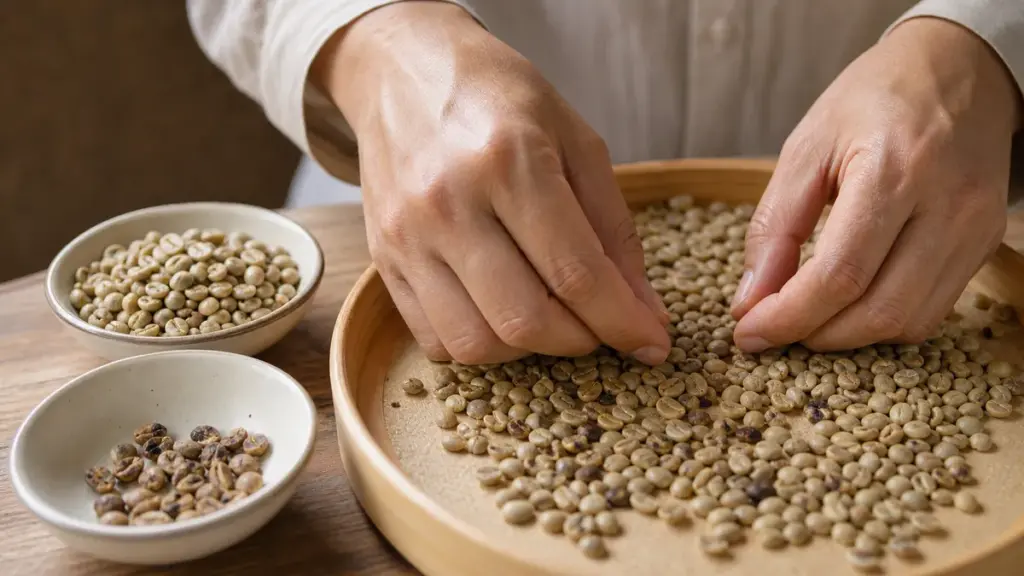
SCA Roasting and Green Coffee address neighbouring parts of the coffee chain, but their emphasis differs. Roasting covers roast development, equipment operation, consistency and production quality control; Green Coffee covers unroasted coffee evaluation, defects, processing and, at advanced levels, contracts and buying strategies.
For an aspiring roaster, my recommendation is to consider sensory development alongside machine-focused training. Being able to follow a roast profile, the recorded progression of a roast, is useful; being able to explain the resulting cup is what makes that information actionable.
Likewise, choose Green Coffee when your questions concern incoming samples, processing differences or purchasing decisions. Do not assume a roasting certificate demonstrates the same knowledge simply because both subjects involve beans before brewing.
Ask a prospective trainer what you will personally do: operate equipment, compare samples, identify defects or interpret records. Request a clear distinction between demonstrations you watch and tasks you practise and have assessed.
SCA Q Grader: what changed from CQI?
Q Grader is now administered by the SCA, not CQI. The updated programme launched on 1 October 2025, following the transition of programme management from the Coffee Quality Institute. Older references to “CQI Q Grader” describe its previous administration, not the current route for new candidates.
The evolved programme is built around Coffee Value Assessment, or CVA. This framework considers physical characteristics, sensory descriptions, judgements of cup quality and information about a coffee beyond the tasting experience. The credential is therefore more specific than a general coffee appreciation certificate.
The SCA currently describes a six-day course with nine assessments: eight practical evaluations and one written examination. Candidates must pass all required assessments, and the resulting licence is valid for three years, with continuing professional development required for renewal.
The intended audience already has experience in cupping, the structured tasting of coffee, and sensory analysis. If that does not describe you yet, develop those foundations first rather than treating Q Grader as an introductory tasting course.
For an existing holder, check your actual licence record and current SCA instructions before describing your status on a CV. Keep the awarding body, credential name and validity dates explicit.
CQI Q Processing and post-harvest certifications
CQI remains relevant to professional qualifications through its post-harvest processing education, historically branded Q Processing. This concerns how harvested coffee is handled and processed, rather than certifying someone primarily as a cup evaluator.
Its current progression includes Processing Generalist, Arabica Processing Professional, Canephora Processing Professional and Processing Expert. Older documents use labels such as Q Processing Level 1 and Level 2, so match the exact course and certificate rather than relying on the level number alone.
Processing Generalist is the more accessible route for understanding processing methods and their influence on coffee. CQI describes Processing Professional as a six-day, field-based course held in a producing country during harvest, with theoretical and practical assessment. Processing Generalist is a prerequisite for Professional candidates who do not work on farm-level coffee processing annually.
For a UK-based learner, ask whether you need processing knowledge to explain and select coffees, or direct competence in managing processing. Those are different objectives, and the field-based Professional route should serve a genuine practical purpose.
How employers recognise coffee certifications
Employer recognition exists, but it is not uniform. A closed Gather & Gather Coffee Specialist advertisement on Compass Group’s careers site described SCA accreditation as highly desirable, while also asking for barista expertise, coaching ability and communication skills. This is evidence of one employer’s stated preference, not proof of a universal hiring requirement.
Treat a credential as evidence to explain, not a badge that speaks entirely for itself. On your CV, give the subject, level, awarding organisation and completion date. For a renewable licence, include its current status.
Then connect it to relevant work. Prepare examples of recipes you have adjusted, quality checks you have completed or production problems you have investigated. Explain your method and outcome without claiming responsibilities you did not have.
If a vacancy requests a particular qualification, ask whether an equivalent credential or practical experience is acceptable. Do not assume that an industry certificate has a particular UK qualification-framework level unless the provider can document that claim.
A checklist before enrolling
Use this sequence to compare offers without getting distracted by impressive-sounding course names:
- Name the outcome. Write down the job or task you want to perform better.
- Identify the issuer. Confirm who awards the credential and the exact programme, subject and level.
- Check assessment. Ask whether successful completion means attendance, a written examination, practical assessment or a combination.
- Confirm readiness. Request current prerequisites and recommended experience in writing.
- Check practical access. Ask which equipment, coffees and facilities you will use, and what you must arrange yourself.
- Check the record. Establish how results and certificates are issued, and whether renewal applies.
- Get an itemised written quotation. Request the full arrangements for registration, assessment, materials, equipment access, retakes and any renewal obligations.
My recommendation is to choose the smallest relevant step that you can practise afterwards. For coffee certifications, a clear link between learning, assessment and real work is a better selection rule than the longest list of credentials.
FAQ
Can I study for a coffee certification online?
Some routes include distance learning, but delivery arrangements differ. SCA courses offer different combinations of remote and in-person learning, while CQI offers live online Processing Generalist study. Check the exact course listing, especially practical assessment arrangements, tasting requirements and equipment access. An online theory component does not tell you how the complete credential is assessed.
Does Processing Generalist make me a Q Grader?
No, Processing Generalist and Q Grader are different credentials. CQI’s processing education develops knowledge of post-harvest methods, while the SCA Q Grader licence assesses professional coffee evaluation using CVA. Choose according to your work, and describe the exact credential accurately rather than shortening either one to a vague claim of being “Q certified”.
Where can I find my CQI certificates?
CQI says its database profile holds course records, grades and non-expired certificates. Log into your existing profile and check the relevant records rather than creating a duplicate account. If a certificate is missing or your status is unclear, contact CQI before using it as evidence in an application or professional biography.
Where to go next
Read SCA Barista Skills for the espresso-service pathway, then SCA Coffee Diploma if you want to combine certificates into broader professional study. If your aim is better coffee at home rather than professional coffee certifications, Home Brewing Workshops is the more relevant next read.
Sources
-
Specialty Coffee Association, Coffee Skills Program, undated live programme page, checked November 2026.
https://education.sca.coffee/coffee-skills-program -
Specialty Coffee Association, Education: Courses, undated live course descriptions, checked November 2026.
https://sca.coffee/education/courses/ -
Specialty Coffee Association, Education: Diplomas, undated live programme page, checked November 2026.
https://sca.coffee/education/diplomas -
Specialty Coffee Association, Q Grader Courses Now Available Across Various Regions and Languages, 1 October 2025.
https://sca.coffee/sca-news/2025/10/1/q-grader-courses-now-available-across-various-regions-and-languages-zakzc -
Specialty Coffee Association, Education: Q Grader, undated live programme page, checked November 2026.
https://sca.coffee/education/q-grader -
Coffee Quality Institute, Post-Harvest Processing, undated live programme page, checked November 2026.
https://www.coffeeinstitute.org/education/processing -
Coffee Quality Institute, Course Progression, undated live education guide, checked November 2026.
https://coffeeinstitute.org/education/course-progression -
Coffee Quality Institute, PHP Program Guidebook, version 2.0, 2024. Used to identify legacy Q Processing names.
https://database.coffeeinstitute.org/api/s3proxy/get/coffee/files/9u7g4u15k7/PHP%20Program%20Guidebook%20v2.0%202024.pdf -
Coffee Quality Institute, FAQs, undated live guidance, checked November 2026.
https://www.coffeeinstitute.org/about/faqs -
Compass Group UK & Ireland, Coffee Specialist, closed Gather & Gather recruitment advertisement, closing date 14 February 2026.
https://www.compass-careers.co.uk/members/modules/job/detail.php?record=208643
This piece was researched using SCA and CQI programme documentation, with a primary employer advertisement used only as a specific example of hiring preferences.
Last checked: November 2026