Home brewing workshops are worth considering when you want practical feedback on making coffee with the equipment you actually use. Choose a course where you brew, taste and adjust the coffee yourself, rather than simply watch a demonstration: the useful outcome is knowing what to change when your next cup disappoints.
In short
- Match the syllabus to your brewer: a filter workshop may not include espresso or milk steaming.
- Compare class size, equipment sharing and individual brewing time, not duration alone.
- Ask for the full booking terms and an itemised written quotation, including equipment, materials and any extras.
- A home workshop does not need formal accreditation to suit your purpose, but any certification claim should be explicit.
- Aim to leave with a repeatable recipe, written notes and a clear method for adjusting flavour.
What home brewing workshops cover
A home brewing workshop is a short, practical class focused on preparing coffee outside a professional café setting. Published UK examples cover filter brewing, domestic espresso or a mixture of both, so the title alone is not enough to establish what you will learn.
For a broader map of learning routes, start with our coffee education guide. Here, the priority is choosing a short course that translates into a better daily brewing routine.
Filter coffee and manual brewing
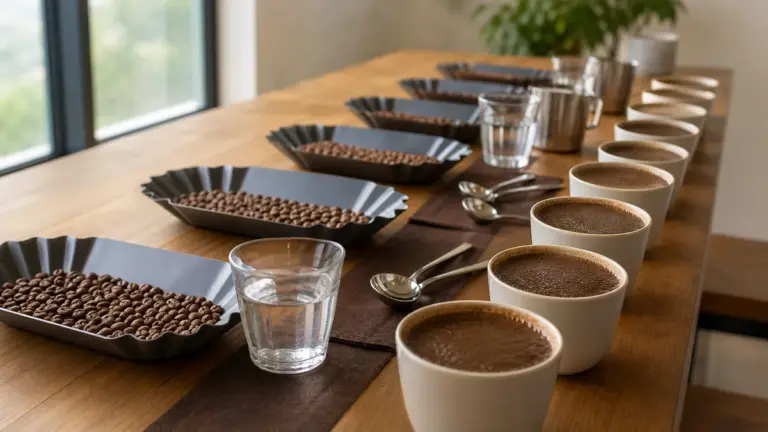
Look for a syllabus covering coffee dose, water quantity, grind size, brewing time and tasting. Dose means the weight of dry coffee; brew ratio describes the relationship between coffee and water by weight. Extraction is the process of dissolving substances from ground coffee into the brewing water.
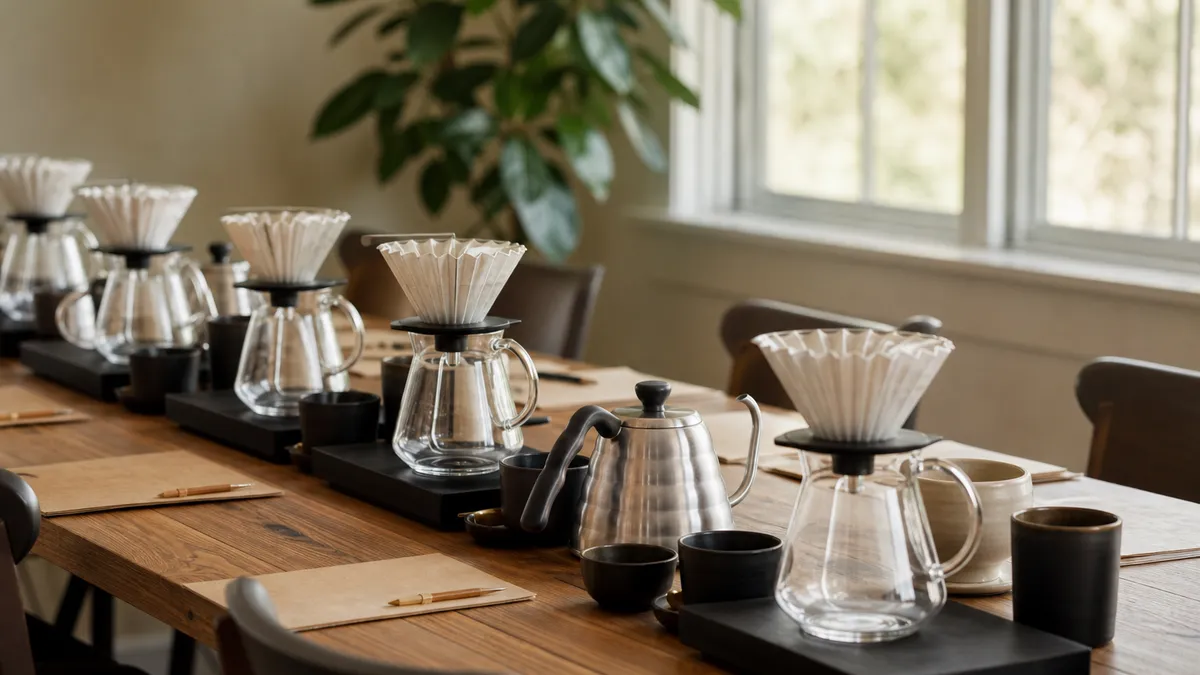
Prufrock’s published Home Brewing course covers immersion, pour-over and hybrid methods, with attention to brew ratio, grind size, brewing time and water. Immersion means steeping the grounds in water, as in a cafetière; pour-over means passing water through a bed of coffee and a filter.
Adams & Russell’s workshop similarly lists grind sizes, filter extraction, recipes, V60, AeroPress and cafetière brewing. These are useful syllabus details because they describe what participants will work on, rather than merely promising better coffee.
Ask whether you will compare brews made with different settings. Our recommendation is to favour a class that connects a change in preparation to a difference you can taste, then lets you repeat the exercise.
Home espresso and milk
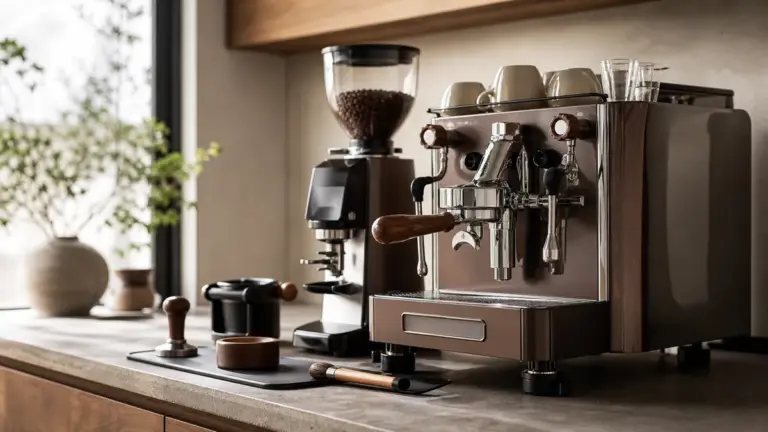
For espresso, look for grinder adjustment, dose, beverage yield, preparation of the coffee bed, cleaning and troubleshooting. Beverage yield is the weight of the finished espresso. “Dialling in” means adjusting the recipe and grinder to achieve the intended result.
FOCCO’s published home workshop includes these topics alongside milk texturing and troubleshooting. Kontext offers individual coaching using the participant’s own tank-fed espresso machine and grinder.
If cappuccinos or flat whites are your main interest, confirm that you will practise milk steaming yourself. If you only drink filter coffee, do not choose an espresso-heavy course simply because it sounds more advanced. Our barista training overview covers the wider training route without treating it as the default choice for home brewers.
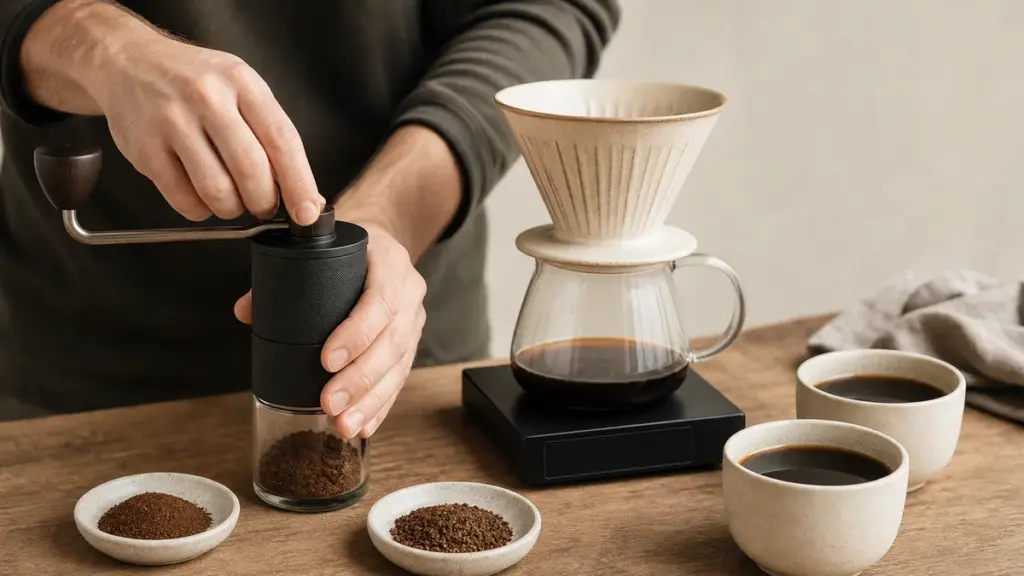
Which workshop format suits you?
Choose by relevance, opportunity to practise and access to feedback. The following table is a selection aid, not a ranking of providers.
| Format | Best suited to | Main advantage to seek | What to check |
|---|---|---|---|
| Small-group practical class | Beginners exploring brewing methods | Brewing and discussing results together | Attendees per working station |
| Individual coaching | A specific problem or familiar equipment | Feedback focused on your routine | Whether the session is genuinely tailored |
| Mixed filter and espresso class | Someone still choosing a brewing direction | Exposure to several approaches | Time spent on each method |
| Live remote tuition | Someone wanting guidance in their own kitchen | Feedback while using familiar equipment | Required kit, camera view and materials |
| Recorded lessons | Someone comfortable learning independently | Repeatable demonstrations | Whether personal feedback is included |
Published examples show why duration needs context. Adams & Russell lists a two-hour workshop for individual tuition or groups of up to four; Prufrock lists three hours with a maximum of six attendees. Voyager’s broader masterclass lists three and a half hours and includes home brewing methods, domestic espresso and milk skills.
Those are providers’ descriptions, not independently assessed measures of teaching quality. Ask how much of the session you will spend brewing rather than listening, and whether everyone can use the equipment without a long wait.
For remote tuition, request a kit list before committing. Ask how the trainer will observe your technique and discuss your results. A recording may be useful reference material, but do not assume it includes the corrective feedback of a live session.
How to judge the total commitment
Assess the whole booking, not just the headline course description. Ask what is included, what you must supply and whether any additional purchases are expected.
Request an itemised written quotation covering:
- Tuition, course materials and any assessment or certificate.
- Coffee, milk, filters and equipment used during the session.
- Any kit or ingredients required beforehand.
- Take-home coffee, recipes, notes and follow-up support.
- Travel arrangements or a trainer’s visit to your home, where applicable.
To compare your own total outlay, add the complete workshop quotation, travel and any required purchases, then compare that total with the teaching time and individual feedback offered. Do not count optional equipment as essential unless the provider explains why your existing setup cannot support the lesson.
For a shared booking, establish whether the quotation covers each participant or the whole group. Also check the VAT basis, cancellation terms, rescheduling arrangements and gift-voucher conditions in writing.
Our editorial view is that a relevant class with substantial personal practice is a stronger choice than a longer session dominated by demonstrations. A take-home bag of coffee is welcome, but it should not decide the booking.
Finding home brewing workshops in the UK
Start with roasters, coffee training centres and cafés that publish a dedicated education programme. Search for your location alongside the method you use, such as “cafetière workshop”, “home filter coffee course” or “home espresso coaching”.
The following are examples of published course descriptions checked in November 2026, not a ranked shortlist or a guarantee of available places:
- Prufrock Barista Training Centre: a filter-focused Home Brewing course covering several brewing methods, recipes, water and tasting.
- Adams & Russell: a Home Brewing Workshop covering grind size, extraction and manual methods, with individual or small-group formats.
- Voyager Coffee: a broader Brew at Home masterclass combining manual brewing, domestic espresso and milk skills.
- Kontext Coffee: individual home espresso coaching that explicitly invites participants to bring suitable equipment.
Use provider pages to establish the syllabus, then contact the organiser about your particular needs. A course listing is evidence of what is advertised, not proof that every participant receives the same experience.
If you want formal training, use the official course-finding route on the Specialty Coffee Association’s website. Check the specific module and level rather than assuming that any course taught by an SCA-qualified trainer awards an SCA certificate.
What to look for before booking
Use this checklist when comparing workshops. Clear, specific answers matter more than an impressive list of coffee terms.
- State your goal. Explain what you brew, what equipment you own and what you want to improve. Ask whether the lesson addresses that problem.
- Request the actual syllabus. Confirm whether it covers filter coffee, espresso, milk or a mixture, and how the practical time is divided.
- Check access to equipment. Ask how many participants share each grinder, brewer or machine, and whether everyone completes their own brews.
- Ask how feedback works. Will the trainer watch your preparation, taste the result and help you choose an adjustment?
- Check the trainer’s fit. Look for experience teaching home users and equipment relevant to yours. Credentials alone do not answer those questions.
- Confirm the practical arrangements. Discuss access, seating, teaching language, sensory needs and any dietary requirements before booking.
- Ask what you take away. Request usable recipes, preparation notes and a troubleshooting approach, plus clarity about follow-up support.
Be cautious if a provider cannot explain what you will practise, implies that equipment purchases are necessary without discussing your setup, or makes unclear accreditation claims.
A useful benchmark is whether you can describe the intended learning outcome in plain language: “I will learn to adjust my grinder and recipe”, for example, is more informative than “I will master coffee”.
Going beyond a recipe
For an experienced home brewer, ask for a workshop that distinguishes strength from extraction, rather than using both words to mean intensity. Strength concerns the concentration of dissolved coffee in the drink; extraction concerns how much material has been dissolved from the grounds.
The SCA’s published Brewing pathway includes measuring strength and extraction at Intermediate level, with water chemistry and recipe development appearing at Professional level. These topics provide a useful indication of deeper study, but they are not prerequisites for enjoying a home workshop.
Our recommendation is to ask for a controlled comparison: keep the coffee and preparation consistent, change one chosen variable, taste the results and record what happened. Then repeat the preferred preparation. This gives you a way to investigate your own brewing instead of collecting unrelated recipes.
For espresso, ask the trainer to explain which lessons transfer to your machine and which depend on the equipment used in class. See SCA barista skills if you want to understand the separate, structured espresso-training route.
Turning the lesson into a home routine
Before attending, send the organiser your brewer and grinder details, your usual recipe and a short description of the problem. Bring equipment only by agreement: Kontext, for example, specifies tank-fed rather than mains-plumbed machines for its bring-your-own coaching.
During the class, record the recipe in a form you can repeat. Note dry coffee and water weights for filter brewing; for espresso, record dry dose and beverage yield separately. Include grind setting, preparation, timing and your own flavour description.
Afterwards, repeat the agreed preparation before experimenting. Keep a brief record of the result and the next adjustment, rather than changing several things at once.
Judge home brewing workshops by what remains useful in your kitchen: a method you understand, a preparation you can repeat and a sensible next step when the result changes.
FAQ
Do I need to own equipment before attending?
No, provided the organiser supplies the equipment and accepts beginners. Prufrock lists no prerequisite skills for its Home Brewing course, while Kiss the Hippo says its workshop coffee and equipment are supplied. If you already own a brewer or grinder, send the details beforehand so the trainer can explain how the lesson relates to it.
Can I buy a workshop as a gift?
Yes, some providers explicitly offer gift bookings or vouchers. Before buying, check that the recipient can choose a suitable method, venue and date, and read the validity and cancellation terms. Avoid assuming that an espresso course suits every coffee enthusiast: someone devoted to cafetière brewing may prefer a manual-brewing session.
Will I receive a recognised qualification?
Only if the specific course includes one, so obtain confirmation before booking. Kiss the Hippo explicitly distinguishes its enthusiast workshops from SCA-accredited courses. A trainer’s qualification is not the same as a qualification awarded to participants. Our guide to coffee certifications explains the wider distinction without making certification a requirement for useful home tuition.
Where to go next
Read Coffee Education to place a short workshop within the wider learning routes, or Barista Training Programs if your goal extends into café work. SCA Barista Skills explains the structured espresso pathway, while Coffee Certifications helps you assess what a course’s credential actually means.
Sources
Provider pages below are undated unless stated otherwise. Their course details were checked in November 2026 and describe advertised provision, not independently tested teaching quality.
- Prufrock Barista Training Centre, Home Brewing, undated, checked 2026. Course description.
- Adams & Russell Coffee Roasters, Home Brewing Workshop, undated, checked 2026. Workshop description.
- Voyager Coffee, Brew at Home Coffee Masterclass, undated, checked 2026. Masterclass description.
- Kontext Coffee Company, BYO: Home Barista Coaching Session, undated, checked 2026. Coaching description.
- FOCCO Coffee Roasters, Home Barista Workshop, undated, checked 2026. Workshop description.
- Kiss the Hippo Coffee, Coffee Workshops & Courses, undated, checked 2026. Workshop descriptions and FAQs.
- Specialty Coffee Association, Education: Courses, undated, checked 2026. Official course structure and learning outcomes.
This article was researched by comparing published UK workshop syllabuses and booking information with the SCA’s official education descriptions; selection advice is editorial judgement, not a report of first-hand attendance.
Last checked: November 2026