To become a barista, apply for an entry-level role with workplace training; to become a roaster, look for supervised roastery work and develop production and tasting skills. Becoming a Q Grader is a later professional step: the SCA Evolved Q Grader route is designed for people who already have experience in cupping and sensory evaluation, not complete beginners.
In short
- Barista work offers a direct entry route, with customer service and teamwork alongside practical coffee skills.
- Roastery assistant and production roles can provide a route into roasting, although employers’ experience requirements vary.
- Choose training for the work you want to do, rather than collecting certificates without opportunities to practise.
- Q Grader is a professional licence supporting quality assessment, sourcing and roasting, not a guaranteed job.
- Compare UK employment offers using contracted hours, responsibilities, training and current statutory pay benchmarks.
Which coffee career suits you?
Start by choosing the working environment, not the most impressive qualification. Serving customers, managing a production process and evaluating coffee samples require overlapping knowledge but different daily habits.
The comparison below uses entry route, core work and working preference as its criteria.
| Path | Practical entry route | Core work | Best suited to |
|---|---|---|---|
| Barista | Direct application, workplace training or a relevant apprenticeship | Preparing drinks, serving customers, cleaning and stock handling | Someone who enjoys people and coordinated service |
| Roaster | Roastery assistant, production support or a trainee opportunity | Following roast profiles, recording batches, tasting and maintaining equipment | Someone who enjoys repeatable processes and careful adjustment |
| Q Grader | Existing cupping and sensory experience, followed by assessment | Evaluating and communicating coffee quality within another professional role | An experienced coffee worker pursuing quality, sensory or sourcing responsibilities |
These are not compulsory steps in a single ladder. You do not have to become a barista before seeking roastery work, and a good barista does not need to pursue Q Grader status.
For a wider map of learning routes, begin with coffee education. Use the career goal to decide what to learn next.
How to become a barista
Find an employer who teaches
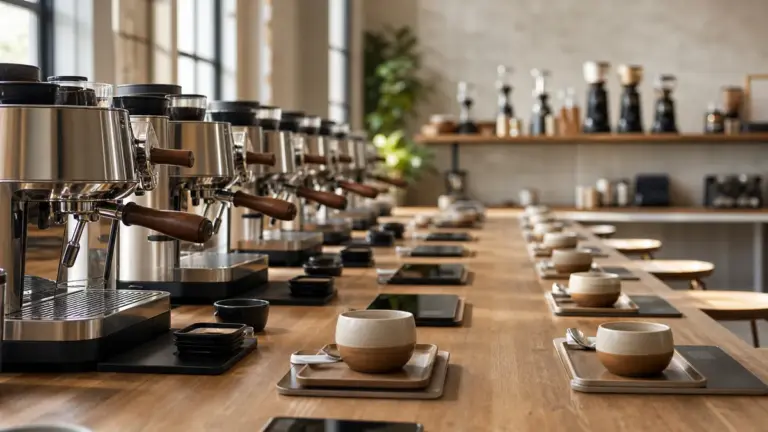
The National Careers Service identifies direct application as a route into barista work, with employers providing training in coffee preparation and product knowledge. Previous retail, catering or customer-service experience can help, but it is not the same as needing an existing coffee qualification.
When approaching an employer, ask who trains new starters, how supervised practice works and what competent performance looks like. A clear answer is more useful than a vague promise of “barista training”.
Relevant hospitality apprenticeships are another possibility. Check the programme available in your part of the UK, its actual coffee content and the employer’s training arrangements rather than assuming every hospitality apprenticeship provides specialist espresso instruction.
Learn consistency before decoration
Your initial training priorities should be:
- Service and teamwork: taking accurate orders, communicating clearly and keeping work moving.
- Espresso preparation: following a recipe and recognising when the result needs adjustment.
- Milk preparation: producing consistent texture and following the workplace’s safe handling procedures.
- Cleaning: completing the machine and workspace routines correctly.
- Workflow: repeating those tasks reliably while serving customers.
These priorities reflect the combination of service duties described by the National Careers Service and practical skills covered by SCA Barista Skills training.
Latte art can be satisfying, but make it one part of your practice rather than the whole objective. Ask a trainer to assess taste, consistency, cleanliness and service alongside appearance.
Build evidence of competence
For an application or development review, prepare examples rather than adjectives. Explain a customer problem you resolved, a cleaning responsibility you managed or an adjustment you made under supervision.
A useful practice record states the task, the feedback received and what improved. Keep workplace recipes and commercial information private unless your employer permits their use.
How to become a coffee roaster
Look beyond the job title
Search for roastery assistant, production assistant and trainee opportunities as well as “coffee roaster”. Read the duties closely: a role involving packing, stock handling and supervised roasting may offer a more suitable starting point than an experienced production vacancy.
Employer requirements genuinely differ. A historical Conscious Speciality roastery-assistant advert accepted applicants without previous roasting experience and offered training. By contrast, Extract Coffee Roasters’ published production-roaster description required experience in roasting, food production or manufacturing, with sensory qualifications listed as desirable.
Neither example establishes a universal entry requirement. They show why you should distinguish a training opportunity from a vacancy expecting independent production work.
Learn production as well as flavour
A roast profile is the planned pattern of a roast, including how its progress is controlled over time. Learning to follow and adjust profiles is part of roasting, but the surrounding production work matters too.
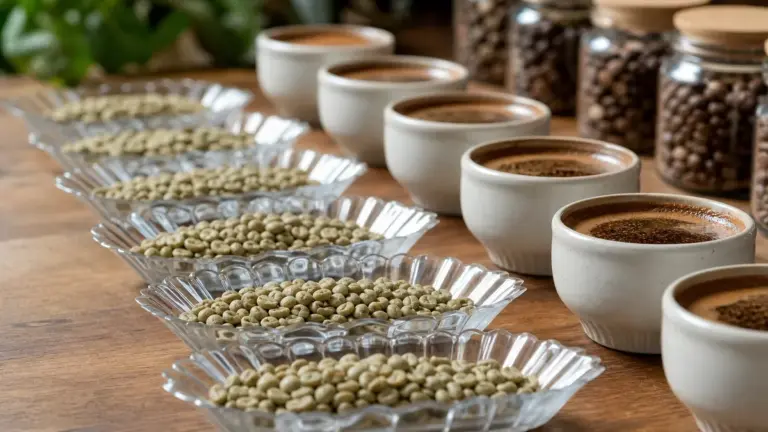
Extract’s role description includes batch records, cupping, preparing green coffee, packaging, inventory, cleaning and preventative maintenance. Green coffee means the unroasted seed that enters the roasting process.
Use that description as a reality check. Ask whether you would enjoy record keeping and repeated quality checks as much as tasting a particularly fragrant sample.
Develop a disciplined learning loop
A practical development plan is to:
- Observe the site’s operating and safety procedures.
- Follow an established profile under supervision.
- Record the batch and any authorised adjustments.
- Taste the result with the quality team.
- Discuss the evidence before deciding what to change.
This is a suggested learning method, not a universal employer procedure. Follow the site’s instructions and do not experiment independently with unfamiliar commercial equipment.
SCA Roasting training progresses from basic operation and profiles to heat transfer, production management and quality control. It can provide structure, but ask how you will practise afterwards.
How to become an SCA Evolved Q Grader
Understand the current route
The Specialty Coffee Association took over operation of the evolved Q Grader programme from the Coffee Quality Institute on 1 October 2025. The current route is based on the SCA’s Coffee Value Assessment, or CVA, a framework for assessing different aspects of coffee quality and value.
Older CQI material describes an earlier programme. It is historical guidance, not evidence of the current application or assessment requirements.
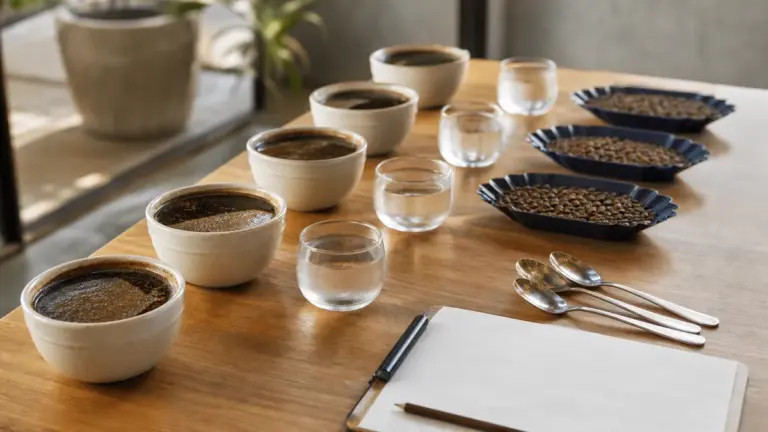
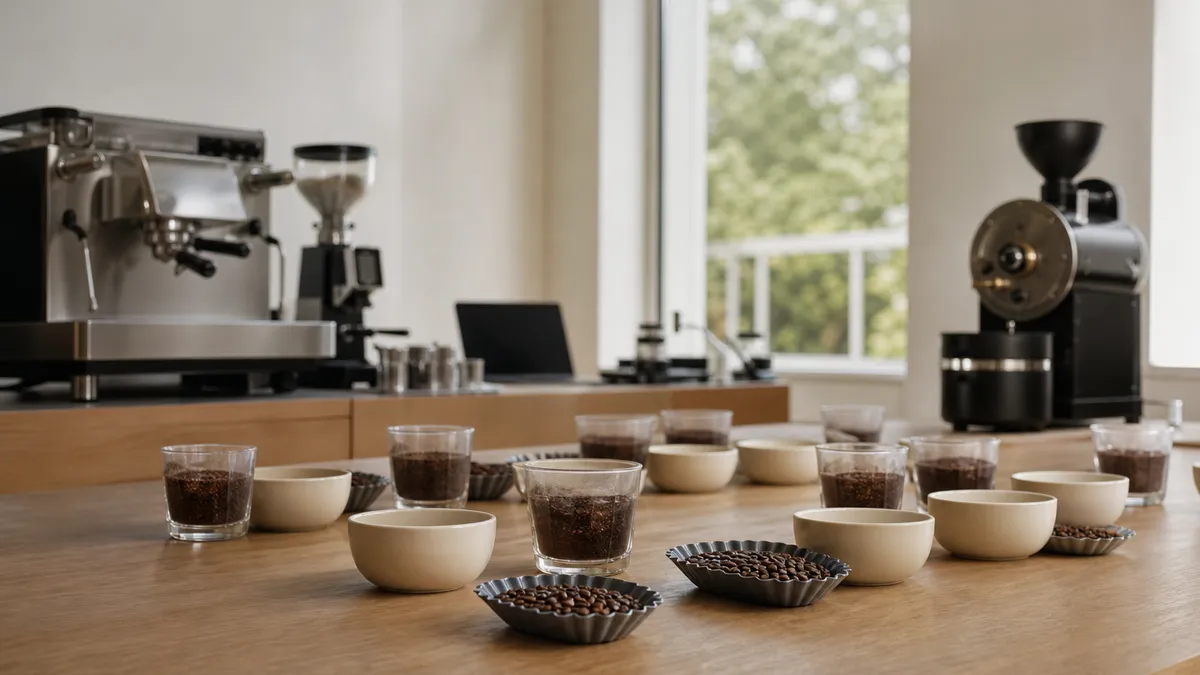
Prepare through repeated cupping
Q Grader is an advanced professional credential rather than a sensible first coffee course. The SCA identifies experienced cuppers, sensory evaluators and professionals in quality control, sourcing or roasting as its intended audience.
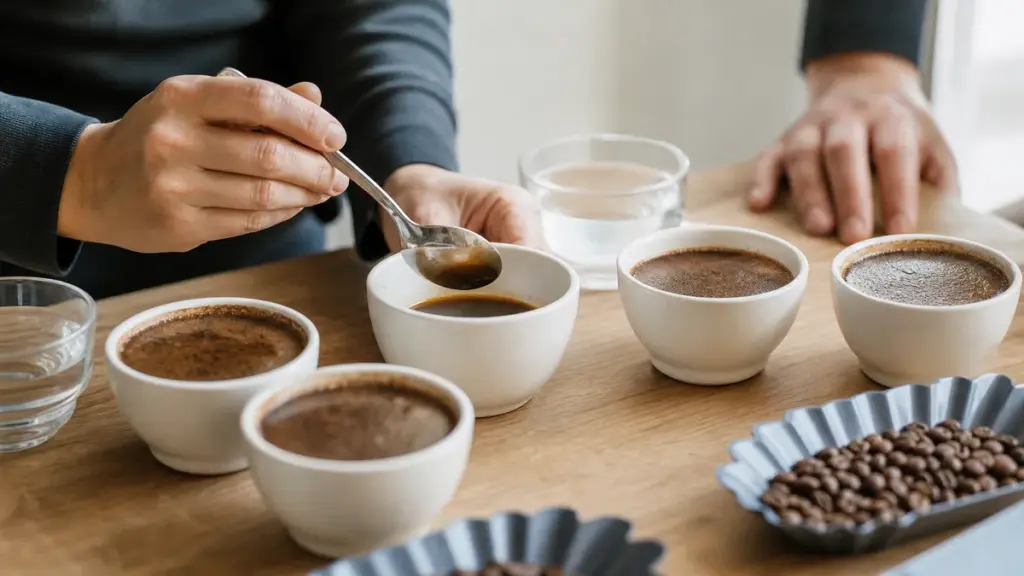
Cupping is a structured way of preparing and tasting coffee samples for comparison. Sensory evaluation means assessing characteristics through the senses; calibration means working towards consistent interpretation with other assessors.
Before committing, seek an instructor’s assessment of your readiness. Useful preparation includes repeated cupping, familiarity with CVA, clear descriptive language and experience comparing your observations with other tasters. Routine quality-control work offers a relevant setting for developing those habits.
Start with cupping and the flavour wheel if structured tasting is new to you.
Know what you are committing to
As checked in November 2026, the SCA describes a course lasting six consecutive days, with eight practical assessments and one written examination. Candidates must pass every assessment. The resulting licence lasts three years, with renewal through continued professional development.
Confirm assessment, retake and renewal arrangements directly before enrolling. See q grader certification for the dedicated qualification guide.
Choose training that closes a real skills gap
The SCA offers specialist learning in Barista Skills, Brewing, Green Coffee, Roasting and Sensory Skills, with Foundation, Intermediate and Professional levels. That structure allows you to target a weakness rather than treating every module as compulsory.
For a new barista, practical preparation and cleaning may be the priority. For a production worker moving towards roasting, profile control and sensory evaluation may be more relevant.
Before booking, ask:
- What should I already be able to do?
- How much supervised practice will I receive?
- How are practical skills assessed?
- Is this an attendance certificate or an assessed qualification?
- Where can I practise after the course?
Request an itemised written quotation explaining tuition, materials, assessments and any retakes. Keep the qualification choice separate from assumptions about employment: completing a course is not the same as demonstrating competence in a particular workplace.
UK pay: use dated benchmarks carefully
For UK pay comparisons, use the Office for National Statistics’ Annual Survey of Hours and Earnings, ASHE, alongside the current government minimum-wage guidance.
As checked in November 2026, ASHE Table 14 provides 2026 provisional and 2025 revised editions, released on 22 October 2026. It reports employee earnings by occupational group, including separate full-time and part-time measures. A publication date and reference year are not interchangeable.
ONS identifies baristas within SOC 9266, coffee shop workers. That is an occupational group, not a separate specialist salary scale for every barista grade. Do not present a general coffee-shop figure as a precise head-barista benchmark.
For head baristas, compare supervision, staff training and quality responsibilities. For production roasters, compare independent machine operation, production duties and quality-control expectations. For green buyers, examine the actual sourcing and commercial responsibilities rather than borrowing a roaster’s benchmark.
Use current employer adverts and written offers for those specific comparisons, stating their location and date. This guide does not reproduce monetary pay figures.
The statutory rates applying from 1 April 2026 depend on age and apprenticeship circumstances. The National Living Wage applies from age 21; it is a legal minimum, not a measure of specialist competence or progression.
Progression: take on responsibility, not just another title
The National Careers Service lists management, staff training, equipment maintenance, tasting and buying among possible directions from barista work. Choose the direction you actually enjoy rather than assuming management is the only successful outcome.
Within roasting, SCA training distinguishes basic operation from advanced profile design, production management and quality control. Use those capabilities to discuss progression with an employer, while recognising that job titles differ between businesses.
Q Grader status can support quality, sensory, roasting and buying roles. It does not replace the other capabilities a position requires.
To become a barista, roaster or Q Grader, make your next step specific: a supervised task, a relevant application or an instructor-led readiness assessment. Ask what evidence would show you are ready for greater responsibility.
FAQ
Do I need a degree to enter coffee work?
A degree is not a standard academic entry requirement for barista work. ONS describes coffee-shop work as having no formal academic entry requirements, with training typically received on the job. For roasting, inspect each vacancy’s requirements rather than assuming one rule applies across employers. The examples researched here show different expectations for assistant and production positions.
Can home coffee experience help an application?
Yes, use it as evidence of interest and a willingness to practise, rather than presenting it as commercial experience. Describe what you have learnt, how you record results and how you respond to feedback. Then ask for workplace training in the employer’s equipment, procedures and production or service expectations.
Does becoming a Q Grader guarantee a green-buying job?
No, Q Grader is a quality-assessment credential, not a job placement. The SCA identifies green buying as one role the licence can support, while its Green Coffee training also covers contracts and buying strategies. Read the complete job description and develop the other required capabilities rather than relying on the credential alone.
Where to go next
Read Coffee Education to place your chosen career within a broader learning path, then How to Taste Coffee: Cupping and the Flavour Wheel to begin structured sensory practice. If professional evaluation is your goal, Q Grader Certification explains the qualification in greater detail.
Sources
-
National Careers Service, “Barista”, live career profile, checked November 2026.
https://nationalcareers.service.gov.uk/job-profiles/barista
Used for entry routes, workplace skills, duties and progression. -
Extract Coffee Roasters, “Production Roaster”, undated employer role description, vacancy marked filled, checked November 2026.
https://extractcoffee.co.uk/work-with-us/production-roaster/
Used for production duties and an example of employer requirements, not as an available vacancy. -
Conscious Speciality, “Careers: Production roaster / roastery assistant”, historical advert referring to July 2025, checked November 2026.
https://consciousspeciality.com/careers
Used only as evidence of an entry route accepting applicants without roasting experience. -
Specialty Coffee Association, “Education: Courses”, live programme overview, checked November 2026.
https://sca.coffee/education/courses
Used for course areas, levels and learning outcomes. -
Specialty Coffee Association, “Education: Q Grader”, live programme requirements, checked November 2026.
https://sca.coffee/education/q-grader
Used for audience, assessment structure, licence duration and renewal. -
Specialty Coffee Association, “The Specialty Coffee Association and the Coffee Quality Institute Announce Historic Partnership to Provide Better Support and Education to the Coffee Industry”, 2025, official legacy website.
https://tetra-pentagon-2dmy.squarespace.com/sca-news/2025/4/22/the-specialty-coffee-association-and-the-coffee-quality-institute-announce-historic-partnership-to-provide-better-support-and-education-to-the-coffee-industrynbsp-ng7ff
Used for the operational transfer date and CVA basis. -
Office for National Statistics, “Earnings and hours worked, occupation by four-digit SOC: ASHE Table 14”, 2026 provisional and 2025 revised editions, released 22 October 2026.
https://www.ons.gov.uk/employmentandlabourmarket/peopleinwork/earningsandworkinghours/datasets/occupation4digitsoc2010ashetable14
Used for the available editions and scope, not for monetary estimates. -
Office for National Statistics, “Standard Occupational Classification 2020, Volume 1: Structure and descriptions of unit groups”, 2024 revision, unit group 9266.
https://www.ons.gov.uk/file?uri=%2Fmethodology%2Fclassificationsandstandards%2Fstandardoccupationalclassificationsoc%2Fsoc2020%2Fsoc2020volume1structureanddescriptionsofunitgroups%2Fsoc2020volume1structureanddescriptionofunitgroupspdf16102024.pdf
Used for barista classification and academic entry requirements. -
GOV.UK, “National Minimum Wage and National Living Wage rates”, rates applying from April 2026, checked November 2026.
https://www.gov.uk/national-minimum-wage-rates
Used for age and apprenticeship distinctions; monetary rates are not reproduced.
Research combined official career guidance, qualification-provider documentation, ONS dataset information and clearly identified employer role descriptions; practical development suggestions are editorial guidance, not first-hand testing.
Last checked: November 2026