Coffee brewing methods are easiest to understand by how water meets the grounds: it flows through them, steeps with them, is driven through under pressure, or is heated with them in a pot. Cold brewing describes temperature rather than a separate extraction mechanism, so cold coffee can be made by either immersion or percolation. Choose first by the texture and concentration you enjoy, then by how much attention you want to give the process.
In short
- Read ratios carefully: filter and immersion recipes compare dry coffee with brewing water; espresso compares dry coffee with the finished drink.
- Paper-filtered brewing generally gives a clearer cup; mesh filtration leaves a heavier texture and more sediment.
- A cafetière steeps before filtering, while an AeroPress combines steeping with pressure-assisted filtration.
- Published recipes are starting points, not compulsory settings. Grind, temperature and time need to work together.
- Separate hands-on effort from waiting time: an overnight brew can require less attention than a short manual pour.
How coffee brewing methods fit together
Extraction means dissolving substances from ground coffee into water. The useful distinction is what happens during that contact, not the shape or brand of the brewer. Some devices combine several principles, so these are overlapping families rather than sealed compartments.
- Percolation: water passes through a bed of grounds and carries dissolved material away. Pour-over and automatic drip are familiar examples.
- Immersion: grounds steep in the brewing water before separation. A cafetière is the straightforward example.
- Pressure-assisted brewing: pressure moves liquid through grounds or a filter. Espresso, moka and AeroPress belong here, although their pressures and brewing sequences differ.
- Decoction: coffee and water are heated together in a vessel. Turkish coffee is the principal example covered here.
- Cold brewing: extraction without hot brewing water, using immersion, dripping or another circulation system.
Siphons and steep-and-release drippers show why the overlap matters: both include a steeping stage followed by filtration. The brewing methods hub provides the route into individual techniques once you have chosen a family.
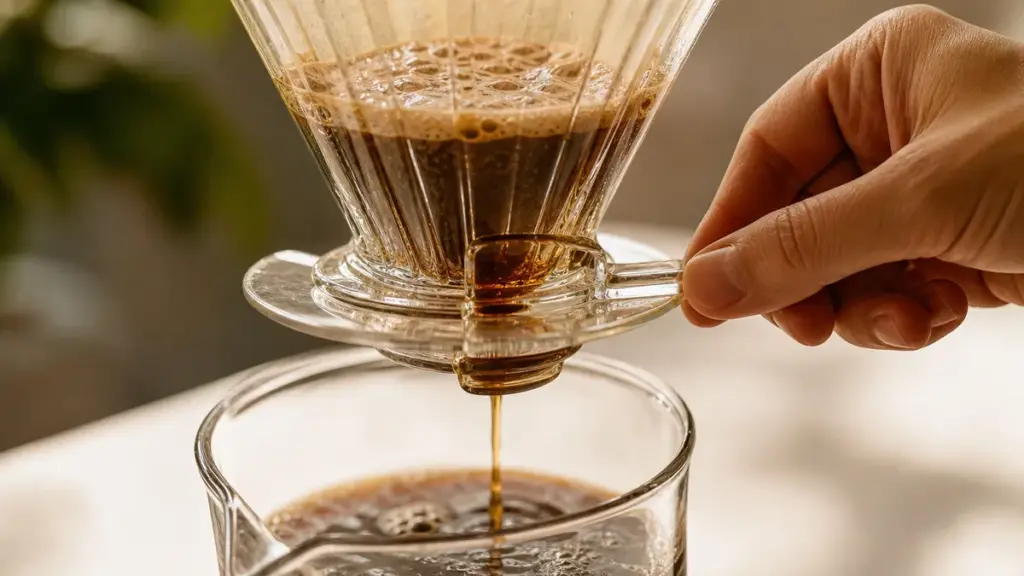
Coffee brewing methods compared
The table compares representative recipes, not fixed definitions. Ratios are coffee to water by weight, except espresso, which is dose to beverage yield by weight. Where a manufacturer’s guide measures water in millilitres, the suggested weighed-water version below is a practical adaptation.
Times exclude heating unless stated. Flavour descriptions indicate likely texture and concentration, not flavours guaranteed by the equipment.
| Method | Example ratio | Grind starting point | Brewing time | Likely cup |
|---|---|---|---|---|
| Automatic drip | 55 g to 1,000 g water, about 1:18.2 | Medium, adjusted to brewer | Machine-dependent | Paper-filtered clarity; easy sharing |
| Pour-over | 15 g to 250 g, about 1:16.7 | Medium | 2½ to 3 minutes | Clear, with distinct flavour detail |
| Cafetière | 56 g to 850 g, about 1:15.2 | Coarse | 4 minutes, then press | Heavy-bodied, some sediment |
| Steep-and-release dripper | 20 g to 240 g, 1:12 | Medium | 2 minutes steeping, then drain | Paper-filtered, relatively concentrated |
| AeroPress | 17 g to 260 g, about 1:15.3 | Fine in this published recipe | 50 seconds steeping, 20 seconds pressing | Filtered cup with adjustable strength |
| Espresso | 18 g in, 36 g out, 1:2 | Fine | 25 to 35 seconds | Concentrated, substantial texture |
| Moka pot | 25 g to 250 g, 1:10 in one study | Fine, suitable for moka | Manufacturer example: 3 to 6 minutes including heating | Stronger than typical filter coffee |
| Turkish coffee | 8 g to 80 g, 1:10 in one study | Fine | About 2 minutes 10 seconds to 2½ minutes in that study | Concentrated, with grounds left in the cup |
| Siphon | 23 g to 350 g, about 1:15.2 | Coarse in Hario’s featured recipe | About 2 minutes brewing | Filtered immersion; texture depends on filter |
| Cold immersion | 55 g to 700 g, about 1:12.7 | Medium-fine in Hario’s bottle recipe | 8 hours refrigerated | Rich, comparatively mellow |
Recipe sources: SCA for automatic drip; Hario for pour-over, steep-and-release, siphon and cold immersion; Stumptown for cafetière; AeroPress’s published competition recipe for AeroPress; La Marzocco for espresso; Bialetti and experimental research for moka; experimental research for Turkish coffee. These examples deliberately show that successful recipes do not share one universal ratio or grind.
Percolation: water flowing through coffee
In gravity brewing, fresh water enters the bed while brewed liquid drains away. Grind therefore affects both extraction and resistance to flow: making the particles smaller can increase contact with water but also slow drainage. Uneven flow can leave different parts of the bed extracted differently.
Automatic drip handles water delivery for you. Pour-over makes the person brewing responsible for its timing and distribution. Neither is inherently superior: choose automation for repeatable routines and manual pouring when you enjoy controlling the process. Read drip brewing for the automated approach, or pour-over for manual technique.
An old-fashioned percolator is a particular appliance, not a synonym for every percolation method. Its pump tube delivers liquid from the pot to the basket, allowing repeated circulation. Use coarse coffee and its own dosing instructions rather than importing a pour-over recipe: Cuisinart’s example runs for approximately ten minutes, demonstrating how different the cycle can be.
Immersion and hybrid methods: steep, then separate
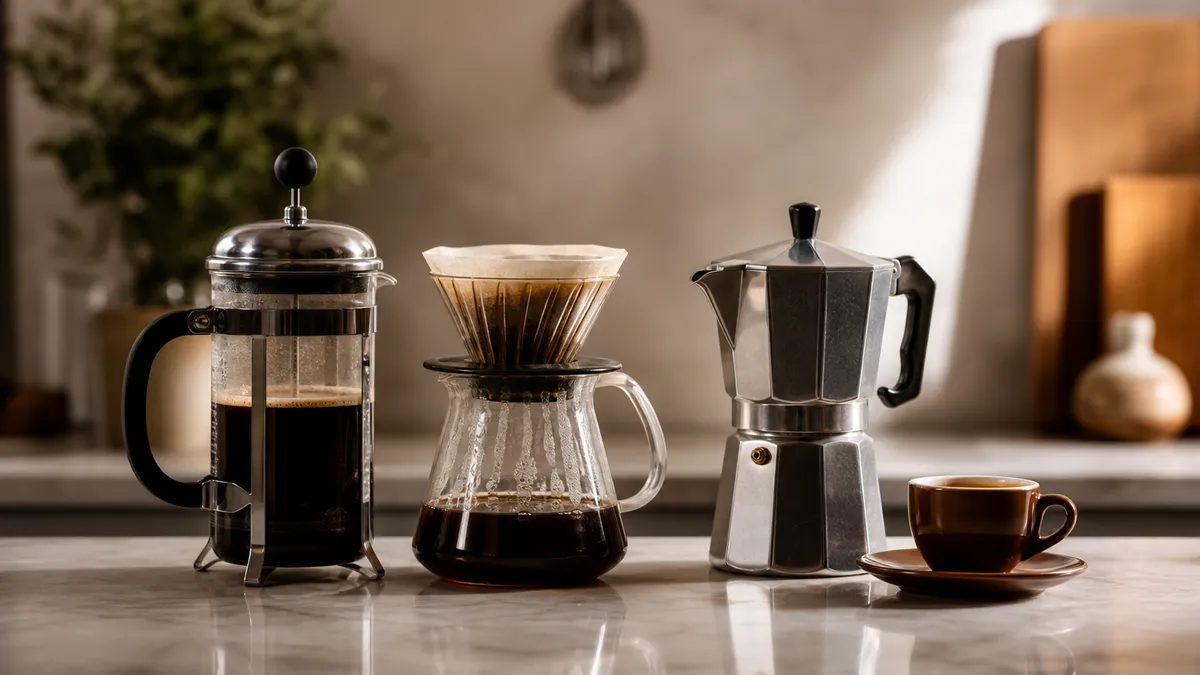
A cafetière, also called a French press, holds coffee and water together before its mesh plunger separates most grounds from the drink. The plunger is a filter, not an espresso piston. Its heavy-bodied cup suits readers who value texture more than a completely sediment-free finish.
A steep-and-release dripper holds the mixture behind a valve, then drains through paper when opened. This separates the steeping period from the final drawdown, although grind still affects drainage. Hario explicitly encourages adjusting both grind and steeping time rather than treating its supplied recipe as compulsory.
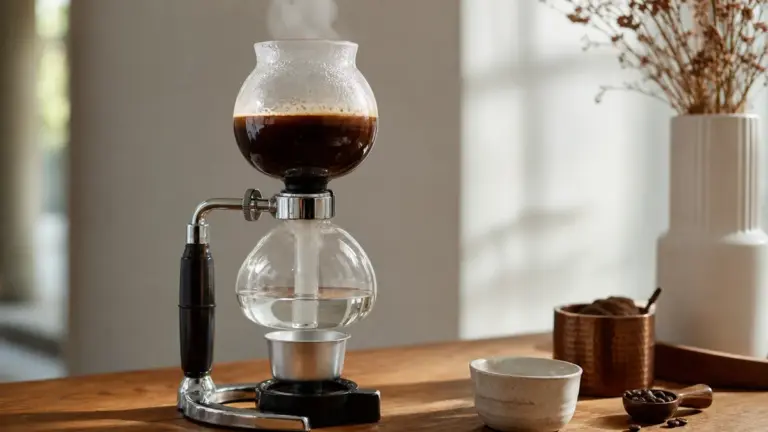
A siphon uses pressure changes to move water between chambers. Coffee steeps in the upper chamber, then passes through a filter during drawdown. It suits someone who enjoys an involved brewing ritual, but the heat source, glassware and filter add handling and cleaning steps.
Pressure-assisted brewing: espresso, moka and AeroPress
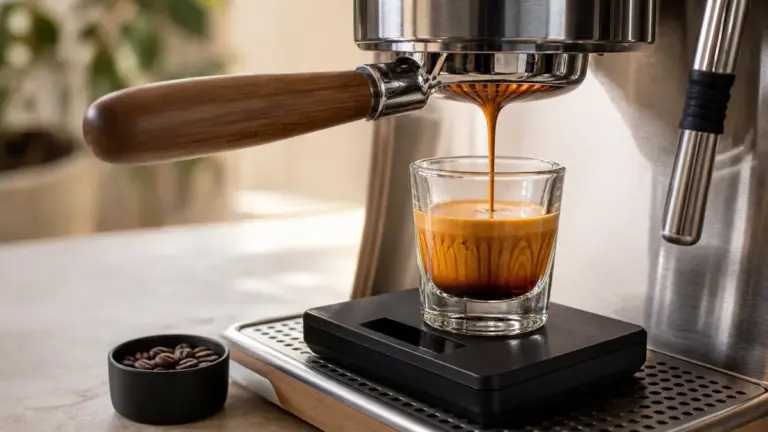
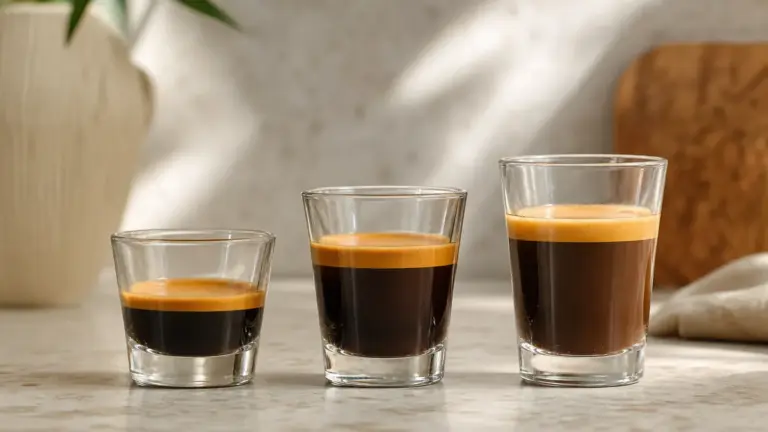
Espresso drives brewing water through a compacted bed of finely ground coffee. Its defining practical difference is concentration: weigh the liquid leaving the machine, not just the water entering it. An 18 g dose producing 36 g of espresso is a 1:2 dose-to-yield ratio.
A moka pot uses heat-generated pressure to move water upwards through its coffee basket. It produces concentrated coffee, but its recipe and operation should not be treated as interchangeable with espresso. The table’s 1:10 example belongs to a particular study setup: for your pot, the basket and safe water level govern filling. Bialetti specifies water below the safety valve and loose grounds without tamping.
An AeroPress commonly combines immersion with a manually pressed filtration stage. Its flexibility explains the wide recipe variation: the table uses one published recipe, not an official optimum. Changing the water quantity or adding dilution afterwards changes concentration without requiring an espresso-style extraction.
Decoction: heating coffee and water together
Turkish coffee is prepared by heating fine grounds with water in a small pot, often called a cezve or ibrik. Unlike a cafetière or dripper, it is served without removing the grounds through a separate filter, so sediment is part of the drinking experience.
The table’s ratio and timing come from a laboratory preparation, not a universal traditional recipe. Pot size, batch size and heating method affect the process. Treat the figures as a comparison point, and follow a complete recipe for the particular pot rather than assuming that longer boiling improves extraction.
Cold brewing: temperature, not a fifth mechanism
Cold immersion leaves grounds in water before filtration; cold percolation moves water through them. Experimental research has directly compared cold immersion with circulated, percolated cold extraction, supporting the distinction between brewing temperature and extraction mechanism.
Do not assume every cold brew is a concentrate. Hario’s bottle recipe produces coffee intended for drinking directly, while other preparations use dilution. Record the original coffee and water weights separately from anything added afterwards.
For a simple home preparation, follow a refrigerated recipe using clean equipment. Hario specifies refrigerated brewing and storage for its bottle; UK food guidance recommends a fridge between 0 and 5°C. That general chilling advice is not a cold-brew shelf-life validation, so do not infer that a homemade batch will keep indefinitely.
Choosing by taste and effort
Start with texture, then concentration, then workflow. These recommendations are editorial judgements based on the brewing sequences above, rather than results from comparative product testing.
- For clarity: begin with paper-filtered drip or pour-over. Choose drip if you want the machine to deliver the water.
- For a substantial, sediment-tolerant cup: try a cafetière. Accept the grounds handling as part of the routine.
- For concentrated drinks: choose espresso if you want to learn dose, yield and grind adjustment; consider moka if you prefer a hob-based process.
- For steeping without manual pouring: consider a steep-and-release dripper.
- For experimentation: AeroPress offers substantial recipe flexibility; siphon adds a more involved heating and drawdown sequence.
- For advance preparation: refrigerated cold immersion trades immediate availability for little attention during the steep.
Count cleaning as effort too. Imagine disposing of wet grounds, rinsing the filter assembly and preparing the next batch, not just making the first attractive cup.
Adjusting a recipe without chasing numbers
Use this short comparison method, adapted from Hario’s pour-over guidance:
- Weigh 15 g coffee and 250 g water, about 250 ml, for a 1:16.7 ratio.
- Start with a medium grind and water at 92 to 94°C.
- Wet the grounds with 45 g of the total water and wait 30 to 45 seconds.
- Add the remaining water in stages, aiming initially for 2½ to 3 minutes overall.
- Taste, record the result, then change one variable rather than several.
| Symptom | Likely cause | First adjustment |
|---|---|---|
| Thin and sharply sour pour-over | Insufficient extraction or very fast flow | Try a finer grind while retaining the ratio |
| Harsh, drying pour-over with slow drainage | Excessive resistance or unsuitable extraction | Try a coarser grind |
| Espresso reaches its yield too quickly | Too little resistance through the bed | Grind finer, keeping dose and yield steady |
| Espresso reaches its yield too slowly | Too much resistance | Grind coarser, keeping dose and yield steady |
These are diagnostic starting points, not proof of a single cause.
Strength and extraction are different
Strength describes how concentrated the drink is; extraction yield describes how much soluble material has been removed from the dry coffee. A strong drink is not automatically well extracted, and a longer recipe is not automatically better. Controlled sensory research shows that strength, extraction and roast interact to change flavour, sweetness and thickness.
Standards also have boundaries. SCA Standard 310-2021 concerns atmospheric-pressure electrical filter brewers, not every coffee brewing method. Its 55 g per kilogram test ratio and temperature requirements should not be presented as compulsory settings for espresso, cafetière or cold brew.
FAQ
Can I use the same ground coffee in every brewer?
Not with equally predictable results. Grind affects both extraction and the movement of water through a bed or filter, and the appropriate starting point differs between methods. Buy coffee ground for your main brewer, or adjust a grinder when changing methods. Published grind descriptions are approximate, so record settings that work on your own equipment.
Why do different guides give different recipes for the same method?
They may be targeting different concentrations, coffees or brewing sequences. AeroPress’s published competition recipes demonstrate substantial differences in dose, temperature, grind and dilution. Compare complete recipes rather than borrowing the grind from one and the water quantity from another. A recipe is a coordinated starting point, not a collection of independent ideal numbers.
Does a darker-looking drink mean better extraction?
No. Appearance alone does not establish extraction yield or sensory quality. Coffee research distinguishes beverage strength from the proportion extracted from the grounds, and controlled tasting shows that roast, strength and extraction influence different attributes. Judge the cup by taste and repeatable measurements rather than treating darkness as a quality score.
Where to go next
Use Brewing Methods to choose the next technique to learn from this map of coffee brewing methods. Read Drip Brewing for automated filter preparation, or Pour-Over if you want to control water delivery yourself.
Sources
- Specialty Coffee Association, SCA Standard 310-2021: Home Coffee Brewers, Specifications and Test Methods, 2021 designation, copyright 2022. Retrieved copy: standard PDF.
- Hario UK, How to Brew Coffee with Hario V60 Coffee Dripper, 16 September 2026. Brewing guide.
- Stumptown Coffee Roasters, French Press, undated. Brewing guide.
- Hario, SSD Instruction Manual, undated. Retrieved manufacturer document: manual PDF.
- AeroPress, World AeroPress Champion Coffee Recipes, undated collection, including the 2012 runner-up recipe. Recipe collection.
- La Marzocco Home, Basic Espresso Theory, 2019. Technical guide.
- Bialetti, How to Use the Moka Express?, updated 15 June 2023. Manufacturer instructions.
- Santanatoglia and colleagues, University of Camerino, Effect of Brewing Methods on Acrylamide Content and Antioxidant Activity: Studying Eight Different Filter Coffee Preparations, Antioxidants, 2023, 12(10), 1888. Used for preparation methods and measurements, not health recommendations. Research paper.
- Hario USA, Syphon Recipes and Guides, undated. Recipe collection.
- Prufrock Coffee, Syphon Brewing, undated. Brewing explanation.
- Hario, Filter-in Coffee Bottle FIC-70 Instruction Manual, undated. Manual PDF.
- Cuisinart, Classic 12-Cup Percolator Instruction Booklet, undated. Manufacturer manual.
- Scientific Reports, Influence of Coffee Brewing Methods on the Chromatographic and Spectroscopic Profiles, Antioxidant and Sensory Properties, 2021. Research paper.
- Food Standards Agency, GOV.UK, How to Chill, Freeze and Defrost Food Safely, 2017. Official guidance.
- Frost and colleagues, University of California, Davis, Effects of Brew Strength, Brew Yield, and Roast on the Sensory Quality of Drip Brewed Coffee, Journal of Food Science, 2020, 85(8), pages 2530 to 2543. Research abstract.
- AeroPress, Getting Started with the AeroPress Coffee Maker, undated. Manufacturer instructions.
This guide was researched using retrieved standards, manufacturer instructions, original experimental research and official food guidance; recipe adaptations and editorial recommendations are identified rather than presented as first-hand testing.
Last checked: November 2026