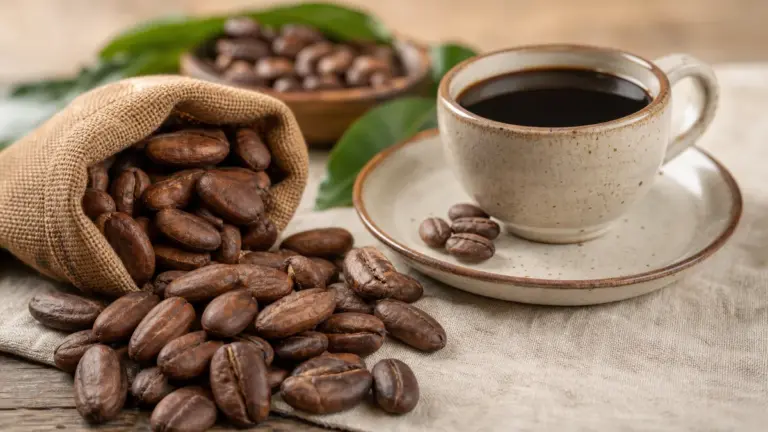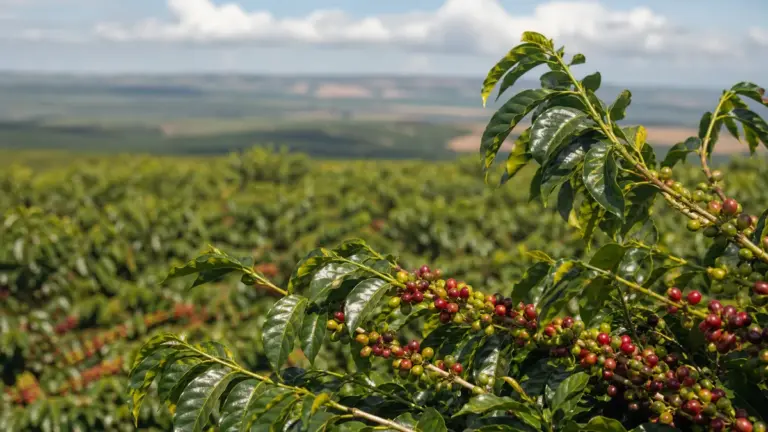
Coffee from Timor-Leste can combine chocolate and caramel sweetness with citrus, stone-fruit or tea-like notes, depending on the lot and processing. This smallholder origin is also the home of the Timor Hybrid, a naturally occurring cross between arabica and robusta that became a major source of coffee leaf rust resistance for breeders worldwide.
In short
- Read the lot description, not just the country name: documented coffees range from chocolate-led and rounded to apple-like and tea-like.
- Typica and Timor Hybrid are important names to recognise, with Catimor selections also documented.
- The main harvest runs from May to September, although individual communities have shorter picking seasons.
- Washed and natural coffees are both produced. Check which process your particular bag uses.
- Low-input farming is not the same as certified organic production. Look for certification rather than assuming it from the origin.
Timor-Leste coffee at a glance
Timor-Leste occupies the eastern part of the island of Timor, while the western part belongs to Indonesia. Keep that distinction in mind when reading an origin label: the country of production and the name of the Timor Hybrid answer different questions.
For its regional context, start with our guide to East and Southeast Asia.
| Feature | What to know |
|---|---|
| Growing altitude | Sucafina documents 1,300 to 1,900 metres for farms in Letefoho, an important specialty-producing area. This is a regional range, not the national minimum and maximum. |
| Main varieties and genetic groups | Typica and Timor Hybrid are documented together at Eratoi; Project Origin also records Typica and Catimor coffees in Ermera. Catimor is a group of related varieties, not one uniform variety. |
| Main processing methods | Washed and natural, both documented in exporter lot records. |
| Harvest months | May to September nationally in the sector development plan. Eratoi gives July to August for its own harvest. |
| Typical cup profile | Chocolate, caramel or brown-sugar sweetness with citrus and sometimes stone fruit; particular lots can show apple and black-tea notes. These are documented tasting descriptions, not a guaranteed national flavour. |
Fact-panel sources: the national coffee sector development plan, Sucafina’s origin profile, Karst Organics’ Eratoi record and Project Origin’s Ermera lot sheet. Full details appear in Sources.
What does Timor-Leste coffee taste like?
A useful starting expectation is sweetness with a rounded texture, rather than a compulsory “earthy” character. Project Origin’s washed Ermera records include milk chocolate, caramel, toffee, orange and peach, alongside another lot described through malt, brown sugar and nuts.
There is a brighter side too. Volcafe describes a washed Cooperativa Café Timor coffee through milk chocolate, floral notes and citrus, while Karst Organics lists green apple, white wine and black tea for Eratoi. Those descriptions show why “all Timorese coffee is heavy and low in acidity” is too blunt.
Here, acidity means the bright sensation that might remind you of citrus or apple. Body means the coffee’s weight and texture in the mouth. A cup can have chocolate sweetness and lively acidity together.
Treat tasting notes as a shortlist of possibilities, not ingredients or promises. My buying advice is to choose a lot whose description names both flavour and texture: “orange, caramel, medium body” tells you more than “rich mountain coffee”. Ask whose tasting notes you are reading, too; the examples above are the suppliers’ assessments, not independent testing by this site.
A short history of coffee in Timor-Leste
Coffee arrived in Timor in the early nineteenth century, but its precise introduction is less settled than a single neat date suggests. Historical research discusses competing accounts of the planting material’s route, including Portuguese connections and a possible introduction from Java.
Commercial expansion under Portuguese colonial rule was not simply a story of suitable mountain conditions. Coffee became increasingly important as the sandalwood economy declined, and plantation development included coercive labour arrangements. That history deserves a place beside the more familiar account of a remarkable hybrid plant.
A short timeline keeps the main developments in view:
- Early nineteenth century: coffee was introduced to Timor, although the exact route remains debated.
- 1860s: Portuguese colonial efforts expanded coffee production as an alternative source of export income.
- 1920s: World Coffee Research places the appearance of the naturally occurring Timor Hybrid in this decade.
- 1967: breeders at Portugal’s coffee rust research centre began crosses that helped establish the Sarchimor and Catimor breeding groups.
The distinction between introduction, commercial expansion and hybrid discovery matters. They are separate events, not interchangeable dates for when “Timor coffee began”.
Smallholders, shade and organic production
Small family farms are central to this origin. As one concrete example, Sucafina’s Laklo Natural record describes coffee supplied by smallholders farming an average of 0.5 hectares, with coffee grown beneath casuarina shade trees. That is evidence for a particular supply chain, not an average to apply automatically across the country.
The national development plan identifies ageing trees, limited farm rehabilitation and inconsistent processing as constraints. More recent Asian Development Bank project material continues to emphasise coffee-based agroforestry, farm rehabilitation and agricultural training. Agroforestry means growing coffee within a managed system that includes trees and other crops.
This helps explain why “traditional” needs careful handling. Shade and established farming knowledge are valuable, but productive trees still need attention. Romantic descriptions of untouched farms can obscure the work of pruning, maintaining soil fertility and managing the harvest.
What “organic by default” leaves out
Timor-Leste is often described as producing coffee “organically by default”, meaning that farmers use few or no synthetic agricultural inputs. The national development plan uses that expression but also warns that low-input production without adequate nutrient replacement is not a durable farming model.
Certified organic is a different claim. It requires production and handling to meet a defined standard, backed by inspection and certification. UK guidance does not allow a food business simply to substitute an appealing description of farming methods for the certification needed to market food as organic.
For a UK buyer, the practical question is therefore: is this particular coffee certified? Look for the relevant control-body information or ask the roaster. Neither a country name nor the absence of fertiliser purchases establishes certification, and certification should not be treated as a flavour score.
How processing changes the picture
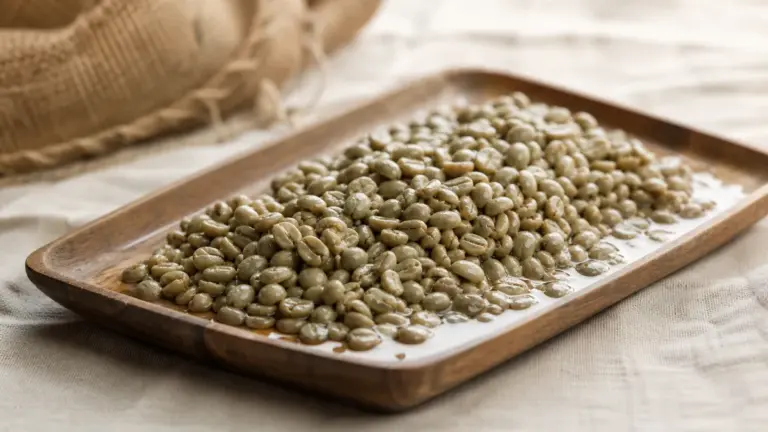
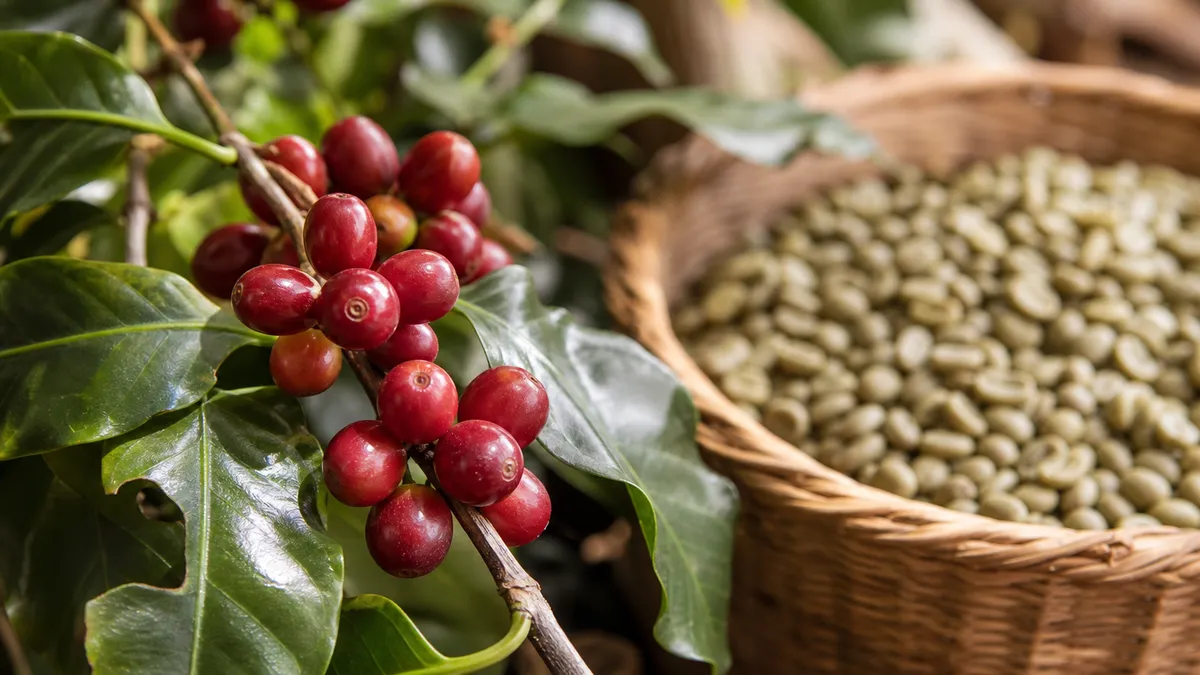
Processing is the work that turns picked coffee cherries into dried seeds ready for milling and export. Timor-Leste supplies both washed and natural coffees, so avoid borrowing a processing assumption from another origin.
In washed processing, the fruit skin and pulp are removed before the remaining sticky layer, called mucilage, is broken down and washed away. Project Origin’s Ermera records describe pulping, fermentation, washing and subsequent patio drying.
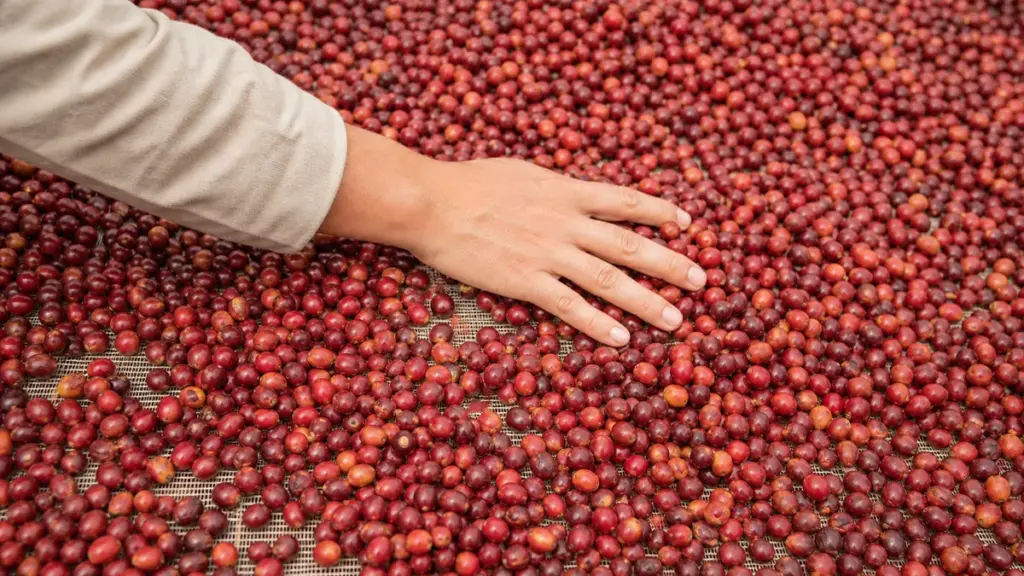
In natural processing, the cherries dry with the fruit still surrounding the seeds. Sucafina’s Laklo record describes ripe cherries delivered to a central mill, spread to dry and raked regularly for even drying.
These are processes, not quality grades. Project Origin documents both washed and natural Ermera lots with citrus, chocolate and sweet-fruit descriptions, so neither category should be reduced to one flavour.
The national sector assessment identifies delayed or uneven drying and inconsistent cherry handling as quality risks. Its practical message is more useful than a blanket preference for one process: careful harvesting, prompt handling and controlled drying matter. When a roaster explains those details, you have something concrete to assess beyond the word “natural” or “washed”.
The Timor Hybrid: why this origin matters worldwide
The Timor Hybrid, often written Híbrido de Timor or HdT, is a naturally occurring cross between Coffea arabica and Coffea canephora, the species traded as robusta. It is not a roasting style, a processing method or a blend made by mixing two bags of beans.
World Coffee Research dates its appearance to the 1920s. That decade-level wording is the most useful here, rather than implying that one exact discovery year is universally agreed.
Its importance lies in inherited disease resistance. Coffee leaf rust, caused by the fungus Hemileia vastatrix, damages foliage and can cause serious crop losses. The hybrid gave breeders access to robusta-derived resistance within material they could cross with arabica varieties.
From a natural cross to breeding families
Breeders selected Timor Hybrid plants and crossed them with compact arabica varieties. Two particularly influential combinations were:
- Timor Hybrid crossed with Caturra: the basis of the Catimor group.
- Timor Hybrid crossed with Villa Sarchi: the basis of the Sarchimor group.
These are families containing different selections, not two single varieties with identical behaviour. World Coffee Research calls such material introgressed arabica: arabica breeding material carrying inherited traits introduced from another species.
That terminology also prevents a common misunderstanding. A Timor Hybrid descendant grown elsewhere is not Timor-Leste-origin coffee. Its breeding history and the place where its crop was grown are separate pieces of information.
Resistance is not permanent immunity
Timor Hybrid ancestry should not be read as a promise that a plant cannot get rust. World Coffee Research records the breakdown of resistance in some historically resistant descendants and stresses the need for validated, variety-specific assessments.
Nor does this ancestry settle cup quality. The catalogue acknowledges historical quality concerns around introgressed varieties, while individual Timorese lot records demonstrate varied sensory profiles. Genetics matters, but a family name alone is not a tasting result.
The hybrid’s achievement is substantial without exaggeration: it supplied breeding material that helped protect coffee production far beyond its home island.
Choosing Timor-Leste coffee in the UK
My suggested buying order is traceability first, flavour description second, certification where it matters to you. Ask for the municipality or community, producer group, processing method and harvest information before relying on a broad national reputation.
Choose a chocolate-and-caramel description if that is the flavour direction you want. Choose an explicitly apple-like, citrus-led or tea-like description if you want to explore the origin’s brighter side. Do not assume the latter from altitude alone.
For regional comparisons, use our guides to the Philippines and Thailand and Myanmar. Compare the actual lot information across those origins rather than treating neighbouring countries as substitutes.
The most rewarding way to approach Timor-Leste coffee is to keep its two identities together: a smallholder origin worth tasting on its own terms, and the home of breeding material whose influence reaches much further.
FAQ
Does “Timor” on a coffee bag always mean it was grown in Timor-Leste?
No, “Timor” can refer to the plant’s variety or ancestry rather than its growing country. The Timor Hybrid has been used in breeding programmes beyond the island. Read the country-of-origin field separately from the variety field, and ask the roaster if the label leaves the distinction unclear.
Is Timor Hybrid coffee a blend of arabica and robusta?
No, the Timor Hybrid is a plant produced by a natural cross between the two species. A blend combines harvested coffees, usually during preparation for sale or roasting. The hybrid inherited genetic material through reproduction, which is why its resistance traits could subsequently be used in breeding.
Can I choose Timor-Leste coffee because I want very low acidity?
Not reliably from the country name alone. Documented Timorese lots include bright citrus and green-apple descriptions as well as chocolate-led, rounded profiles. Ask the roaster how the specific coffee tastes and look for a description of acidity and body, rather than assuming every coffee from the origin behaves alike.
Where to go next
Read East and Southeast Asia for the regional framework, then Philippines to continue exploring the region’s origins. Thailand and Myanmar offers another useful comparison: keep the producer, variety and processing information beside you as you read.
Sources
-
World Coffee Research, Arabica Varieties, online catalogue PDF retrieved November 2026, especially “Introgressed (Catimor/Sarchimor)” and “A note about coffee leaf rust resistance”.
https://cdn2.assets-servd.host/worldcoffee-research/production/pdf/catalogEnglish/Combined/arabica-1769602235.pdf
Supports the explanations of introgression, breeding families and resistance limitations. -
World Coffee Research, “Villa Sarchi”, online varieties catalogue, undated, retrieved November 2026.
https://varieties.worldcoffeeresearch.org/varieties/villa-sarchi
Supports the breeding history and parentage. -
World Coffee Research, “A new Arabusta for the 21st century”, 2018.
https://worldcoffeeresearch.org/news/2018/a-new-arabusta-for-the-21st-century
Supports the natural hybrid’s origins, breeding influence and resistance limitations. -
Timor-Leste Ministry of Agriculture and Fisheries, National Coffee Sector Development Plan Timor-Leste 2019 to 2030, 2019.
https://www.tradeinvest.tl/node/files/Reports/Timor-Leste_National_Coffee_Sector_Development_Plan_2019-2030.pdf
Supports the harvest calendar, production constraints, organic production discussion and quality-development priorities. -
Andrea Fahey, Australian National University, Timor-Leste’s Colonial Heritage from the Early Modern Era to the Second World War, 2023, particularly the sections on coffee introduction and plantation development.
https://openresearch-repository.anu.edu.au/bitstreams/ab098e5f-7791-4b60-bf3a-1a969b3a5479/download
Supports the historical account and its qualifications. -
Asian Development Bank, “Coffee and Agroforestry Livelihood Improvement Project (Additional Financing)”, 2026 project record.
https://www.adb.org/projects/51396-002/main
Supports the current rehabilitation and agroforestry priorities. -
Sucafina, “Timor-Leste”, undated origin profile, retrieved November 2026.
https://sucafina.com/emea/origins/timor-leste
Supports the geography and documented Letefoho altitude range. -
Sucafina, “Laklo Natural”, undated lot record, retrieved November 2026.
https://sucafina.com/na/offerings/laklo-natural
Supports the smallholder farm-size, shade and natural-processing examples. -
Karst Organics, “Eratoi”, undated producer record including a 2025 harvest account, retrieved November 2026.
https://karstorganics.com/eratoi/
Supports the varieties, harvest period and attributed supplier tasting notes. -
Project Origin, Timor-Leste: Ermera, 2022 lot sheet.
Supports the varieties, washed and natural processing, and attributed supplier tasting notes.
-
Volcafe, “TL Washed Organic”, undated lot record, retrieved November 2026.
https://volcafe.au/coffee/tl-washed-organic/
Supports the attributed tasting description for a Cooperativa Café Timor coffee. -
Department for Environment, Food & Rural Affairs, “Organic food: labelling and advertising rules”, live guidance, retrieved November 2026.
https://www.gov.uk/guidance/organic-food-labelling-rules
Supports the UK certification and organic marketing requirements.
This article was researched from coffee breeding references, national planning documents, historical scholarship, UK official guidance and identifiable supplier lot records; sensory descriptions are attributed supplier assessments, not first-hand testing.
Last checked: November 2026