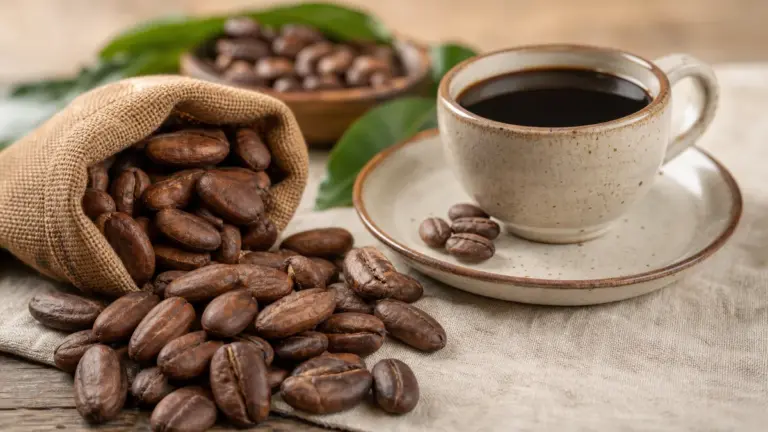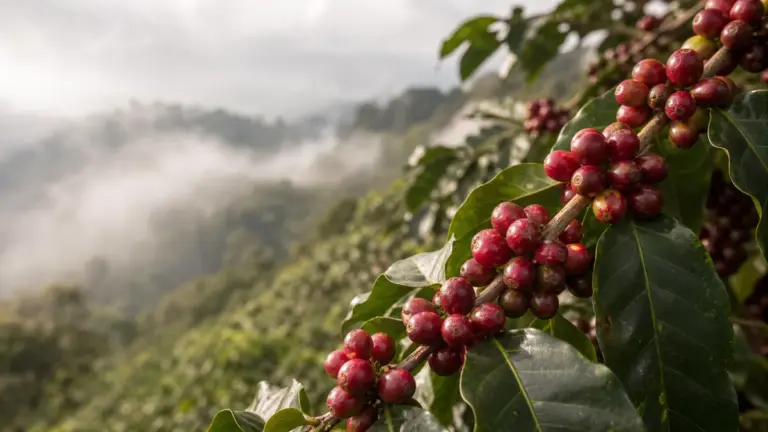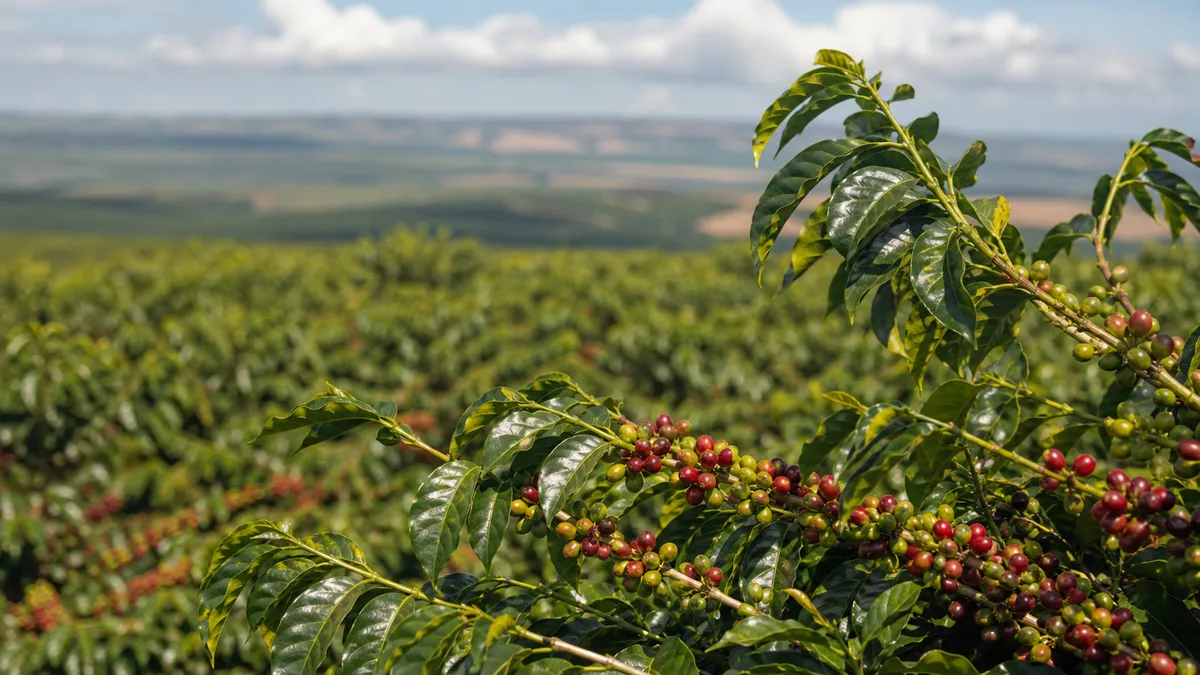
Laotian coffee is best known for the Bolaven Plateau, where arabica can offer a medium-bodied cup with gentle citrus and floral notes, while robusta brings fuller texture and, in some naturally processed lots, chocolate flavours. The most useful buying distinction is not simply “Laos”, but the species, processing method and producer behind the beans.
In short
- Main growing area: the Bolaven Plateau in southern Laos, although coffee also comes from northern provinces.
- Growing conditions: volcanic red soils, substantial rainfall and cooler upland temperatures support both arabica and robusta.
- Names to recognise: Typica and Catimor are important arabica labels; robusta is a different species, not an arabica variety.
- Processing matters: the Bolaven Plateau produces washed arabica, washed robusta and natural robusta, so do not assume every Lao coffee has the same character.
- Buying rule: ask for the harvest, species, process and farm or cooperative, rather than relying on the country name alone.
Laos coffee at a glance
The following panel describes the main Bolaven coffee tradition, not a specification that every farm must meet. Altitude and harvest windows vary between locations, species and published sources.
| Feature | Bolaven Plateau reference |
|---|---|
| Altitude | FAO describes a broad plateau range of 600 to 1,300 metres, with substantial arabica-growing land at 1,000 to 1,300 metres. |
| Main species and varieties | Arabica, especially Typica and the Catimor group, alongside robusta. |
| Established processing methods | Washed arabica; washed and natural robusta. |
| Harvest months | FAO gives October to December for arabica and December to February for robusta. The September 2020 Lao Coffee Notebook gives a broader regional season of November to March. |
| Typical cup profile | Arabica: medium body, mild citrus and floral tones. Producer descriptions of robusta include rounded washed cups and fuller natural coffees with chocolate notes. |
Panel sources: FAO, Arabica coffee manual for Lao PDR, 2005; UNCTAD, 2020; LURAS and Comma Coffee, September 2020; ILO, 2020; Bolaven Plateau Coffee Producers Cooperative, undated product descriptions. The different harvest windows should not be read as contradictory promises about an individual lot.
The Bolaven Plateau: why coffee grows here
The Bolaven Plateau is the centre of Lao coffee production. Its principal coffee districts include Paksong in Champasak province, Thateng in Sekong and Lao Ngam in Saravan, also written Salavan. UNCTAD’s 2020 account placed more than 95% of national coffee production in this area. That is a historical published estimate, not a newly measured November 2026 share.
The plateau combines elevation, volcanic red earth and plentiful rain. Cooler conditions at higher elevations can delay ripening, giving coffee more time to develop its potential aroma and acidity. However, altitude works together with temperature, rainfall, variety and farm management: it is not a quality score expressed in metres.
Volcanic soil also needs qualification. FAO’s field guidance describes suitable red earths but identifies soil acidity and nutrient availability as management issues. A productive coffee plant removes nutrients from the field with each harvest, so a fertile-looking site still needs careful attention to soil condition and plant nutrition.
For the drinker, the practical lesson is to treat “volcanic plateau” as useful geographical context, not a tasting guarantee. A named producer and clear processing information tell you more about a bag than an attractive description of its soil.
The broader East and Southeast Asian coffee guide places Laos alongside its neighbours without treating the region as a single flavour category.
Arabica and robusta both belong in the story
Arabica, Coffea arabica, and robusta, Coffea canephora, are separate species. Typica is an arabica variety; Catimor is a group of related arabica varieties with similar breeding ancestry. A bag marked “Catimor” therefore gives useful information, but not the identity of one universally identical cultivar.
Arabica: Typica and Catimor
Typica and Catimor appear repeatedly in accounts of Bolaven farming. Their presence reflects different agricultural priorities as well as coffee history: traditional arabica plantings sit alongside material introduced to improve productivity and resistance to coffee leaf rust.
Catimor’s ancestry comes from crosses involving Caturra and the Timor Hybrid, the latter a naturally occurring arabica and robusta hybrid. These coffees are classified within arabica, despite carrying genetic material from robusta. World Coffee Research also cautions that disease resistance can change as pathogens evolve, so “rust-resistant” should never be expanded into “permanently immune”.
For buying purposes, neither Typica nor Catimor should settle the quality question. FAO’s Lao evaluation work found that tasters could not reliably distinguish the Typica and Catimor samples in that particular assessment. Those results describe the samples tested, not every subsequent harvest, but they are a useful warning against judging by pedigree alone.
Robusta: more than an anonymous blending ingredient
Robusta has a long-established place in Lao production. The plateau also supports robusta at elevations that challenge the easy assumption that this species only belongs in hot lowlands. The ILO’s 2020 account records high-elevation robusta cultivation in Champasak province.
Processing creates meaningful differences within that category. The Bolaven Plateau Coffee Producers Cooperative describes its washed robusta as light and rounded, while its natural robusta has more body and chocolate flavours. These are the producer’s descriptions of its products, not independent findings about all Lao robusta.
Our Vietnam coffee guide provides a useful neighbouring comparison, but a Vietnamese robusta label should not be used as shorthand for how Lao robusta will taste.
A short history of coffee in Laos
French colonial introductions established coffee on the Bolaven Plateau in the early twentieth century. Arabica, robusta and liberica were planted, but coffee leaf rust affecting arabica helped robusta become the dominant species in the historical production system described by FAO.
Later development work encouraged arabica and better processing. By the publication of FAO’s manual in 2005, work with the Coffee Research Experimentation Centre at Ban Itou included variety evaluation, processing demonstrations and assessment by coffee buyers. The emphasis was not simply on planting more trees, but on improving what happened between ripe fruit and exportable beans.
Commercial development also changed the sector’s structure. The ILO traces a stronger push towards private investment and coffee commercialisation to the mid-1990s. Its account describes a supply chain involving growers, collectors, processors, exporters and cooperatives, rather than one uniform plantation model.
That history explains why Laos can appear in two different coffee conversations: as an established agricultural exporter and as an origin for separately identified coffees. Neither description cancels the other.
Production: the plateau dominates, but Laos is not just Paksong
Coffee production extends beyond the best-known southern growing area. The Lao Coffee Notebook, published in September 2020, identifies smaller northern sources including Xieng Khouang, Luang Prabang and Huaphan. Calling every Lao coffee “Paksong coffee” therefore loses genuine geographical detail.
Production involves smallholders as well as larger commercial operations. Cooperatives can bring together coffee from multiple farming households, while other growers sell through collectors and processors. Consequently, “single-origin Laos” does not necessarily mean a single farm, or even a single variety. Ask what the seller means by the term.
Historical trade figures show the sector’s export role. The September 2020 notebook records 26,155 tonnes of coffee exports in 2019. This is an export figure for that year, not national production and not a current annual total. Keeping those categories separate avoids a common problem when comparing coffee statistics.
When reading a supplier’s origin sheet, check whether a quantity refers to fresh cherries, dried coffee, green beans or a green-bean equivalent. For example, the ILO explicitly labels some of its production and export figures as green-bean equivalents. A number without its product form and reporting period is poor grounds for comparison.
What Laotian coffee tastes like
A useful starting expectation for Bolaven arabica is medium body with mild citrus and floral tones. Here, body means the drink’s perceived weight and texture, while acidity describes its bright or lively taste, rather than a laboratory measurement of pH. Published descriptions are a starting point, not a promise that every bag will reveal the same notes.
For robusta, look particularly closely at the process. The cooperative’s chocolate-toned natural robusta and rounded washed robusta illustrate why a species label alone cannot describe the whole drinking experience.
Processing helps explain the differences
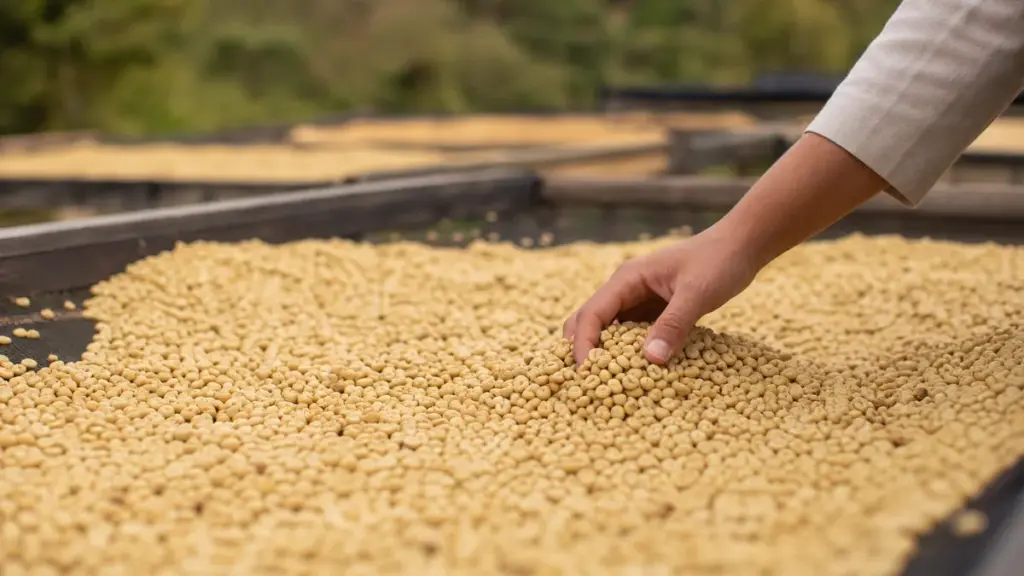
Washed processing removes the fruit skin and deals with the sticky mucilage around the seeds before drying. In natural processing, the seeds dry inside the whole coffee fruit before the dried outer material is removed. These are different routes from cherry to green bean, not different roasting styles.
Harvest selection and drying are equally important. FAO’s Lao guidance stresses ripe fruit, prompt processing and clean drying surfaces. Rewetting and excessively slow drying can introduce undesirable fermented, musty or dirty flavours. Such defects should not be excused as an inevitable “earthy” regional character.
Nor should a historical assessment become a permanent national verdict. FAO’s 2005 tasting exercise found clean but often restrained samples, with some lacking acidity and distinction. That is valuable evidence about a development project’s coffees at that time, not a fair description of everything Laos produces now.
Choosing Lao coffee in the UK
My recommendation is to begin with a clearly identified washed Bolaven arabica if you want to explore the citrus-and-floral side of the origin. Choose a separately identified robusta if your main interest is comparing species and processing. These are starting choices for exploration, not a ranking.
Before ordering, ask the roaster for:
- Species and variety: arabica or robusta, with more specific variety information where known.
- Producer and location: a farm, village, cooperative or estate, rather than only “Laos”.
- Processing: washed, natural or another clearly explained method.
- Harvest information: when the coffee was picked, alongside the roasting date.
- Lot-specific tasting notes: descriptions of this coffee, not generic country copy.
For a regional tasting, compare coffees with similar roasting and processing descriptions rather than changing every variable at once. Read Indonesia’s coffee origins for another comparison, but keep the individual lot, rather than a national stereotype, at the centre of the exercise.
FAQ
Does “Bolaven” mean a coffee variety?
No, Bolaven names the growing plateau, not a coffee variety. Coffee from the plateau can be arabica or robusta, and arabica labels may include Typica or Catimor. A bag carrying only “Bolaven” therefore tells you its regional origin but leaves important questions about species, variety and processing unanswered.
Is Lao coffee traditionally served with condensed milk?
Condensed milk is an established accompaniment in the traditional serving described by the Lao Coffee Notebook. It records coffee brewed through a cloth bag or small basket, often served dark and bitter, with condensed milk and ice when available. That describes a preparation tradition, not the inherent flavour of every Lao-grown bean.
Does coffee from Laos automatically qualify as organic?
No, origin alone is not evidence of organic certification. UNCTAD’s 2020 study distinguishes Lao domestic organic certification from the certification requirements of importing markets. If organic status matters to your purchase, ask the seller for the certification applying to that particular product rather than relying on a general claim about traditional farming.
Where to go next
Read East and Southeast Asia for the regional framework, then Vietnam for a neighbouring coffee industry to compare with Laos. Indonesia and Thailand and Myanmar are useful next reads for widening that comparison while keeping growing region, species and processing distinct.
Sources
-
Food and Agriculture Organization of the United Nations, Arabica coffee manual for Lao PDR, August 2005, Chapter 1, “Coffee plant & site selection”.
https://www.fao.org/4/ae939e/ae939e03.htm -
Food and Agriculture Organization of the United Nations, Arabica coffee manual for Lao PDR, August 2005, Chapter 4, “Plant nutrition & fertiliser management”.
https://www.fao.org/4/ae939e/ae939e06.htm -
Food and Agriculture Organization of the United Nations, Arabica coffee manual for Lao PDR, August 2005, Chapter 6, “Harvesting and processing”.
https://www.fao.org/4/ae939e/ae939e08.htm -
Food and Agriculture Organization of the United Nations, Arabica coffee manual for Lao PDR, August 2005, Chapter 7, “Quality assessment”.
https://www.fao.org/4/ae939e/ae939e09.htm -
World Coffee Research, Coffee Varieties Catalog: T8667, undated live entry, retrieved November 2026.
https://varieties.worldcoffeeresearch.org/varieties/t8667 -
United Nations Conference on Trade and Development, Lao People’s Democratic Republic: Sustainable Commercialisation in the Coffee Value Chain, 2020. Used for sector history, geography and certification context, not its erroneous description of Catimor parentage.
https://unctad.org/system/files/official-document/ditctabinf2020d2_en.pdf -
International Labour Organization, Improving occupational safety and health in the global value chain of coffee in Lao People’s Democratic Republic: Drivers and constraints. A case study, first edition, 2020.
https://vzf.ilo.org/wp-content/uploads/2021/04/Improving-occupational-safety-and-health-in-the-global-value-chain-of-coffee-in-Lao-Peoples-Democratic-Republic-Drivers-and-constraints.-A-case-study.pdf -
Lao Upland Rural Advisory Service and Comma Coffee, Lao Coffee Notebook, September 2020.
https://laocoffee.org/wp-content/uploads/2020/10/lao-coffee-notebook-english-final.pdf -
Bolaven Plateau Coffee Producers Cooperative, “Our coffee: our products”, undated, retrieved November 2026. Used as primary evidence of the cooperative’s product range and attributed sensory descriptions.
https://cpc-laos.org/EN/EN-ourcoffee-products.html
This article was researched through retrieved FAO guidance, international development studies, World Coffee Research’s catalogue and producer documentation, with historical statistics explicitly dated and producer tasting descriptions identified as such.
Last checked: November 2026