Modern specialty coffee culture centres on coffee’s distinctive flavour, its origins and the skill involved in preparing it. It brings together producers, roasters, baristas and drinkers, but its stated commitments to quality, traceability and sustainability should not be mistaken for guarantees of ethical sourcing or adequate farmer remuneration.
In short
- Specialty coffee is about distinctive attributes and value, not simply a particular brewing device or café appearance.
- Traceability helps identify where coffee comes from; it does not, by itself, establish whether growers earn enough.
- Brewing bars, roastery counters and tasting workshops offer different ways into the culture.
- Competitions recognise different skills, including espresso preparation, manual filter brewing and sensory discrimination.
- Our editorial view: good specialty service should make coffee easier to understand, not make customers feel examined.
What makes modern specialty coffee culture distinctive?
The Specialty Coffee Association, or SCA, defines specialty coffee through distinctive attributes that give a coffee or coffee experience additional market value. Those attributes can be sensory, such as aroma and texture, or informational, such as the producer, origin and processing method. The definition is broader than a single tasting score.
That distinction explains the scene’s interest in both the cup and the story behind it. A drinker might value an unusual aroma; another might care particularly about knowing who produced the coffee. These are related interests, but they answer different questions.
For beginners, the useful starting point is not specialist vocabulary. Tell the barista what you normally enjoy and ask for a recommendation with a plain explanation. “Something chocolatey with milk” is a perfectly serviceable request.
This article concentrates on the contemporary specialty scene. For the wider context of customs, places and everyday coffee drinking, start with coffee culture.
Quality, traceability and sustainability: promises versus proof
Quality means more than impressive language
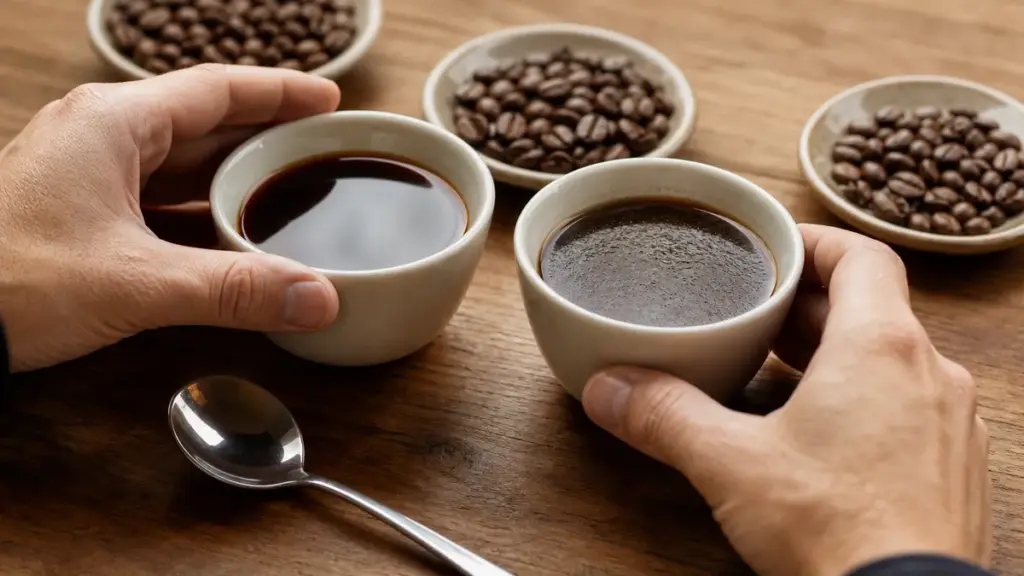
The SCA’s Coffee Value Assessment separates physical characteristics, sensory description, impressions of quality and information about the coffee. In particular, describing what a coffee tastes like is not the same exercise as deciding how much an evaluator likes it.
That separation is useful outside professional tasting. You can recognise that a drink has a distinctive character without wanting another cup. Equally, enjoying a familiar flavour does not mean you have failed to appreciate coffee properly.
Our editorial recommendation is to treat tasting language as an invitation to compare, not a requirement to agree. Ask what a descriptor means in everyday terms rather than trying to reproduce somebody else’s verdict.
Traceability identifies a route, not an outcome
Traceability concerns information about where coffee comes from and how it moves through the supply chain. Named producers and clear sourcing information can make that chain more visible, but the SCA cautions that “direct trade” has no consistent definition and does not necessarily redistribute wealth towards producers.
Published payment information also needs context. Free on Board, usually shortened to FOB, refers to coffee delivered onto a ship at the exporting port. It is not a statement of the farmer’s take-home income. An export transaction therefore cannot, on its own, establish whether a farming household earns enough.
Ask what the business actually knows: who supplied the coffee, how the relationship works and what evidence supports its claims about producer benefit. An attractive account of a farm visit is not a substitute for those answers.
Sustainability needs a defined claim
“Sustainable” should prompt another question: sustainable in what respect? Packaging, farming practices and the operation of a café are different subjects.
The UK Competition and Markets Authority’s Green Claims Code calls for environmental claims to be clear, accurate and supported by current, credible evidence. Broad claims should reflect the whole life cycle, while narrower claims must make their scope clear without implying benefits elsewhere.
For readers, the practical rule is straightforward: prefer a specific, evidenced statement over a reassuring adjective. A business may sincerely hold sustainability values while still having substantial work to do.
Brewing bars and roaster cafés
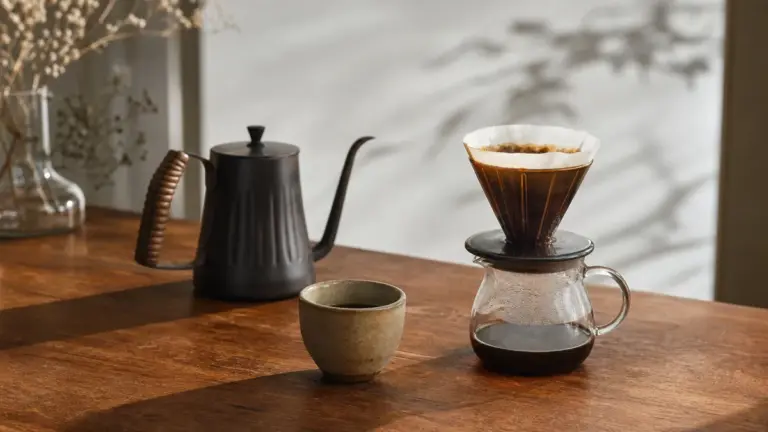
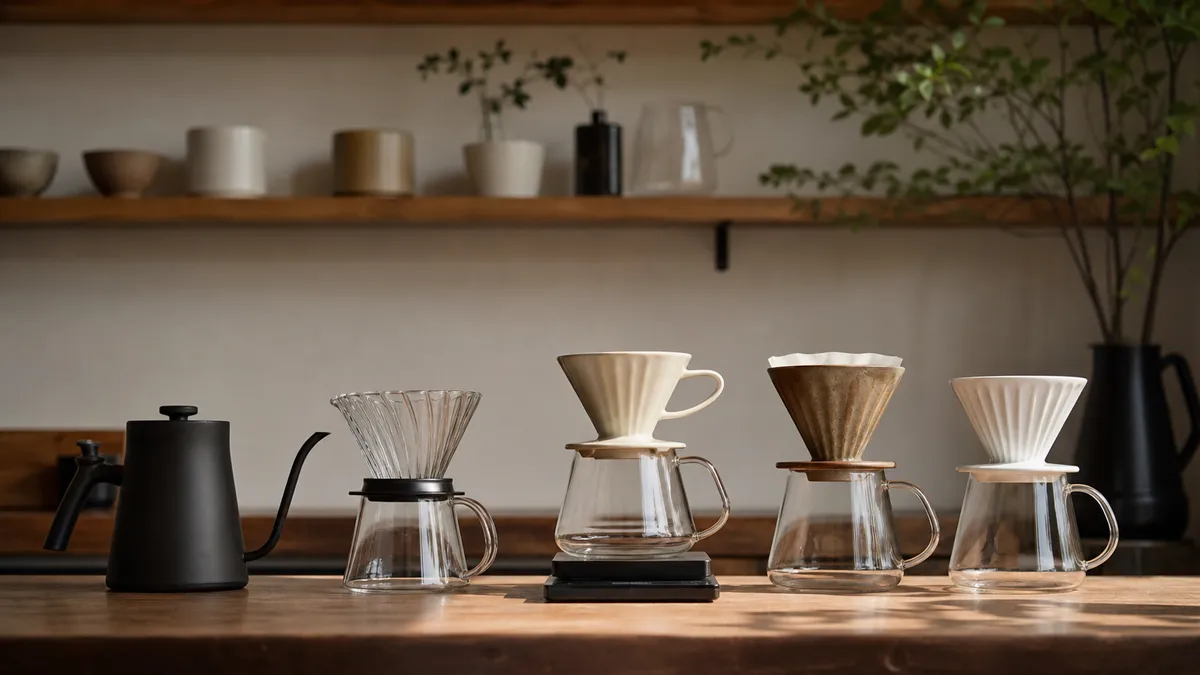
A brewing bar makes preparation part of the encounter. In manual pour-over brewing, ground coffee sits in a filter while water is poured through it into a cup or server. Scales and timers help the brewer follow a repeatable method; the SCA’s published pour-over guidance explicitly uses both.
The useful question is not whether the equipment looks elaborate, but what the preparation helps you understand or enjoy. Ask why a particular coffee has been chosen and what the brewer hopes you will notice.
A roaster café connects the finished drink with roasting more directly. Some businesses serve coffee beside a working roastery; others operate separate cafés and training spaces. Anything Coffee describes an on-site roasting and coffee-counter model in Leeds, while North Star lists separate roasting operations, cafés and an academy.
Choose the experience according to your purpose, rather than assuming one format is superior.
| Experience | What to ask | Particularly useful if |
|---|---|---|
| Manual brewing bar | “Why have you chosen this coffee for this method?” | You want to discuss preparation |
| Working roastery counter | “What can visitors see or learn here?” | You are curious about roasting |
| Café with retail beans | “Which coffee would suit how I brew at home?” | You want practical buying guidance |
| Workshop or tasting | “Is this suitable for complete beginners?” | You prefer structured learning |
These are visitor prompts, not quality ratings. A concise, helpful answer matters more than a theatrical demonstration.
Competitions: craft on a public stage
Coffee competitions turn particular professional skills into judged performances. At the World Barista Championship, competitors prepare four espressos, four milk-based drinks and four signature beverages within a 15-minute performance. Judging includes taste, cleanliness, technical proficiency, creativity and presentation.
The World Brewers Cup instead concentrates on manual filter brewing. Its compulsory service asks competitors to work with the same supplied coffee, while open service allows them to select a coffee and explain their preparation. That creates different tests: responding to a shared ingredient and presenting a chosen one.
In the UK, the SCA chapter lists national competitions covering barista skills, brewing, cup tasting, latte art, coffee cocktails and roasting, with routes to corresponding world finals.
For a curious viewer, competitions offer a way to observe how professionals explain flavour and organise service. Our advice is to watch for transferable ideas, such as clarity and consistency, rather than treating a championship routine as the required model for an everyday drink.
Social media: discovery, education and display
Social media gives specialty coffee a second setting beyond the counter. It can be a place to look for demonstrations, compare explanations and discover businesses, but it also rewards the appearance of an experience.
A qualitative study by Hanbit Chang and Bas Spierings examined specialty coffee bars in Seoul through interviews and Instagram activities with 17 female millennials. Participants frequently discussed photogenic interiors and image-making, while some distinguished between cafés that looked good online and those they wanted to revisit for coffee.
This was a specific, small qualitative study, not a representative survey of coffee drinkers worldwide. Its useful warning is narrower: online visibility and enjoyment in the cup need not coincide.
When assessing coffee content, separate demonstration from promotion. Can you follow the explanation? Are its limitations acknowledged? Does an appealing image actually tell you anything about the drink?
For a closer regional perspective, read Japanese and Korean coffee culture. Avoid treating a platform’s most visible cafés as a complete portrait of a country.
Elitism, access and who gets to define good taste
Specialty coffee faces a reasonable criticism: expertise can become a barrier when it is used to rank people rather than explain coffee.
There is a difference between describing a drink precisely and insisting that everyone should prefer it. The SCA’s assessment framework itself distinguishes sensory description from an evaluator’s impression of quality, including personal or market preferences. That distinction leaves room for disagreement without making either drinker ignorant.
Our editorial position is that a customer should not need to defend a preference for milk, a familiar flavour or a short conversation. Technical knowledge is valuable when it helps someone choose, understand or troubleshoot.
Access deserves practical attention too. Before attending a tasting, ask about seating, step-free entry, the format and whether explanations assume previous experience. Businesses can make participation easier by stating these things clearly rather than expecting visitors to know what to ask.
The best response to elitism is not to abandon precision. It is to explain precisely, acknowledge preferences and leave the customer free to enjoy the drink.
The UK scene: look beyond a single café style
The UK scene offers more than one route into specialty coffee. North Star’s published Leeds locations include hand-brewed coffee, retail coffee and equipment, and an academy offering workshops and tastings. Anything Coffee’s Armley site combines a working roastery with a counter where visitors can drink coffee and ask questions. These are examples of different formats, not a ranking or evidence of independent performance testing.
Organised competition provides another point of entry through the SCA UK chapter. Its range of disciplines also shows why “coffee expertise” is not a single skill: roasting, identifying differences between cups and preparing drinks are distinct activities.
When exploring locally, check the business’s current information rather than relying on an old photograph or recommendation. For another perspective on café service and identity, continue with Australian and Melbourne coffee culture.
How to explore without feeling out of place
Use this short checklist on your next visit:
- Start with a preference. Describe a drink you enjoy rather than guessing the correct terminology.
- Ask one useful question. Try “What makes these coffees different?” instead of requesting the entire story.
- Keep sensory and sourcing questions separate. “What does it taste like?” and “What supports your sourcing claims?” require different answers.
- Choose an appropriate setting. A busy takeaway counter may not be the right place for a lengthy discussion; ask about a quieter visit or workshop.
- Keep your own verdict. You are allowed to understand the explanation and still prefer something else.
Our editorial test for modern specialty coffee culture is whether its knowledge becomes useful to the drinker, and whether its claims remain open to scrutiny. Curiosity should be enough to begin.
FAQ
Do I need specialist equipment to take part?
No. You can begin by ordering a drink, asking a question or attending a beginner-friendly tasting. Treat equipment as something to investigate when you have a particular task in mind, not as an entry requirement. For a first visit, a clear preference and a willingness to compare are more useful than a shopping list.
Does a roaster café necessarily roast coffee in front of customers?
No. The relationship between roasting and café service varies by business. Anything Coffee describes roasting on site at its Armley counter, whereas North Star lists separate roasting operations and café locations. Check the venue’s own description if seeing a working roastery is the purpose of your visit.
What should I do if I cannot taste what the barista describes?
Say what you notice, or simply whether you enjoy it. There is no need to invent an answer. Professional assessment distinguishes sensory description from personal impressions of quality; ordinary conversation can do the same. Ask the barista to explain one characteristic in simpler terms rather than trying to match an entire description.
Where to go next
Read Coffee Culture for the broader framework around coffee customs and everyday drinking. Japanese and Korean Coffee Culture offers a regional perspective on cafés and preparation, while Australian and Melbourne Coffee Culture provides another useful comparison with modern specialty coffee culture.
Sources
- Specialty Coffee Association, What Is Specialty Coffee?, undated current webpage.
- Specialty Coffee Association, Coffee Value Assessment, undated current framework overview.
- Specialty Coffee Association, From Sea to Shining Sea: Coffee’s Transport and Expanding Our Definition of “the Middle People”, 25, issue 17, undated webpage.
- Specialty Coffee Transaction Guide, What Is the Specialty Coffee Transaction Guide?, current webpage introducing the 2025 guide.
- Competition and Markets Authority, The Green Claims Code Checklist, 2021.
- Specialty Coffee Association of America, Guidelines for Brewing with a Two Cup Pour-Over Brewer, revision 2 April 2016.
- World Coffee Championships, World Barista Championship and World Brewers Cup, undated current competition overviews.
- Specialty Coffee Association UK Chapter, SCA UK Competitions, undated current webpage.
- Chang, H. and Spierings, B., Places “for the gram”: Millennials, specialty coffee bars and the gentrification of commercial streets in Seoul, Geoforum, 2023.
- North Star Coffee Roasters, Contact: Our Locations, undated current business webpage.
- Anything Coffee, Visit Our Roastery, undated current business webpage.
Researched using live searches of association guidance, official competition information, UK environmental-claims guidance, published qualitative research and businesses’ own venue descriptions; no first-hand venue testing is claimed.
Last checked: November 2026