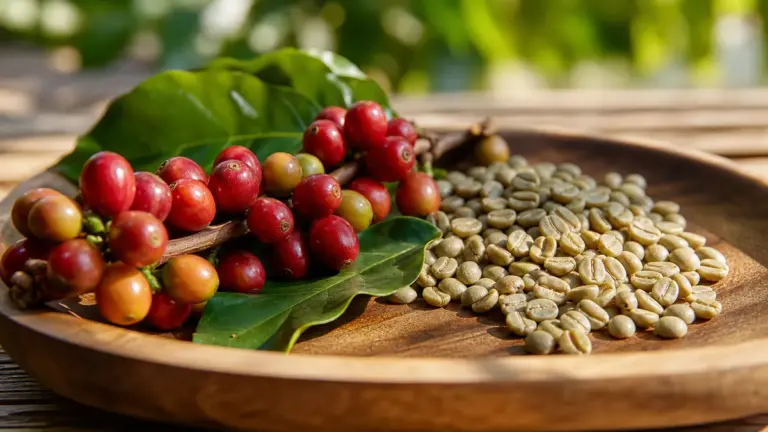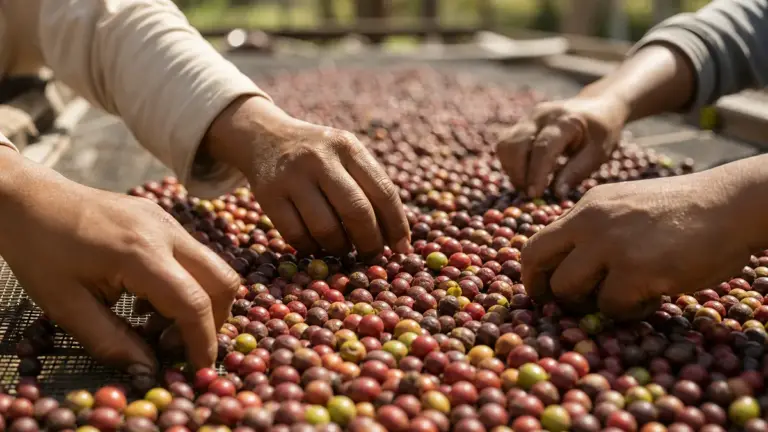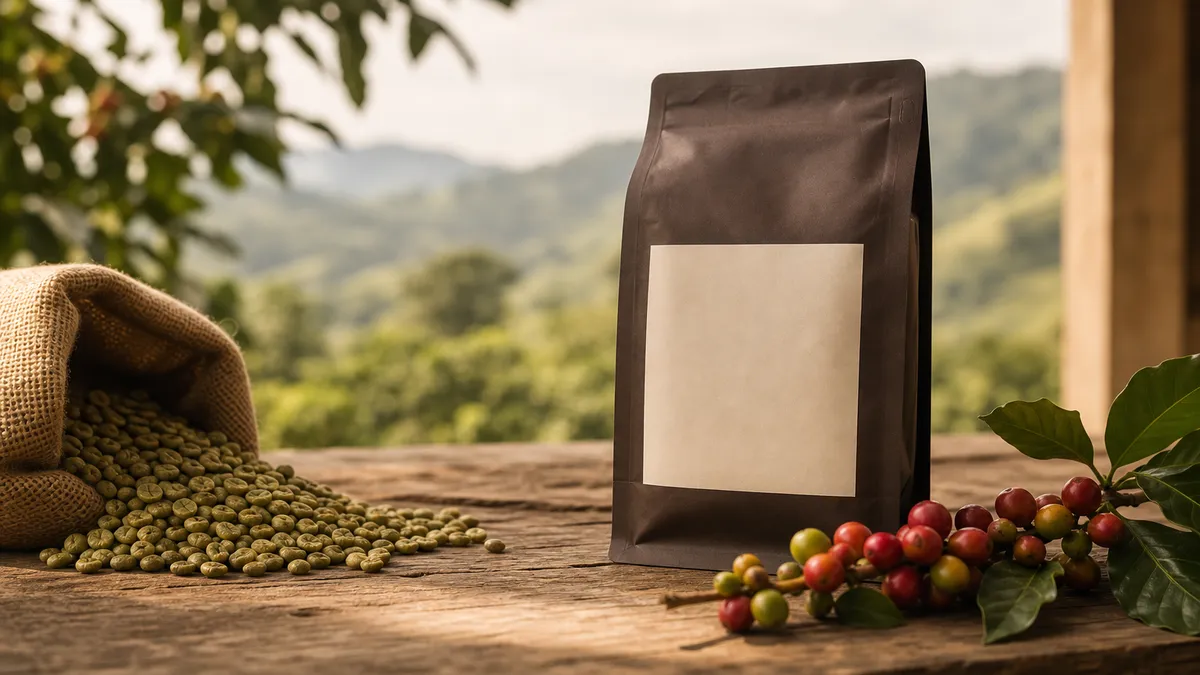
Traceability in coffee is the ability to follow a particular batch through its supply chain, using linked records of where it came from, how it was handled and where it went. The useful question is not simply “Is this coffee traceable?” but “Traceable to what, through which stages, and with what evidence?”
In short
- A country, region, co-operative, farm and individual lot represent different levels of origin detail.
- Traceability records and public transparency are different: a business may hold information that never appears on the bag.
- Identity-preserved, segregated and mass-balance systems support different claims about the physical coffee.
- Fairtrade coffee requires physical traceability; Rainforest Alliance does not permit mass balance for coffee.
- A QR code or blockchain record is a way to access or maintain information, not independent proof that the information is true.
Transparent Supply Chains
A transparent coffee supply chain makes relevant information available to the people who need to assess it. Traceability provides the underlying connections: records linking a producer’s delivery to a processing batch, an export shipment and, eventually, a roasted product.
Three questions help separate the ideas:
- Traceability: can the product’s journey be reconstructed?
- Transparency: which information is disclosed, and to whom?
- Verification: what checks support the information?
These are not interchangeable. A roaster might publish a producer’s name without showing how that producer’s coffee connects to the current batch. Conversely, a supplier might maintain detailed commercial records while publishing only the country of origin.
For the wider role of standards and independent checks, start with coffee certification. Here, the focus is narrower: following the coffee and understanding what the evidence actually establishes.
The food-safety baseline
Food Standards Agency guidance for England, Wales and Northern Ireland describes a “one step back” and “one step forward” approach: businesses must identify their immediate suppliers and the businesses they supply. Sales directly to final consumers generally do not require forward records identifying those consumers. Scotland has separate guidance.
That baseline supports investigations and targeted withdrawals or recalls. It is not the same as giving a shopper a publicly accessible, farm-to-bag history.
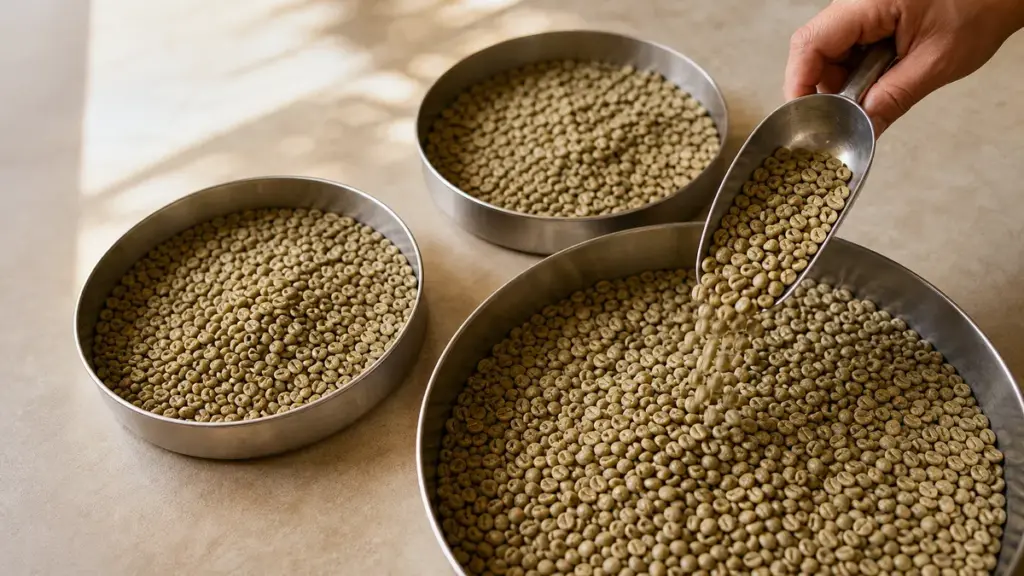
Levels of coffee traceability
Origin detail and continuity of records are separate dimensions. A precise farm name is useful, but the supporting records still need to connect that farm with the coffee being sold.
When assessing a supplier’s claim, distinguish these possible endpoints:
- Country: the producing country is identified.
- Region: the origin is narrowed geographically.
- Co-operative or producer group: the supplying organisation is identified.
- Mill or washing station: the processing facility is identified, which does not necessarily identify each contributing farm.
- Farm or plot: the growing location is identified.
- Lot: a defined batch is linked to its contributors and subsequent handling.
Treat this as a reading framework, not a universal industry grading system. Ask the supplier what each term means in its own records.
The Rainforest Alliance system illustrates an important qualification: identity-preserved traceability reaches the farm certificate holder. Check whether that certificate represents an individual farm or a group before interpreting it as single-farm identification.
More detail is not automatically more useful. A clearly documented producer-group lot may offer stronger evidence than an individual farmer’s name attached to an otherwise unexplained product.
Identity-preserved, segregated and mass-balance systems
These terms describe how certified material is handled and accounted for. They are not interchangeable descriptions of geographical precision, and their exact application depends on the scheme and commodity.
| Model | What happens to the material | What the model establishes |
|---|---|---|
| Identity preserved | Source identity remains linked to the certified material | Traceability to the specified certified source |
| Segregated | Certified material stays separate from non-certified material, but certified sources may be combined | Certified physical content, without necessarily retaining individual source identity |
| Mass balance | Certified and non-certified material may mix, with certified volumes controlled through accounting | An equivalent certified quantity was sourced, not that the particular beans came from certified farms |
Rainforest Alliance also recognises Mixed Identity Preserved, where material from different certified sources is combined but those sources remain identifiable.
Do not assume mass balance applies to coffee because a certification scheme permits it for another crop. Fairtrade states that all its coffee is physically traceable. Rainforest Alliance’s current Traceability Annex also excludes coffee from the crops eligible for mass balance.
These are differences between permitted sourcing models, not evidence that one organisation contradicts the other. Read the coffee-specific rules, then use certification labels compared for the broader comparison.
Establishing what is traceable at each stage
The following is an illustrative supplier-checking method, not a description of one company’s operations. Its purpose is to test whether records connect across handovers and transformations.
- At collection: ask whether deliveries identify individual growers, a producer group or only a buying location. Establish where separate deliveries become a shared lot.
- During processing: ask how incoming material connects to outgoing coffee. If lots are combined, do the records retain their contributors, or only the identity of the resulting batch?
- At export and import: ask how the processing lot connects to shipment and warehouse references. A shipment identifier is useful only if earlier records remain accessible.
- At roasting and packing: ask how green-coffee lots connect to roast batches, blends and packed products.
- At delivery: retain the supplier and product references needed to identify the coffee received.
A chain of custody is the documented sequence of handling and transfers connecting these stages.
Accounting must also recognise transformations. Rainforest Alliance, for example, requires a platform conversion when processing changes certified volume, including conversion from green to roasted coffee.
The key distinction is between losing physical separation and losing information. Combining known lots can preserve their documented identities. Combining lots without retaining their contributing references cannot support the same origin claim.
How to read traceability on coffee bags
Start with the bag, then check the associated product page. Use this short reading order rather than treating any single detail as decisive.
First, find the stated origin. Does the wording name a country, region, producer organisation, processing facility or farm? Do not assume those describe the same level of detail.
Second, look for a batch connection. A lot or batch reference can provide the bridge between the retail product and the supplier’s records. A producer biography alone does not demonstrate that connection.
Third, identify what each date describes. If harvest, shipment and roasting dates are supplied, distinguish them. A roast date cannot, by itself, establish when or where the coffee was harvested.
Fourth, follow the QR code. Does it open information about this product or batch, or merely a general brand story? Look for named supply-chain participants, a defined reporting period and an explanation of checks.
Finally, read certification claims separately. A certification mark concerns the applicable scheme requirements. It does not necessarily promise public access to every farm identity or transaction. The Rainforest Alliance article explains that scheme in more detail.
For a blend, ask whether the information covers every component and how substitutions are communicated. Prefer an explicit explanation of changing origins to a permanent story that cannot be connected to current deliveries.
Reading transparency reports
A useful transparency report explains its coverage and method, not just its ambitions. When reviewing one, ask:
- Does it cover all coffee purchased, or a selected range?
- Is coverage measured by coffee volume rather than the number of products?
- What reporting period applies?
- Are producers, organisations and supply-chain partners identified?
- Which statements are independently checked, and which are company-reported?
- What information remains unavailable?
The Pledge, a coffee transparency initiative, provides one reporting model. Its published instructions request producer or producer-organisation identity, lot volume, relationship length, quality information and transaction information. They also require the share of transparent coffee to be stated against total volume for an explained period.
Financial disclosures need particular care. FOB, meaning Free On Board, relates to delivery aboard a vessel at the named shipment port under the relevant trade term. An FOB disclosure is not, by itself, evidence of what an individual grower received.
Nor does an origin record establish whether a household earns a living income. The ICO treats actual farmer-household income as a distinct area requiring credible data. For the human outcomes behind the records, see living income and labour rights.
Technology, blockchain and the evidence
Digital tools can connect identifiers, transactions and processing records. Rainforest Alliance’s MultiTrace platform, for example, supports transactions and different traceability models. However, access to a certification platform is not the same as public access to its underlying information.
Blockchain is a shared digital ledger designed to make recorded transactions resistant to alteration. Its potential benefit is a consistent record across participants, not an ability to observe farms or inspect sacks of coffee.
What research demonstrates
A peer-reviewed Colombian coffee study published in 2022 implemented a proof of concept using Hyperledger Fabric, a blockchain platform. It explored feasibility and implementation challenges.
That is evidence that a particular technical approach could be built and examined. It is not evidence that all blockchain-labelled coffee has a complete chain of custody, or that the technology necessarily improves farmer livelihoods.
The distinction matters because a dependable record can still preserve an incorrect entry. NIST’s technical guidance warns that recording real-world inputs on a blockchain does not necessarily establish whether those inputs reflect real events.
Questions to ask about blockchain claims
Ask who enters information, who checks it and how records connect to physical deliveries. Also ask how mistakes are corrected, who controls access and whether farmers can see and challenge information concerning them.
Those are governance questions, not software specifications. A claim such as “blockchain verified” is incomplete unless the supplier explains what was verified, by whom and against which evidence.
What traceability cannot prove
Traceability can support accountability, but it does not replace evidence about labour conditions, household income or environmental outcomes. Knowing where coffee originated and knowing what happened there are different achievements.
Public disclosure also has limits. Commercial confidentiality and producer privacy should be considered when deciding what to publish. Buyers can request controlled access or independent verification rather than assuming every underlying record should be openly available.
For workplace procurement, request a sample batch record and a written explanation of the claimed endpoint. Ask where records stop, how blends are handled and whether the information follows your actual deliveries.
The practical standard for coffee traceability is straightforward: a defined claim, connected records and checks proportionate to that claim. A frank explanation of remaining gaps is more useful than an unexplained promise of complete transparency.
FAQ
Can a blend be fully traceable?
Yes, a blend can retain traceability to its contributing sources if its records preserve those connections. Rainforest Alliance’s Mixed Identity Preserved model illustrates this principle for certified sources. Ask whether the supplier can connect the particular packed batch to its components, rather than simply naming the origins normally used in the recipe.
Does traceability require direct purchasing from a farmer?
No, traceability does not require a direct purchasing relationship. Intermediaries can participate in a documented chain, provided the relevant records connect across their transactions and handling. The Pledge’s published instructions explicitly state that coffee does not have to be traded directly to meet its transparency criteria.
Is a paper-based system automatically less credible than a digital one?
No, paper records are not automatically less credible. Food Standards Agency guidance allows businesses to choose their record-keeping system, including paper-based systems, provided information can be supplied promptly. For a buyer, the stronger test is whether records are accurate, connected and available for checking, not whether the presentation uses a particular technology.
Where to go next
Read Coffee Certification for the wider relationship between standards, assurance and traceability, then Certification Labels Compared to interpret different scheme claims. Rainforest Alliance explains one certification system in depth, while Living Income and Labour Rights in Coffee examines outcomes that origin records alone cannot establish.
Sources
-
Food Standards Agency, Food traceability for businesses, updated 15 October 2026.
https://www.gov.uk/government/publications/food-traceability-for-businesses/food-traceability-for-businesses
Official guidance on traceability, business records, geographical scope and record-keeping systems. -
Rainforest Alliance, Traceability Annex, version 1.4, effective 1 March 2026, page updated 28 October 2026.
https://knowledge.rainforest-alliance.org/docs/traceability-annex-v14
Binding requirements covering sourcing models, eligible crops, transactions and conversions. -
Rainforest Alliance, MultiTrace: Traceability User Guidance Manual, online guidance, undated.
https://knowledge.rainforest-alliance.org/docs/multitrace-traceability-user-manual-guidance
Operational explanations of traceability models and platform functions. -
Fairtrade International, Traceability in Fairtrade supply chains, undated.
https://www.fairtrade.net/us-en/why-fairtrade/how-we-do-it/traceability-in-fairtrade-supply-chains.html
Scheme explanation confirming physical traceability for Fairtrade coffee. -
transparency.coffee, How to sign The Pledge, undated.
https://www.transparency.coffee/how-to-sign-the-pledge/
Published reporting requirements, coverage disclosure and the distinction from direct purchasing. -
International Chamber of Commerce, FOB: Free On Board, Incoterms 2020.
https://library.iccwbo.org/content/tfb/BOOKS/BK_0049/BK_0049_05_RulesSea.htm
Primary explanation of FOB delivery and responsibilities. -
National Institute of Standards and Technology, Blockchain Technology Overview, NISTIR 8202, 2018.
https://www.nist.gov/publications/blockchain-technology-overview
Technical explanation of blockchain records and their limitations concerning real-world inputs. -
Bettín-Díaz, R., Rojas, A. E. and Mejía-Moncayo, C., Colombian Origin Coffee Supply Chain Traceability by a Blockchain Implementation, Operations Research Forum, volume 3, article 64, 2022.
https://link.springer.com/article/10.1007/s43069-022-00174-4
Original exploratory research implementing a blockchain proof of concept. -
International Coffee Organization, Market Transparency, undated.
https://ico.org/global-knowledge-hub/works/data-transparency/
Primary account of work on credible data, origin capacity and farmer-household income.
Researched using retrieved official guidance, certification requirements, primary technical documentation and original peer-reviewed research; practical checklists are editorial applications of those sources.
Last checked: November 2026