Coffee usually benefits from resting after roasting: try whole beans after about 5 to 14 days for filter and 7 to 21 days for espresso, then adjust to the coffee and the roaster’s advice. These are tasting starting points, not fixed freshness windows: cooling, roast level, grinding, packaging and storage all influence when a coffee brews best.
In short
- Cooling removes heat to prevent further unwanted roasting; resting allows trapped gases to escape afterwards.
- Degassing is the release of gas, mainly carbon dioxide. Oxidation is a separate chemical process involving oxygen.
- Ground coffee releases gas much faster than whole beans, so do not grind a bag in advance to accelerate resting.
- A one-way valve releases excess pressure while restricting air entering through the valve. It does not make the whole package oxygen-free.
- Read the roast date, opening date and storage instructions together. A best-before date does not identify the best brewing day.
Cooling: finishing the roast properly
Cooling begins as soon as the intended roast is reached. Beans retain heat, and reactions within them can continue after they leave the roasting chamber, so effective cooling helps prevent unintended further development. This is a different job from resting: coffee can be cool enough to package while still containing substantial trapped gas.
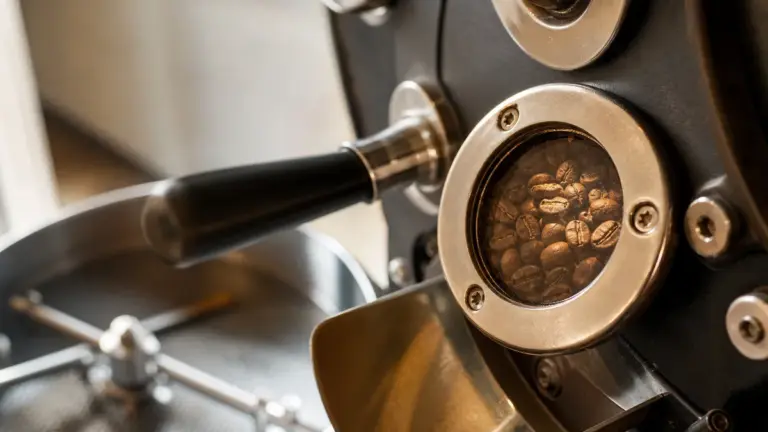
Air cooling draws cooler air through the beans. Water quenching uses water to remove heat, including through evaporation, and is used in industrial roasting. The equipment and cooling method therefore form part of the roasting process, rather than an optional pause at the end.
Research comparing these methods found faster degassing in water-quenched coffees with higher moisture content. However, most measured aroma compounds showed similar stability between the air-cooled and water-quenched samples. That does not support a blanket claim that every water-quenched coffee tastes worse.
For the machinery involved, see roasting equipment. Home-roasting methods and safe handling belong in how to roast coffee at home, rather than a universal cooling time imposed on different machines.
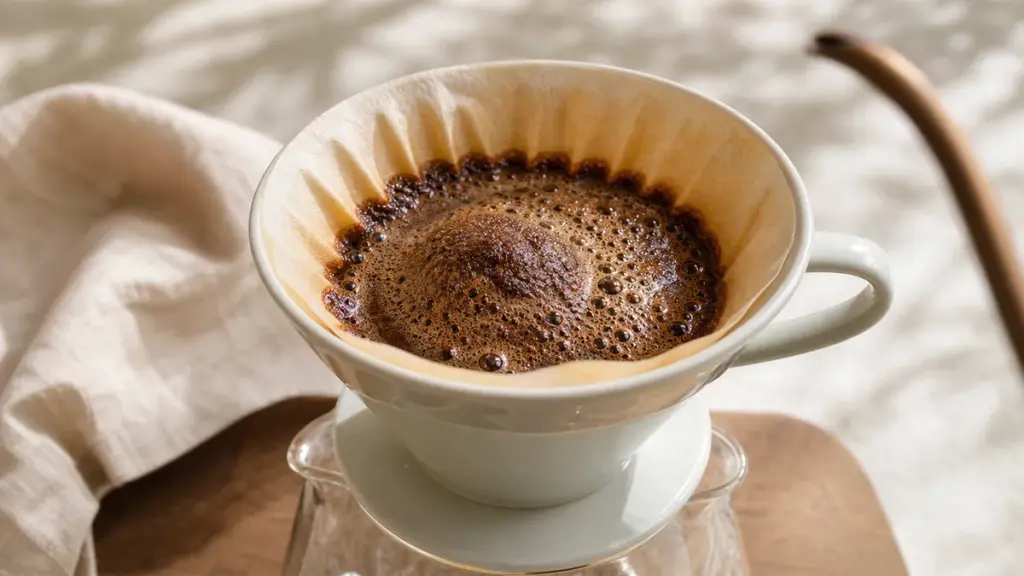
Degassing: why roasted coffee releases CO₂
Roasting produces gases through heat-driven chemical reactions. Some escape immediately; some remain within the bean’s porous structure and gradually move out afterwards. Carbon dioxide, written CO₂, makes up the largest share of this released gas.
Degassing means this continuing escape of gas. It happens during storage, accelerates when beans are ground, and continues when water reaches the grounds.
Grinding makes a particularly large difference because it breaks open the bean structure and shortens escape routes. In a laboratory study, up to 75% of trapped gas escaped during grinding and the following 90 seconds for freshly roasted coffee ground to espresso fineness. That result describes the tested coffees and conditions, not a guaranteed percentage for every grinder.
This is why whole-bean resting advice cannot simply be transferred to pre-ground coffee. A sealed bag of ground coffee and a sealed bag of whole beans of the same roast age are not behaving identically.
The wider coffee roasting guide explains where this post-roast stage fits within the journey from green bean to finished coffee.
How long should coffee rest after roasting?
Use the roaster’s recommendation first, then taste. Published advice differs because roasters are discussing different coffees, roast styles, brewing methods and packaging, not because there is one agreed deadline that somebody has missed.
The following ranges concern whole beans stored in a well-sealed package, counted from the roast date.
| Brewing method | Broad starting point | What might change it? |
|---|---|---|
| Filter coffee | About 5 to 14 days | Darker roasts may be enjoyable sooner; some light roasts benefit from longer |
| Espresso | About 7 to 21 days | Lighter roasts may need the longer end or beyond; darker roasts may work sooner |
These are practical ranges drawn from roasters’ experience, not experimentally established limits for all coffee. Brewing before them is not automatically wrong, and reaching their end does not make the beans stale.
Why espresso often needs longer
Espresso forces water through a compact bed of finely ground coffee. Gas release can complicate extraction, making very fresh coffee harder to dial in, meaning to adjust until the shot tastes balanced.
Square Mile’s published experiments with its Red Brick blend found freshly roasted samples difficult to brew and predominantly sour. That is useful first-hand evidence for that blend and method, not proof that every sour espresso needs more rest.
Filter brewing offers an opportunity to release gas during the bloom, the initial wetting of the grounds. Espresso generally has less opportunity for a separate, open degassing stage before extraction.
Why recommendations disagree
Square Mile recommends 5 to 14 days for filter and 7 to 14 days for espresso. Climpson & Sons gives more roast-specific guidance, including 10 to 21 days for light-roast espresso, but shorter rests for darker roasts.
The disagreement is about the appropriate starting point, not whether gas escapes after roasting. Roast level changes both gas production and release behaviour, while brewing preferences determine what counts as the most enjoyable result. Do not turn the longest recommendation into a rule for every bag.
One-way valves: resting without leaving the bag open
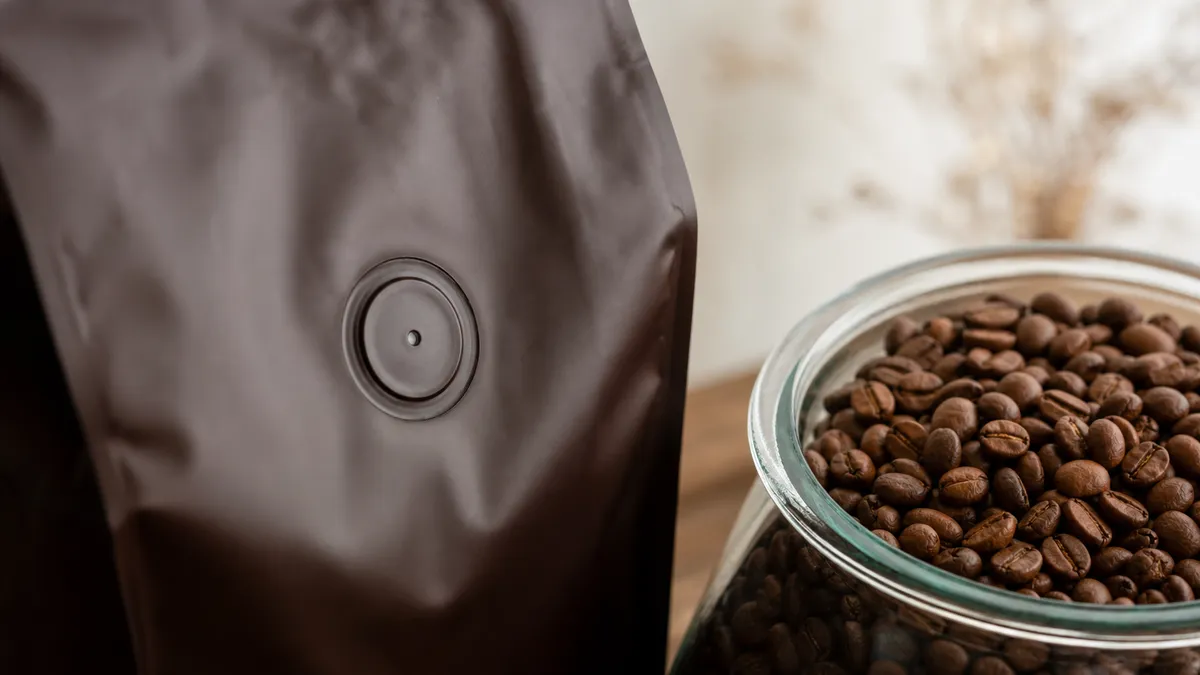
A coffee bag’s one-way valve is a pressure-release device. When gas pressure inside reaches the valve’s opening point, gas can escape; when pressure falls, the valve closes again.
This lets coffee continue degassing inside a sealed package without continually inflating it. The valve is designed to restrict oxygen entering through that route, but it does not remove oxygen already inside the bag.
The rest of the packaging matters too. Its material, seals and closure influence how well it protects the contents. A valve attached to a poorly sealed package cannot compensate for the leak.
Leave an unopened, intact valve bag sealed while the beans rest. Opening it repeatedly to “let the gas out” defeats part of the packaging’s purpose by exchanging its internal atmosphere with room air.
After opening, close it promptly and follow the roaster’s storage instructions. Transferring beans into a jar is not automatically an improvement: a controlled packaging study found that the specific original package with an integrated screw cap preserved measured aroma freshness better than the tested canister, clip and tape alternatives. That finding does not rank every container on the market.
Degassing is not the same as staling
Resting and staling overlap in time, but they describe different things.
Degassing is primarily a physical release process. Oxidation happens when oxygen reacts with coffee constituents, including oils and aroma compounds. Staling is the broader loss or alteration of desirable flavour, encompassing chemical changes and the escape of volatile aroma compounds, which readily enter the air.
Consequently, coffee can become easier to brew as it loses excess gas while also gradually losing some aroma. The aim is not to remove every trace of CO₂. It is to find a useful balance between brewing behaviour and flavour retention.
Heat, oxygen exposure and moisture influence deterioration. Keep beans well sealed, dry and away from heat and direct sunlight, rather than leaving them open on a worktop to hurry the process.
Freshness also involves more than aroma intensity. A strong smell from an open bag means aromatic compounds are reaching your nose, but it does not quantify how much desirable aroma remains in the beans.
Roast date versus best-before date
A roast date tells you when roasting happened. It gives you a starting point for testing rest, but says nothing by itself about subsequent storage or how often the bag has been opened.
A best-before date concerns food quality, rather than being a use-by safety deadline. Food Standards Scotland also stresses that best-before guidance depends on following the labelled storage instructions. It is not a promise that coffee will deliver its most distinctive flavour immediately before that date.
For buying and stock rotation, read the information together:
- Roast date: how far the coffee has travelled through its post-roast changes.
- Opening date: when its protective packaging atmosphere was disturbed.
- Storage instructions: the conditions under which the supplier expects it to keep.
- Roaster’s brewing advice: guidance specific to that coffee.
Do not calculate an unknown roast date backwards from a best-before date. Without the producer’s stated shelf-life policy, the calculation has no reliable basis.
Likewise, “best within a month” is not a universal scientific boundary. Packaging research demonstrates why storage conditions must be considered alongside elapsed time.
Find your coffee’s resting point
A small comparison is more useful than waiting for a supposedly perfect date.
- Record the starting information. Note the roast date, whether the coffee is whole or ground, and when you opened it.
- Follow the roaster’s initial recommendation. If none is supplied, use the broad filter or espresso range above as a first tasting point.
- Keep the comparison controlled. Use your normal recipe and record the coffee dose, water or beverage weight, temperature and brewing time.
- Taste again on another day. Note aroma, sweetness, acidity, texture and, for espresso, how consistently the coffee brews.
- Change one thing at a time. If you alter the grind, record it. Otherwise, improvement caused by a recipe change can be mistaken for improvement caused by resting.
For repeatable comparisons, taste the drink as it cools rather than judging only the first hot sip. This is an editorial tasting method, not a laboratory freshness test.
| Symptom | Possible cause | Useful next check |
|---|---|---|
| Very foamy espresso and unstable brewing soon after roasting | Excess gas may be contributing | Retest after more rest, keeping preparation consistent |
| Sour coffee despite resting | Extraction or the coffee’s inherent acidity may be involved | Check the recipe rather than adding rest indefinitely |
| Muted aroma after repeated opening | Aroma loss and air exposure may be contributing | Check closure, storage and how much coffee you keep open |
| Little visible filter bloom | Less retained gas, among other variables | Judge the brewed flavour, not bloom size alone |
What freshness measurements can and cannot tell you
Coffee researchers measure different aspects of ageing. Gravimetric methods track tiny losses in mass as gas escapes. Aroma analysis tracks changes in volatile compounds, sometimes using ratios between selected compounds as freshness indices, numerical indicators of change.
These approaches answer related but different questions. Retained gas helps explain brewing behaviour; aroma measurements help describe chemical ageing. Neither automatically identifies the day on which every drinker will prefer a particular coffee.
Controlled degassing experiments also show why roast level cannot be ignored: darker roasting produced more released gas and faster release under the tested conditions. More initial gas does not necessarily mean a longer required rest.
For everyday roast cooling, degassing and freshness decisions, keep the calendar as a record, not a verdict. Use it alongside intact packaging, a repeatable brew and the flavour in the cup.
FAQ
Can I brew coffee on the day it is roasted?
Yes, once it has been properly cooled, but it may not give the easiest or most representative brew. Very fresh coffee retains gas that can complicate extraction, particularly for espresso. Treat a same-day brew as an early comparison rather than a final judgement on the coffee’s quality.
Should I grind beans early to shorten their resting time?
No, not as a routine substitute for resting whole beans. Grinding releases gas rapidly, but also exposes coffee to faster aroma loss and chemical change. Keep the coffee whole while it rests and grind for brewing, rather than trying to reproduce several days of whole-bean resting by leaving grounds exposed.
Does a swollen bag prove the coffee is fresh?
No, swelling shows pressure inside the package, not a complete assessment of freshness. Coffee can release gas during storage, but package pressure also depends on the valve and packaging conditions. Neither a swollen bag nor a flat one tells you enough about retained aroma, oxygen exposure or likely brewing quality.
Where to go next
Read Coffee Roasting for the wider process, then Roasting Equipment to understand the machinery behind roasting and cooling. If you roast your own beans, How to Roast Coffee at Home puts cooling and post-roast handling into a practical workflow.
Sources
- Anderson, Shimoni, Liardon and Labuza, Journal of Food Engineering. The diffusion kinetics of carbon dioxide in fresh roasted and ground coffee, 2003. Publisher abstract. Laboratory evidence on CO₂ formation, retention and release.
- Smrke and colleagues, American Chemical Society. Time-Resolved Gravimetric Method To Assess Degassing of Roasted Coffee, 2018 journal issue, first published online in 2017. Open-access paper, ZHAW repository. Experimental evidence on roast level, roast speed and grinding.
- Baggenstoss, ETH Zürich. Coffee roasting and quenching technology: formation and stability of aroma compounds, doctoral thesis, 2008, especially chapter 6, reporting research published in 2007. Full thesis. Cooling methods and controlled cooling comparisons.
- Square Mile Coffee Roasters. Rest Is Best, undated, accessed November 2026. Roaster guidance. Practical resting recommendations, not a universal standard.
- Square Mile Coffee Roasters. Red Brick and Freshness, 2020. Reported brewing experiments. First-hand observations for a particular espresso blend.
- Climpson & Sons. The importance of resting coffee: notes from our own experiments, undated, accessed November 2026. Roaster guidance. Roast-specific practical resting ranges.
- TricorBraun Flex. Degassing Valves FAQs, undated, accessed November 2026. Manufacturer explanation. Valve operation and pressure release.
- Smrke and colleagues, Food Packaging and Shelf Life. Effects of different coffee storage methods on coffee freshness after opening of packages, 2022, volume 33, article 100893. Open-access paper, ZHAW repository. Controlled comparison of opened-package storage.
- Specialty Coffee Association. What is the Shelf Life of Roasted Coffee? A Literature Review on Coffee Staling, 2012. Association review. Staling mechanisms and storage influences.
- Glöss and colleagues, Chimia. Freshness indices of roasted coffee: monitoring the loss of freshness for single serve capsules and roasted whole beans in different packaging, 2014, volume 68, pages 179 to 182. Paper abstract. Analytical freshness indicators and packaging research.
- Food Standards Scotland. Use-by and best-before dates, undated, accessed November 2026. Official consumer guidance. Quality dates and storage instructions.
This article was researched using controlled coffee-science studies, an academic thesis, official guidance and clearly distinguished first-hand roaster recommendations; no first-hand testing was undertaken for this article.
Last checked: November 2026