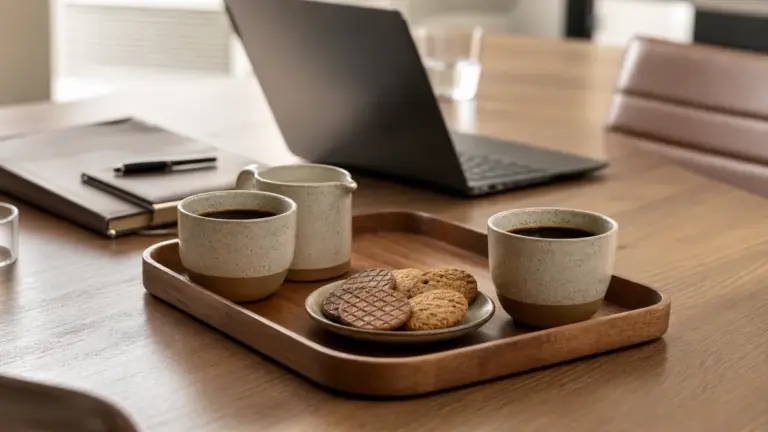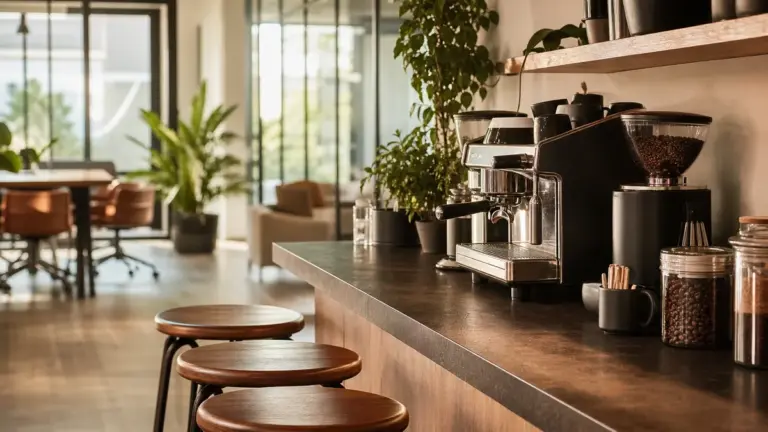
Office coffee culture is the set of habits, choices and unwritten rules around making drinks and taking breaks at work. Build a good one by making those breaks genuinely available, offering drinks beyond regular coffee, and sharing responsibility for the space without making social participation compulsory.
In short
- Treat coffee breaks as an invitation, not a meeting everyone must attend.
- Offer decaf, tea, water and suitable milk alternatives alongside regular coffee.
- Give cleaning and replenishment named owners, with cover when they are away.
- Keep coffee clubs and tastings optional, beginner-friendly and open to non-drinkers.
- Research supports some benefits of short breaks, but does not prove that providing coffee improves productivity or staff retention.
What good office coffee culture looks like
A useful test is whether someone can comfortably say, “I am coming for the conversation, but I am having water.” Another is whether a colleague can take a quiet break alone without having to explain themselves.
Aim for dependable drinks, permission to pause and considerate behaviour. Coffee knowledge is optional. Nobody should need an opinion on roast profiles to feel welcome, and nobody should have to disclose a health condition to explain their drink choice.
Start by asking colleagues what they actually want: which drinks they use, when they can take breaks, what runs out and what makes the shared area frustrating. Include people on different shifts, part-time colleagues and those who rarely visit the kitchen.
The wider coffee in the workplace hub covers the surrounding decisions. This article focuses on everyday habits rather than equipment selection or kitchen design.
Make rituals easy to join and easy to decline
Try one modest shared ritual before filling the calendar. An occasional mid-morning invitation, a welcome drink for a new starter or an open break after a recurring team meeting gives people a starting point.
Make the invitation specific but flexible: “We will be in the kitchen after the meeting if you fancy a drink.” Avoid attendance lists, compulsory conversation prompts and managers asking why someone did not join.
Protect the difference between a break and another work discussion. If conversation turns into a decision about a project, record that decision through the usual work channel rather than leaving absent colleagues to discover it later.
Make access fair
Do not organise every gathering around the same group’s availability. Rotate occasional events and arrange cover where reception, support or operational staff cannot leave together. Agree arrangements with the people responsible for those services.
Managers should model the behaviour they are inviting: take a break themselves, respect someone else’s pause and avoid treating a mug at a desk as proof that a person has rested.
For the physical surroundings, use creating a coffee-friendly office environment. Here, the priority is permission and participation, not furniture.
Offer inclusive choices without making people explain
Keep decaf visible and easy to prepare, rather than something available only if someone asks the right person. Give tea and water equal standing, and choose plant-based milk alternatives after asking what colleagues need and will use.
Maintain a private route for allergy information. Retain original packaging so ingredients can be checked, and do not assume that a plant-based drink is allergen-free: soya and almond drinks, for example, introduce their own allergens.
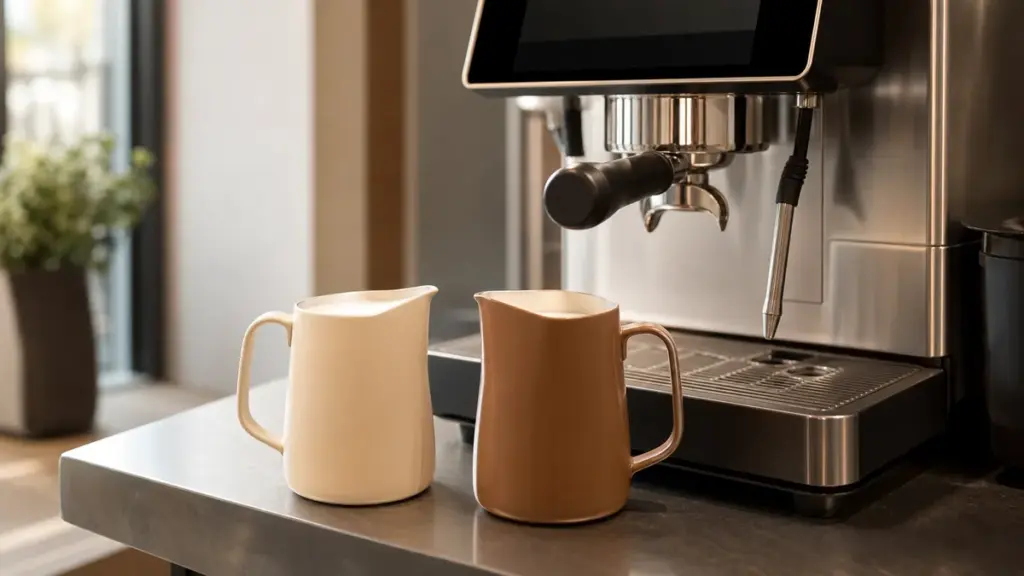
Shared milk equipment needs particular care. Allergen residues can pass between drinks through shared utensils or equipment. Use separate, clearly identified utensils and a suitable cleaning process; if you cannot control cross-contact, say so rather than promising an allergen-free drink.
Caffeine choices also deserve privacy. EFSA’s scientific assessment found that caffeine close to bedtime can disturb sleep in some adults. The NHS advises no more than 200 mg of caffeine a day from all sources during pregnancy, but colleagues should never have to announce a pregnancy to obtain decaf.
Individual sensitivity and medical circumstances differ. Anyone seeking personal advice about caffeine should speak to a GP, pharmacist or midwife. Your role as an organiser is to provide choices, not to monitor consumption.
Agree shared etiquette and cleaning responsibilities
Write a short agreement that describes actions rather than scolds people. “Return milk to the fridge” is more useful than “Respect the kitchen”.
A workable checklist is:
- After making a drink: leave the preparation area clear, deal with spills and put used crockery in the agreed place.
- When supplies run low: replenish them if that is your assigned task, or notify the named person.
- For shared milk: follow the packaging’s storage instructions, use-by date and any instructions applying after opening.
- For the machine: follow its manufacturer’s cleaning instructions and report faults rather than improvising repairs.
- For routine checks: assign responsibility for cleaning, stock checks and absence cover.
Separate ordinary courtesy from scheduled maintenance. Everyone can clear up after themselves; that does not mean everyone should independently change machine settings or decide which cleaning chemicals to use.
Do not let the most conscientious colleague become the permanent unpaid organiser. Allocate responsibility through an agreed rota or job role, allow time for it and make the arrangement visible.
In Great Britain, HSE guidance requires access to drinking water and somewhere to rest and eat meals. Treat the coffee offer as an addition to those welfare basics, not a replacement for them.
Run coffee clubs and tastings without the snobbery
A coffee club can simply be an optional group that suggests coffees and hosts occasional tastings. Agree who organises it, how choices are made and whether its activities are separate from the standard drinks available to everyone.
Keep the everyday provision accessible. A club should not take over the only machine, repeatedly change everyone’s settings or make ordinary drink preferences a subject of judgement.
A simple tasting format
For a first session, try this suggested format:
- Choose two coffees. Pick a clear comparison rather than a large selection.
- Prepare them consistently. Use the same brewing method and recipe so you are not deliberately changing several things at once.
- Serve small individual portions. Allow people to taste, smell or simply observe, with water and alternative drinks available.
- Ask plain questions. Which seems sweeter, more bitter, fuller or more drying?
- Finish with preference, not a winner. Record what people enjoyed without presenting the result as an objective quality ranking.
This is an informal activity, not professional coffee grading. Nobody needs to identify an exact fruit or agree with the organiser.
Make decaf sessions an ordinary part of the programme, and do not assume that every participant wants to drink every sample. A colleague who enjoys discussing the aroma but declines the drink has still joined in.
Include remote and hybrid colleagues deliberately
Offer remote colleagues an equivalent invitation, not a live view of an office gathering they cannot hear. Try a small, optional online catch-up where everyone brings any drink they like.
Avoid making it another reporting meeting. Keep work updates in their usual channels, allow people to leave easily and do not require cameras or participation in a tasting.
For hybrid teams, vary occasional activities across office days. Publish practical information, such as changes to drinks provision, somewhere everyone can access it. If a conversation produces a work decision, document it regardless of who happened to be beside the machine.
These are suggested inclusion practices, not proven remedies for remote-work difficulties. An office coffee event should not become a test of commitment, nor should remote colleagues have to reproduce an office ritual at home.
What research does and does not show
The strongest relevant evidence concerns breaks, not the coffee machine itself.
A 2022 systematic review and meta-analysis combined 22 independent samples from experimental and quasi-experimental studies. It found small improvements in vigour and reductions in fatigue after micro-breaks, but no statistically significant improvement in overall performance. The review defined micro-breaks as interruptions to tasks lasting no longer than 10 minutes.
That supports a cautious case for short pauses. It does not establish that coffee caused the benefits, that social breaks suit everyone or that a particular machine will improve productivity.
Remote-working research needs similar care. A natural-experiment study using communication data from 61,182 US Microsoft employees found that firm-wide remote work made collaboration networks more static and siloed. It examined one organisation during the first six months of 2020, not a trial of virtual coffee breaks.
It is reasonable to use that finding as a prompt to consider opportunities for informal contact. It is not evidence that scheduled coffee chats solve isolation.
Likewise, if a workplace survey finds that people who like the coffee also report greater satisfaction, that association alone cannot show cause. They may also appreciate their manager, workload or working environment. Do not turn a popular perk into an unsupported promise about retention, absence or output.
Build office coffee culture through a small pilot
Use a suggested four-week pilot rather than launching a permanent programme immediately.
- Listen first. Gather drink preferences, access problems and suggestions through a short voluntary survey.
- Choose one change. For example, improve decaf availability or trial one optional shared break.
- Assign ownership. Name the organiser, stock contact and cleaning cover.
- Review and adjust. Ask what helped, what excluded people and what should stop.
Plan replenishment around attendance rather than payroll headcount. The following figures are illustrative arithmetic, not demand forecasts or machine-capacity recommendations. They assume 60% attendance and two coffees per person present; replace both assumptions with local observations.
| Total team headcount | People present at 60% attendance | Daily coffees at two per person present |
|---|---|---|
| 10 | 6 | 12 |
| 30 | 18 | 36 |
| 60 | 36 | 72 |
Record tea, decaf and milk preferences separately rather than treating everyone as a regular coffee drinker. If provision needs changing, obtain itemised written quotations covering equipment, consumables, servicing, filters, installation and any contractual commitments. Compare the full provision over the same period, including staff cleaning time, rather than assessing the machine alone.
The complete workplace guide covers the broader planning questions; coffee stations and office perks helps put the offer in context.
Judge your office coffee culture by whether people can access a drink they want, take an appropriate break and leave the shared space ready for someone else. Keep what works, change what does not and let participation remain a choice.
FAQ
Can a small office build a coffee culture without a club?
Yes, a club is entirely optional. Start with reliable drinks, a clear cleaning arrangement and occasional invitations to pause together. There is no need to give the activity a name or create a committee. Ask the team what would be useful, and avoid turning a simple shared pleasure into another administrative task.
What if colleagues disagree about which coffee to provide?
Keep a dependable everyday option and make experimentation optional. Invite feedback about specific qualities, such as bitterness or strength, rather than asking people to defend their taste. A tasting can help the group compare preferences, but a majority vote should not remove a practical decaf or alternative-drink option that others need.
Should managers attend informal coffee gatherings?
Managers can attend, but should avoid taking control of the occasion. Join as a colleague rather than using the gathering for announcements, progress checks or feedback about individuals. Make it equally acceptable for people to join, decline or leave. If an operational issue arises, move it into an appropriate work discussion.
Where to go next
Read Coffee in the Workplace: The Complete Guide for the wider planning decisions, and Creating a Coffee-Friendly Office Environment for the surroundings that support everyday use. Coffee Stations and Office Perks helps position drinks within the broader workplace offer without confusing equipment with culture.
Sources
-
PLOS ONE, Albulescu and colleagues. A systematic review and meta-analysis on the efficacy of micro-breaks for increasing well-being and performance (2022; shortened title), volume 17, article e0272460.
https://journals.plos.org/plosone/article?id=10.1371/journal.pone.0272460 -
Nature Human Behaviour, Yang and colleagues. The effects of remote work on collaboration among information workers (published online 2021; volume 6, 2022).
https://www.nature.com/articles/s41562-021-01196-4 -
Health and Safety Executive. Have the right workplace facilities: What you must provide for a safe and healthy workplace (undated live guidance, retrieved 2026).
https://www.hse.gov.uk/simple-health-safety/workplace-facilities/welfare.htm -
Food Standards Agency. Allergen guidance for food businesses (2020; publication page updated July 2026).
https://www.gov.uk/government/publications/allergen-guidance-for-food-businesses/allergen-guidance-for-food-businesses -
European Food Safety Authority. Caffeine, including the summary of its Scientific Opinion on the safety of caffeine (2015; live topic page retrieved 2026).
https://www.efsa.europa.eu/en/topics/topic/caffeine -
NHS. Foods to avoid in pregnancy (reviewed June 2026).
https://www.nhs.uk/pregnancy/keeping-well/foods-to-avoid/ -
Food Standards Agency. How to chill, freeze and defrost food safely (2017; live guidance retrieved 2026).
https://www.gov.uk/government/publications/how-to-chill-freeze-and-defrost-food-safely/how-to-chill-freeze-and-defrost-food-safely
This article was researched using primary workplace studies and official welfare, food-safety and caffeine guidance; activity formats and planning examples are editorial suggestions, not tested interventions.
Last checked: November 2026