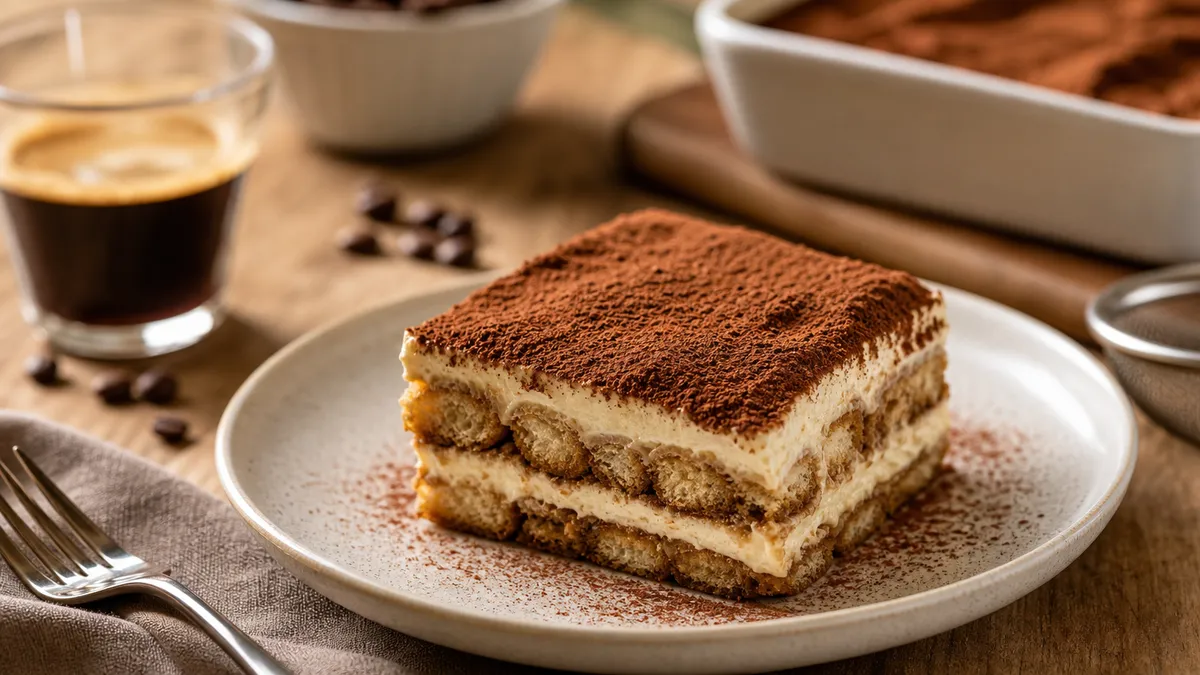
Tiramisu is a chilled Italian dessert made by layering coffee-dipped savoiardi biscuits with a mascarpone, egg yolk and sugar filling, then finishing with cocoa. For a classic-style result, use strong, cooled coffee, dip the biscuits briefly and refrigerate the assembled dessert for at least 6 hours.
In short
- This recipe serves 8, using 500 g mascarpone, 250 g savoiardi and 300 ml coffee.
- The Treviso restaurant version uses egg yolks, without whipped cream, egg whites or alcohol.
- British Lion or Laid in Britain hen eggs are suitable for raw use for most people under UK food safety guidance, with an important exception for severely immunocompromised people.
- Pasteurised liquid egg yolk suitable for uncooked dishes is an alternative to shell eggs.
- Keep the finished dessert at 0 to 5°C and, as a cautious household rule, eat it within 48 hours of preparation.
Classic Tiramisu
A good tiramisu has tender biscuit layers, a soft, rich filling and enough coffee bitterness to balance the sugar. It should be moist rather than wet, with cocoa providing a slightly bitter finish.
This recipe follows the six-ingredient, yolk-only approach published by Le Beccherie in Treviso. It is a home-scale adaptation with less sugar, measured coffee and biscuits weighed rather than counted, not a reproduction of the restaurant’s registered formula.
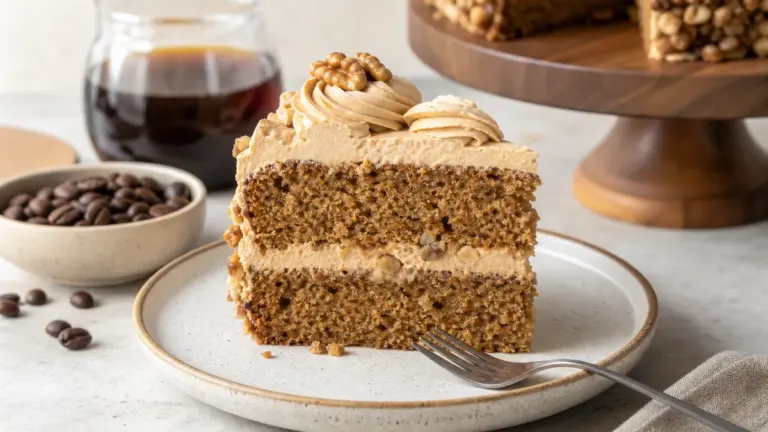
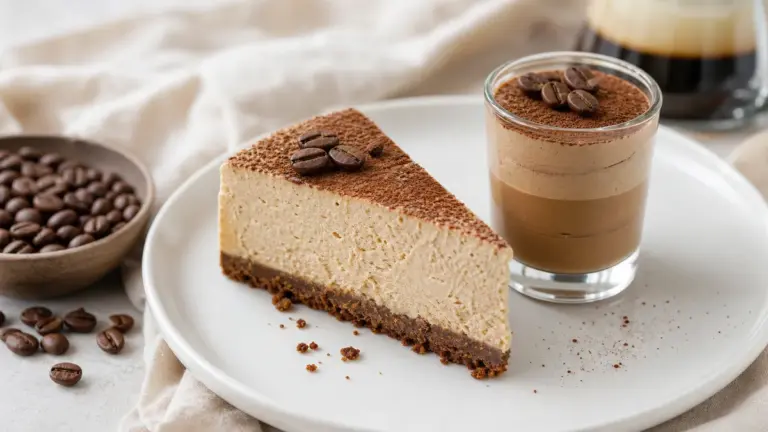
For other coffee puddings, start with the coffee desserts guide.
Recipe card
Serves: 8
Preparation: approximately 25 minutes, plus coffee cooling
Chilling: at least 6 hours, preferably overnight
Cooking: none after brewing the coffee
Equipment: digital scales, measuring jug, electric whisk, two mixing bowls, flexible spatula, shallow coffee dish, fine sieve and a serving dish approximately 20 cm square and 6 cm deep.
Ingredients
- 500 g full-fat mascarpone made with pasteurised milk or cream
- 100 g egg yolk, weighed without shells, from British Lion or Laid in Britain hen eggs; alternatively, use 100 g pasteurised liquid egg yolk labelled as suitable for uncooked dishes
- 120 g caster sugar
- 250 g dry savoiardi biscuits, also sold as Italian ladyfingers or sponge fingers
- 300 ml strong, unsweetened espresso, cooled
- 10 g unsweetened cocoa powder
Approximate caffeine: around 50 mg per serving from the coffee alone, using EFSA’s illustrative figure of 80 mg per 60 ml espresso and assuming all 300 ml enters the dessert: (300 ÷ 60 × 80 ÷ 8 = 50) mg. Cocoa adds caffeine, while unused dipping coffee reduces the amount consumed. Actual espresso caffeine varies substantially.
In pregnancy, the NHS advises no more than 200 mg caffeine daily from all sources. Individual sensitivity varies: consider decaffeinated coffee and seek advice from a GP, pharmacist or midwife where appropriate.
Method
-
Prepare and cool the coffee. Brew 300 ml espresso and pour it into a shallow dish. Let it cool before dipping. Keep the eggs and mascarpone refrigerated meanwhile.
-
Check the biscuit layout. Arrange a dry layer in the serving dish, then remove it. Allow roughly half the biscuits for each of two layers, breaking a few to fill gaps.
-
Whisk the yolks and sugar. Whisk the 100 g yolk and 120 g sugar in a clean bowl until paler and thick enough for a ribbon of mixture to sit briefly on the surface.
-
Incorporate the mascarpone. Stir the mascarpone briefly with a spatula to loosen it. Fold in the yolk mixture in several additions, stopping when smooth rather than continuing to beat.
-
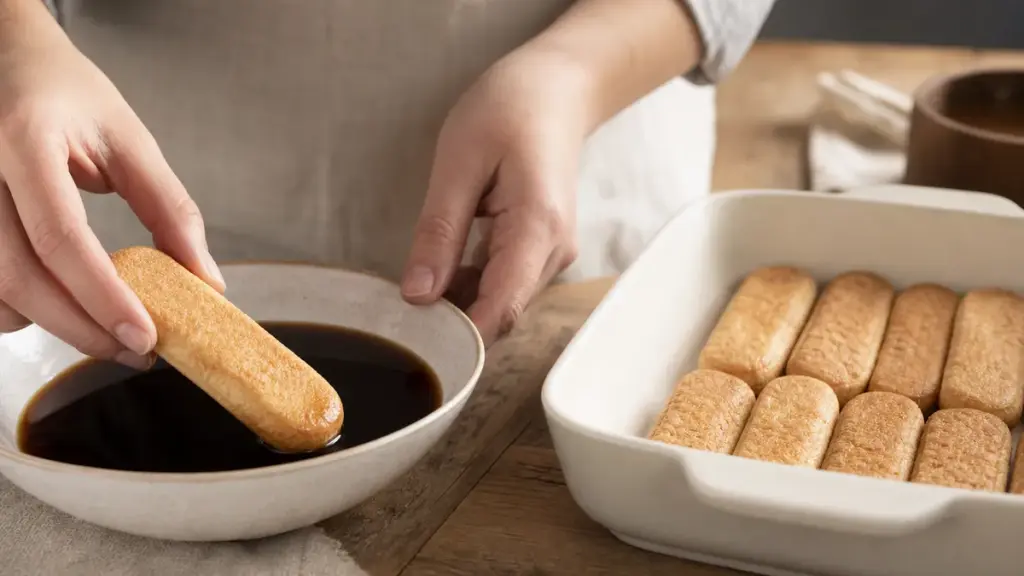
Dip the first layer. Briefly dip each biscuit into the cooled coffee, turn it and lift it out immediately. Wet both surfaces without softening it enough to break. Arrange a close-fitting layer.
-
Add the filling. Spread half the mascarpone mixture over the biscuits. Repeat with the remaining biscuits and filling. Do not pour leftover coffee over the layers.
-
Cover and chill. Cover without touching the surface and refrigerate immediately at 0 to 5°C for at least 6 hours, preferably overnight. Count chilling within the storage period, not in addition to it.
-
Finish and serve. Sift over the cocoa shortly before serving. Cut into 8 portions or spoon into bowls. Return the remaining dessert promptly to the fridge.
Choosing mascarpone and savoiardi
Mascarpone is the soft, creamy cheese that gives the filling its richness. Use full-fat mascarpone rather than a reduced-fat spread, which would change the formulation. Check for pasteurised milk or cream, particularly when serving someone who is pregnant.
Savoiardi are dry, light sponge biscuits that absorb liquid. A brief dip moistens their surfaces without immediately destroying their structure. Soft cake fingers need different handling, so dry Italian-style biscuits are the clearer starting point.
Judge the dip by the biscuit, not a stopwatch. Try one first and shorten the dip if it becomes difficult to lift.
Raw egg safety and safe storage
What UK guidance actually says
A blanket warning that everyone must avoid raw egg tiramisu would misrepresent UK guidance. The Food Standards Agency considers hen eggs produced under the British Lion Code and Laid in Britain schemes to carry a very low, but not zero, Salmonella risk.
Its advice permits raw or lightly cooked assured hen eggs for most people, including pregnant people, young children and older adults. Food Standards Scotland gives corresponding advice. Check the assurance scheme rather than assuming any British egg meets it.
The exception is people who are severely immunocompromised and require a medically supervised diet. They should follow their clinical team’s advice, which may require thoroughly cooked eggs and exclude this dessert.
Use clean, undamaged eggs, observe date marking, wash hands after handling shells and clean equipment and surfaces. Do not substitute raw duck, goose or quail eggs: the raw hen-egg guidance does not extend to them.
Pasteurised alternatives
For a version without unpasteurised raw egg, use commercially pasteurised liquid yolk explicitly suitable for uncooked dishes. Weigh the same 100 g and follow its storage instructions. Whole egg or egg white is not a direct replacement.
Some recipes heat yolks over simmering water or whisk them with hot sugar syrup. Thickening or a hot syrup temperature alone does not establish that the complete mixture received a validated safety treatment. Pasteurised yolk is simpler here; do not improvise home pasteurisation.
Refrigerating the finished dessert
Keep tiramisu covered at 0 to 5°C, checking with a fridge thermometer. Use a cautious limit of 48 hours from preparation, or any shorter applicable ingredient instruction.
This applies the FSA’s general household leftovers advice, not a tiramisu-specific laboratory shelf-life determination. Take out only what you need and keep unrefrigerated serving time short.
Coffee strength and texture
The coffee should taste concentrated before it meets the sweet filling. Espresso supplies flavour without requiring a large soaking volume. Cool it before use, as the published Le Beccherie method directs.
The 300 ml is the available dipping liquid, not a quantity that must all be absorbed. Using every drop can leave a puddle beneath the biscuits.
As an editorial taste preference, medium or medium-dark coffee with chocolate or nut notes is a straightforward match. Smoky coffee can dominate; fruit-led coffee gives a different balance. Choose a flavour you enjoy.
Moka-pot coffee is an alternative: prepare the same available volume and judge its flavour before assembly. Treat it as a substitution and do not reuse the espresso-based caffeine estimate.
Troubleshooting
| Symptom | Likely cause | Fix |
|---|---|---|
| Liquid beneath the dessert | Oversoaked biscuits or surplus coffee poured in | Shorten the dip; leave unused coffee behind |
| Grainy or greasy filling | Mascarpone mixture worked too much | Stop mixing as soon as smooth |
| Unpleasantly dry biscuit centres | Dip too brief for that biscuit | Wet both surfaces more thoroughly next time |
| Portions slump | Insufficient chilling or a soft filling | Chill overnight; spoon into bowls |
Aim for tender layers and a spoonable filling, not the firmness of baked cake.
Tiramisu Variations
With whipped cream
Whipped cream appears in published adaptations but is absent from Le Beccherie’s six-ingredient recipe. It produces a different filling rather than making the yolk-only version more authentic.
Follow a recipe formulated around cream instead of adding an arbitrary quantity here: the balance of dairy, egg and biscuit matters.
With egg whites
Matilde Vicenzi’s published version folds whipped egg whites into the mascarpone mixture for an airier filling.
Raw egg guidance still applies to the whites. For pasteurised whites, check suitability for whipping and uncooked use.
With alcohol
Marsala appears in published variations, including Vicenzi’s. For a modest adaptation here, replace 30 ml coffee with 30 ml Marsala, keeping the available dipping liquid at 300 ml.
Alcohol is not required by the Treviso original. This dessert is not cooked afterwards, so an alcoholic version must not be described as alcohol-free.
Decaffeinated, fruit and chocolate versions
Use decaffeinated espresso in the same quantity for a lower-caffeine version. Do not call it caffeine-free, particularly with cocoa present.
Fruit versions depart further from the classic. Galbani publishes a raspberry adaptation; follow a dedicated formulation rather than adding wet fruit indiscriminately between these layers.
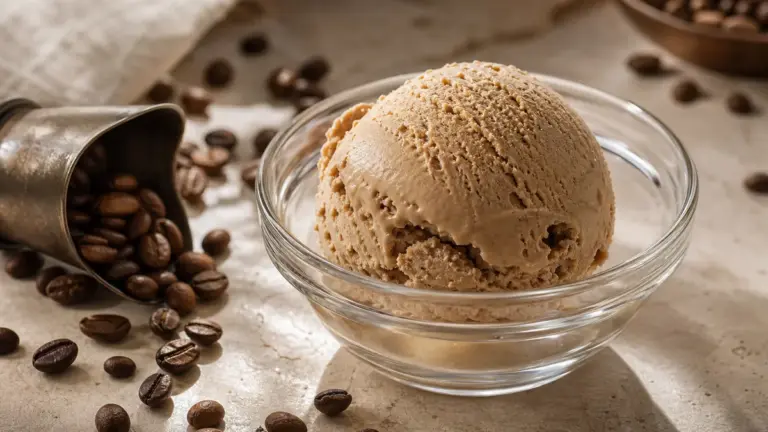
For a frozen dessert, move to coffee ice cream. For baked chocolate and coffee rather than chilled biscuit layers, try espresso brownies.
Tiramisu history in brief
Tiramisu’s origin is disputed, and its precise invention year should not be presented as settled.
- 1950s: Friuli-Venezia Giulia’s tourism authority attributes a coffee, mascarpone, biscuit and cocoa version to Tolmezzo. It also identifies a different predecessor from Pieris involving sponge cake, chocolate mousse and zabaglione, an egg-based cream.
- Late 1960s to early 1970s: Le Beccherie’s current account places development in this period, crediting Alba Campeol and pastry chef Roberto “Loli” Linguanotto.
- 1972: Le Beccherie dates its menu appearance to this year. Its older published history places the final experiments in 1971 to 1972.
- 15 October 2010: The restaurant records its recipe being filed by notarial deed with the Accademia Italiana della Cucina.
This recipe follows the Treviso restaurant tradition without claiming that its account resolves the competing regional claims.
FAQ
Can I make tiramisu without an espresso machine?
Yes, use strong, cooled moka-pot coffee instead. The practical requirement is enough concentrated coffee flavour without oversaturating the biscuits. Prepare 300 ml as the available dipping liquid, but leave any surplus behind. Its caffeine content will differ, so the espresso-based estimate in the recipe card no longer applies.
Does tiramisu need gelatine?
No, this yolk-and-mascarpone formulation does not need gelatine. Its ingredient list follows the six-ingredient Treviso approach, with refrigeration built into the method. Expect a soft dessert rather than a rigid cake. Adding gelatine would create a different formulation and would need its own quantities and method.
Can I make individual portions?
Yes, assemble the same layers in 8 small dessert glasses instead of one dish. Break the biscuits to fit and distribute the filling evenly. Individual portions are useful when you prefer a spooned dessert to cut squares, but they need the same refrigeration, egg precautions and preparation-to-storage timing.
Where to go next
Read Coffee Desserts: The Complete Guide to choose your next pudding by method and texture. Coffee Ice Cream takes coffee into a frozen dessert, while Espresso Brownies offers a baked chocolate option; Coffee Cake is the next read for a sliceable bake rather than chilled tiramisu.
Sources
- Le Beccherie, Tiramisù Beccherie: Recipe and History, undated. Original ingredient list, layering method and the restaurant’s historical account. Recipe and history PDF.
- Le Beccherie, The Original Tiramisu Recipe and The Invention of Tiramisu, undated, retrieved November 2026. Original recipe; restaurant history.
- Food Standards Agency, Advice on safe storage, handling and use of eggs for catering, updated 20 August 2026. Applies to England, Northern Ireland and Wales. Egg safety guidance.
- Food Standards Scotland, Update of FSS advice on the consumption of raw / lightly cooked eggs, 29 July 2021, reference FSS-ENF-21-005. Scottish guidance PDF.
- Food Standards Agency, How to chill, freeze and defrost food safely, 2017, current online guidance retrieved November 2026. Chilling guidance.
- NHS, Foods to avoid in pregnancy, current online guidance retrieved November 2026. Pregnancy food guidance.
- European Food Safety Authority, Caffeine, guidance accompanying the 2015 Scientific Opinion, retrieved November 2026. Caffeine guidance.
- Matilde Vicenzi, Matilde’s Traditional Tiramisu Recipe, undated. Recipe PDF.
- Great British Chefs, Monica Shaw, Classic tiramisu, 2016. Published cream variation and make-ahead method. Recipe.
- Galbani, Raspberry Tiramisu with Galbani Mascarpone, undated. Fruit variation.
- PromoTurismoFVG, Tiramisù, undated. Regional authority’s competing origin account. Regional history.
This piece was researched from published restaurant and manufacturer recipes, UK food safety guidance, EFSA caffeine guidance and competing regional historical accounts; the home-scale formulation is an editorial adaptation, not a claim of first-hand testing.
Last checked: November 2026