Burundian coffee is best known for sweet, bright washed arabica, often with citrus, floral and fruit notes and a creamy texture. Red Bourbon is the dominant variety, but the washing station, processing method and individual lot tell you more about the cup than the country name alone.
In short
- Look for a named washing station and processing method, not just “Burundi” on the bag.
- Burundi’s coffee authority gives 1,600 to 2,100 metres as the growing range for its fully washed coffee specification, although lower growing areas also exist.
- The main harvest runs approximately March to July, with local and seasonal variation.
- Bourbon is a variety of arabica, not a processing method or a flavouring.
- Potato taste defect produces a striking raw-potato smell. It is associated with damaged cherries and microbial activity, but its biological pathway is not completely settled.
What does Burundi coffee taste like?
The characteristic washed profile combines fruit and floral aromas with lively acidity and a rounded, sometimes creamy body. Burundi’s coffee authority, ODECA, describes citrus and tropical-fruit notes alongside citric and malic acidity, the kinds of brightness associated with citrus fruit and apples.
Treat that description as a starting point rather than a tasting checklist. A coffee need not display every characteristic to be representative, and “fruity” does not tell you whether its most noticeable quality will be fragrance, sweetness or sharpness.
For a first purchase, my recommendation is a washed lot whose roaster describes both sweetness and acidity. Read the description as a whole: “bright citrus, floral and creamy” suggests a different drinking experience from a bag described mainly through its processing experiment.
Burundi belongs within the wider coffee story of east Africa, but it deserves attention on its own terms. Start with the actual lot rather than expecting it to reproduce a favourite coffee from another country.
Origin fact panel
| Feature | What to know | Source |
|---|---|---|
| Growing altitude | ODECA’s fully washed specification lists 1,600 to 2,100 metres. Its regional listings extend down to 1,300 metres, so the narrower band is not a national minimum. | ODECA, fully washed specification and regional listings |
| Main varieties | Predominantly Red Bourbon, with smaller amounts of Mibirizi and a variety ODECA calls “Jacson 7”. | ODECA, national coffee profile |
| Processing | Fully washed is a defining style; natural and honey processing are also practised. | ODECA; Long Miles Coffee |
| Main harvest | Approximately March to July; Long Miles describes harvest opening towards the end of March and winding down around July. | ODECA; Long Miles Coffee |
| Typical washed cup | Fruit, flowers and citrus, lively acidity and creamy body; individual lots differ. | ODECA, fully washed specification |
Bourbon, altitude and the limits of an origin label
Bourbon is a variety within the species Coffea arabica. World Coffee Research describes it as an important arabica variety with very good quality potential at high altitude. “Red Bourbon” refers to its red-ripe fruit, not the colour of the roasted beans.
That quality potential comes with agricultural disadvantages. World Coffee Research lists Bourbon as susceptible to coffee leaf rust and coffee berry disease. An attractive variety name therefore represents neither effortless production nor a guarantee of excellent coffee.
Nor should every Burundian variety be grouped loosely under Bourbon. World Coffee Research identifies Mibirizi as Typica-related on the basis of genetic testing. Burundi’s Bourbon-dominant reputation is useful shorthand, but it should not erase the other varieties present.
Altitude needs equally careful reading. ODECA publishes different elevation bands for its producing regions, rather than one uniform growing height. When comparing bags, ask whether the quoted figure describes the farms supplying the coffee, a washing station or a broad regional range.
For the buyer, the sensible approach is to use altitude and variety as context, then make the decision using the lot description and the roaster’s assessment. A higher number is not a substitute for evidence about the coffee itself.
Why washing stations matter
A washing station is a processing facility where coffee fruit, usually called cherries, is received and prepared for drying. In Burundi’s smallholder system, it is an important meeting point between the work on individual farms and the coffee eventually sold to roasters.
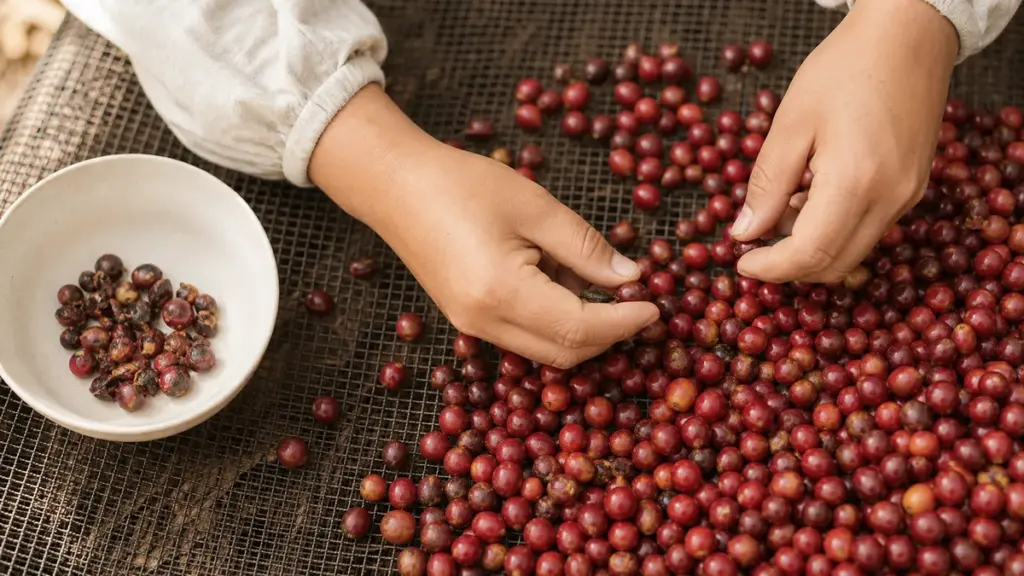
Long Miles Coffee describes farmers hand-picking cherries and delivering them to washing stations or collection points. Its quality programme includes checking ripeness, floating cherries in water and hand-sorting visible defects. The station is therefore doing much more than washing something already ready for export.
A typical fully washed sequence is:
- Receive and sort the cherries. Remove unsuitable fruit before it enters the main lot.
- Depulp the fruit. Take off the skin and much of the flesh surrounding the seeds.
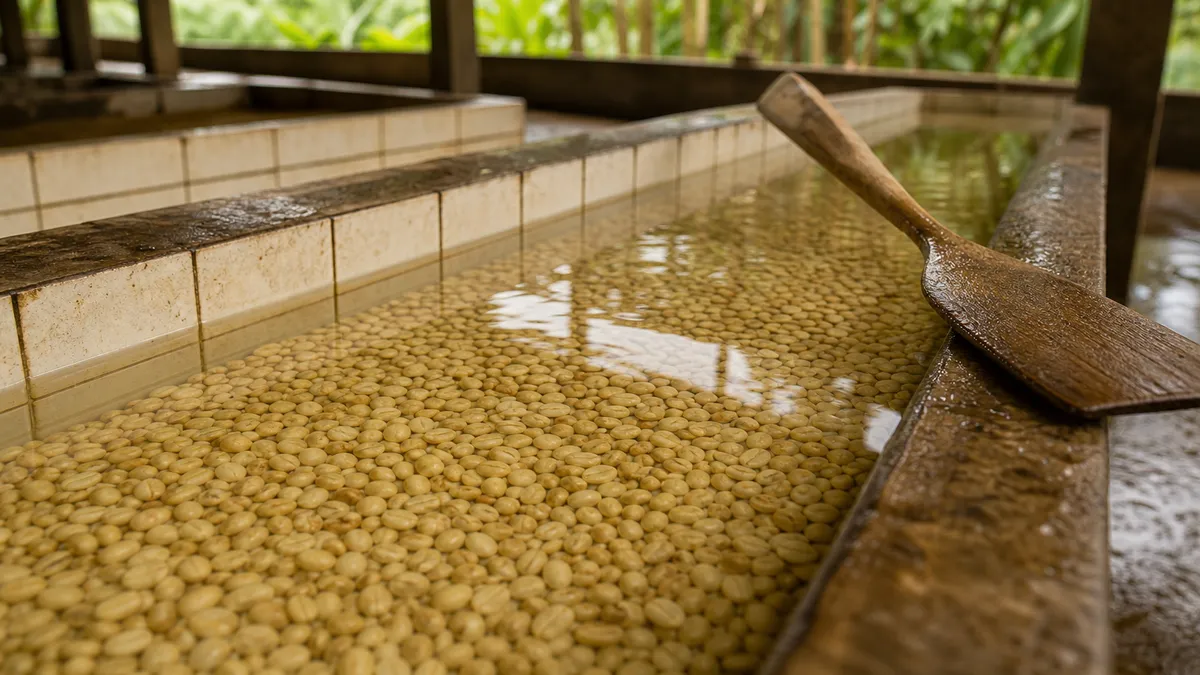
- Ferment the remaining mucilage. Microorganisms break down the sticky fruit layer and associated pectin.
- Wash the parchment coffee. Remove the loosened material while the seeds remain inside their protective parchment covering.
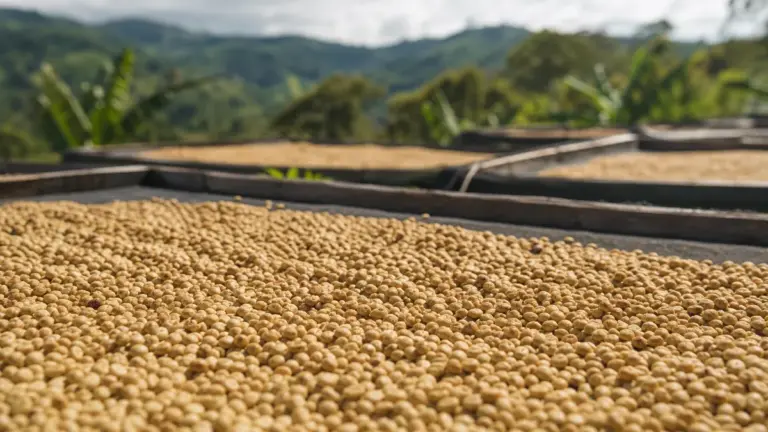
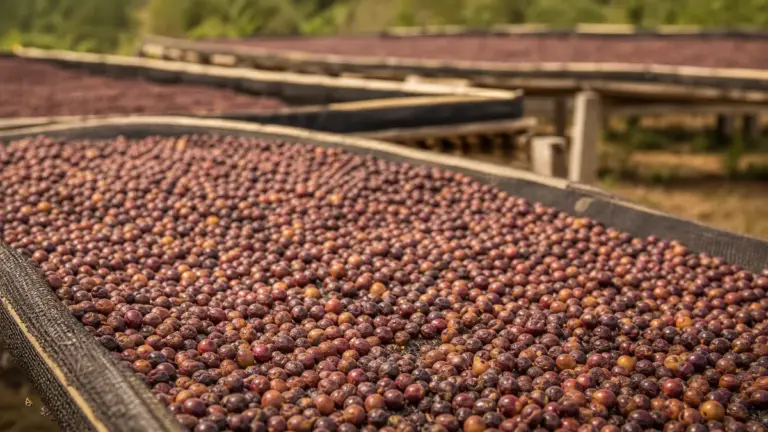
- Dry the coffee. Long Miles uses raised drying tables for its processed coffees.
ODECA’s specification also includes washing and grading, soaking, shaded pre-drying and subsequent drying. These are stages in a processing approach, not a single compulsory timetable followed identically by every station.
The useful question is therefore not simply “Is it washed?” Ask what the producer actually did. A named station provides a point from which to investigate processing and quality control; it should not be read as proof that every coffee carrying its name is identical.
For a neighbouring origin to explore alongside this production story, read Rwanda. Compare named lots rather than assuming that a shared processing term means a shared flavour.
Harvest, processing and reading the bag
Burundi’s main picking window is approximately March to July. However, a harvest calendar is not an arrival calendar: ODECA lists milling and export activity continuing beyond the picking season.
Long Miles’ own accounts illustrate why dates should remain approximate. Its annual farming account describes cherries arriving from late March, while its visitor information presents April to July as the harvest period. Those descriptions need not conflict; one identifies the opening of activity and the other a practical seasonal window.
When buying in the UK, ask for the crop information as well as the roast date if you want to understand the coffee’s journey. Do not infer the harvest year from the date the roaster put it into a bag.
Processing deserves similar attention. Long Miles reports producing fully washed, natural and honey coffees in Burundi. Natural coffee dries inside the whole fruit; honey processing begins with depulping but retains mucilage during drying. Neither term means that fruit or honey has necessarily been added.
For an introduction to the country, I would choose a straightforward washed lot before an unusually processed release. That is an editorial preference: it gives you a useful reference before exploring how a different process changes your experience. Once you have that reference, comparisons with individual coffees from Kenya become more informative than broad national rankings.
Potato taste defect: what causes the raw-potato smell?
Potato taste defect, often shortened to PTD, is an unusually recognisable coffee fault: an intense smell reminiscent of freshly peeled raw potato. A single affected bean can spoil the sensory experience of a whole brew, although that does not establish that every remaining bean in the bag is affected.
The insect, bacteria and aroma compound
Antestia bugs are strongly associated with the defect. The relevant insects include Antestiopsis orbitalis, the species discussed in Jackels and colleagues’ chemical investigation published in 2014.
That study found 3-isopropyl-2-methoxypyrazine, abbreviated IPMP, inside affected green beans. Its findings supported a link between antestia feeding damage and the chemical profile of defective coffee.
The leading biological explanation is that wounds in coffee cherries provide entry points for microorganisms. Bacteria can then contribute to the production of the compounds responsible for the potato-like aroma. Research has implicated bacteria including Pantoea, but the complete pathway should not be presented as settled.
This distinction corrects an oversimplification sometimes repeated about PTD: “the bug introduces bacteria, which produce IPMP” is a useful outline of a proposed mechanism, not a fully demonstrated account of every affected bean.
Why damage matters beyond the bug
A controlled field experiment published in 2025 compared insect-damaged cherries, mechanically damaged cherries and unmanipulated controls in Rwanda. Both damage treatments produced PTD, showing that antestia infestation was not essential under the experimental conditions.
That result strengthens the case for wounds as an important part of the pathway. It does not negate the established association with antestia bugs, and it does not measure how frequently each route occurs on Burundian farms. Experimental damage also should not be treated as identical to normal farming conditions.
Prevention consequently spans farming and processing. World Coffee Research recommends pest management and the removal of damaged material; Long Miles describes scouting for insects, floating cherries and hand-sorting deliveries.
What to do if you encounter it
If freshly ground coffee has a strong raw-potato smell, set that dose aside rather than trying to adjust the brew around it. Clear retained grounds according to your grinder’s instructions and tell the roaster what you noticed, including the lot details.
Avoid drawing a country-wide conclusion from one affected brew. Equally, do not dismiss the defect as an unusual tasting note that you ought to enjoy. It is a quality fault, and useful feedback helps distinguish an isolated occurrence from a wider problem.
Choosing a Burundian coffee
Use this short buying sequence:
- Choose the process deliberately. Start with washed if your aim is to understand the country’s characteristic washed style.
- Look for traceability. Prefer information naming the station, producer organisation and lot where available.
- Read the full sensory description. Consider texture and sweetness alongside fruit or floral notes.
- Ask about unclear details. Check what an altitude figure represents and which crop the coffee comes from.
- Keep the comparison fair. When tasting several coffees, use the same brewing approach before drawing conclusions about origin.
For Burundi coffee, the most useful combination is a clear lot identity, an intelligible processing description and a flavour profile that matches what you enjoy. Those details give you something concrete to choose, taste and return to.
FAQ
Does “Bourbon” mean the coffee contains alcohol?
No, Bourbon is the name of an arabica coffee variety, not a statement that the coffee contains whisky or another alcoholic ingredient. On a Burundian coffee bag, Red Bourbon normally identifies the variety reported for the lot. Read the processing description separately if you want to understand how the cherries were handled.
Does “honey processed” mean honey was added?
No, honey processing normally describes coffee dried with some sticky fruit mucilage remaining after depulping. The name refers to that processing approach, not an ingredient requirement. Long Miles distinguishes it from both fully washed processing, where mucilage is removed before drying, and natural processing, where the whole cherry is dried.
Is a washing station the same thing as a farm?
No, a washing station processes coffee, whereas a farm grows it. Long Miles describes smallholders delivering cherries to stations or collection points in Burundi. A station name is therefore useful processing information, but it should not automatically be interpreted as the name of a single estate or farming household.
Where to go next
Read East Africa to place Burundi within the wider regional guide, then Rwanda to explore another origin alongside it. Kenya is a useful next country profile when planning a tasting comparison based on named lots rather than national stereotypes.
Sources
-
ODECA, Café Fully Washed (Complètement Lavé), undated, current online specification retrieved November 2026.
https://odeca.gov.bi/product/cafe-fully-washed-completement-lave/ -
ODECA, Profil du café du Burundi and regional altitude listings, undated, retrieved November 2026.
https://odeca.gov.bi/profil-du-cafe-du-burundi/ -
World Coffee Research, Arabica Varieties Catalog: Bourbon, live catalogue, retrieved November 2026.
https://varieties.worldcoffeeresearch.org/varieties/bourbon -
World Coffee Research, Arabica Varieties Catalog: Mibirizi, live catalogue, retrieved November 2026.
https://varieties.worldcoffeeresearch.org/varieties/mibirizi -
Long Miles Coffee, A year in the life of Long Miles Coffee in Burundi, undated, retrieved November 2026.
https://www.longmilescoffee.com/a-year-in-the-life-of-long-miles-coffee-in-burundi/ -
Long Miles Coffee, Coffee Processing, 2021.
https://www.longmilescoffee.com/coffee-processing/ -
Long Miles Coffee, How Long Miles ensures coffee quality, from farm to cup, 2021.
https://www.longmilescoffee.com/how-long-miles-ensures-coffee-quality-from-farm-to-cup/ -
World Coffee Research, Potato taste defect: Impacts of the Antestia bug and overview of mitigation efforts, 2023.
https://worldcoffeeresearch.org/download/a2a841cb-658e-4020-b70d-c38d3bc3f0c3 -
Jackels, S. C., and colleagues, GCMS investigation of volatile compounds in green coffee affected by potato taste defect and the Antestia bug, Journal of Agricultural and Food Chemistry, 2014.
https://pubmed.ncbi.nlm.nih.gov/25284290/ -
Bigirimana, J., and colleagues, Mechanical Damage Causes Potato Taste Defect in Coffee Without Antestia Bug Infestations: Evidence from Experimental Data, International Journal of Fruit Science, 2025.
https://www.tandfonline.com/doi/abs/10.1080/15538362.2025.2548292
This article was researched using Burundi’s coffee authority, World Coffee Research, producer accounts of their own practices and peer-reviewed chemical and field research; no first-hand tasting or farm inspection is claimed.
Last checked: November 2026