The best UK specialty coffee roasters for your shortlist include Square Mile, Origin, Workshop Coffee, Dear Green, Hard Lines and Established Coffee. Each offers a different starting point, from clearly separated espresso and filter ranges to approachable house coffees and producer-focused seasonal releases; the right choice depends on what you drink and how you brew.
In short
- Choose by sourcing detail, roast and dispatch information, suitable range and evidence of quality control, not packaging or reputation alone.
- This is a desk-researched shortlist, not a blind tasting or a measured ranking of roasting performance.
- All six roasters had live official coffee listings when checked in November 2026. An active shop is evidence of trading activity, not proof of fulfilled orders.
- Buy one suitable coffee before committing to a subscription, and check whether it comes whole bean or ground.
- Freshly dispatched does not necessarily mean ready to brew immediately. Follow the roaster’s resting advice for the particular coffee.
How we selected the roasters
“Best” needs a purpose. A coffee chosen for a milk-heavy office menu need not be the same coffee someone chooses to explore delicate filter flavours.
This guide assesses published information against four criteria:
- Sourcing transparency: can you identify the producer, farm, co-operative or washing station, alongside the country and processing method?
- Freshness: does the roaster explain roast dates, dispatch timing, storage or resting?
- Range: can you find a coffee suited to your brewing method and preferences, including decaf where needed?
- Consistency: does the business describe repeatable recipes, quality-control tasting or an approach to maintaining its house coffees?
These are selection criteria, not numerical scores. We reviewed official shops, product descriptions, sourcing pages and customer guidance. No coffees were independently brewed, blind tasted or assessed across repeated batches for this article. Published flavour notes and operational promises therefore remain the roasters’ descriptions, not findings from our own testing.
We also checked for live coffee products and ordering facilities. That is a more useful trading check than relying on an old directory entry, although it cannot establish delivery performance.
The shortlist is deliberately selective rather than exhaustive. For the wider context, start with our coffee shops and roasteries guide. If the terminology is getting tangled, our explanation of shops, roasters and brands separates those roles.
Best UK specialty coffee roasters by drinking preference
The recommendations below are editorial judgements based on the published evidence. They are not an order of merit.
| Roaster | Why shortlist it | Suggested starting point | Main consideration |
|---|---|---|---|
| Square Mile | Separate espresso and filter choices, detailed coffee information | Red Brick for espresso | Its online coffee range is whole bean |
| Origin | Broad choice, accessible house blends and published reports | Resolute or Stronghold for espresso | Check each coffee rather than assuming one house style |
| Workshop Coffee | Explicit sourcing approach and emphasis on clean, sweet profiles | A coffee matched to your preferred brewing method | Freshness claims depend partly on its packaging |
| Dear Green | Named blend components and a stated roast-to-dispatch limit | Goosedubbs for an approachable house coffee | Read the current blend details before reordering |
| Hard Lines | An everyday flagship alongside seasonal releases | House Party | The flagship is only one part of the range |
| Established Coffee | Detailed producer and processing information | São José for chocolate-and-fruit notes | Check the individual coffee’s brewing guidance |
Square Mile: a clear starting point for espresso and filter
Square Mile’s official shop separates espresso, filter and decaf coffees. Its Red Brick espresso blend publishes component information, roast levels and a brewing recipe, making it a useful candidate for someone who wants more guidance than a bag of beans alone.
The company explains that Red Brick’s components change with crops and harvest cycles. That distinction matters: a familiar product name does not mean an unchanged blend. Download or read the information for the edition you actually receive.
Square Mile says it dispatches coffee within 24 hours of roasting and sells whole beans rather than pre-ground coffee. Its strength here is the combination of product detail and brewing direction. The limitation is straightforward: you need access to a suitable grinder.
Origin: useful for comparing familiar and exploratory coffees
Origin’s range includes blends, single-origin coffees and decaf, with whole-bean and ground options. Its FAQ recommends Resolute and Stronghold as approachable espresso starting points and directs filter drinkers towards its single-origin range.
Origin also maintains a reports page containing transparency and impact publications. That gives a curious buyer somewhere to investigate beyond an individual product description, although the date and scope of each report still matter.
Our recommendation is to use Origin when you want to compare an everyday house coffee with something more exploratory from the same supplier. Do not treat its broad range as a single roast style: choose the product whose description and intended use match your drink.
Workshop Coffee: for buyers drawn to clean, sweet profiles
Workshop describes its preferred coffee character as clean and sweet, and its sourcing page discusses traceability, processing, drying and continuing producer relationships. It also says it works with exporters and importers, rather than presenting every purchase as a direct farm transaction.
Its range includes house blends, single origins and decaf options. Workshop says coffee is roasted in Hatfield and packed with nitrogen, a gas used here to help preserve freshness.
That packaging approach is worth understanding before comparing roast dates across suppliers. Workshop’s published freshness window is its own product claim, not an independently tested result from this guide. Choose it for the documented sourcing approach and stated flavour direction, then judge the particular coffee in your brewer.
Dear Green: an approachable house coffee with traceable components
Dear Green’s Goosedubbs blend is described with milk chocolate, plum and pecan notes and recommended for espresso, filter, cafetière and milky coffee. Its product page names the coffees within the blend rather than stopping at broad origin countries.
Dear Green also states that it does not ship coffee more than seven days after roasting. Its sourcing page describes relationships with importers and assessment of incoming coffee, providing evidence of a quality-control process, though not independent proof of batch consistency.
Goosedubbs is our suggested starting point for readers seeking a familiar, rounded flavour description. Check the current components and notes when reordering, rather than assuming that a house blend is permanently fixed.
Hard Lines: an everyday flagship with room to explore
Hard Lines describes its range as a mixture of seasonal single origins, limited releases and everyday favourites. Its House Party coffee is a Brazilian single-origin offering, with published notes of chocolate, dried fruit and nuts.
The House Party page identifies Sete Cachoeiras and the Brito family. It also states that coffee is roasted to order, typically shipped within one to three working days of roasting, and supplied with a roast date.
Our reason for including Hard Lines is that clear everyday entry point alongside a changing wider range. Start with House Party if its flavour description appeals, but do not use it to predict every seasonal release. “Single-origin” is a sourcing description, not a promise of a particular flavour.
Established Coffee: for readers who enjoy the detail behind a lot
Belfast-based Established Coffee had an active official shop listing coffees from several origins when checked. Its São José listing provides the farm, region, variety and processing method, alongside chocolate, plum and almond tasting notes.
The roaster describes that coffee as suitable for filter and espresso-based drinks. It also offers a grind selection, with space to specify a brewing method.
Established is worth shortlisting if producer and processing detail are part of your enjoyment of coffee. The qualification is that the recommendation applies to the documented range, not an independently verified claim that every roast follows one style. Read each lot description rather than choosing from the roaster’s name alone.
How to buy a coffee you will actually enjoy
Use this checklist before ordering:
- Name the drink first. Tell the roaster whether you mainly make black filter coffee, espresso or milk drinks.
- Describe what you like. “Chocolatey and rounded” or “floral and lively” is more useful than asking for its best coffee.
- Check the format. Choose whole bean if you have a suitable grinder. Otherwise, select the grind for your actual brewer.
- Read the coffee information. Look for the producer or producing group, process, flavour description and brewing guidance.
- Check roast, dispatch and resting advice separately. Dispatch is when a parcel leaves, not when it arrives or reaches your preferred brewing age.
- Try before subscribing. Establish whether you enjoy the coffee, whether the quantity suits your consumption and whether deliveries can be adjusted.
For workplace supply, ask for itemised written quotations covering coffee, delivery, training, technical support and any equipment arrangements. Request the VAT basis and substitution policy in writing. This guide selects coffee roasters, not machine-service providers, so do not infer servicing capability from the quality of a retail coffee range.
If you want to taste before ordering, our guide to independent coffee shops in UK cities is a more useful next step than choosing from photographs alone.
Freshness, maintenance and fair comparisons
Origin recommends resting its coffee for five to 14 days after roasting. Treat that as Origin’s guidance, not a universal timetable: ask the supplier about the coffee you buy.
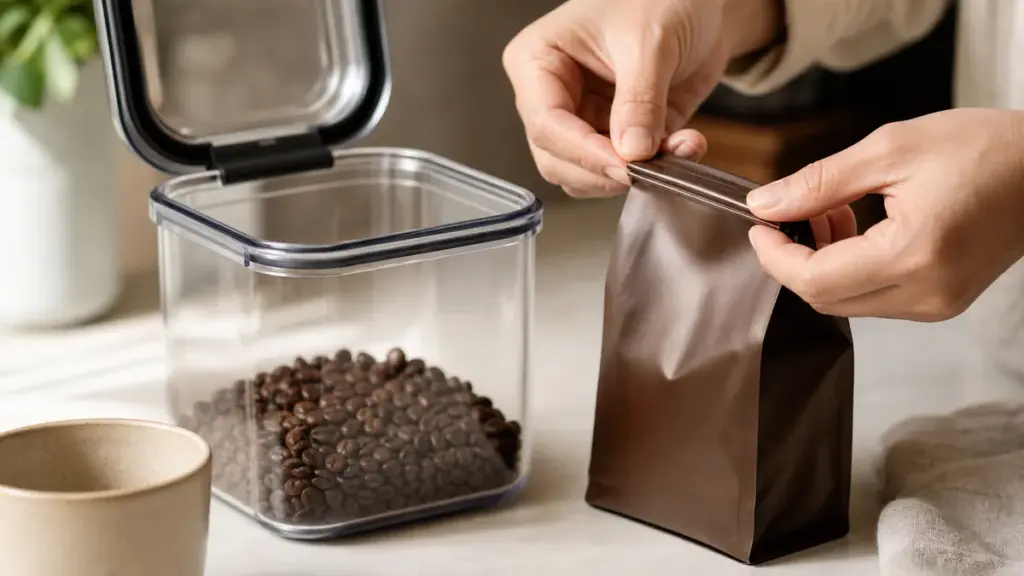
For storage, Square Mile advises keeping opened coffee sealed in a cool, dark place. Buy a manageable quantity and record the roast date, opening date and recipe when comparing bags.
Equipment care belongs in the comparison too. JURA’s published guidance explains that coffee-oil traces in a bean container can affect the result and gives model-specific cleaning instructions. Follow your own grinder or machine manual, including its requirements for the hopper, brew system, milk system and water treatment. Do not improvise a maintenance routine from another model.
For a useful personal comparison, keep the brewer, water and starting recipe unchanged, then adjust one variable at a time. This is a suggested comparison method, not a laboratory protocol. Record what you taste, including sweetness, acidity, bitterness and texture, rather than whether a famous name met expectations.
What consistency and transparency can really tell you
A sourcing story and a quality-control process answer different questions. Producer names help you understand provenance; repeated tasting and roast records concern how a business manages the coffee after purchase. Neither replaces tasting the finished drink.
Workshop and Dear Green describe quality-control activities, while Square Mile publishes changing blend information and a starting recipe. Those are useful signs of an organised approach, but this research cannot establish which company delivers the least batch variation. That would require repeated, controlled purchases and assessment.
Read ethical claims with similar care. Workshop explicitly describes using importers and exporters; Dear Green explains its importer relationships. Ask who performs each role and what information is available, rather than assuming that fewer intermediaries automatically means a better outcome.
For the best UK specialty coffee roasters shortlist for you, choose the strongest match between documented sourcing, practical supply arrangements and the flavour you want to drink.
FAQ
Are the tasting notes ingredients added to the beans?
They should not be read as an ingredient list. The roasters present notes such as chocolate, plum and almond as flavour descriptions of the coffee. Established’s São José page, for example, lists its processing information separately from those notes. If you need to establish whether anything has been added, check the product information and ask the roaster.
Can I buy specialty coffee without owning a grinder?
Yes, several roasters here offer ground coffee. Origin, Workshop, Dear Green, Hard Lines and Established provide ground options in their published shopping information. Choose the setting for your brewing method rather than simply selecting “ground”. Square Mile states that its online coffee offering is whole bean, so it requires a grinder.
Does a subscription always send a different coffee?
No, the subscription type determines that. Hard Lines offers a House Party subscription centred on that coffee, while Origin describes a changing feature subscription. Origin also warns that supply can occasionally mean repeats. Read whether the plan promises a familiar coffee, a changing selection or a particular brewing style before subscribing.
Where to go next
Read Coffee Shops, Roasters and Coffee Brands: The Difference to understand who sources, roasts and serves your coffee, then use Coffee Shops and Roasteries to explore the wider subject. Best Independent Coffee Shops in UK Cities helps with finding places to taste coffee, while chain coffee comparisons covers the different question addressed by UK Coffee Shop Chains Compared.
This article contains no affiliate links. Any publisher-level commercial relationship with an included roaster must be declared before publication.
Sources
The following official sources were retrieved and used. Undated pages are identified as such rather than assigned a publication year.
-
Square Mile Coffee Roasters, Coffee, Red Brick and FAQ, undated live pages, checked November 2026. Used for range, blend information, whole-bean policy, dispatch and storage guidance.
https://shop.squaremilecoffee.com/collections/coffee
https://shop.squaremilecoffee.com/products/red-brick-6
https://shop.squaremilecoffee.com/pages/faq/1000 -
Origin Coffee, Speciality Coffee Beans, FAQs and Reports, undated live pages, checked November 2026. Used for available categories, grind options, buying recommendations, resting advice and the reporting archive. The archive includes publications labelled 2022 and 2024/25; their presence is not treated as verification of every claim within them.
https://www.origincoffee.co.uk/collections/coffee
https://www.origincoffee.co.uk/pages/faqs
https://www.origincoffee.co.uk/pages/reports -
Workshop Coffee, Shop All Specialty Coffee, How We Source, How We Work and Shipping & Returns, undated live pages, checked November 2026. Used for range, sourcing, stated flavour objectives, quality control, roasting location and packaging claims.
https://workshopcoffee.com/collections/coffee
https://workshopcoffee.com/pages/how-we-source
https://workshopcoffee.com/pages/how-we-work
https://workshopcoffee.com/pages/shipping-returns -
Dear Green Coffee Roasters, The Goosedubbs Blend and Our Approach to Coffee Sourcing, undated live pages, checked November 2026. Used for flavour descriptions, blend traceability, grind options, dispatch-age policy and stated quality-control practices.
https://www.deargreencoffee.com/products/the-goosedubbs
https://www.deargreencoffee.com/pages/coffee-sourcing -
Hard Lines Coffee, About Us and House Party Subscription, undated live pages, checked November 2026. Used for range, House Party’s origin and flavour description, producer information, dispatch claims and subscription format.
https://hard-lines.co.uk/pages/about
https://hard-lines.co.uk/products/house-party-subscription -
Established Coffee, Established Coffee, São José: Brazil and The Cafe, undated live pages, checked November 2026. Used for active listings, Belfast location, product traceability, flavour descriptions and grind options.
https://established.coffee/
https://established.coffee/collections/all/products/sao-jose-brazil
https://established.coffee/pages/the-cafe -
JURA, FAQs About Maintenance & Hygiene and IMPRESSA A9 One Touch Instructions for Use, undated webpages and manual, checked November 2026. Used for manufacturer-led maintenance advice and the effect of coffee-oil traces in the bean container.
https://www2.jura.com/en/purchasing-advice/optimum-maintenance/faq
https://us.jura.com/-/media/global/pdf/manuals-na/Home/A9/A9_UL.pdf
This article was researched through official roaster shops, product pages, sourcing statements and customer guidance, with manufacturer documentation for maintenance; no first-hand tasting or delivery testing was undertaken.
Last checked: November 2026