The major barista competitions award different skills, so there is no single winner across espresso preparation, filter brewing, latte art, tasting and roasting. Pan Wei, representing China, won the 2026 World Barista Championship on 25 October 2026; below are the winners across all seven World Coffee Championships for 2025 and 2026, followed by recent barista champions and landmark performances.
In short
- The World Coffee Championships comprise seven separate competitions, each with its own title.
- World Barista Championship competitors prepare four espressos, four milk-based drinks and four signature beverages in 15 minutes.
- A national championship win and a world championship win are different achievements: always check the discipline, year and level.
- Agnieszka Rojewska became the first woman to win the World Barista Championship in 2018.
- Follow the organiser’s final rankings and official performance recordings, rather than treating a finalist announcement as the result.
Which are the main barista competitions?
The World Coffee Championships, usually shortened to WCC, bring together distinct tests of coffee preparation and sensory skill. The World Barista Championship is one of these competitions, not another name for the whole programme.
For a beginner, the simplest distinction is between making drinks, recognising flavour differences and roasting coffee. A champion in one discipline has won that particular contest, not every form of coffee competition.
Espresso and filter brewing
The World Barista Championship (WBC) combines espresso, milk-based drinks and original signature beverages. Judges assess taste alongside technical proficiency, cleanliness, creativity and presentation. Its service format makes communication part of the performance, rather than an optional commentary.
The World Brewers Cup (WBrC) focuses on manual filter brewing. Its open service lets competitors present their chosen coffee, while compulsory service tests brewing with coffee supplied by the organiser. Our brewers cup guide explains that distinction in more detail.
Presentation and mixed drinks
The World Latte Art Championship (WLAC) tests visual expression, including the ability to reproduce matching designs. Contrast, creativity and consistency matter: an attractive individual pour is not the whole task.
The World Coffee in Good Spirits Championship (WCIGS) combines coffee preparation with alcoholic mixed drinks. Its final includes Irish Coffees and designer drinks, so it tests a different set of skills from the WBC.
Tasting, roasting and traditional preparation
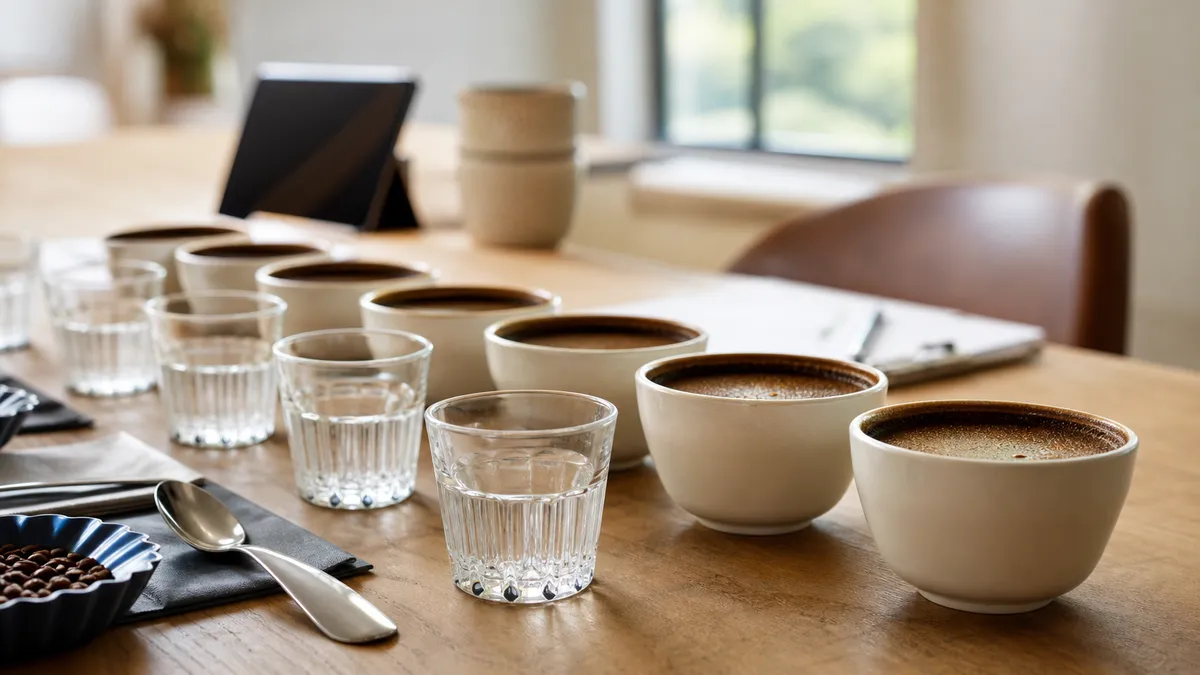
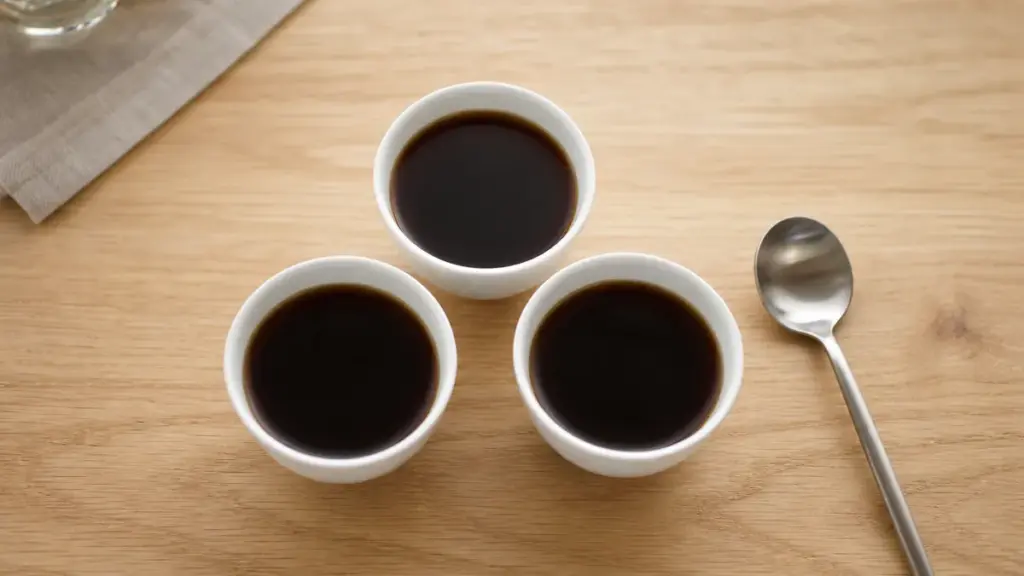
The World Cup Tasters Championship (WCTC) is a discrimination test, not a contest to produce the longest tasting description. Competitors identify the different coffee within sets of three cups, balancing accuracy with speed.
The World Coffee Roasting Championship (WCRC) evaluates coffee assessment, roast planning and execution, together with the resulting cup quality. The Cezve/Ibrik Championship centres on preparation using the distinctive long-handled coffee pot, with room for competitors’ cultural expression.
For the wider events picture, start with coffee events and festivals. This article concentrates on titles and verified winners rather than exhibition programmes.
Barista competitions and winners: 2025 and 2026
These are the world champions recorded in official WCC announcements. Names follow the organiser’s published forms, including “Bala” and “Chatchalerm (AKA BOSS)”.
Results checked on 2 November 2026. The table covers two completed competition seasons, not an all-time roll of honour.
| Competition | Main skill tested | 2025 winner | 2026 winner |
|---|---|---|---|
| World Barista Championship | Espresso, milk drinks and signature beverages | Jack Simpson | Pan Wei |
| World Brewers Cup | Manual filter brewing | George Jinyang Peng | Nas Jaafar |
| World Latte Art Championship | Latte art design and repeatability | Chen Zhuohao | Bala |
| World Coffee in Good Spirits Championship | Coffee and alcoholic mixed drinks | Georgius Audrey Teja | Andy Philein |
| World Cup Tasters Championship | Identifying different coffees accurately and quickly | Chatchalerm (AKA BOSS) | Le Quang Cuong (Nicky) |
| World Coffee Roasting Championship | Coffee assessment and roasting | Mikaël Portannier | Benjamin Brassart |
| Cezve/Ibrik Championship | Cezve/ibrik coffee preparation | Charles Boyenval | Jane Espante |
Read these results by discipline. Winning Cup Tasters demonstrates exceptional discrimination under competition conditions; it does not mean the winner also holds the barista or brewing title.
Likewise, the country or competition body represented is not the origin of every coffee used. Keep those details separate when reading a routine recap or a roaster’s description of a competition coffee.
Recent World Barista Championship winners by year
For readers following the espresso-based championship, this is the continuous annual sequence from 2021 to 2026. It includes the competition body represented and the host city, helping distinguish similarly named events.
| Year | World Barista Champion | Representing | Host city |
|---|---|---|---|
| 2021 | Diego Campos | Colombia | Milan |
| 2022 | Anthony Douglas | Australia | Melbourne |
| 2023 | Boram Um | Brazil | Athens |
| 2024 | Mikael Jasin | Indonesia | Busan |
| 2025 | Jack Simpson | Australia | Milan |
| 2026 | Pan Wei | China | Panama City |
There was no 2020 World Barista Champion. The SCA and World Coffee Events cancelled that year’s world championship events because of pandemic-related international visa and travel restrictions.
For the performance format and judging framework, read our world barista championship guide. Keeping that explanation separate leaves this page focused on who won and how to verify the record.
Landmark winners and what to watch for
A result tells you who won. A performance recording can show how coffee selection, preparation and explanation worked together, but it cannot let you taste what the judges tasted.
The following short timeline highlights different reasons to explore the archives. Not every milestone is a new brewing invention.
2009: Gwilym Davies wins for the United Kingdom
The official final ranking names Gwilym Davies as the 2009 World Barista Champion, representing the United Kingdom, at the Atlanta competition.
For UK readers, this is a useful historical reference point. When comparing an older performance with a recent one, first establish the rules used in each edition rather than judging both against today’s format.
2015: Sasa Sestic brings carbonic maceration to the stage
Sasa Sestic’s winning 2015 performance is a landmark in the competition story of carbonic maceration, a controlled processing approach involving a carbon dioxide-rich environment.
His company, Project Origin, identifies that championship as the introduction of its carbonic maceration approach to the specialty coffee industry. Its process description includes temperature-controlled tanks flushed with carbon dioxide.
The useful distinction is that this innovation concerns processing before roasting, not a setting on the espresso machine. Credit the producer and processing work as well as the on-stage preparation. Project Origin’s account is a participant’s commercial account, not independent proof that every coffee carrying the term follows an identical process.
2018: Agnieszka Rojewska combines a historic win with customer-focused service
Agnieszka Rojewska became the first woman to win the WBC in 2018. In a contemporaneous interview, she explained that her routine addressed the gap between what coffee professionals know and what a new customer understands.
Her presentation treated the judges as customers progressing towards a more detailed understanding of specialty coffee. The lesson worth studying is how to explain an unfamiliar flavour without making the drinker feel uninformed.
2023: Boram Um connects the routine to teamwork and production
Boram Um’s winning presentation used teamwork as its organising theme. A published interview with his roasting collaborator describes a Panama Gesha espresso, a blend for the milk course, and his family farm’s Brazilian Pink Bourbon coffee in the signature beverage.
This is worth watching for the relationship between courses. Rather than assuming one coffee or preparation must suit everything, ask how each choice supports the intended drink.
These performances offer ideas to examine, not controlled experiments proving that a particular process, blend or presentation caused the victory.
How to follow results without mixing up titles
Use this checklist when checking a new winner or researching an older one:
- Write down the complete title and year. “World champion” alone leaves out the discipline.
- Start at the official WCC competition page. Follow its rankings, rules and event links.
- Check the competition stage. A first-round leader, semi-finalist or finalist has not necessarily won the championship.
- Read the final ranking. Confirm that the result belongs to the final round rather than an earlier performance.
- Match the recording to the round. Use the official WCC YouTube channel and check the video title before analysing a routine.
- Record the represented competition body separately from coffee origin. They answer different questions.
- Keep the source and checking date. That makes a winners list easier to maintain when corrected rankings appear.
The distinction between a finalists list and a final result is particularly useful during live coverage. An announcement may list competitors in no particular order, so the first name on the page is not automatically the leader.
For UK competitors and the domestic qualification context, use our UK barista championship guide. For checking where competitions sit within larger shows, consult coffee events worldwide.
What competition results do, and do not, tell you
Treat a championship title as a precise achievement: a named person won a named competition in a named year. It is not a universal rating for every coffee, café or piece of equipment associated with that person.
For a more useful viewing session, choose one question before pressing play. You might examine how the competitor describes sweetness, introduces the producer, organises service or explains the reason for a coffee choice.
Then separate observation from inference. “The competitor used this technique” is something a recording may establish. “This technique made the coffee taste better” requires evidence beyond watching it happen.
That distinction keeps barista competitions and winners interesting without turning the results into claims they were never designed to support.
FAQ
Does a competition winner’s country tell me where the coffee was grown?
No, the represented competition body and the coffee’s growing origin are separate details. The official rankings identify whom the competitor represents, while coffee information or the performance may identify the producer and origin. When researching a winning routine, record both rather than assuming the coffee came from the competitor’s home country.
Can I watch the championships without attending the host event?
Yes, WCC provides official online coverage and performance recordings. Its event pages direct viewers to the relevant streams or YouTube recordings. For learning rather than simply following the announcement, choose a complete routine and check whether it is from the first round, semi-final or final before comparing it with another performance.
Does a winner’s final score include their earlier-round scores?
Check the rules for that competition and edition rather than assuming scores accumulate. WCC result documents distinguish competition rounds, and different disciplines use different scoring structures. For identifying the champion, use the published final ranking. For analysing performance, read the applicable rules alongside the results rather than combining numbers yourself.
Where to go next
Read World Barista Championship for the service format and judging, World Brewers Cup for the filter-brewing discipline, and UK Barista Championship for the domestic competition context. Coffee Events and Festivals Worldwide helps you place these championships within the wider events calendar.
Sources
The following primary records and first-person interviews were retrieved for this article. Live pages without publication dates are identified by the edition checked.
- World Coffee Championships, competition descriptions, 2026 editions checked: World Barista Championship, World Brewers Cup, World Latte Art Championship, World Coffee in Good Spirits Championship, World Cup Tasters Championship, World Coffee Roasting Championship and Cezve/Ibrik Championship.
- World Coffee Championships, Rankings announcement archive, 2025 and 2026. Official announcements identifying the six non-WBC champions for 2025.
- World Coffee Championships, WCC News, 2026. Championship announcements for brewing, roasting, Coffee in Good Spirits and Cup Tasters.
- World Coffee Championships, Announcing the 2026 World Barista Champion, Pan Wei, 25 October 2026.
- World Coffee Championships, San Diego World Coffee Championships, 2026. Official latte art result.
- World Coffee Championships, Dubai World Coffee Championships, 2026. Official Cezve/Ibrik result.
- World Coffee Championships, Announcing the 2025 World Barista Champion: Jack Simpson representing Australia, 21 October 2025.
- World Coffee Championships, Final WBC Rankings Released, 7 May 2024.
- World Barista Championship, 2023 World Barista Championship rankings, 2023.
- World Barista Championship, 2022 full rankings, 2022. Official result document hosted by the Canadian competition body.
- Specialty Coffee Association, Milan World Coffee Championships announcement, 27 October 2021.
- World Barista Championship, 2009 final results, 2009. Official result document hosted by the Canadian competition body.
- Specialty Coffee Association, 2020 World Coffee Championships Canceled Due to COVID-19 Travel Restrictions, 2020.
- Project Origin, CM Selections, undated, checked 2026. Participant’s account of the 2015 introduction and its processing method.
- Agnieszka Rojewska, Who’s Aga Rojewska?, undated; Daily Coffee News, World Barista Champion Agnieszka Rojewska on Customer Service and Competition, 5 July 2018. Autobiographical confirmation and original interview.
- The Roasters Pack, World Barista Champion 2023: Boram Um, 28 July 2023. Interview incorporating testimony from the roasting collaborator.
This article was researched using official championship announcements and ranking documents, with original interviews and clearly attributed participant accounts used for historical routines.
Last checked: November 2026