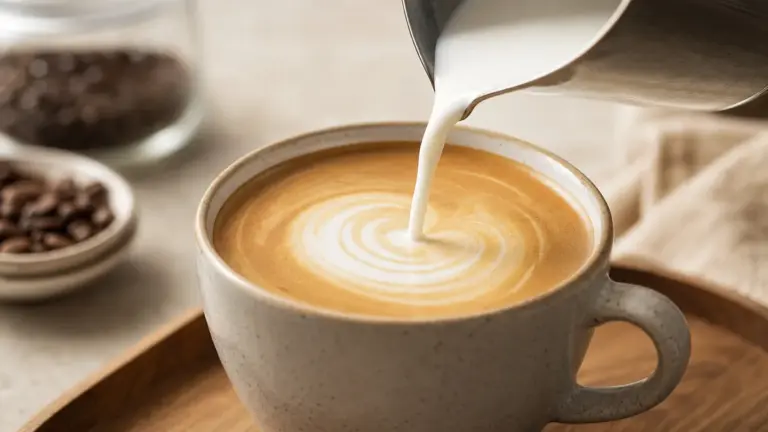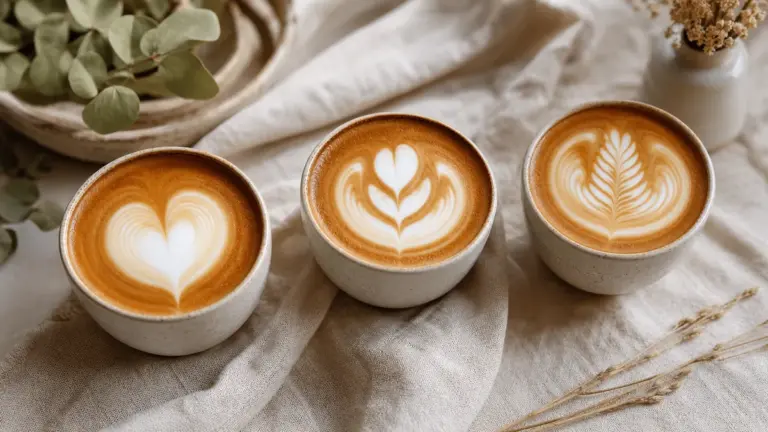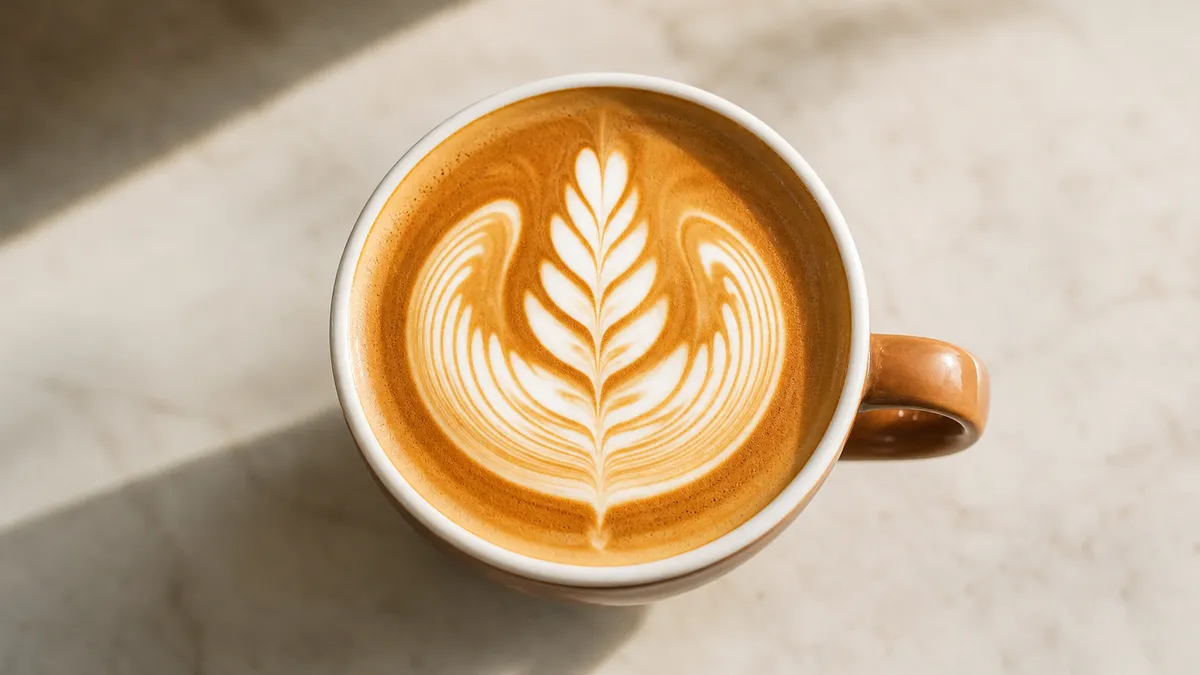
The World Latte Art Championship (WLAC) is an international competition in which qualified baristas create latte art under timed conditions, with matching designs judged for their visual quality, creativity and consistency. It is a World Coffee Events programme within the Specialty Coffee Association’s World Coffee Championships portfolio, and entry normally comes through a sanctioned national championship.
In short
- Matching pairs matter: competitors must reproduce an intended design, not simply make one impressive cup.
- Free-pour patterns are made through pouring alone; designer categories allow additional techniques within the rules.
- Under the 2026 arrangements, Art Bar participation is compulsory, but its audience award is separate from the world title.
- The published rules can change between years, including the drinks required in each round.
- UK entrants qualify through the UK Latte Art Championship, organised by the SCA UK Chapter.
What is the World Latte Art Championship?
The WLAC turns coffee decoration into a structured test of artistic and professional skill. Competitors work against the clock, producing prescribed categories of drinks rather than choosing any number of cups or any technique they like.
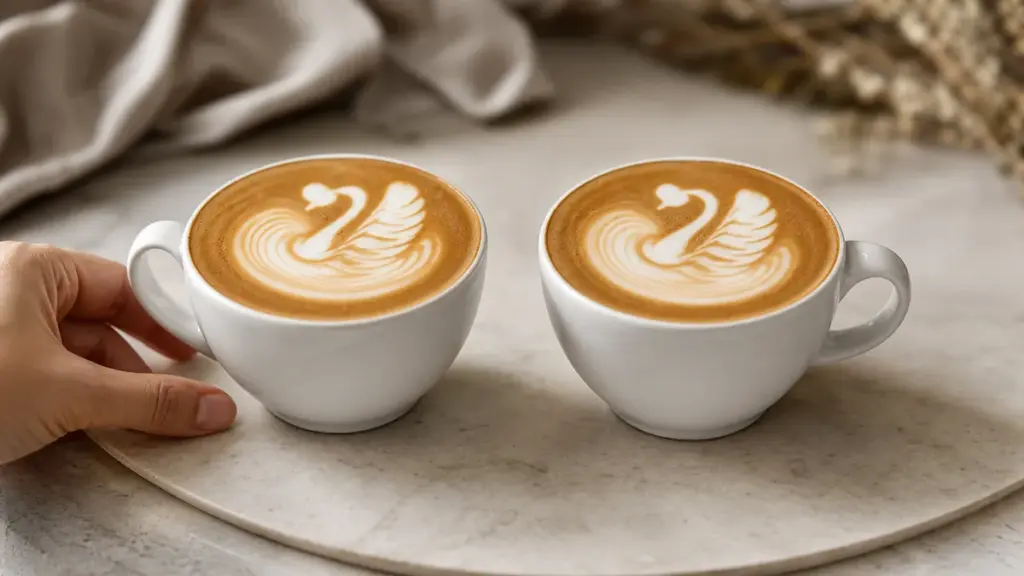
The central challenge is repeatability. A striking animal or abstract pattern is only part of the task: the barista must reproduce the intended image across a matching pair and present it within a controlled routine.
For a beginner, the useful distinction is between making attractive coffee and competing in latte art. Competition adds a rulebook, reference images, drink categories, presentation requirements and a formal scoring system. Our coffee art and latte art hub provides the broader starting point.
Who organises it?
The official rules identify the WLAC as a programme of World Coffee Events Ltd (WCE), a wholly owned subsidiary of the Specialty Coffee Association (SCA). The championship belongs to the World Coffee Championships (WCC) portfolio, which the SCA produces.
These names describe different parts of the same structure, not rival championships. WCE is the organisation named in the competition rules; WCC is the championship portfolio; SCA is the parent association.
Two dates help explain its history:
- 2005: the World Latte Art Championship began.
- 2011: WCE was established by the Specialty Coffee Association of America and the Speciality Coffee Association of Europe to manage international competitions. Their joint venture had been announced in October 2010.
How the World Latte Art Championship works
Always attach a year to a format description. A recording from an earlier championship can be useful viewing without being a reliable guide to the current drink requirements.
This guide uses the published 2026 WLAC Rules and Regulations for the format below. Those rules allow a preliminary round, an optional semi-final configuration and a final. The official results for San Diego show that the actual 2026 event proceeded from the first round directly to the final.
Stage rounds under the 2026 rules
The times below are performance times, not the separate preparation allowance.
| Stage | Who progresses | Required drinks | Performance time |
|---|---|---|---|
| Preliminary | Qualified entrants | Two matching free-pour lattes, then two matching designer lattes | 8 minutes |
| Semi-final, if activated | Highest-scoring 12 from the preliminary | Two pairs of free-pour lattes, then two matching designer lattes | 11 minutes |
| Final | Highest-scoring six from the preceding stage | Two pairs of free-pour lattes, then two matching free-pour macchiatos | 10 minutes |
The normal preparation allowance is three minutes. The rules extend it to five minutes where a semi-automatic espresso machine and separate grinder are provided.
The important distinction is between what the rulebook permits and what the organiser schedules for a particular event. Check the confirmed round configuration alongside the rules rather than assuming every edition has a semi-final.
Free-pour and designer patterns
Free-pour means creating the pattern through the milk pour itself, without etching or surface decoration. Etching means manipulating the surface with a tool to draw or refine a design.
Designer lattes permit etching and approved surface ingredients. That does not make them unrestricted craft projects: competitors still work within the championship’s beverage and ingredient rules.
Stage competitors also provide a printed photograph of each intended pattern. The judges compare the drinks with that reference, so the task is not merely to produce two cups that happen to resemble each other.
What happens at the Art Bar?
The Art Bar gives competitors a separate opportunity to create an individual design using free-pour techniques, etching and permitted decoration.
For 2026, it became a compulsory component associated with the preliminary round, but its result does not contribute to the World Latte Art Champion title. An in-person and/or online audience contest determines the separate Art Bar winner.
The rules provide five minutes of preparation followed by five minutes of competition. Competitors present one completed drink for photography.
This is a significant change from 2025, when Art Bar formed part of the semi-final and contributed to progression. An older explanation saying that Art Bar scores help decide the finalists can therefore be correct for that edition and wrong for 2026.
For the wider distinction between this championship and other event formats, see latte art competitions.
How judging works
The stage panel comprises two visual judges and a head judge. The visual scoresheet assesses the drinks and the barista’s presentation, while the head judge’s sheet includes best practice, organisation and an overall impression.
The principal visual categories are:
- Identical patterns: consistency across the pair and correspondence with the reference.
- Surface quality: the appearance of the milk surface.
- Contrast and definition: how clearly the design stands out.
- Harmony: the pattern’s balance within the cup.
- Successful execution: whether the intended design has been achieved.
- Overall appeal: the visual effect of the finished work.
Hospitality, equipment use and the overall presentation also appear on the visual scoresheet. This is not simply a photograph contest conducted beside an espresso machine.
Why the most complicated design does not automatically win
Difficulty is only part of the assessment. A viewer should also consider whether both cups look controlled, whether the pattern reads clearly and whether the whole composition feels balanced.
As a viewing exercise, try ignoring the subject for a moment. Instead of asking whether a dragon is more impressive than a bird, compare the two versions of each design. Look at their proportions, placement and clarity.
That approach helps separate an ambitious idea from a successfully delivered routine. It also makes the championship more interesting to watch: the decisive detail may be consistency rather than the most immediately recognisable picture.
What the scores do not establish
The published WLAC scoresheets do not contain a flavour-scoring category. A championship result therefore should not be treated as proof that a drink tastes better than another coffee.
Equally, visual judging is broader than symmetry alone. Symmetry can suit a particular design, but an asymmetric composition can still be deliberate and balanced. Avoid judging every animal, figure or abstract pattern as though it were supposed to be a symmetrical heart.
Recent verified champions
The following results are supported by official rankings or national association reporting.
| Year | Champion | Representation | Host city |
|---|---|---|---|
| 2024 | Yi-Chen Xie | Taiwan | Copenhagen, Denmark |
| 2025 | Chen Zhuohao | China | Geneva, Switzerland |
| 2026 | Bala, also known as Shao-Sing Lin | Chinese Taipei in the official WCC result | San Diego, United States |
The 2026 championship took place from 10 to 12 April 2026. Bala is the latest completed WLAC champion verified for this guide.
Names and representation labels need care. UCC Taiwan identifies its competitor as Shao-Sing Lin (Bala), while WCC lists Bala representing the competition body of Chinese Taipei. These refer to the same champion from Taiwan, not different winners.
Use the result for the relevant year when checking a claim. A separate Art Bar award, national championship or similarly named competition should not be substituted for the WLAC world title.
How to qualify through a national championship
The normal route is to win the championship run by a WCE-licensed Competition Body, meaning an approved organisation authorised to hold the qualifying competition. Winning a local latte art event does not, by itself, confer a world championship place.
In the UK, that route is the UK Latte Art Championship (UKLAC), organised by the SCA UK Chapter. Its competition programme feeds into the World Coffee Championships.
National arrangements can differ from the world event’s latest format. For example, SCA UK specified that its 2026 UKLAC followed the 2025 WLAC rules, with a semi-final, Art Bar and final. The national event’s published instructions therefore matter just as much as the world rulebook.
A prospective competitor’s checklist
- Find your recognised Competition Body. Confirm that the event qualifies competitors for the WLAC.
- Check eligibility before planning a routine. Read the age, representation and conflict-of-interest requirements.
- Download the specified rules and scoresheets. Check the edition explicitly rather than relying on a familiar filename.
- Confirm the local arrangements. Ask about entry, selection, equipment, cups, practice access and the round structure.
- Practise the complete routine. Include reference images, serving order, presentation and the clock, not just individual pours.
- Complete world registration if selected. National qualification and world-event registration are separate administrative steps.
As practical preparation, keep a folder containing the applicable rules, organiser correspondence and your routine plan. Mark anything that needs clarification and seek an answer before the event.
For your own practice review, photograph matching pairs together rather than preserving only the better cup. This is a useful way to keep attention on repeatability.
How to watch and learn from the championship
Try watching a full routine before studying isolated close-ups. First follow the sequence of drinks, then return to the individual patterns.
A useful viewing checklist is:
- Can you recognise the intended image in both cups?
- Are the two designs similarly positioned and proportioned?
- Does the pattern remain clear without an explanation?
- Is the presentation calm and organised?
These are viewing prompts, not a substitute for judge training or the official scoring definitions. Avoid awarding imaginary scores from a camera angle that hides part of the cup.
For a different way to explore coffee’s visual side, coffee art exhibitions provides a useful next read. When watching the World Latte Art Championship, keep the year’s rules nearby: understanding the task makes the achievement much easier to appreciate.
FAQ
Is the World Latte Art Championship the same as the World Barista Championship?
No. They are separate competitions within the World Coffee Championships portfolio. WLAC focuses on latte art and the associated performance, using its own drink requirements and scoresheets. A competitor’s World Barista Championship result should not be reported as a World Latte Art Championship title.
Can someone from outside the UK enter the UK qualifier?
Potentially, but eligibility depends on the representation rules, not simply where someone wishes to compete. The published rules provide passport and qualifying residency, employment or study routes. Ask SCA UK to confirm your documentation before entering, especially if you have recently moved or could qualify through more than one Competition Body.
Does winning Art Bar make someone the world champion?
No. Under the 2026 arrangements, Art Bar has a separate audience-selected award and does not contribute to the world-title score. A competitor can potentially win both awards, but they are distinct results. Earlier editions used different Art Bar arrangements, so check the year when reading older coverage.
Where to go next
Start with Coffee Art and Latte Art for the wider subject, then read Latte Art Competitions to understand other competitive formats. Coffee Art Exhibitions is the useful next read if the artistic presentation interests you more than qualification and scoring.
Sources
- World Coffee Championships / SCA, About, current webpage, checked November 2026. Official overview.
- WCC Rules and Regulations Committee, 2026 World Latte Art Championship Rules and Regulations, 2026 edition, particularly sections 1, 2 and 14. Official rules PDF.
- WCC Rules and Regulations Committee, 2026 WLAC Summary of Rule Changes, 2026 edition. Official changes PDF.
- World Coffee Championships / SCA, Rules & Regulations Released for the 2026 World Latte Art Championship in San Diego, 2025. Official announcement.
- WCC Rules and Regulations Committee, 2025 World Latte Art Championship Rules and Regulations, 2025 edition, used for definitions and comparison with the previous format. Official rules PDF.
- World Coffee Championships, Visual Scoresheet: Semi-Final / Final Round and Head Judge Scoresheet: Preliminary Round, files supplied in the 2026 rules collection. Rules and scoresheet collection.
- World Coffee Championships, 2026 World Latte Art Championship Rankings, 2026. Official results PDF.
- World Coffee Championships, 2025 World Latte Art Championship Final Rankings, 2025. Official results PDF.
- Specialty Coffee Association of Japan, NewsLetter, volume 79, October 2024, WLAC Copenhagen report and results. Association newsletter PDF.
- SCA UK Chapter, SCA UK Competitions and Latte Art Championship, current competition information and 2026 arrangements. Competition programme; 2026 championship information.
- UCC Taiwan, UCC Taiwan Representative Shao-Sing Lin Wins the 2026 World Latte Art Championship, 17 April 2026. Competitor identity announcement.
- Specialty Coffee Association, Calling the Shots: 20 Years of the World Barista Championship, 25 Magazine, issue 9, 2019; SCAA and SCAE, Specialty Coffee Associations of America and Europe Announce World Coffee Event Joint Venture, 12 October 2010. SCA history; joint venture announcement.
This guide was researched from published competition rules, scoresheets, official results, national association information and the named competitor’s employer announcement.
Last checked: November 2026