The best brewing method is the one that matches the coffee you enjoy, the amount you need and the effort you want to put in. Our starting recommendation is a steep-and-release paper-filter brewer for straightforward black coffee, a cafetière for a fuller texture, an automatic filter machine for shared pots, or espresso equipment when café-style milk drinks are the priority.
In short
- Choose by texture first: paper-filtered coffee generally feels cleaner, while metal-filtered coffee retains more oils.
- Separate brewing time from hands-on time: waiting for coffee to steep is different from controlling a pour.
- Check capacity in millilitres, not just the manufacturer’s number of “cups”.
- For travel, consider the whole kit: brewer, filters, coffee, drinking vessel and access to hot water.
- Compare the complete setup and ongoing consumables, not the brewer alone.
Which brewing method is best for your routine?
Start with the drink, rather than the equipment. Do you want a large black coffee, a textured cafetière brew, a short concentrated drink or a flat white?
Then decide which inconvenience you are willing to accept. Pour-over asks you to attend to the kettle; a cafetière leaves wet grounds to remove; manual espresso involves preparing each shot and cleaning milk equipment. Those are different kinds of work, not simply different levels of enthusiasm.
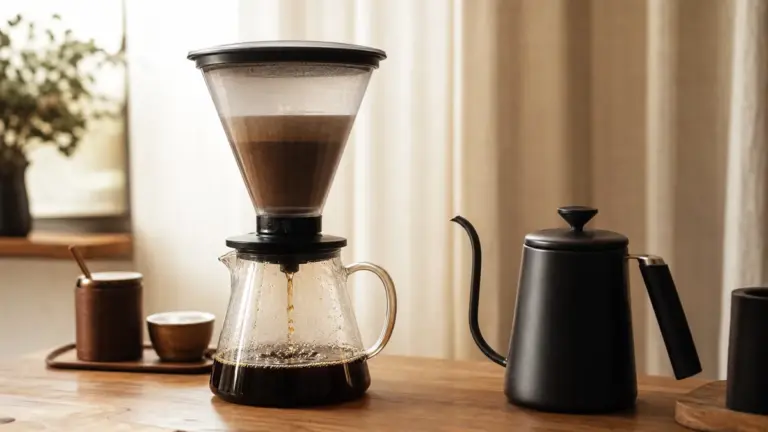
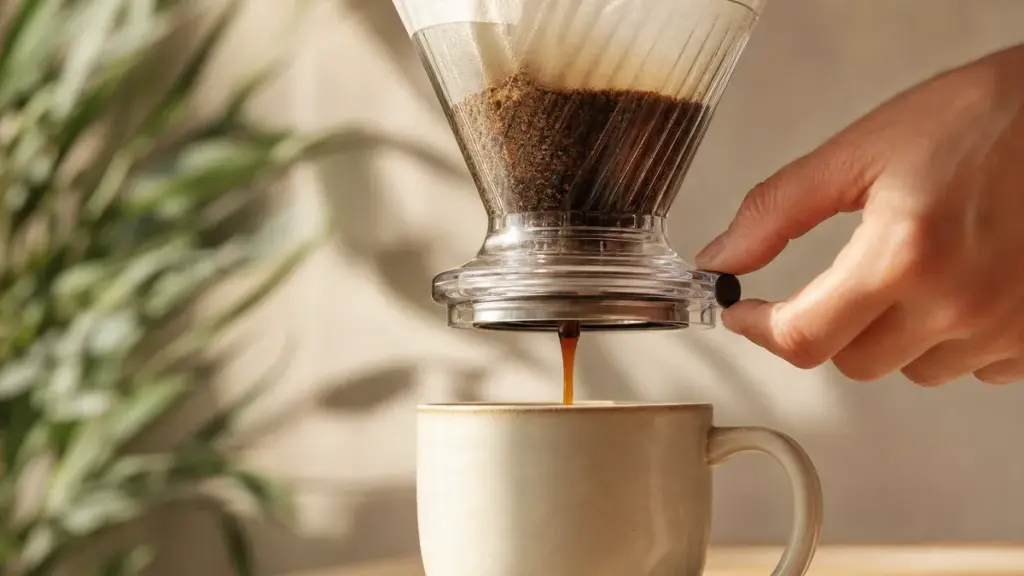
Our editorial recommendation for an undecided beginner is a steep-and-release brewer. Coffee steeps in water before draining through a paper filter, so you can try paper-filtered coffee without learning a continuous pouring technique. That recommendation is a judgement about convenience, not a claim that it makes objectively better coffee.
For the wider map of equipment and techniques, start with brewing methods.
Brewing methods compared
The criteria below are typical cup character, hands-on effort, practical serving pattern and suitability. Taste descriptions are tendencies, not guarantees: beans, roast, grind and recipe still matter. Capacity descriptions are selection guidance, not specifications for every model.
| Method | Typical cup character | Effort and skill | Serving pattern | Who it suits |
|---|---|---|---|---|
| Automatic paper-filter drip | Clean texture; strength depends on the recipe | Low attention after preparation | A shared pot, within the machine’s stated limits | Households and small teams wanting coffee together |
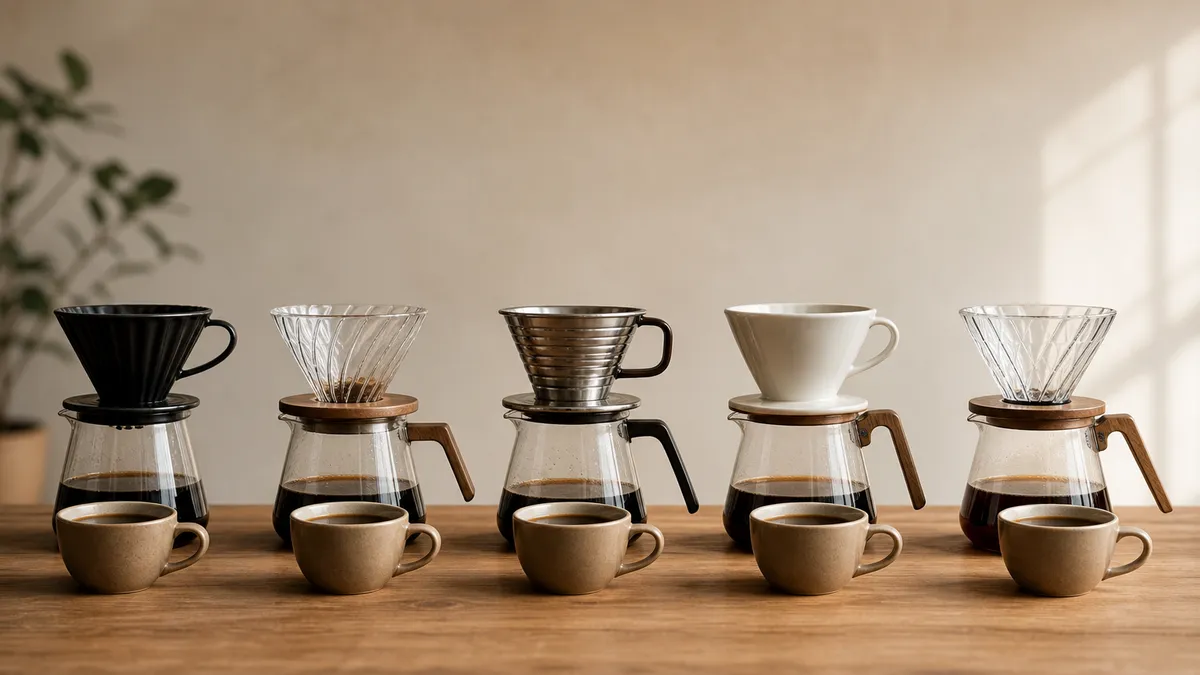
| Paper-filter pour-over | Clean texture, with little sediment | More attention to pouring and drainage | A mug or server matched to dripper size | People who enjoy an involved brewing routine |
| Cafetière or French press | Fuller, oilier texture, sometimes with fine sediment | Straightforward steeping and plunging; grounds need clearing | A shared brew in a suitably sized press | Drinkers who prefer body over a very clear cup |
| Steep-and-release paper filter | Clean texture from a steeped brew | Low pouring skill; operate the release valve | Often individual servings; check the model | Beginners wanting paper filtration without continuous pouring |
| AeroPress with paper filter | Clean-textured coffee; concentration is recipe-dependent | Several simple assembly, stirring and pressing steps | Individual servings are its natural role | Travellers and people making coffee for themselves |
| Moka pot | Concentrated, assertive coffee | Requires attention to heat and the manufacturer’s instructions | A pot of small servings | Drinkers wanting a short coffee or a base for added milk |
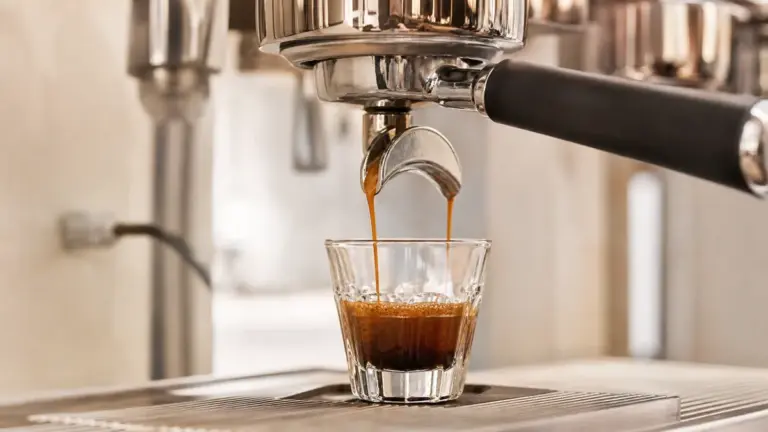
| Manual espresso machine | Concentrated coffee with substantial body | Highest preparation and adjustment demand here | Repeated shots rather than one shared pot | Espresso drinkers and people prioritising steamed-milk drinks |
The distinctions between filter materials, immersion brewing and concentrated espresso are supported by manufacturer documentation and comparative extraction research. The suitability judgements are editorial interpretations of those operating requirements, not results of first-hand equipment testing.
A traditional percolator is another option worth considering if that is the equipment you already own. Read percolator brewing before replacing it: an informed adjustment is a better first step than assuming a different brewer must improve your coffee.
Choose the taste and texture you actually enjoy
Clean and light-textured, or fuller and oilier?
“Clean” describes a cup with relatively little suspended material, not superior cleanliness or quality. Paper filtration and metal filtration produce different textures: Hario’s technical catalogue explains that stainless-steel filters allow coffee oils through that paper filters retain.
That makes filter material a useful first decision. If you dislike the sediment at the bottom of a cafetière cup, try paper filtration. If paper-filtered coffee feels too light for your preference, a metal-filtered method is worth exploring.
Do not assume, however, that pour-over must taste fruity or cafetière coffee must taste chocolatey. Those flavour descriptions cannot be assigned to a brewer independently of the coffee being brewed.
Concentrated does not automatically mean better extracted
Strength means how concentrated the drink is. Extraction means how much material the water has dissolved from the grounds.
An espresso can be concentrated yet unpleasantly unbalanced; a larger filter coffee can be less concentrated yet satisfying. Comparative laboratory and sensory research found greater concentrations in espresso-style drinks than in the longer coffees studied, but did not identify a universally best extraction method.
For choosing equipment, ask two separate questions: “How intense do I want each sip?” and “Do I enjoy the balance of this particular coffee?”
Compare effort, capacity and cleaning
Count the work you must attend to
Do not judge convenience from extraction time alone. Include filling, grinding, assembling, brewing, serving and cleaning.
A pour-over may be enjoyable precisely because you control it throughout. For someone preparing breakfast or joining a meeting, that same attention requirement may be its main disadvantage. Automatic drip moves much of the brewing work into the machine, although you still prepare the coffee and clear the filter.
A steep-and-release brewer offers a useful middle ground. Hario describes its Switch as combining immersion and pour-over: steep first, then operate the switch to drain. Our preference for it as a beginner option follows from that workflow, rather than a promise of superior flavour.
Size the brewer around the finished drink
Write down how much coffee you actually serve. As an illustrative planning assumption, four servings of 250 ml require 1,000 ml of finished coffee. This is not the same as adding 1,000 ml of brewing water, because some water remains with the grounds.
Manufacturer “cup” counts are not interchangeable with your mugs. For example, Technivorm’s KB instructions describe a 1.25 litre machine as making ten cups. Hario lists Switch capacities of 200 ml and 360 ml, depending on size. These are manufacturer-stated capacities, checked in November 2026, not independently measured yields.
For several people drinking together, our recommendation is to favour a suitably sized batch brewer or cafetière over repeating individual brews. For one person, a smaller brewer may fit the routine better than equipment intended for a full pot.
Consider the grounds afterwards
Picture the clearing-up stage before choosing. Would you rather discard a paper filter containing the grounds, or wash a reusable filter and remove loose grounds?
Neither preference needs defending. Also check whether the parts you will handle daily are easy to reach, disassemble and dry. A brewer that looks simple on the worktop may have a cleaning routine you find irritating.
Which method is best for milk drinks and travel?
Milk drinks: distinguish a splash from a latte
If you add a splash of milk, choose primarily by the black coffee’s taste and texture. If you want a drink dominated by hot milk, consider how concentrated the coffee base needs to be.
For espresso-based drinks with steamed milk, our recommendation is espresso equipment with suitable milk-steaming capability. A steam wand introduces another cleaning task: Sage’s instructions require wiping and purging it after texturing milk.
Moka coffee or an AeroPress concentrate can make an enjoyable alternative with separately heated or frothed milk. Treat these as alternatives, not identical reproductions of espresso. AeroPress explicitly describes its flow-control output as espresso-style concentrate rather than real espresso.
Keep milk refrigerated according to its storage instructions. FSA guidance recommends a fridge temperature between 0 and 5°C; do not confuse a pleasant milk-serving temperature with safe storage guidance.
Travel: pack the complete brewing system
Our travel preference is a plastic AeroPress or plastic dripper when suitable hot water is available. That is a practical judgement about carrying and handling the equipment, not a durability ranking based on testing.
Check the destination before packing. You need somewhere stable to brew, a suitable vessel, water, coffee and a way to deal with wet grounds. For AeroPress use, the manufacturer warns against pressing into thin or delicate glassware.
A moka pot needs a compatible heat source, not just a kettle. Follow its own instructions: Bialetti specifies water below the safety valve and loose coffee in the funnel, without pressing it down. Do not treat it as a small espresso machine.
Compare the complete setup and ongoing requirements
Assess what you need beyond the brewer:
- Preparation: suitable ground coffee or a grinder, plus a way to measure repeatable doses.
- Water and heat: kettle or hob access, machine water requirements and any treatment recommended by the manufacturer.
- Serving: mugs, server, milk jug or separate frother.
- Consumables: paper filters, cleaning materials and applicable water filters.
- Upkeep: replacement seals, servicing needs and the availability of spare parts.
For your own comparison, record the initial equipment requirements separately from recurring purchases and maintenance. Over your chosen ownership period, add those categories together, then divide by the number of drinks you realistically expect to make. Use consistent assumptions about dose, milk use and wastage.
For a workplace purchase, request itemised written quotations, including installation, training, servicing, consumables, exclusions and VAT treatment. This article compares brewing choices, not supplier packages.
Make the decision, then improve the recipe
Use this decision path:
- Steamed-milk drinks are essential: investigate espresso equipment and its milk workflow.
- Several people want black coffee together: prioritise batch capacity.
- You want a fuller texture: try a cafetière.
- You want paper-filtered coffee with little pouring technique: try steep-and-release.
- You enjoy controlling each pour: choose pour-over.
- You mainly brew for yourself away from home: assess an AeroPress or portable dripper.
Once you have chosen, resist changing equipment at the first disappointing cup. The SCA’s Brewing Best Practices gives a reference dose of 55 g per litre, plus or minus 10%, with brewing water at 94°C, plus or minus 2°C, at contact with the coffee. These are reference conditions for that guidance, not compulsory settings for every brewer.
There is useful precision behind that caution. In a controlled drip-coffee study, researchers found little sensory effect from brewing at 87°C, 90°C or 93°C when strength and extraction were held constant. They adjusted other brewing variables to achieve that control. The finding does not mean temperature never matters in ordinary brewing.
Water is another variable, not an afterthought: the SCA water chart considers hardness and alkalinity separately. Before replacing equipment, keep your coffee and water consistent and adjust one recipe variable at a time.
The best brewing method for you should earn its place through a drink you enjoy and a routine you will repeat. If easy paper-filtered coffee sounds right, steep-and-release brewers are a sensible place to begin.
FAQ
Can I use the same ground coffee in every brewer?
You can experiment, but one grind will not suit every brewer equally well. Grind affects extraction and how readily water moves through the coffee. Start with the equipment manufacturer’s guidance rather than assuming a bag labelled “ground coffee” suits everything. When comparing methods, use the same beans if possible, but allow each brewer an appropriate grind and recipe.
Should I buy a grinder before choosing a brewing method?
Choose the brewing method first, then decide what grinding capability it needs. This avoids selecting a grinder without knowing the preparation requirements. You can begin with coffee ground appropriately by a roaster, then consider grinding at home when you want more control. For manual espresso, include grinding and adjustment in your assessment of the complete workflow.
Will a different brewer fix coffee that tastes flat?
Not necessarily: water and recipe deserve attention before you replace equipment. The SCA water chart associates different combinations of hardness and alkalinity with different sensory outcomes. Compare the same coffee using consistent doses and a suitable recipe, and check your local water supplier’s information. A new brewer is a poor diagnostic tool if several other variables change at once.
Where to go next
Read Brewing Methods to explore the wider family of techniques, then Clever Dripper and Hario Switch if straightforward paper-filtered brewing appeals. Percolator Brewing is the useful next read if you already own a traditional percolator and want to understand how to use it well.
Sources
-
Specialty Coffee Association, Protocols & Best Practices, undated compilation, “Brewing Best Practices”, p. 17.
https://static1.squarespace.com/static/587af1d4db29d69a1a226b95/t/60748749cf593c00972df582/1618249556105/SCA%2BProtocols%2B%26%2BBest%2BPractices.pdf -
Specialty Coffee Association, SCA Water Chart, undated.
https://static1.squarespace.com/static/587af1d4db29d69a1a226b95/t/60747196b54d702410bd802a/1618243990452/sca%2Bwater%2Bchart-us-letter.pdf -
Gloess and colleagues, ZHAW, Comparison of nine common coffee extraction methods: instrumental and sensory analysis, 2013, European Food Research and Technology, volume 236.
-
Batali, Ristenpart and Guinard, University of California, Davis, Brew temperature, at fixed brew strength and extraction, has little impact on the sensory profile of drip brew coffee, 2020, Scientific Reports.
https://www.nature.com/articles/s41598-020-73341-4.pdf -
Hario, V60 Glass “Switch” Immersion Dripper, live product description and manufacturer-stated capacities, checked November 2026.
https://globalhario.com/products/hario-immersion-dripper-switchglass -
Hario, English Catalogue, 2022, filter-material and brewing descriptions.
https://hario.cc/PDF/2022_English_Catalog.pdf -
AeroPress, FAQs for the AeroPress Coffee Maker, undated live guidance, checked November 2026.
https://aeropress.com/pages/faq -
Sage Appliances, The Barista Express Instruction Book, document revision UG8 I23, milk-steaming and cleaning guidance.
https://assets.sageappliances.com/BES875/SES875_EU_UG8_I23_LR.pdf -
Bialetti, How to use the Moka Express?, updated 15 June 2023.
https://bialetti-cookware.zendesk.com/hc/en-us/articles/5416235346322-How-to-use-the-Moka-Express -
Technivorm Moccamaster, KB Operating Instructions, undated, manufacturer-stated capacity.
https://support.moccamaster.com/hc/en-us/article_attachments/1500014339642 -
Food Standards Agency via GOV.UK, How to chill, freeze and defrost food safely, published 18 December 2017, live guidance checked November 2026.
https://www.gov.uk/government/publications/how-to-chill-freeze-and-defrost-food-safely/how-to-chill-freeze-and-defrost-food-safely
This piece was researched using retrieved SCA guidance, peer-reviewed extraction and sensory research, manufacturer documentation and FSA food-storage guidance; recommendations are editorial judgements rather than first-hand test results.
Last checked: November 2026