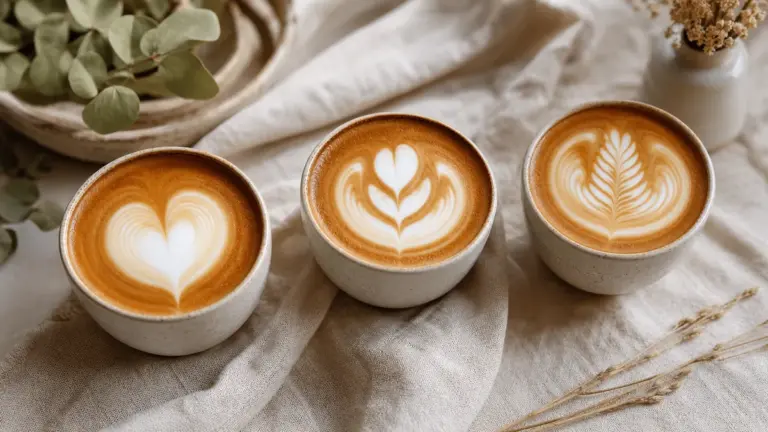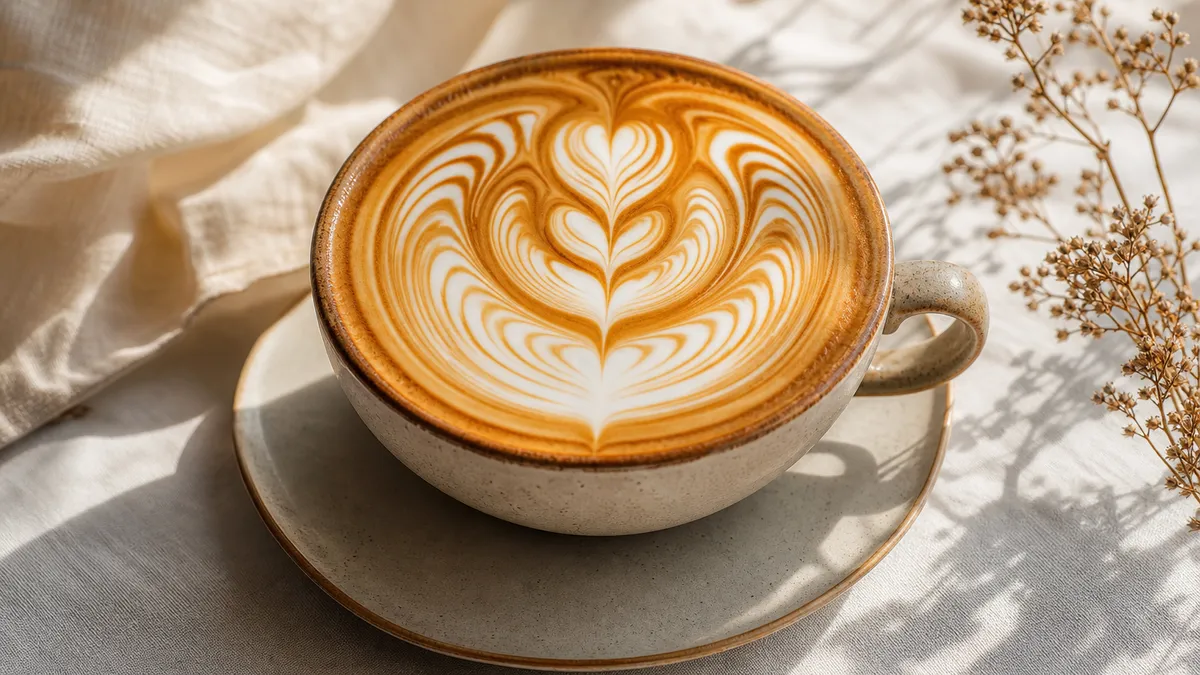
Latte art masterpieces include intricate free-poured swans, multi-rosetta compositions, etched illustrations, coloured designs and sculpted 3D foam characters. The most remarkable examples deserve attention not simply because they look complicated, but because their shapes are clear, balanced and deliberately made.
In short
- Identify the technique before judging the difficulty: free-pouring, etching and foam sculpture require different skills.
- Advanced free-pour patterns can combine several rosettas, tulip stacks and carefully placed finishing strokes.
- Competition quality includes contrast, surface texture and repeatability, not just an impressive subject.
- Under the 2026 World Latte Art Championship rules, designer patterns may use one food colouring as a surface highlight; free-pour categories prohibit etching and surface decoration.
- For practice, choose one recognisable composition and improve its spacing before adding more detail.
What makes a latte art masterpiece?
For this guide, a masterpiece means a design in which technical control serves a clear visual idea. A complicated cup is not automatically a successful one: the viewer should be able to recognise the intended shape without an explanation.
The World Latte Art Championship’s visual assessment includes matching patterns, surface quality, contrast, harmony, successful execution and overall appeal. These provide a useful viewing framework even if you have no intention of competing.
Look first at the outline, then at the smaller details. Does the animal have a convincing silhouette? Can you distinguish individual leaves? Is there enough brown coffee around the white shapes to keep them separate?
That surrounding brown area is negative space, the part of the composition left outside the main pattern. Treat it as part of the picture, rather than empty room waiting to be filled.
If the techniques are unfamiliar, start with the wider coffee art and latte art guide. Here, the focus is on what advanced designs achieve, rather than teaching the first heart.
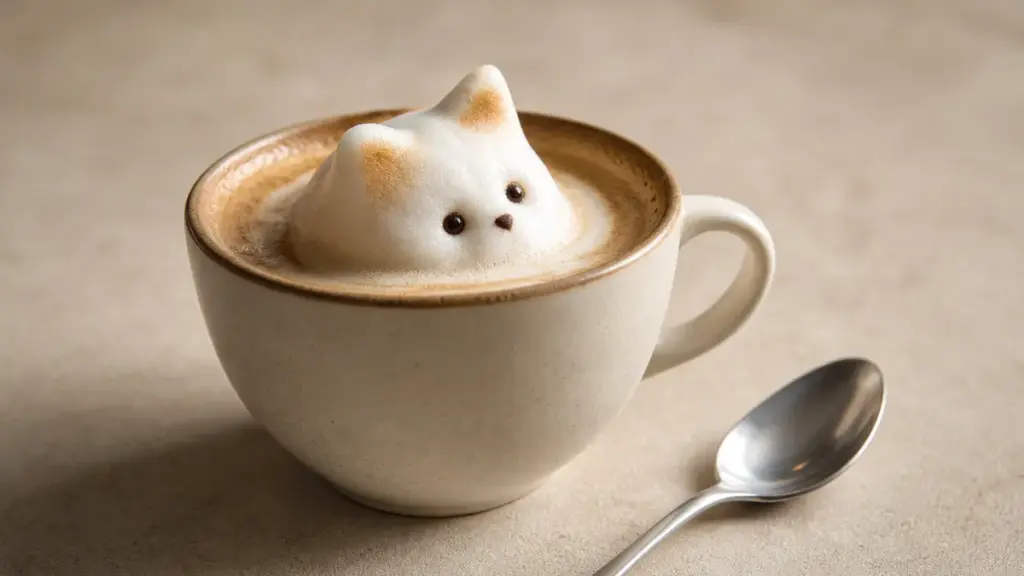
Advanced free-pour designs worth studying
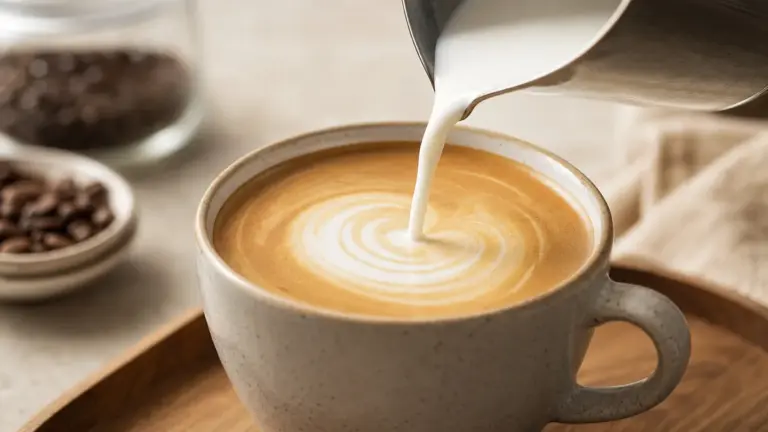
Free-pouring creates the pattern by pouring steamed milk directly from a jug, without drawing tools. Microfoam, milk containing finely dispersed air bubbles, provides the white material against the brown coffee.
Swans and elaborate bird designs
A swan is an especially rewarding design to study because its parts remain readable. In Lattiz’s illustrated tutorial, a rippled rosetta becomes the wing, a curved milk stroke forms the neck, and a small heart supplies the head.
The transformation is the interesting part. A familiar leaf pattern stops being a leaf when it is placed beside a neck and head.
When viewing a swan, inspect the junction between wing and neck. As an editorial judgement, a clean connection and convincing head position matter more than squeezing in another ripple. A richly detailed wing cannot rescue an unreadable silhouette.
More elaborate versions extend the composition. The Latte Art Grading System’s gold-level patterns include a swan with four rosettas and a rose on its head.
Multi-rosetta compositions
A rosetta is a fern-like pattern made from alternating milk and coffee lines. Advanced arrangements turn several of these leaves into a larger composition rather than presenting one central fern.
The Latte Art Grading System’s published examples include seven rosettas around a central six-element tulip, and eight rosettas arranged as a snow star. These are useful, documented examples of how far familiar building blocks can be developed.
For the viewer, the pleasure lies in the relationship between the parts. Look for consistent leaf sizes, clear centres and a composition that belongs inside the cup rather than appearing cropped by its rim.
The individual movements are covered in heart, tulip and rosetta. At this level, study arrangement rather than simply counting leaves.
Vortex and reverse patterns
Not every ambitious design needs to depict an animal. Geometric arrangements can be just as demanding.
The Latte Art Grading System’s black-level material includes a 15-element vortex and a reverse composition with a nine-element tulip. These show a different kind of ambition: repeated elements must work together as one organised pattern.
When studying them, ask where your eye travels. Does it follow the composition naturally, or become caught in an overcrowded patch? This is a useful way to appreciate abstract latte art without assuming that more elements always mean better art.
A documented championship example: whale, moose and dragon
Named examples are most useful when the designs and achievement can both be verified.
Xie Yi-chen won the 2024 World Latte Art Championship in Copenhagen. Reporting by the Taipei Times, with Taiwan’s Central News Agency, identifies his final-round designs as a whale, a moose and a dragon, grouped under the theme “Diverse World”.
According to that report, the subjects represented sea, land and sky. This makes the set worth studying as a coherent artistic idea, not merely a collection of unrelated difficult patterns.
Our interpretation is that these subjects offer a useful lesson in recognition. When examining an animal design, look for the features that identify it immediately: the body’s outline, the head’s position and the relationship between the main shapes.
Do not infer the exact pouring sequence from a finished photograph. A photograph records the result, not whether every detail was poured, etched or otherwise added. Watch the complete performance before attributing a technique.
For the distinction between artistic ambition and formal scoring, see latte art competitions.
Etching: illustration on the coffee surface
Etching uses a tool to draw or refine the surface pattern after pouring. It belongs to a different discipline from free-pouring, rather than being an inferior version of it.
Purpose-made etching tools can have a pointed drawing end and a broader end for handling foam. The pointed end gives the artist a means of working on details that are not formed directly by the milk stream.
A useful way to assess an etched illustration is to separate its main shape from its finishing marks. Does the picture already have a convincing structure, with the fine lines supporting it? Or does it depend on a mass of tiny marks to explain what it represents?
For your own design, sketch a simple silhouette first and decide which details genuinely need a tool. An eye, a facial outline or a short decorative accent can be a more disciplined choice than covering the whole surface.
The 2026 World Latte Art Championship permits etching in designer-pattern lattes, but not in free-pour categories. The classification matters: a beautiful etched design should be appreciated for its illustration, not described as an unaided pour.
Colour: a different artistic choice
Colour gives an artist another compositional decision: where should the viewer look first?
For this guide, our preference is for restrained colour that clarifies the subject. Before adding it, ask whether the underlying brown-and-white design already works. If it does not, colour risks becoming a distraction rather than an improvement.
Competition permissions are narrower than the possibilities of decorative coffee art. Under the 2026 World Latte Art Championship rules, designer-pattern drinks may use one food colouring to highlight the surface design. Colouring or flavouring within the beverage is prohibited, and predominantly colouring-based designs should expect lower marks.
Those are championship rules, not a universal definition of artistic merit. Equally, an attractive multicoloured image should not automatically be labelled a championship-legal design.
For any drink intended for consumption, use only colouring suitable for the intended food or drink application and follow its instructions. The Food Standards Agency’s authorisations guidance makes clear that permitted uses and conditions matter; approval of an additive does not mean unrestricted use in every product.
3D latte art: foam as sculpture
Three-dimensional latte art changes the question from “What picture is on the drink?” to “What shape rises above it?”
Reissue’s own gallery documents 3D character designs, including raised versions of recognisable animated figures. This establishes the style as a distinct practice, rather than simply an unusual name for a thickly poured heart.
The most useful viewing angle is different, too. Assess a flat pattern from above, but examine a foam sculpture from the side as well. Look at the relationship between its raised parts and the cup beneath them.
Our editorial preference is for a simple, readable form over a tall but confused construction. The sculpture should still look intentional when viewed without its painted details.
Do not use 3D examples as your target texture for ordinary free-pouring. La Marzocco’s pouring guidance calls for evenly integrated milk with a flowing, wet-paint appearance; a rigid layer of foam produces a very different result.
How to study a masterpiece and practise intelligently
Use this checklist when watching a demonstration or choosing your next design. It is a study method, not a substitute for the underlying latte art pouring technique.
- Identify the discipline. Record whether the design is free-poured, etched, coloured or sculpted. Avoid comparing unlike techniques as though they had identical constraints.
- Name the main shapes. Describe the composition in plain words before worrying about the artist’s smallest movements.
- Mark the negative space. Sketch where the brown gaps belong. Give those gaps as much attention as the white shapes.
- Choose one feature to improve. Work on the swan’s silhouette, the spacing between leaves or the position of a central element, rather than changing everything.
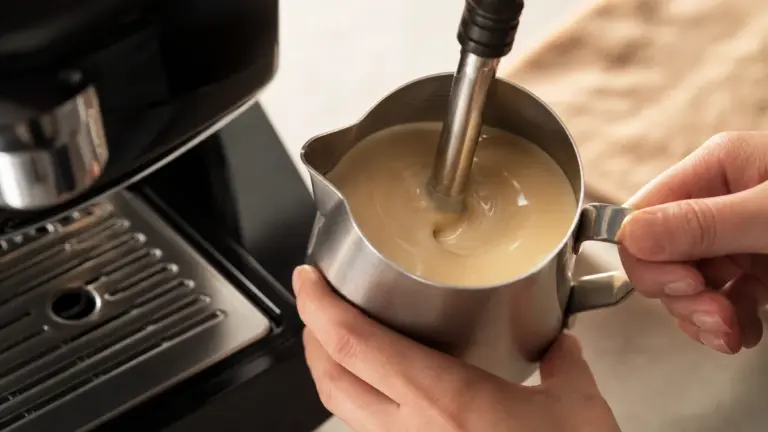
- Prepare before steaming. La Marzocco advises deciding on the intended pattern beforehand and pouring promptly, before foam separates from the liquid.
- Repeat the same composition. Photograph attempts from the same angle. Compare the overall shape before counting details.
Read the milk, not just the hand movements
The milk stream and the milk texture work together. Manufacturer guidance explains that a higher, slower initial pour mixes milk into the coffee; bringing the spout close to the surface allows the white pattern to spread.
This gives you a practical diagnostic question: is the intended shape failing because its placement is wrong, or because the milk is not behaving as expected?
Keep the distinction clear. A rigid foam layer followed by blobs calls for attention to milk preparation. A recognisable but poorly arranged composition calls for attention to design. Learning which problem you have is more useful than attempting an even harder pattern.
FAQ
Does beautiful latte art prove the coffee tastes good?
No, a beautiful pattern does not establish that the espresso tastes good. La Marzocco explicitly distinguishes the appearance of latte art from improving the drink’s flavour. Judge the cup on both terms: enjoy the visual craft, then assess whether the coffee and milk make a pleasant drink rather than treating the picture as a quality certificate.
Can plant-based drinks produce advanced latte art?
Yes, suitable plant-based barista formulations can produce latte art. La Marzocco’s guidance notes that different milks behave differently and recommends alternatives designed for steaming. Keep the formulation consistent while practising so that you can judge changes in your technique, rather than changing the drink base and the pattern at the same time.
Which advanced design should I attempt first?
Choose the design closest to a pattern you can already repeat. Our suggested next step for someone with a reliable rosetta is a swan, because the wing retains that familiar structure. If your strength is precise stacking, develop a more organised tulip composition instead. This is an editorial learning suggestion, not a formal grading requirement.
Where to go next
Use How to Pour Latte Art for the mechanics, then Heart, Tulip and Rosetta to strengthen the building blocks behind advanced compositions. Read Latte Art Competitions to understand formal assessment, or Coffee Art Exhibitions to explore how latte art masterpieces fit into coffee’s wider visual culture.
Sources
- World Coffee Championships, Specialty Coffee Association, 2026 World Latte Art Championship Rules and Regulations, 2026 edition, particularly sections 2.5 and 14.
https://wcc.coffee/s/2026-World-Latte-Art-Championship-Rules-and-Regulations.pdf - World Coffee Championships, Specialty Coffee Association, WLAC Visual Scoresheet: Semi-Final / Final Round, document linked in the 2026 rules collection.
https://wcc.coffee/s/2026-WLAC-Visual-Scoresheet-Semi-and-Finals.pdf - Latte Art Grading System, L.A.G.S. Battle Regulation, version 4.0, publication year not stated, skills appendix.
https://api.barcaffe.si/storage/filemanager/Dokumenti/26LagsBattle/LAGSBATTLE_REGULATION_ENGLISH_.pdf - La Marzocco Home, Pro Tips for Latte Art, 2019.
https://home.lamarzoccousa.com/pro-tips-for-latte-art/ - La Marzocco Home, Steaming Milk on the Linea Mini, 2024.
https://home.lamarzoccousa.com/steaming-milk-on-the-linea-mini/ - Lattiz, The Swan, illustrated tutorial, publication year not stated.
https://www.lattiz.com/en/learn-how-make-perfect-latte-art-swan-smart-milk-solution-lattiz - Edo Barista, Latte Art Pen: Your Ally to Amaze with a Cappuccino, 2020.
https://edobarista.com/en/content/news/58-latte-art-pen-your-ally-to-amaze-with-a-cappuccino - Reissue, 3D Latte Art, official gallery, publication year not stated.
https://www.reissue.co.jp/latteart_cat/thrd-latte-art/ - Taipei Times, with Central News Agency, Taiwanese Barista Wins 2024 World Latte Art Championship, 19 July 2024.
https://www.taipeitimes.com/News/taiwan/archives/2024/07/19/2003821022 - Food Standards Agency, Guidance on Using the Register of Food Additive Authorisations, live guidance, publication year not stated.
https://data.food.gov.uk/regulated-products/food_authorisations/guidance
Research combined official competition documents, manufacturer technique guides, an artist’s official gallery, authoritative reporting and Food Standards Agency guidance; the practice checklist and aesthetic judgements are editorial synthesis, not first-hand testing.
Last checked: November 2026