Starting a coffee shop or roastery in the UK means proving demand, securing suitable premises, registering a food business and arranging the equipment, people and finance to operate safely. A café and a roastery need different plans: serving drinks is a hospitality operation, while roasting adds manufacturing, extraction and emissions considerations.
In short
- Register your food business with the appropriate local authority at least 28 days before trading. Scotland also requires this notice period.
- Food-business registration is free, but it does not replace planning permission, environmental authorisations or activity-specific licences.
- Check the proposed premises and extraction route before committing to occupation or ordering machinery.
- Build food safety procedures around your actual activities, including allergen management for cafés and production controls for roasteries.
- Obtain itemised written quotations and prepare a cash-flow forecast before seeking finance.
Choose the business before choosing the machine
Start by deciding what you will sell, to whom and through which channels. A neighbourhood café, takeaway kiosk, wholesale roastery and online coffee brand are different businesses, even when they use the same beans.
| Model | Main operational priority | Evidence to gather before committing |
|---|---|---|
| Coffee shop | Consistent service during busy periods | Local demand, customer habits and a realistic service trial |
| Roastery | Repeatable production and dependable orders | Buyer feedback, repeat purchases and production trials |
| Combined café and roastery | Managing service and production together | Separate demand forecasts and a workable shared layout |
For a café, observe the proposed area at different times and speak to potential customers. For a roastery, test samples with prospective buyers and distinguish polite enthusiasm from a repeat order.
Your business plan should explain the offer, competition, sales channels, operating requirements, risks and responsibilities. Use the coffee industry overview for context, but base your own forecast on evidence from the customers you intend to serve.
Keep the opening offer manageable. Consider buying roasted coffee or using a contract roaster, which produces coffee for your business, before deciding whether owning roasting equipment serves a proven need.
Build the financial plan from itemised quotations
Separate opening expenditure from recurring commitments and working capital, the funds needed to keep operating while payments come in and bills fall due.
Request itemised written quotations covering:
- Premises, legal advice, surveys, fit-out and utility alterations.
- Equipment, installation, commissioning, water treatment and training.
- Extraction, emissions controls and any required examinations.
- Opening stock, packaging, cleaning materials and small equipment.
- Staffing, insurance, servicing, waste collection, accounting and marketing.
Ask suppliers to identify exclusions, ongoing obligations and VAT treatment. Compare complete installed proposals, not just the machine supplied.
Build your own product calculations. For drinks, include coffee, milk, other ingredients, packaging and wastage; then account for labour and overheads across a realistic sales volume. For roasted coffee, measure saleable output from trial batches rather than treating the green coffee loaded as the finished quantity available to sell.
Prepare a monthly cash-flow forecast covering at least 12 months. Include the owner’s income needs, tax payments, stock purchases and the timing of wholesale receipts, then test slower sales, delayed opening and equipment downtime.
Discuss suitable finance with an accountant and potential funders. Compare repayment obligations, security, personal guarantees and ownership implications, not simply whether an application is accepted.
Check premises and permissions before committing
Send the local planning authority a written description of the proposed operation: customer seating, takeaway service, food preparation, roasting, deliveries, opening hours and extraction. Ask a solicitor to check that the occupation agreement permits those activities and the necessary alterations.
Planning classifications are not UK-wide
In England, cafés selling food and drink mainly for consumption on the premises generally fall within Class E(b). Some low-impact industrial activities can fall within Class E(g)(iii), while other industrial processes fall within Class B2.
A commercial roastery is not automatically B2 or sui generis. Its classification depends on the operation and its effects; a combined café and roastery may also require consideration of primary, ancillary or mixed use. Ask the planning authority to assess your actual proposal rather than relying on a property advertisement.
Do not apply England’s Class E terminology across the UK. Confirm the relevant classification locally in Wales, Scotland or Northern Ireland, and check whether extraction, external alterations or existing planning conditions need separate attention.
Registration is not a general operating licence
Check activity-specific requirements with the council’s licensing team. In England and Wales, selling alcohol and supplying hot food or drink between 11pm and 5am can require a premises licence, subject to exemptions. Scotland and Northern Ireland have separate licensing arrangements.
Also ask about outdoor seating, pavement use and any proposed entertainment.
Before approving the layout, check handwashing, food preparation, drainage, ventilation, storage, accessibility and fire safety arrangements. For a roastery, establish whether there is a feasible exhaust route and suitable space for deliveries and production.
Register and establish food safety procedures
In England, Wales and Northern Ireland, register with the appropriate local authority at least 28 days before trading. Registration is free. Food Standards Scotland also requires registration at least 28 days before trading.
A roastery handling and supplying coffee is a food business, not merely an equipment workshop. Register each relevant premises and describe the activities accurately, including wholesale supply or online sales.
Food safety procedures must be based on HACCP, meaning hazard analysis and critical control points: identifying what could make food unsafe and establishing controls. Suitable catering resources include Safer Food, Better Business, Scotland’s CookSafe and Northern Ireland’s Safe Catering pack. A roasting operation needs procedures suited to manufacturing, not an unchanged café checklist.
For cafés, establish cleaning, chilling, pest-control and allergen procedures before opening. Keep ingredient information current and train staff to handle allergy enquiries without guessing. Foods qualifying as prepacked for direct sale, such as sandwiches packed on site before customers select them, need the food name and a full ingredients list with regulated allergens emphasised.
For roasting, include incoming stock checks, storage, production records, contamination controls and recall arrangements. Discuss applicable acrylamide mitigation and monitoring requirements with the food safety officer.
Specify equipment around the workflow
Write an equipment brief before approaching suppliers. Describe the menu or product range, expected busy periods, staffing, available utilities and cleaning arrangements.
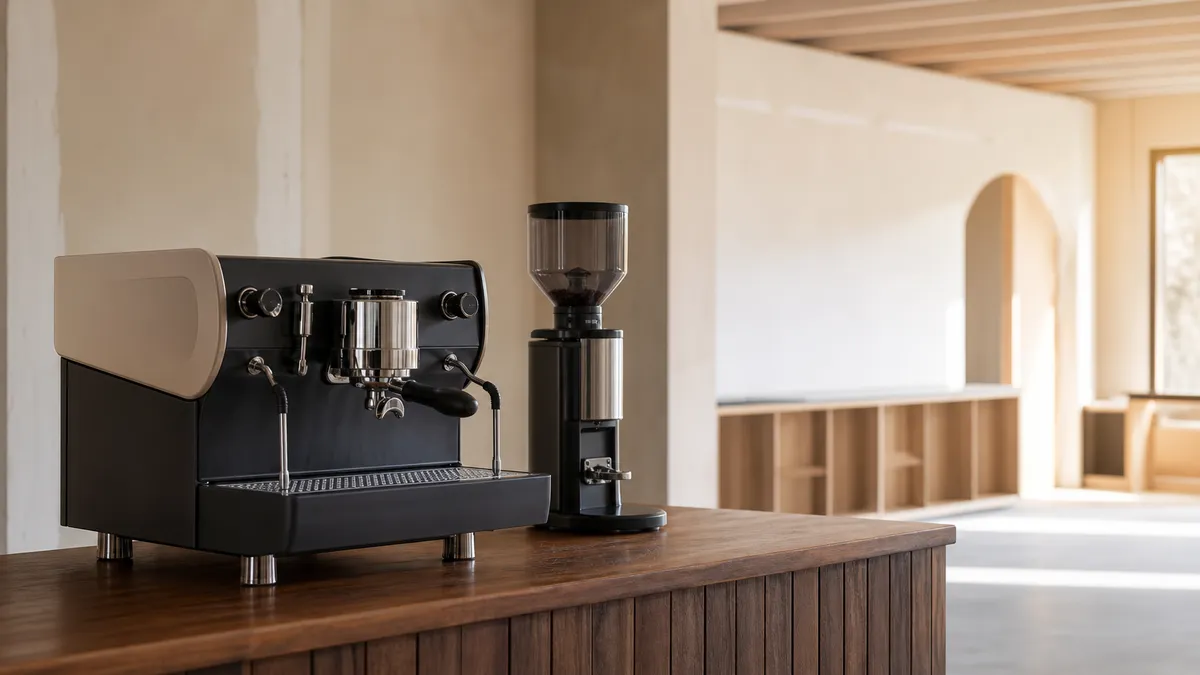
For a café, assess the espresso machine, grinders, refrigeration, washing equipment, water treatment, scales and storage as one working system. Ask suppliers to demonstrate the intended workload, including steaming milk and cleaning between tasks, rather than quoting an isolated machine output.
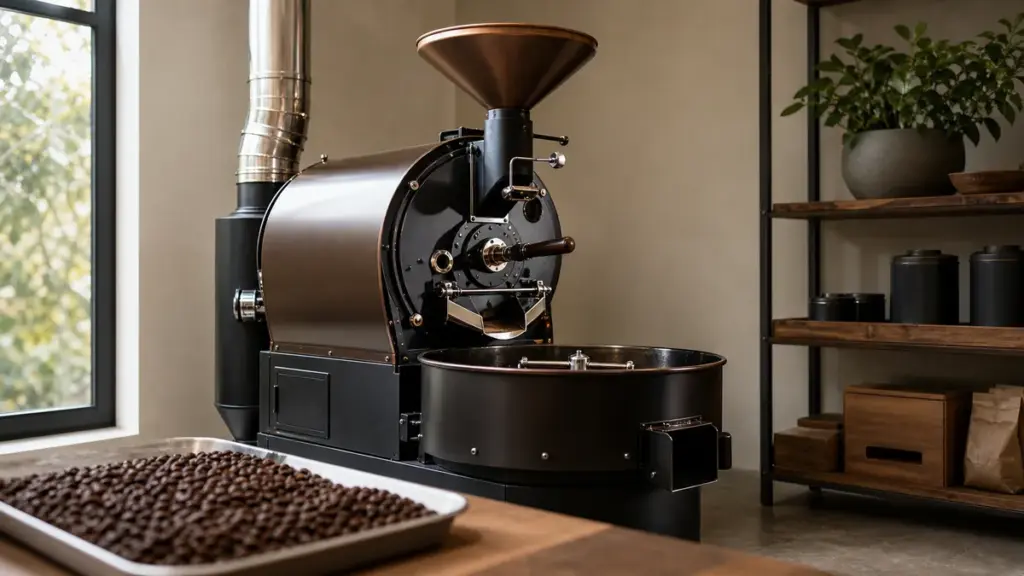
For a roastery, specify production, cooling, exhaust, packing, weighing, storage and quality-control needs together. Ask how the proposed installation handles cleaning access, maintenance and future expansion. Treat manufacturer output figures as claimed capacity until demonstrated under your intended conditions.
Arrange pressure-system compliance separately from servicing
Commercial espresso machines with steam boilers can fall under the Pressure Systems Safety Regulations 2000 in Great Britain. Steam is a relevant fluid at any pressure.
Ask the supplier and a competent person to establish the applicable duties. Where required, a written scheme of examination and examination must be in place before use. Routine servicing does not replace statutory examination; consult HSENI for Northern Ireland requirements.
Resolve roasting emissions before installation
Take the proposed roaster specification and site layout to environmental health before ordering. Include fuel, operating schedule, throughput, exhaust arrangements and nearby homes or other sensitive uses.
Ask for a written assessment of:
- Whether the installation requires an environmental permit or another authorisation.
- Applicable smoke controls and any furnace or chimney requirements.
- How odour, noise and emissions will be controlled.
In England and Wales, environmental permitting depends on the regulated activity and installation, not simply the description “coffee roastery”. Scotland and Northern Ireland use different regulatory arrangements, so confirm the responsible regulator locally.
In Great Britain, ask about applicable Clean Air Act requirements. Odour is a separate consideration: in England, councils must investigate potential statutory nuisance from business premises and can require it to stop or be restricted.
Ask the designer whether an afterburner, scrubber or another control system is appropriate, and what evidence supports the proposal. Do not assume a named technology is universally required or guarantees compliance.
Worker exposure needs separate attention. HSE warns that coffee roasting and grinding can produce diacetyl vapour, and that exposure can exceed workplace limits. Arrange a suitable hazardous-substance assessment and controls, including extraction and exposure checks where indicated.
Choose suppliers and train the team
Assess coffee suppliers on consistency, traceability, availability and support, not the appeal of one sample. Ask about ordering arrangements, delivery lead times, substitutions, product specifications and complaint handling.
For green coffee, agree sample approval and delivery arrangements before purchasing production stock. Our guide to green coffee trading and importers explains the supply-chain roles; direct trade and auctions covers alternative purchasing relationships.
Keep records of food suppliers and business customers supplied so products can be traced if something goes wrong.
Recruit around the work that needs doing: opening, preparation, service, production, cleaning and administration. Check employment status, right to work, payroll, minimum-wage compliance, pension duties and applicable employers’ liability insurance before staff start.
Train people in both quality and safety. Food handlers need appropriate instruction and supervision; a certificate alone does not demonstrate that the workplace’s procedures are being followed.
Use a staged opening checklist
- Validate demand: identify customers, test the offer and record the assumptions behind forecast sales.
- Clear the site: resolve planning, occupation terms, utilities, extraction and relevant permissions.
- Confirm finance: complete quotations, cash-flow forecasting and funding arrangements.
- Register and document: meet the registration deadline and prepare food safety and traceability procedures.
- Commission and train: complete installation checks, required examinations and staff instruction.
- Rehearse the operation: run a service or production trial, including cleaning, an allergy enquiry and a traceability exercise.
For starting a coffee shop or roastery, use this sequence as a set of decision gates. Do not move to equipment installation while the site’s suitability remains uncertain.
FAQ
Can I start a roastery from home?
Yes, potentially, but a domestic address does not remove food-business or premises requirements. The FSA recognises home-based food businesses, which must register where required. Discuss the proposed roasting activity with planning and environmental health, and check property permissions, extraction, storage and the effect on neighbours before installing equipment.
Do I need a food hygiene certificate to open?
A food hygiene certificate is not universally compulsory, but appropriate food hygiene training is necessary. The FSA distinguishes having a certificate from demonstrating adequate knowledge and safe working practices. Choose training suited to each role, then teach the business’s own cleaning, allergen, storage and record-keeping procedures.
Must I wait for a food hygiene inspection before opening?
Normally, a business requiring registration rather than approval does not need to wait for its first inspection. It must still meet the registration notice period and comply with food law from the start. Confirm the position with the local food safety team, particularly where your activities might require approval, and obtain any other necessary permissions.
Where to go next
Read Coffee Industry through the industry guide to understand the wider trading system. Green Coffee Trading, Importers and Exporters explains sourcing responsibilities, while Direct Trade and Coffee Auctions helps you assess purchasing relationships before building them into a roasting business.
Sources
-
Food Standards Agency, Starting a food business, updated 2026. Registration, premises, training and traceability guidance.
https://www.gov.uk/guidance/starting-a-food-business -
Food Standards Scotland, Starting a food business checklist, undated, accessed 2026. Scottish registration, premises and food safety resources.
https://www.foodstandards.gov.scot/business-guidance/starting-a-new-business/starting-a-food-business-checklist -
GOV.UK, Food safety management systems for businesses, current guidance accessed 2026. HACCP-based procedures.
https://www.gov.uk/food-safety-management-systems -
Food Standards Agency, Allergen guidance for food businesses, 2026; Prepacked for direct sale allergen labelling changes for restaurants, cafés and pubs, updated 2026.
https://www.gov.uk/government/publications/allergen-guidance-for-food-businesses/allergen-guidance-for-food-businesses
https://www.gov.uk/government/publications/prepacked-for-direct-sale-ppds-allergen-labelling-changes-for-restaurants-cafes-and-pubs/prepacked-for-direct-sale-ppds-allergen-labelling-changes-for-restaurants-cafes-and-pubs -
Food Standards Agency, Acrylamide legislation, 2018, current text accessed 2026.
https://www.gov.uk/government/publications/acrylamide-legislation/acrylamide-legislation -
UK Government, When is permission required?, updated 2023; Town and Country Planning (Use Classes) (Amendment) (England) Regulations 2020, SI 2020/757.
https://www.gov.uk/guidance/when-is-permission-required
https://www.legislation.gov.uk/uksi/2020/757/pdfs/uksi_20200757_en.pdf -
GOV.UK, Premises licence (England and Wales), current guidance accessed 2026.
https://www.gov.uk/find-licences/premises-licence -
GOV.UK, Local authority environmental permits (England and Wales), current guidance accessed 2026; Derry City and Strabane District Council, Pollution Prevention Control, undated, accessed 2026.
https://www.gov.uk/find-licences/local-authority-environmental-permit
https://www.derrystrabane.com/services/health-communitywellbeing/environment-and-neighbourhoods/pollution-prevention-control -
GOV.UK, Preventing air pollution: Boilers and furnaces, current guidance accessed 2026; DEFRA, Nuisance smells: how councils deal with complaints, 2015.
https://www.gov.uk/preventing-air-pollution/boilers-and-furnaces
https://www.gov.uk/guidance/nuisance-smells-how-councils-deal-with-complaints -
HSE, Pressure Systems Safety Regulations 2000 (PSSR); Introduction to pressure equipment, current guidance accessed 2026.
https://www.hse.gov.uk/pressure-systems/pssr.htm
https://www.hse.gov.uk/pressure-systems/about.htm -
HSE, Exposure to diacetyl vapour in food and drink manufacture, safety bulletin EPD01-2023, January 2023.
https://www.hse.gov.uk/safetybulletins/diacetyl-vapour-exposure.htm -
Business.gov.uk, Preparing for funding applications; GOV.UK, Write a business plan, current guidance accessed 2026.
https://www.business.gov.uk/support/funding-for-business/preparing-for-funding-applications/
https://www.gov.uk/write-business-plan -
GOV.UK, Get ready to employ someone for the first time: step by step; Employ people, current guidance accessed 2026.
https://www.gov.uk/get-ready-to-employ-someone
https://www.gov.uk/browse/business/employ-people
This guide was researched using retrieved government, food safety regulator and HSE guidance; the checklists are editorial recommendations, not first-hand business or equipment testing.
Last checked: November 2026