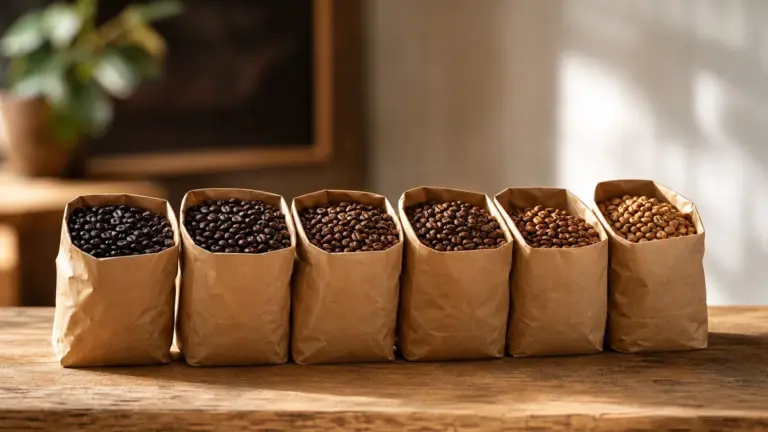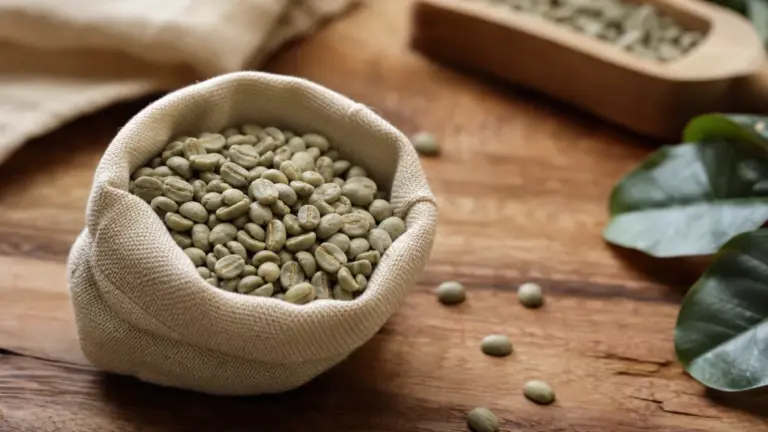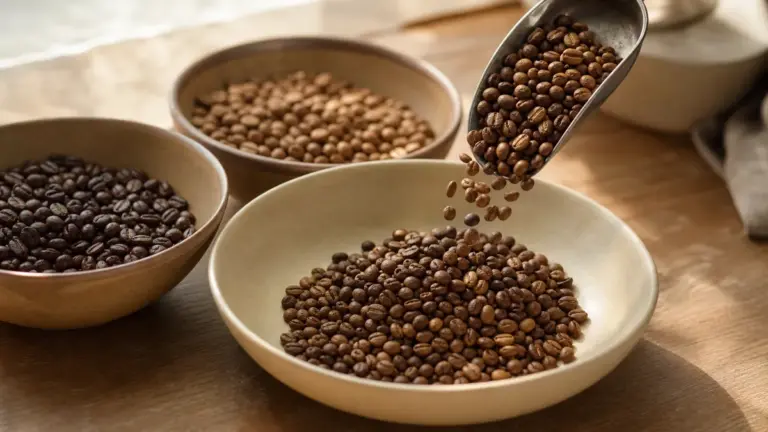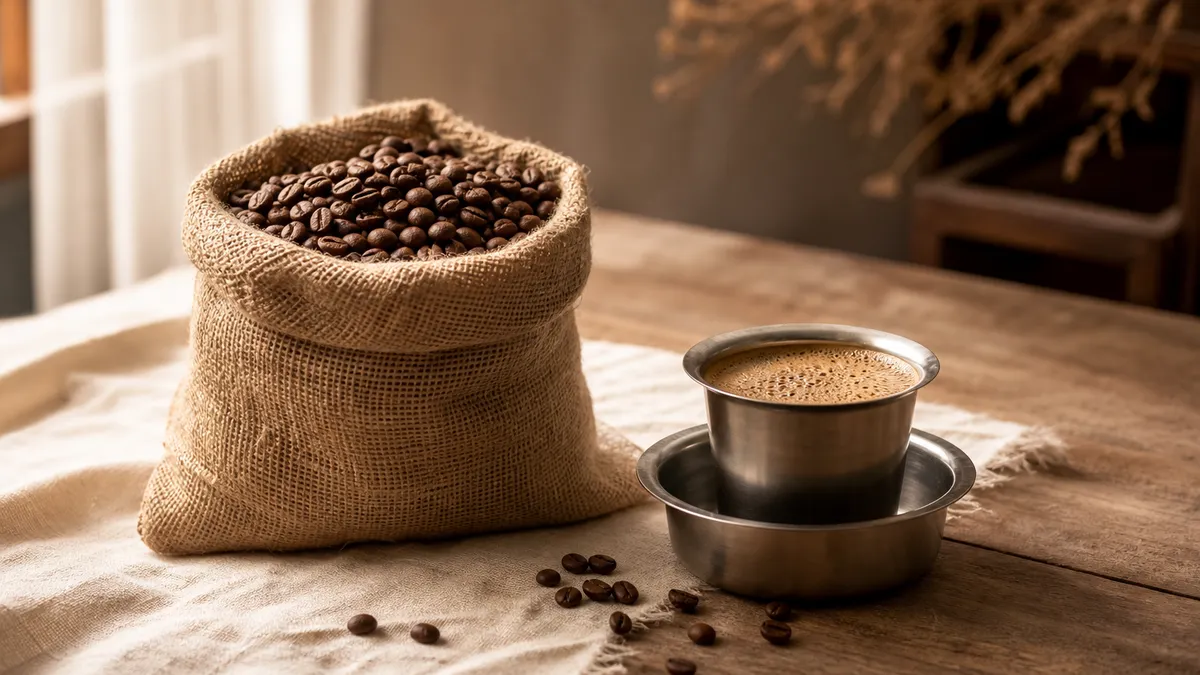
Single-origin coffee comes from one stated place, which might be a country, a region, a farm or a separately identified lot. Its main value is the connection between the coffee and its source: the useful question is not simply “Is it single-origin?” but “How precisely is that origin identified?”
In short
- A country-level single-origin coffee can include beans from several farms.
- A farm name, producer group and lot reference provide more useful detail than “single-origin” alone.
- Origin does not guarantee quality, ethical sourcing or a particular roast level.
- Harvest timing and changing availability are part of buying an agricultural crop.
- Single-origin coffees can work as filter coffee, espresso and milk drinks. Choose for the drink you enjoy.
What does single-origin coffee mean?
“Single-origin” describes provenance, meaning where the coffee comes from. It does not, by itself, describe how good the coffee tastes or how it should be brewed.
The geographical scale matters. A roaster might use the term for coffee from one country, while another reserves it for a named producer or cooperative. These are different levels of specificity, rather than necessarily contradictory claims.
| Origin level | What it identifies | What still needs checking |
|---|---|---|
| Country | Coffee grown within one country | Which regions and producers supplied it |
| Region | A named growing area within a country | Whether several farms contributed |
| Farm or estate | A named agricultural holding | Whether different varieties or batches were combined |
| Lot | An identified batch kept together in the supply chain | What defines the batch and how it was separated |
A cooperative or washing station can also identify a meaningful origin. A washing station is a processing facility, not necessarily a farm, so ask whether its coffee comes from one grower or a group.
For the wider terminology, start with the beans and blends guide.
Single-origin does not mean single variety
Place and plant variety are separate pieces of information. A coffee can come from one farm without consisting of one variety.
Likewise, “single-origin” and “single estate” are not interchangeable descriptions. If the distinction matters to your purchase, look for the actual farm, producer group and batch information rather than interpreting the front of the bag generously. The finer distinctions belong in micro-lot and estate coffee.
Traceability: what a useful label should tell you
Traceability is the ability to follow a coffee through documented stages of its supply chain. A place name is a starting point; records connecting the producer, processing, export and roasting stages make the connection more substantial.
For a consumer, a useful product page should answer straightforward questions:
- Where was the coffee grown?
- Who produced it, individually or collectively?
- How was it processed?
- Which harvest or crop does it belong to?
- Can the seller identify the batch being sold?
You do not need every detail printed on the bag. Ask the roaster for the missing information, especially if the product description makes a strong claim about a particular farm or lot.
Traceability also needs to match the claim. Documentation showing that coffee came from a country is not the same as documentation linking it to a named farm. Neither should be confused with evidence of organic production, working conditions or producer income.
Editorial buying rule: favour clear, relevant answers over an elaborate origin story. A precise account of a producer group can be more useful than a farm photograph with little explanation of what is actually in the bag.
Why origin matters to flavour
An identifiable source gives you something to return to and compare. If you enjoy a coffee, you can look for the same producer, region or processing approach again, rather than searching only for a broad description such as “strong”.
But flavour is not a direct reading of geography. World Coffee Research’s sensory work describes contributions from the plant’s genetics, growing conditions and the stages that follow harvest, including processing, storage, roasting and brewing.
That distinction explains why two coffees from the same country need not taste alike. It also explains why a familiar farm name does not promise an identical cup every year.
What “flavour clarity” really means
In tasting, clarity is a useful description for flavours that are easy to distinguish: perhaps citrus acidity, a cocoa-like finish or a floral aroma. It is not a grade automatically attached to single-origin coffee.
Keeping a source separate lets the drinker encounter that coffee without other origins deliberately added to shape the result. However, there is no reason to assume that a single-origin cup must be more complex, balanced or enjoyable than a blend.
Tasting notes are best treated as sensory comparisons, not shopping lists of ingredients. The World Coffee Research lexicon provides shared references for describing aroma, flavour and texture. You need not identify every named fruit to decide whether you like the cup.
For the different purpose of combining coffees, see coffee blending.
Seasonality: why the coffee may change or disappear
Coffee harvests follow growing conditions, so availability should not be expected to behave like a permanently fixed manufactured product.
Colombia illustrates why a country name alone tells you little about timing. Cenicafé describes different harvest patterns across its northern, central and southern growing areas, with coffee collected somewhere in the country throughout the year. That does not mean one particular farm produces continuously.
Harvest date and roast date answer different questions. The first identifies when the crop was gathered; the second identifies when the beans were roasted. Neither replaces information about handling and storage between those stages.
A roaster’s named single-origin offering may disappear when its purchased stock is finished. It may return after a later harvest, but it is sensible to approach that return as a new crop rather than demand an exact repeat.
For regular buying, ask:
- Is this a specific lot or an ongoing regional offering?
- Will the producer or component coffees change?
- What should I try when this batch finishes?
These questions are particularly useful when choosing coffee for a shared workplace, where some drinkers welcome variety and others want a familiar daily cup.
What affects the price of single-origin coffee?
The words “single-origin” do not explain the commercial terms of a coffee on their own. The International Trade Centre identifies factors including quality, rarity, production requirements, marketing and the structure of the supply chain.
Keeping a small batch separate, sampling it and selling it as an individual product can involve work that differs from handling larger, interchangeable volumes. Scarcity can also influence the offer independently of whether you personally prefer its flavour.
A detailed label therefore deserves investigation, not automatic approval. Ask what distinguishes the coffee: a particular sensory profile, separately managed processing, documented provenance or simply limited availability.
For workplace supply, request an itemised written quotation covering the coffee, delivery arrangements, order quantities, substitutions and VAT treatment. Compare like-for-like terms and taste the proposed coffee in the drinks you actually serve.
How single-origin coffees work with different brewing methods
There is no brewing method reserved for single-origin coffee. Treat origin as information about the beans, not an instruction to abandon the equipment or drinks you enjoy.
The following are practical selection suggestions, rather than a ranking of methods.
| Method or drink | A useful way to approach it | What to ask the roaster |
|---|---|---|
| Pour-over or batch filter | Use a repeatable recipe to compare coffees | Which filter recipe suits this roast? |
| Cafetière or other immersion brewer | Keep your familiar method while exploring a new source | What grind and steeping approach do you suggest? |
| Espresso | Adjust the recipe for the particular coffee | What dose, yield and timing were used? |
| Cappuccino, latte or flat white | Evaluate the finished milk drink, not only the espresso | Has this coffee been assessed with milk? |
For filter brewing, the Specialty Coffee Association’s published two-cup pour-over guidance provides one reference recipe: 22 g of coffee and 400 g of water at 93.5°C. That is approximately a 1:18.2 coffee-to-water ratio by weight, not a special rule for single-origin beans.
Espresso is equally legitimate. Blue Bottle publishes a single-origin espresso recipe using 20 g in and 40 g out, a 1:2 dose-to-yield ratio by weight. These figures are an example of a roaster’s recipe, not a requirement that every coffee must meet.
Adding milk is not a misuse of traceable coffee. Both Blue Bottle and Counter Culture include milk drinks in their espresso guidance. My practical recommendation is simple: if you mainly drink flat whites, judge your purchase as a flat white.
How much can origin actually explain?
For a more precise understanding, separate three questions: where the coffee came from, what it tastes like, and whether you enjoy it.
The Specialty Coffee Association’s Coffee Value Assessment distinguishes physical characteristics, sensory description, quality impressions and information beyond the cup, such as origin traceability. That separation is useful: an interesting provenance is not itself a flavour measurement.
World Coffee Research’s multi-location variety trial also found that genetics and growing environment interact in their effects on cup quality. This was evidence from a field trial with sensory evaluation, not proof that one location or variety always tastes superior.
An informal home comparison cannot isolate geography if the coffees also differ in variety, processing and roast. You can still learn what you prefer, but “I liked this lot” is a sounder conclusion than “this country makes better coffee”.
Choose single-origin coffees when you want a clearer connection to a source and the opportunity to follow its changing crops. Let the label guide your questions; let the cup decide whether you return.
FAQ
Does single-origin mean speciality coffee?
No. Single-origin describes provenance, whereas quality needs separate assessment. The Specialty Coffee Association’s assessment approach distinguishes physical and sensory characteristics from information such as traceability. A specific source can make a coffee interesting and identifiable without establishing that it is free from defects or that its flavour will suit you.
Can a decaffeinated coffee be single-origin?
Yes. A decaffeinated coffee can retain an identified origin, and roasters sell coffees described this way. Decaffeination and provenance answer different questions. When choosing one, ask for the source and processing information just as you would with another coffee, rather than assuming that “decaf” is its only meaningful characteristic.
Does a named farm prove that the coffee was ethically sourced?
No. A farm name identifies a claimed source, not the conditions under which the coffee was grown or traded. Traceability can support verification, but environmental, labour and payment claims need evidence relevant to those claims. Ask what has been verified, by whom and through which records or certification.
Where to go next
Read Coffee Beans and Blends: The Complete Guide for the wider buying vocabulary, then Micro-Lot and Single Estate Coffee for more precise source descriptions. Coffee Blending explains how combining coffees serves a different purpose from keeping single-origin coffees separate.
Sources
-
Counter Culture Coffee, Coffee Basics: Single-Origin Coffee, undated. Primary account of the roaster’s terminology and sourcing approach.
https://counterculturecoffee.com/blogs/counter-culture-coffee/coffee-basics-single-origin -
World Coffee Research, Sensory Lexicon, second edition, version 2.0, 2017.
https://worldcoffeeresearch.org/download/bf904452-fc8c-488f-b591-c0b20d9bcab2 -
LMC International with ProForest, prepared for FAO, Enhancement of Coffee Quality: Socioeconomic Study, including the traceability assessment, 2006. Used for enduring traceability principles, not current scheme requirements.
https://www.fao.org/fileadmin/user_upload/agns/pdf/coffee/Annex-E.12.pdf -
International Trade Centre, The Coffee Guide, fourth edition, 2021.
https://www.intracen.org/media/5718 -
Cenicafé, Oliveros Tascón, Ramírez and Sanz-Uribe, Cosecha del café, in Manual del cafetero colombiano, volume 2, 2013. Repository abstract retrieved through search.
https://biblioteca.cenicafe.org/handle/10778/4343 -
Specialty Coffee Association, Coffee Value Assessment, undated, current overview.
https://sca.coffee/value-assessment -
World Coffee Research, Evaluating cup quality in global arabica variety trial reveals complex interaction between genetics and environment, 10 June 2024.
https://worldcoffeeresearch.org/news/2024/cup-quality-gxe-imlvt -
Specialty Coffee Association of America, Guidelines for Brewing with a Two Cup Pour-Over Brewer, revision 2 April 2016.
https://scagermany.coffee/wp-content/uploads/2021/02/best-practices-two-cup-pour-over-brewer.pdf -
Blue Bottle Coffee, How to Make Long Pull Espresso: Single Origins Through the Lens of a Long Pull Espresso, undated. Primary account of its brewing recipe.
https://bluebottlecoffee.com/us/eng/brew-guides/single-origin-espresso -
Counter Culture Coffee, Quick + Easy Espresso and Help & FAQ, undated.
https://counterculturecoffee.com/pages/quick-easy-espresso
https://counterculturecoffee.com/pages/help-faq
This article was researched using coffee research organisations, trade and assessment references, a national coffee research institute and roasters’ own explanations; brewing suggestions are not claims of first-hand testing.
Last checked: November 2026