Coffee beans are the seeds of the coffee plant’s fruit, roasted to develop the aromas and flavours we recognise in the drink. Choosing coffee beans and blends is easiest when you separate three questions: where the coffee came from, how it was processed and roasted, and whether its flavour suits the way you drink it.
In short
- Single-origin describes provenance; a blend combines coffees selected to work together. Neither term guarantees quality.
- An estate identifies a farm source, while a micro-lot identifies a separately selected batch. Ask what the description means for that particular coffee.
- Espresso and breakfast blends describe intended use or style, not different kinds of coffee plant.
- Read tasting notes alongside roast level, processing method and origin, rather than choosing by country alone.
- Buy manageable quantities, check the roast date and grind shortly before brewing where practical.
What is a coffee bean?
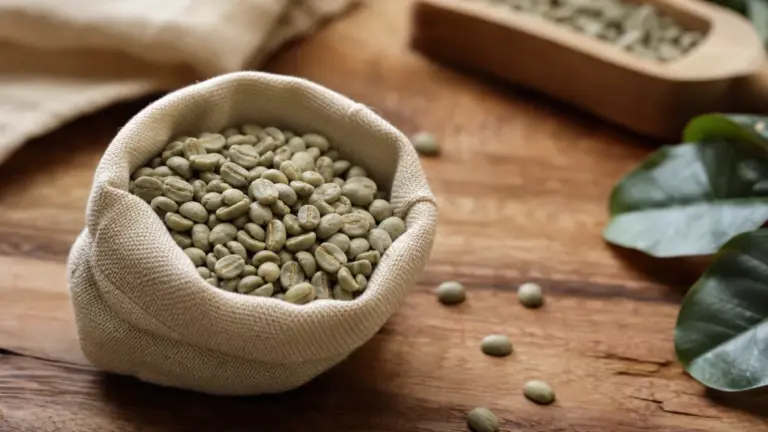
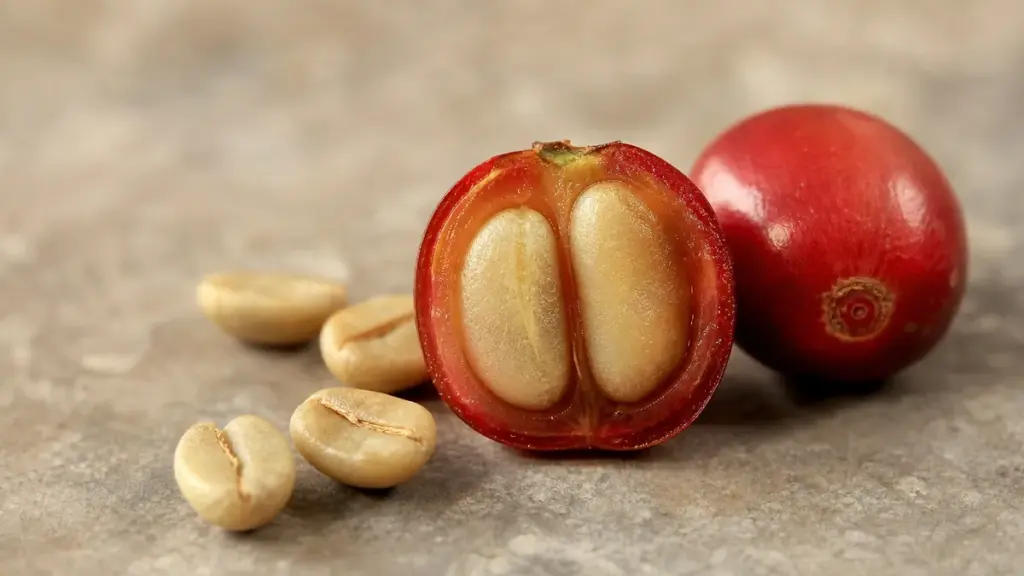
A coffee bean is a seed, not a botanical bean. It develops inside a fruit commonly called a coffee cherry, which usually contains two seeds. Processing removes the surrounding fruit and prepares the seeds for drying and milling; before roasting, they are called green coffee.
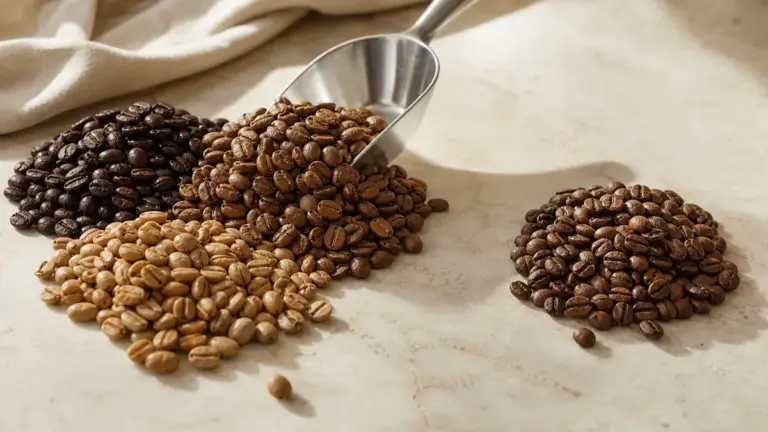
Roasting transforms those seeds into brown, aromatic beans. Chemical reactions create new aroma compounds, while changes to the bean’s structure prepare it for grinding and brewing. The packet in your kitchen therefore reflects both an agricultural crop and decisions made after harvest.
Two widely cultivated species are Coffea arabica, known as arabica, and Coffea canephora, commonly traded as robusta. Each contains considerable diversity. Names such as Bourbon and Typica identify varieties within arabica, not countries, roast levels or processing methods.
“100% arabica” tells you about species, but leaves many questions unanswered: which varieties, how carefully the fruit was harvested, how the coffee was processed and how it tastes. Treat it as useful identification, not a complete quality assessment. The wider beans and blends hub provides the routes into these individual subjects.
Single origin, blends, estates and micro-lots
These descriptions answer different questions, so they can overlap.
Single-origin coffee comes from one stated source. That source might be a country, a region, a producer group or an individual farm. A country-level description can therefore cover coffee from many growers, rather than one neatly bounded plot.
A blend combines coffees to achieve a chosen result. That might be a rounded everyday flavour, a particular balance of sweetness and acidity, or a recognisable style as seasonal ingredients change. Blending does not inherently mean disguising poor coffee.
Single-estate coffee identifies an individual farm or estate. It does not, by itself, tell you whether the bag contains one variety, one harvest day or one processing batch.
A micro-lot is a separately selected and traceable batch. The useful information is why it was separated, perhaps by producer, plot, variety, processing method or cup character, rather than how exclusive the name sounds.
Traceability describes how closely coffee can be followed to its source. It helps explain what you are buying, but is not the same thing as enjoying the flavour. Start with single-origin provenance for the different geographical meanings, or micro-lots and estates for closer farm-level distinctions.
What espresso and breakfast blends mean
An espresso blend is coffee selected and roasted with espresso preparation in mind. It is not a separate species, and espresso does not have to be a blend: single-origin coffee can also be prepared this way.
Read the intended flavour before assuming that espresso means dark and bitter. A roaster might aim for chocolate-like sweetness and substantial texture, or for a brighter, fruit-led result. Ask whether the coffee was developed primarily for drinking black, with milk, or both.
Breakfast blend is less precise. Treat it as a style name and read the accompanying description, rather than assuming a fixed recipe or roast level. For example, Starbucks describes its Breakfast Blend as a medium roast intended for people who prefer a milder cup.
Use the following criteria to narrow your choice: intended preparation, flavour direction and the information still needed.
| Label or style | What it tells you | Who it may suit | What to check |
|---|---|---|---|
| Single-origin | One stated geographical source | Readers exploring provenance | How narrowly the source is defined |
| Estate or micro-lot | More specific sourcing or batch identity | Readers following particular producers or lots | Producer, lot details and reason for separation |
| Espresso blend | Intended for espresso preparation | Espresso and milk-drink users | Roast, flavour and recommended use |
| Breakfast blend | A roaster’s named style | Readers seeking an everyday coffee | Actual roast and tasting description |
My practical recommendation for a shared workplace is to start with the drinks people actually make. Assess a candidate in those drinks before choosing it for an appealing origin story or packet description.
How roast, origin and processing affect your choice
Roast is a flavour direction, not a quality ladder
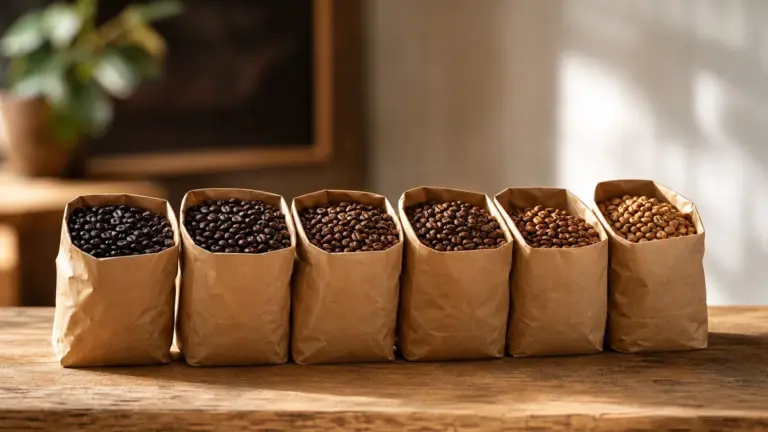
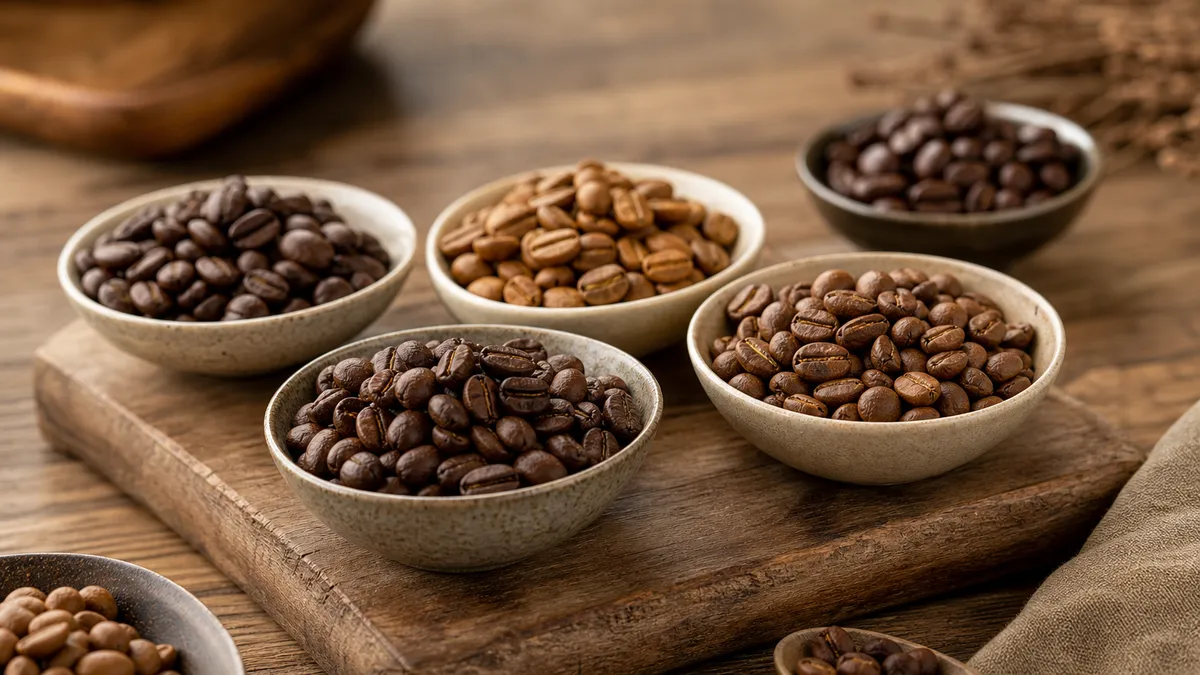
Light roasts generally have a lighter brown appearance and less pronounced roasted character. Their acidity, the bright or tangy sensation in the cup, is often more noticeable. Darker roasting brings stronger roasted flavours and can produce an oily bean surface.
Medium roast sits between those broad descriptions, but roast names are not reliably interchangeable between sellers. “Medium” on one packet should not be treated as an exact match for “medium” on another.
Choose by the flavour you want rather than the idea that darker means better. If you dislike smoky, strongly roasted flavours, say so when buying. If you want a rounded cup rather than a sharp, citrus-led one, give the seller that description too.
Origin is a starting point, not a tasting guarantee
Growing location matters, but a country name cannot describe every coffee produced there. Variety, growing conditions, processing and roasting all contribute to the result.
Avoid turning broad origin associations into rules. Instead, use the country or region to organise your exploration, then compare the specific producer, process and tasting description. Two coffees from the same country can be more useful as a lesson in difference than as examples of one national flavour.
Processing explains what happened after picking
Processing concerns how the fruit is removed and the coffee prepared for roasting:
- Washed: the fruit and sticky mucilage surrounding the seed are removed before drying.
- Natural: the coffee dries inside the whole fruit before the dried outer layers are removed.
- Honey or pulped natural: the skin and some fruit material are removed, but some mucilage remains during drying.
These are process descriptions, not ingredients lists. Honey processing does not mean that honey has been added.
Processing can influence flavour, but the label alone does not guarantee a particular taste. Use it alongside the roast and tasting notes, rather than choosing every natural coffee because you enjoyed one fruity example.
How to read a coffee label
Read a bag in layers, starting with information that helps you choose and moving towards information that helps you understand.
Origin and producer: look for the country, then any region, farm, co-operative or producer group. “Roasted in Britain” identifies the roasting location, not where the coffee was grown.
Species and variety: arabica and robusta identify species-level categories; Bourbon and Typica are variety names. These are different kinds of information, not competing descriptions.
Process and roast: together, these help explain the roaster’s intended result. Neither should be interpreted without the flavour description.
Tasting notes: words such as chocolate, jasmine or apple describe sensory similarities. The World Coffee Research Sensory Lexicon provides references for identifying coffee’s aromas, flavours and textures. Those descriptors are not, by themselves, claims that the named foods were added; check the product description and ingredients information if that distinction matters.
Roast date: this tells you when roasting happened. A best-before date serves a different purpose and does not independently reveal the coffee’s age since roasting.
Blend details: named components and an explanation of the intended style make a blend easier to understand. If consistency matters, ask whether the recipe stays fixed or changes with seasonal availability.
For a more precise comparison, separate description from preference. “Floral, light-bodied and citrus-like” describes a coffee; “I prefer something fuller and less tangy” describes your response. That distinction makes your next purchase more informed.
A practical checklist for buying coffee beans and blends
- Name your usual drink. Tell the seller whether you make black filter coffee, espresso, cafetière coffee or milk drinks.
- Describe what you enjoy. Use concrete preferences such as chocolate-like, fruity, lightly roasted or full-bodied. Mention flavours you dislike.
- Check preparation suitability. For an automatic machine, consult its own instructions before choosing beans. Do not assume that every coffee labelled “espresso” is suitable for every machine.
- Choose a manageable quantity. Start with a small bag rather than committing to a large supply before tasting it.
- Check roast information. Look for a roast date and ask the roaster when they recommend starting to use that particular coffee.
- Compare deliberately. Prepare candidates using the same method and recipe, then taste them as you would normally drink them.
- Record the useful details. Keep the producer or blend name, roast, process and your own short tasting description.
A blend can retain its name while its components change. Square Mile, for example, describes its blends as seasonal and has documented changes in their constituent coffees. When reordering, check the current description rather than assuming an identical recipe.
Keeping your choice tasting good
Store your everyday supply in an opaque, airtight container in a cool, dark place, away from heat and moisture. Grind only what you need shortly before brewing where practical.
Freshness is not simply a countdown from roasting. Roasted coffee releases carbon dioxide, a process called degassing, while aroma loss and oxidation also change its character. Research reviewed by the Specialty Coffee Association shows that roast, packaging and storage conditions affect those changes.
Avoid treating one resting period as a rule for every coffee. Follow the roaster’s guidance, then judge the result in your own preparation. Choosing well and storing well belong together: an informative label cannot protect beans left beside a hot appliance.
FAQ
Can a single-origin coffee contain several varieties?
Yes, single-origin coffee can contain several varieties because the term describes geographical sourcing rather than genetic uniformity. A farm may grow different varieties, while a regional coffee may combine production from several growers. If you want one variety from one separately handled batch, look for that information explicitly rather than assuming “single-origin” includes it.
Why does my favourite blend change slightly between bags?
A blend may change because its components follow seasonal availability and the roaster adjusts the recipe. Some producers aim to preserve a recognisable overall style rather than identical ingredients. Preparation and storage can also affect your experience, so check the current blend information and your brewing routine before attributing every difference to the beans.
Should I avoid pre-ground coffee?
No, pre-ground coffee is a practical choice when you do not have a suitable grinder. Grinding accelerates the changes associated with freshness, so buy manageable quantities and store them carefully. Ask for a grind appropriate to your brewing method. Whole beans offer the option of grinding immediately before brewing, but that requires suitable equipment.
Where to go next
Read Single-Origin Coffees to understand how geographical descriptions change from country to farm. Micro-Lot and Single Estate Coffee explains more specific sourcing, while the Coffee Beans and Blends hub helps you choose the next topic to explore when comparing coffee beans and blends.
Sources
-
National Coffee Association, What is coffee?, undated.
https://www.aboutcoffee.org/origins/what-is-coffee/
Botanical explanation of coffee fruit, seeds and commercial species. -
World Coffee Research, Coffee Varieties Catalog: What’s included, undated, live catalogue.
https://varieties.worldcoffeeresearch.org/about-the-catalog/whats-included
Species, varieties and diversity within cultivated coffee. -
De’Longhi Coffee Lounge, Understanding the difference between single origin, blend and specialty coffee, undated.
https://coffeelounge.delonghi.com/en-int/academy/bean-variety-and-origins/single-origins-blends/
Industry usage of single-origin and blend terminology, not an independent quality assessment. -
Cafe Imports, Introducing Community and Farm Select Coffees, 2023.
https://www.cafeimports.com/north-america/blog/2023/12/20/introducing-farm-and-community-select-offerings-for-2024/
First-party examples distinguishing community blends, farm traceability and microlot categories. -
Square Mile Coffee Roasters, The Filter Blend, 2020.
First-party explanation of blend design and changing seasonal components. -
Starbucks Coffee at Home, Breakfast Blend K-Cup Pods, undated.
https://athome.starbucks.com/products/breakfast-blend-k-cup-pods
Manufacturer’s description of its breakfast blend style and roast. -
National Coffee Association, Roasts, undated.
https://www.aboutcoffee.org/beans/roasts/
Broad roast appearance, flavour and naming guidance. -
National Coffee Association, Processes, undated.
https://www.aboutcoffee.org/beans/processes/
Washed, natural and honey processing descriptions. -
World Coffee Research, Sensory Lexicon, version 2.0, 2017.
https://worldcoffeeresearch.org/resources/sensory-lexicon
Sensory attributes and reference-based flavour description. -
National Coffee Association, Storage and shelf life, undated.
https://www.aboutcoffee.org/beans/storage-and-shelf-life/
Storage conditions, buying quantities and grinding guidance. -
Specialty Coffee Association, What is the Shelf Life of Roasted Coffee? A Literature Review on Coffee Staling, 2012.
https://sca.coffee/sca-news/2012/02/15/what-is-the-shelf-life-of-roasted-coffee-a-literature-review-on-coffee-staling-bjcx7
Review of evidence on roasting, degassing, packaging and storage-related changes.
This piece was researched through live retrieval of botanical, sensory and storage references, an SCA research review, and clearly identified first-party explanations of commercial terminology; no first-hand testing is claimed.
Last checked: November 2026