Coffee plantation tours take you onto a coffee-growing property to see the plants, learn how the crop becomes coffee and, usually, taste the finished drink. The most useful visits connect the fields with processing and the people doing the work; choose harvest time if seeing picking and fresh-cherry processing is your priority, but confirm the farm’s own calendar before booking.
In short
- Ask whether you will visit a working farm, a demonstration garden, a processing mill or a combination.
- Harvest dates vary within countries, so check the specific property rather than relying on a national calendar.
- Confirm which activities are included: picking, roasting and guided tasting are not interchangeable.
- Ask about walking distance, steep ground, steps, toilets and transport before committing.
- Look for clear explanations of who hosts the visit and how producers benefit.
What coffee plantation tours include
A useful tour follows the connection between growing, harvesting, processing and drinking coffee. However, “bean to cup” is a description to investigate, not a guarantee that you will see every stage operating.
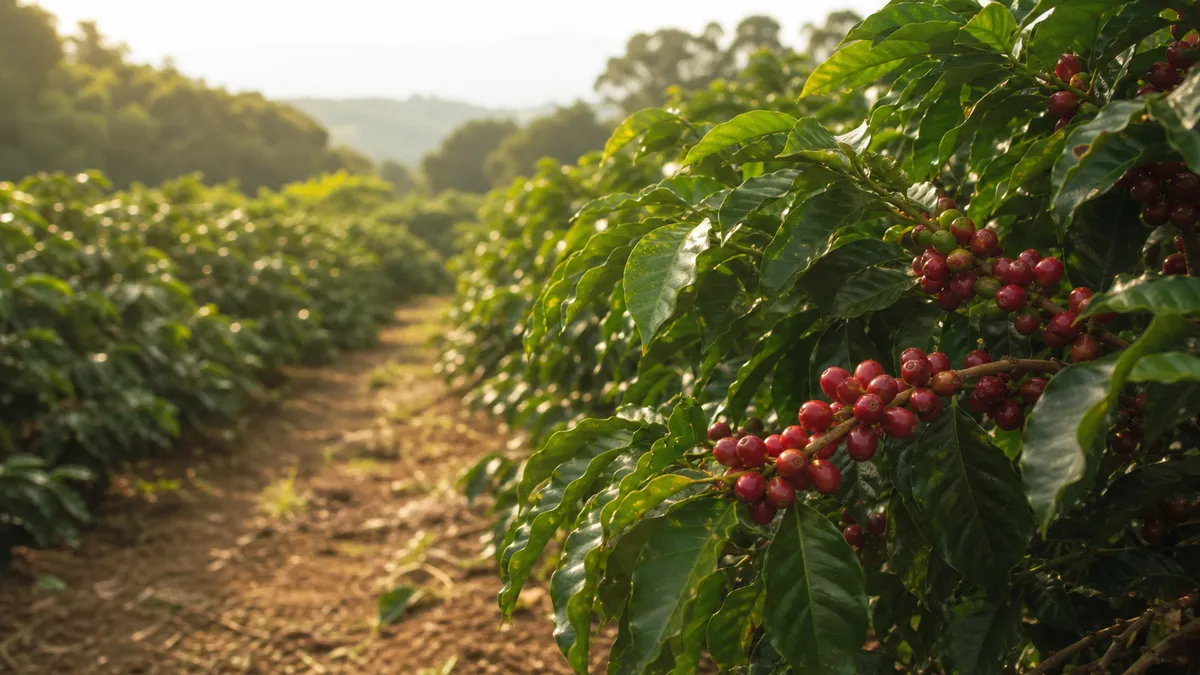
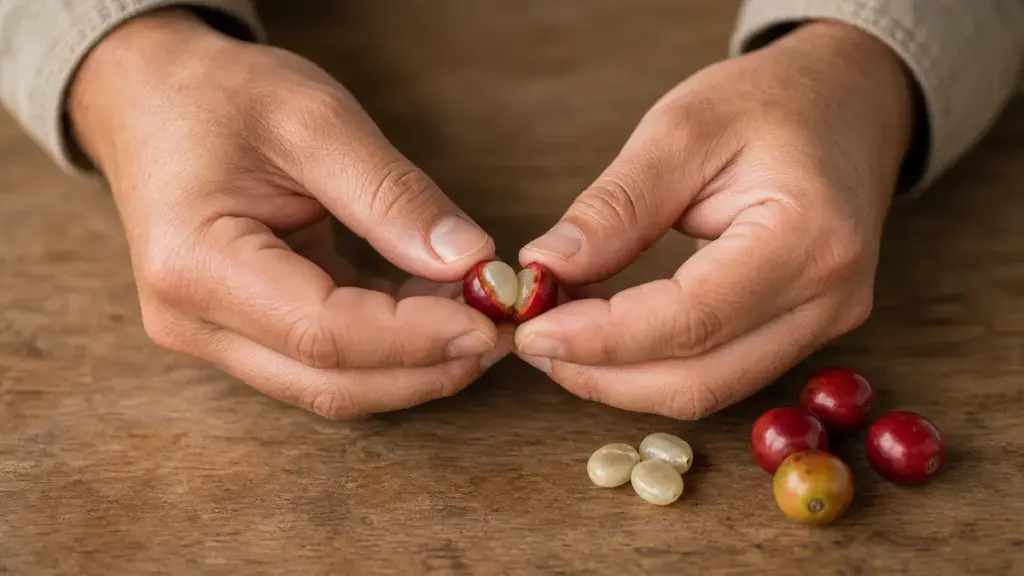
Coffee beans are the seeds inside the fruit, usually called coffee cherries. Seeing that relationship on a branch is often the first useful lesson: the brown beans in your kitchen have already passed through several agricultural and processing stages.
A walk through the growing area
A farm walk can introduce the plants, harvesting decisions and the practical work of growing coffee. Ask the guide to show you what is happening now, rather than only describing the annual cycle.
Useful questions include: which plants are ready to pick, how does the farmer judge ripeness, and what work follows the harvest? Do not pick fruit or step between planted rows without permission.
Processing, roasting and tasting
Processing means preparing the harvested fruit and seeds for drying and subsequent handling. In natural processing, cherries dry with the fruit intact before the outer material is removed; washed processing removes the skin and pulp before the beans are dried. Honey processing leaves some of the sticky fruit layer, called mucilage, on the seeds during drying.
A tour may show equipment, samples or a demonstration rather than a production batch. Ask which you will see. Likewise, a roasting demonstration is different from access to a working commercial roastery.
The tasting might be a freshly brewed drink or a guided comparison. If flavour learning matters most, ask whether you will compare coffees and receive an explanation, rather than simply be served a cup at the end.
The wider coffee and travel guide puts farm visits alongside other ways of exploring coffee culture.
Farm, smallholder visit or plantation?
Although “coffee plantation tours” is a familiar search phrase, coffee farm and plantation tours include more than large estates. De La Gente in Guatemala, for example, describes visits led by small-scale growers, including time in their fields and coffee in the producer’s home.
For this guide, farm visit is the broad term. Use the host’s own description, then ask about ownership, production and the visit itself rather than assuming that “plantation”, “estate” or “finca” tells you everything.
Choose by what you want to understand:
| Visit format | What to establish before booking | Who it suits |
|---|---|---|
| Producer-led farm visit | Whether the grower hosts and interpretation is available | Visitors interested in farming decisions and everyday work |
| Estate and processing visit | Which growing and processing areas are accessible | Visitors wanting to connect agriculture with equipment |
| Demonstration-led experience | Which stages are demonstrations rather than live production | Beginners seeking a structured introduction |
| Farm visit with guided tasting | What is compared and who leads the tasting | Coffee drinkers wanting to connect production with flavour |
These are selection criteria, not quality rankings. A well-explained demonstration can be more informative than watching machinery without understanding what it does.
When to visit: harvest first, exact dates second
Harvest is the best target if your priority is seeing ripe cherries picked and fresh fruit handled. It is not a promise that every activity will be available throughout the day.
Coffee processing follows the arrival of harvested fruit. Ask when picking normally takes place, when cherries reach the mill and whether your tour overlaps with those operations. “During harvest” and “during your appointment” are different questions.
Why a country-wide calendar is not enough
ICAFE, Costa Rica’s coffee institute, publishes a regional guide showing different estimated harvesting windows. Its guide lists Tarrazú from November to March and Turrialba from July to January. The page includes older harvest-campaign information, so use these as indicative regional patterns, not a forecast for your travel dates.
The practical lesson is more useful than memorising months: ask the property what it expects during your particular week. Altitude and climate influence ripening, and neighbouring areas need not follow an identical schedule.
Is a visit worthwhile outside harvest?
Yes, provided the alternative programme interests you. Ask whether it includes a substantial farm walk, processing samples, a roasting demonstration or a guided tasting.
Outside harvest, do not expect a machine to be running merely because it appears in the photographs. Request a clear distinction between activities normally available and those dependent on the crop.
For a broader approach to building a trip around coffee, see coffee tourism.
Countries offering coffee farm tours
The following are starting points supported by official tourism information or a host’s published programme, not a ranking of destinations.
Costa Rica: the official tourism board promotes coffee plantation excursions. It is a useful starting point for finding experiences, but confirm the actual farm, seasonal activities and transport arrangements directly.
Colombia: Colombia Travel lists properties offering production tours and tastings in areas including Risaralda, Quindío and Santander. Look beyond the phrase “coffee experience” and ask how much time is spent among growing plants rather than at accommodation or hospitality facilities.
Guatemala: De La Gente offers grower-led visits around San Miguel Escobar, outside Antigua. Its published programme includes coffee fields, traditional roasting and grinding, Spanish-English interpretation and coffee at the producer’s home.
United States, Hawaiʻi: the official Go Hawaiʻi website identifies farms offering public tours on Hawaiʻi Island, including in Kona. Check the individual host’s programme rather than assuming all listed properties provide the same access.
An advertised experience is not confirmation of current availability or a judgement about travel safety. Consult FCDO advice separately and contact the host before arranging a journey around a particular activity.
Use tours in growing regions for regional planning, and coffee destinations when deciding where coffee fits into a wider holiday.
How to choose an ethical visit
Use local participation, respectful access and clear environmental explanations as your criteria. These reflect UN Tourism’s principles that host communities should share in tourism’s benefits and that visits should respect local people and natural heritage.
Ask who owns the operation, who leads the visit and how the producer benefits. A direct conversation with a grower can be valuable, but do not assume that every farmer wants to host visitors or explain their working life on demand.
Treat fields, homes and processing areas as someone else’s workplace. Ask before photographing people, especially children, and accept a refusal without negotiation. Stay out of restricted areas and follow instructions around equipment.
For environmental claims, ask for specifics: how is processing water handled, what happens to fruit residues, and what does a claimed certification cover? Treat “eco” or “sustainable” as a prompt for questions, not proof by itself.
Respect booking commitments too. De La Gente explains that hosting visitors can mean a producer sets aside field work, making late cancellations consequential.
A practical booking checklist
Work through these steps before reserving coffee plantation tours:
- Identify the actual location. Get the property name, meeting point and confirmation that the visit includes growing coffee.
- Request a written itinerary. Separate the farm walk, mill access, demonstrations, tasting and travel time.
- Check seasonal promises. Ask what is likely during your dates and what replaces activities if picking or processing is unavailable.
- Confirm the guide and language. Establish whether the producer, an interpreter or a separate tourism guide will lead each part.
- Describe access needs precisely. Ask about distance, gradients, surfaces, steps, seating and toilets. Avoid relying on “easy walk”.
- Confirm the practical terms. Check group size, children’s participation, transfers, weather arrangements and cancellation conditions. Where an intermediary is involved, request an itemised written quotation.
- Check travel arrangements separately. Read current FCDO advice for the country and relevant region, and ensure your insurance covers your itinerary and planned activities.
Access deserves particular attention. De La Gente’s published description, for example, specifies approximately 5 kilometres of walking, with uneven paths and some steep sections. That is a property-specific description, not a general standard for coffee tours.
For a field visit, ask the host what footwear and clothing it recommends. Water, sun protection and a rain layer appear on De La Gente’s packing guidance, but your own host should advise on local conditions.
Questions that make the visit more revealing
Once the basic process makes sense, move from “what happens?” to “why do you do it this way?”
Ask the producer to explain a decision visible on the property: the choice of plants, a picking instruction or the arrangement of a drying area. Then ask what would change under different weather or harvest conditions.
At the tasting, ask whether the coffee comes from the property you visited, whether it represents one lot or a blend, and which processing method it received. Request a comparison using the same brewing method where possible, so the discussion has a clear reference point.
Finally, ask what the tour cannot show. A host who clearly distinguishes live work, demonstrations and seasonal limitations helps you understand the visit accurately. That is a better basis for choosing coffee plantation tours than a promise to reveal everything in a single afternoon.
FAQ
Do you need coffee knowledge before visiting?
No specialist knowledge is necessary, but tell the host you want a beginner-friendly explanation. Ask for a visit that connects the fruit, seeds, processing and finished drink without assuming familiarity with technical terms. If you already know the basics, request more detail about the property’s own practices rather than a longer general introduction.
Are coffee plantation tours suitable for children?
Check the individual programme before booking a family visit. Ask about minimum ages, walking conditions, toilets, shade and whether children can skip tasting activities. Also establish which equipment areas they may enter. A child-friendly description should explain the arrangements, not merely say that families are welcome.
Can you visit without drinking coffee?
Ask the host whether tasting is optional and whether the rest of the programme works independently of it. You can request a focus on growing, harvesting and processing instead. Tell the guide beforehand that you will not be drinking coffee, rather than waiting until a tasting has been prepared specifically for your group.
Where to go next
Read Coffee Tourism for the wider purpose of coffee-led travel and Tours in Coffee-Growing Regions to place a farm visit within a regional trip. Coffee Destinations helps with choosing a destination, while Coffee and Travel brings the related planning guides together.
Sources
Undated webpages below were checked in November 2026; the access date is not their publication year.
- National Coffee Association, Lifecycle of Coffee, undated. Botanical basics, harvesting and processing descriptions.
https://www.aboutcoffee.org/origins/lifecycle-of-coffee/ - Instituto del Café de Costa Rica (ICAFE), Preguntas frecuentes: Recolección, undated, includes information referring to the 2020 to 2021 campaign. Regional harvest patterns, used as indicative rather than a current forecast.
https://www.icafe.cr/icafe/preguntas-frecuentes/ - Costa Rican Tourism Board, Costa Rica Coffee Experience, undated. Confirmation of coffee plantation excursions.
https://www.visitcostarica.com/costa-rica-coffee-experience - ProColombia, Colombia Travel, Explore Colombia’s Coffee Farms, the Country of Beauty, undated. Examples of farm-tour locations and activities.
https://colombia.travel/en/blog/coffee-farms-in-colombia - De La Gente, Coffee Tour, undated, current programme checked November 2026. Producer-led format, interpretation, itinerary, access and packing information. These are the organiser’s descriptions, not independently tested findings.
https://www.dlgcoffee.org/coffee-tour - Hawaiʻi Tourism Authority, Go Hawaiʻi, Coffee Plantations on the Island of Hawaiʻi, undated. Confirmation of farms offering public tours.
https://www.gohawaii.com/islands/hawaii-big-island/things-to-do/land-activities/coffee-plantations - UN Tourism, Global Code of Ethics for Tourism, 1999, current online text. Community participation, environmental protection and respect for hosts.
https://www.untourism.int/global-code-of-ethics-for-tourism - Foreign, Commonwealth & Development Office, Foreign travel advice, continuously updated. Destination-specific travel checks.
https://www.gov.uk/foreign-travel-advice - Foreign, Commonwealth & Development Office, Foreign travel insurance, updated 2 August 2024. Insurance covering destinations, conditions and planned activities.
https://www.gov.uk/guidance/foreign-travel-insurance
This article was researched using official tourism information, a coffee institute’s regional guidance, a published host programme, coffee-industry explanations and official travel guidance; no first-hand tour testing is claimed.
Last checked: November 2026