Plan tours in coffee-growing regions around what you want to see, then confirm the harvest and visitor access with individual farms before booking travel. Choose a manageable regional route, check entry requirements and official travel health advice, and favour hosts who explain how visits benefit the people producing the coffee.
In short
- Treat harvest calendars as shortlisting tools, not guarantees that a particular farm will be picking.
- Ask whether processing will be operating during your visit or shown as a demonstration.
- Confirm the host, meeting point, language, walking conditions and transport arrangements in writing.
- Check FCDO advice for the whole route, including transfers, and seek personalised travel health advice.
- Respect working hours, photograph people only with permission and follow the farm’s access and hygiene rules.
Choose a region around your interests
Start with a question rather than a country checklist. Do you want to understand cultivation, watch freshly picked coffee being processed, meet a producer co-operative or compare coffees with the people who grew them? Use that answer to decide which visits deserve space in your itinerary.
For a first origin trip, our recommendation is to explore one growing area properly rather than collect brief stops across several countries. Choose a base, establish which hosts accept visitors and build the route around confirmed appointments. The wider coffee and travel guide provides the starting point for fitting coffee into a broader journey.
Assess a possible region against four criteria:
- Access: can a host confirm a practical route from your accommodation?
- Experience: does the visit address your interests, rather than simply include a tasting?
- Communication: is a suitable guide or interpreter available?
- Suitability: can the host accommodate your mobility, dietary and other requirements?
Official tourism websites are useful discovery tools. Costa Rica’s tourism board, for example, describes farm visits across its growing regions. Treat such listings as leads: contact the actual host before assuming that a particular activity or departure is available.
For country shortlists rather than route planning, see coffee destinations.
Time tours in coffee-growing regions to the harvest
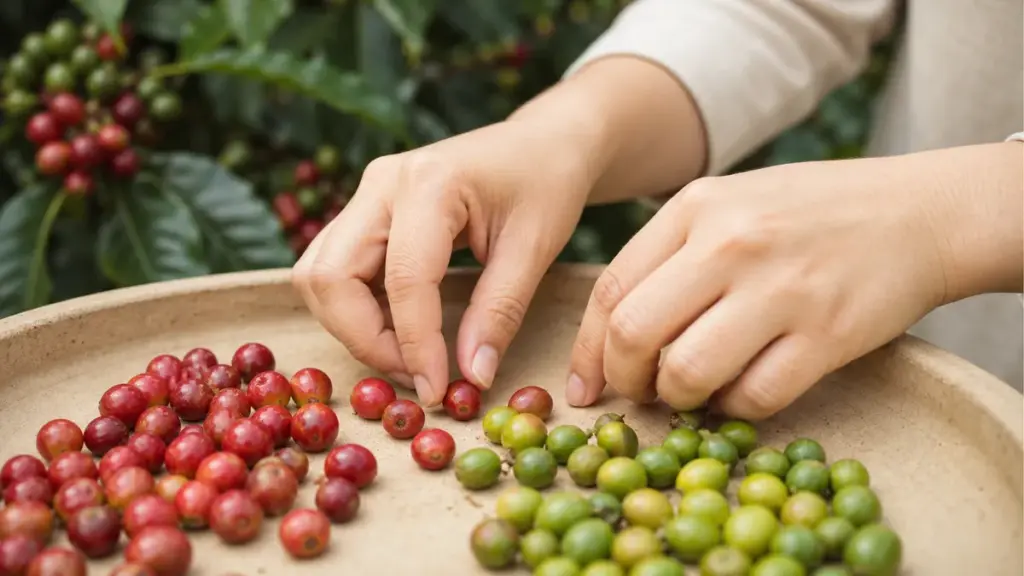
Latitude offers a rough starting point, but it is not a reliable booking calendar. The familiar shorthand is late-year and early-year harvesting north of the equator, roughly October to March, and mid-year harvesting south of it, roughly April to September. Regional calendars show important exceptions, while equatorial countries can have more than one picking period.
Use the following verified examples to narrow your enquiry.
| Region or origin | Harvest indication | What to confirm locally |
|---|---|---|
| Central America, illustrated by Costa Rica | ICAFE lists Tarrazú from November to March and the Central Valley from October to February or March; some other regions start much earlier | The particular district and farm, not a country-wide season |
| Ethiopia | FAO’s historical country profile gives August to January, broader than a simple October to March rule | Current picking dates and visitor access with the host |
| Brazil | USDA’s 2025 report records robusta harvesting beginning in April and arabica in May, with completion expected by September | Species, locality and the current season’s progress |
| Peru | USDA’s 2024 report gives April to September, peaking in June and July | The farm’s own window and road access |
| Rwanda | NAEB describes a start in late February near Lake Kivu and early March elsewhere, continuing into August in some northern areas | Whether your chosen washing station will be receiving fruit |
| Colombia and Kenya | Colombia has October to December and April to June peaks; ICO gives Kenya April to June and October to December | Local crop names, exact dates and whether processing is operating |
These are source-based indications, not forecasts for your departure year. In particular, Rwanda shows why “April to September south of the equator” should not become a rigid rule.
Colombia’s secondary crop is called the mitaca. Kenya also has two harvest periods, but published terminology is inconsistent: ICO gives April to June and October to December without assigning “main” and “fly” labels, while USDA’s 2017 report labels broader March to July and September to December periods differently. Ask for months and the locality rather than relying on a crop nickname.
Altitude and climate also matter. ICAFE explicitly links differences in Costa Rican maturation to elevation, temperature and rainfall. A calendar for one district should not be transferred to another simply because both are in the same country.
Most importantly, ask: “What will actually be happening on the dates I can visit?” Picking, processing, roasting and tasting are separate things to confirm.
Find farms and co-operatives that welcome visitors
Begin with official tourism boards, municipal visitor information and farms’ or co-operatives’ own websites. Then check that the organisation answering your enquiry is the organisation delivering the visit.
A co-operative can be a useful introduction to collective production. Coopeldos in Costa Rica, for example, advertises visits covering model farms, wet and dry processing, export preparation, roasting and tasting. Those are the co-operative’s published descriptions, not independently tested assessments of its tours.
Send a concise enquiry containing your dates, group size, preferred language and interests. Ask:
- Is this a working production site, a demonstration site or a combination?
- Will we meet a producer, co-operative representative or visitor guide?
- Which activities will be operating during our visit?
- Are farm walking, processing access and tasting all included?
- What are the walking distance, gradients, surfaces and toilet arrangements?
- Can you provide the meeting point and transport arrangements in writing?
- What happens if weather or production changes the programme?
Request an itemised written quotation setting out guiding, interpretation, transfers, meals, accommodation and any optional activities. Confirm cancellation terms and which organisation handles each booking.
Do not treat a published coffee business address as an invitation to arrive unannounced. For evaluating the visit itself, rather than planning the wider journey, read coffee plantation tours.
Build a route that leaves room for change
Use this sequence once you have a shortlist:
- Choose the learning priority. Write down what would make the trip worthwhile, such as seeing harvesting or understanding co-operative processing.
- Check official advice before committing. Review the destination and the route between your arrival point, accommodation and farms.
- Secure the essential visit. Obtain written confirmation from the host whose activity determines your timing.
- Choose accommodation around access. Ask the host or local transport provider to assess the actual journey, including the final approach.
- Add contrasting visits. Pair cultivation with processing or tasting rather than booking several near-identical introductory tours.
- Leave an uncommitted interval. Treat this as contingency time, not an opportunity to squeeze in another distant stop.
Ask for travel time under expected conditions, not just distance. In Peru, for example, USDA identifies poor roads as a challenge for producers. That is a reason to seek local transport advice, not to assume every growing district is difficult to reach.
Before departure, save booking confirmations, meeting points, accommodation details, insurance information and emergency contacts somewhere accessible without your main phone. Share the itinerary with someone at home.
Check visas, FCDO advice and travel health
Entry requirements and insurance
For UK-based planning, use the Foreign, Commonwealth & Development Office’s country advice, including its regional warnings, entry requirements, safety information and health section. Check before booking, again before departure and during the trip through email alerts.
Confirm passport validity, visa or electronic authorisation requirements, transit rules and any required vaccination certificate with the relevant official authorities. Requirements depend on your nationality and itinerary; do not assume a rule for British passport holders applies to every member of the group.
Make sure travel insurance covers all destinations, transfers and planned activities. FCDO warns that travelling against its advice may invalidate cover. Obtain clarification from the insurer if the wording is unclear.
If the trip includes professional sourcing, research or hands-on work, ask the destination’s authorities which entry permission is appropriate. Do not assume a sightseeing visit and an extended work arrangement are interchangeable.
Vaccinations and malaria advice
Use the NHS travel vaccination guidance and the country information supplied by the National Travel Health Network and Centre, NaTHNaC, through TravelHealthPro. These complement FCDO advice rather than replace it.
The NHS recommends seeking advice from a travel health professional at least 4 to 6 weeks before travel. Start planning earlier where possible; NaTHNaC says an appointment is still worthwhile at short notice.
Give the clinician your full route, including overnight stops, transit countries, rural accommodation and planned activities. They can assess recommended vaccinations, malaria prevention and whether vaccination documentation is relevant. Do not decide that malaria precautions are unnecessary simply because a farm is described as being in the highlands.
Discuss pregnancy, medicines and existing conditions with a GP, pharmacist, travel clinic or midwife as appropriate. Follow advice on insect-bite avoidance and food and water hygiene. If you develop worrying symptoms, particularly fever, during or after travel, seek urgent medical advice and explain where you have been.
Make the visit responsible and useful
Responsible tourism begins with respecting the host’s control over the visit. Ask before entering growing areas, touching equipment, picking fruit or joining an activity. Follow instructions even when they change the photographs or experiences you had imagined.
UN Tourism recommends hiring local guides, supporting local businesses, respecting private spaces and asking permission before photographing people. Apply that permission to sharing images as well as taking them. Avoid turning workers into background scenery.
Ask practical questions about who owns the visitor business, who guides the tour and how the producer or co-operative benefits. The broader coffee tourism article examines the relationship between visitors and producing communities.
Be equally specific about environmental claims. “Eco” is not an explanation. Ask about waste, water use, visitor numbers and the scope of any certification. The Global Sustainable Tourism Council distinguishes certification of a tourism business from recognition of a standard: a badge needs context.
For a more informed visit, take these questions:
- Which stages happen here, and which happen elsewhere?
- Does the coffee being tasted come from this farm or from several producers?
- What changes between harvest seasons?
- Which decisions are made by individual growers and which collectively?
- What would the host most like visitors to understand?
Listen without demanding that every answer fit a familiar speciality-coffee story. A productive tour should leave you better able to describe the people, work and decisions behind the drink.
FAQ
Can I plan an origin trip without knowing much about coffee?
Yes, provided you choose visits designed for general visitors. Tell the host that you want an introduction and ask whether specialist knowledge is expected. A useful personal aim is to understand how the fruit becomes a drink, then explore more technical questions as they arise. Avoid booking a trade-focused appointment simply because its description sounds more advanced.
Can people who do not drink coffee enjoy the trip?
Yes, if you plan the itinerary around their interests as well. Ask whether they can join the farm walk without taking part in tasting, and confirm food, seating and other practical arrangements. Keep non-coffee time genuinely available rather than expecting everyone to attend every appointment on an enthusiast’s shortlist.
What should I record in my travel notebook?
Record the host’s preferred name, visit date, activities observed and questions answered. Distinguish what you saw from what the guide described or demonstrated. For tastings, note the stated origin and your own impressions without treating them as definitive quality judgements. Ask permission before recording conversations or sharing commercially sensitive details.
Where to go next
Read Coffee Plantation Tours to assess individual visits, and Coffee Destinations to develop your shortlist. Coffee Travel in Ethiopia, Colombia and Costa Rica provides country-focused context, while Coffee Tourism explores the wider relationship between visitors and producers. Use those alongside this planning sequence when arranging tours in coffee-growing regions.
Sources
-
FCDO, Foreign travel advice and Foreign travel checklist, live guidance checked 2026.
https://www.gov.uk/foreign-travel-advice
https://www.gov.uk/guidance/foreign-travel-checklist
Entry requirements, regional advice, alerts, documents and contingency planning. -
FCDO, Foreign travel insurance, updated 2024.
https://www.gov.uk/guidance/foreign-travel-insurance
Insurance scope, existing conditions, activities and travelling against official advice. -
NHS, Travel vaccinations, reviewed 2026; NaTHNaC, General travel advice, updated 2026, and Country information, live resource.
https://www.nhs.uk/vaccinations/travel-vaccinations/
https://travelhealthpro.org.uk/factsheets/general-travel-advice
https://travelhealthpro.org.uk/countries
Consultation timing, personalised assessment, vaccination and malaria guidance. -
ICAFE, Preguntas frecuentes: Recolección, undated page containing historical campaign material.
https://www.icafe.cr/icafe/preguntas-frecuentes/
Regional harvest estimates and the influence of altitude and climate, used as background rather than a current forecast. -
USDA Foreign Agricultural Service, Coffee Annual: Brazil, BR2025-0013, 2025; Coffee Annual: Colombia, CO2025-0014, 2025; Coffee Annual: Peru, PE2024-0008, 2024.
https://apps.fas.usda.gov/newgainapi/api/Report/DownloadReportByFileName?fileName=Coffee+Annual_Brasilia_Brazil_BR2025-0013.pdf
https://apps.fas.usda.gov/newgainapi/api/Report/DownloadReportByFileName?fileName=Coffee+Annual_Bogota_Colombia_CO2025-0014.pdf
https://apps.fas.usda.gov/newgainapi/api/Report/DownloadReportByFileName?fileName=Coffee+Annual_Lima_Peru_PE2024-0008.pdf
Harvest examples and Peruvian infrastructure context. -
International Coffee Organization, Country Coffee Profile: Kenya, ICC-124-7, 2019; USDA Foreign Agricultural Service, Coffee Annual: Kenya, 2017.
https://www.ico.org/documents/cy2018-19/icc-124-7e-profile-kenya.pdf
https://apps.fas.usda.gov/newgainapi/api/report/downloadreportbyfilename?filename=Coffee+Annual_Nairobi_Kenya_5-15-2017.pdf
Kenya’s harvest periods and differing crop terminology. -
FAO, Post Harvest Handling and Processing of Coffee in African Countries, Annex 4, 2000; NAEB, About Rwanda coffee, undated.
https://www.fao.org/4/X6939E/X6939e10.htm
https://www.naeb.gov.rw/rwanda-coffee/about-rwanda-coffee
Historical Ethiopian harvest window and Rwanda’s regional calendar. -
Costa Rican Tourism Board, Costa Rica Coffee Experience, undated; Coopeldos, Coffee Tours, undated.
https://www.visitcostarica.com/costa-rica-coffee-experience
https://www.coopeldos.com/en/coffee-tours/
Official tourism discovery information and a co-operative’s advertised programme. -
UN Tourism, Tips for a Responsible Traveler, revised 2020; Global Sustainable Tourism Council, How to be a Responsible Traveler, 2026 webpage version.
https://www.untourism.int/node/17069
https://www.gstc.org/for-travelers/
Visitor conduct, community benefit and tourism certification distinctions.
This article was researched using official travel and health guidance, agricultural publications, tourism bodies and a co-operative’s published visitor information; no tours were independently tested.
Last checked: November 2026