The World Brewers Cup is the international championship for manually brewed filter coffee, testing both the quality of the drink and the brewer’s ability to explain it. Its two service types, Compulsory and Open, combine a shared-coffee challenge with a presentation using the competitor’s chosen coffee.
In short
- Open Service gives competitors 10 minutes to brew and present their chosen coffee.
- Compulsory Service uses organiser-provided coffee, water, grinder and standardised serving vessels.
- Judges assess the coffee’s sensory qualities; Open Service also rewards accurate descriptions, knowledge and presentation.
- There are two service types, but the championship can have two or three competition rounds.
- Nas Jaafar, representing Malaysia, won the 2026 championship.
What makes the World Brewers Cup different?
The World Brewers Cup, abbreviated to WBrC, puts manually brewed filter coffee at the centre of competition. The organiser describes it as a showcase for brewing craft and skill, with competitors preparing individual drinks for sensory judging.
The distinction matters when choosing what to watch. This is a competition about understanding a coffee, preparing it deliberately and communicating its character, rather than treating the brewing equipment as the main attraction. The wider coffee events guide places it alongside the industry’s other championships and gatherings.
Think of its two services as complementary questions. Compulsory Service asks what a brewer can achieve with shared ingredients and equipment; Open Service asks what they can create and communicate when choosing their own coffee. That interpretation follows the competition’s contrasting service requirements.
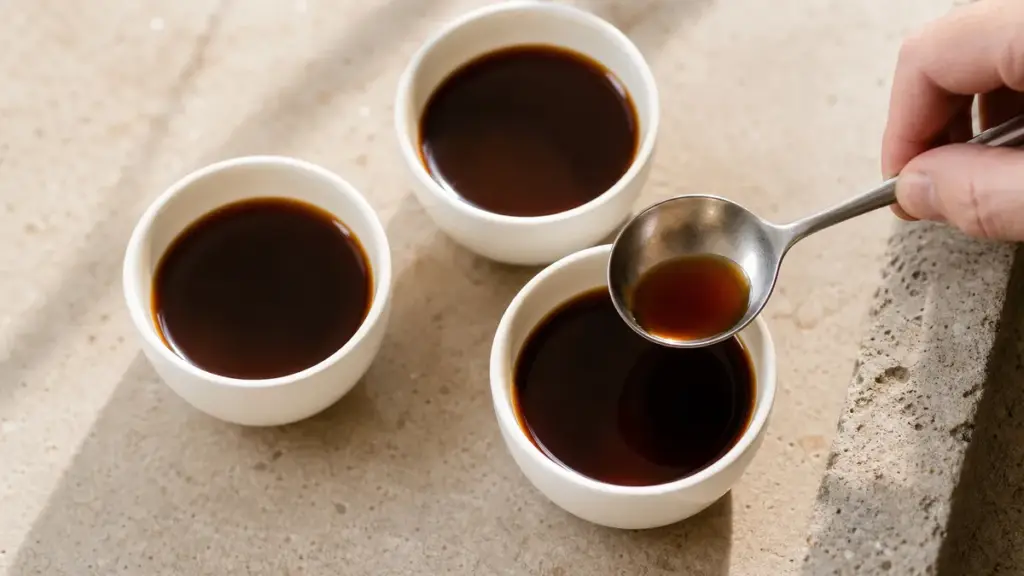
World Brewers Cup format: services are not rounds
Compulsory Service and Open Service are service types, not necessarily two successive rounds. Under the 2026 rules, an entry field of up to 38 competitors produces three rounds: Open Service, a Compulsory semi-final and an Open final. With more than 38, there are two rounds, with both services performed in the final.
Compulsory Service
Competitors receive the same anonymous coffee and use the supplied water, grinder and serving vessels. They have seven minutes to prepare three individually brewed coffees, without an accompanying presentation. The coffee’s identity is withheld during the challenge.
The organiser’s spectator guidance explains the purpose particularly clearly: judges evaluate the drinks without knowing who brewed them. This separates the tasting exercise from a competitor’s reputation or storytelling.
Open Service
Open Service gives the brewer a chosen coffee and a 10-minute presentation. Origin information, brewing decisions and tasting descriptions can all form part of the routine, but the presentation must accompany coffee prepared for the judges.
For spectators, listen for the connection between a decision and an intended result. A useful explanation tells you why the brewer chose a technique, then gives you something specific to look for in the cup.
| Feature | Compulsory Service | Open Service |
|---|---|---|
| Coffee | Shared organiser-provided coffee | Competitor’s chosen coffee |
| Performance time | Seven minutes | 10 minutes |
| Spoken presentation | Not evaluated | Part of the evaluation |
| Main distinction | Brewing under shared conditions | Coffee quality plus communication |
Format details follow the official rules and competition overview, checked in November 2026.
Why older routines need context
Rules change, so an older winning performance is not a reliable equipment checklist for a new competitor. In 2026, the official grinder became mandatory for both services, and the championship moved to a fixed six-competitor final.
The changes summary also specifies eight minutes of Open Service setup time and restricts competitors using their own grinder to the identical official model and permitted configuration. Read historical routines for ideas, then check the current rules before entering.
How the judging works
The sensory scoresheets assess aroma, flavour, aftertaste, acidity, sweetness, mouthfeel and overall impression. Mouthfeel means the physical texture and weight of the drink, rather than its flavour. Compulsory Service’s scoresheet centres on these coffee attributes.
Open Service adds separate evaluation of descriptor accuracy, attention to detail, coffee knowledge and presentation. Saying that a coffee resembles a particular fruit is therefore not decorative commentary: the accuracy of that description is assessed.
A useful way to follow the judging is to separate three questions:
- What is the coffee like? Consider its aroma, flavour, texture and finish.
- Does the description fit? Listen for clear, recognisable descriptions rather than simply an impressive list.
- Does the service make sense? Look for an organised routine whose explanation supports the drinking experience.
These viewing prompts reflect the sensory and presentation categories, rather than constituting an additional official scoring system.
The Open Service head judge also scores overall workflow and technical uniformity. In practical terms, pay attention to how consistently the competitor prepares the individual drinks, not just how elegantly they handle a kettle.
There is also a concentration limit: the beverage must contain no more than 2% total dissolved solids, commonly shortened to TDS. This measures dissolved material in the drink; it is not a score for deliciousness. The organiser uses the limit to distinguish this filter-coffee competition from more concentrated drink categories.
Notable winners from official records
These selected champions provide useful starting points for exploring the competition, rather than a complete roll of honour.
| Year | Champion | Representing |
|---|---|---|
| 2012 | Matt Perger | Australia |
| 2016 | Tetsu Kasuya | Japan |
| 2018 | Emi Fukahori | Switzerland |
| 2024 | Martin Wölfl | Austria |
| 2026 | Nas Jaafar | Malaysia |
The names and represented countries are confirmed by championship results, SCA publications and the New Zealand Specialty Coffee Association’s contemporary report.
The represented country is worth retaining when discussing a champion: it identifies their competition representation, rather than inviting assumptions about birthplace or nationality.
For broader context on the different titles, use barista competitions and winners. Keeping those categories separate avoids confusing a Brewers Cup title with a different championship.
Brewing innovations worth understanding
Matt Perger: attention to ground-coffee uniformity
On his own Barista Hustle biography, Perger identifies sieving coffee grounds for a more uniform particle size as part of his Brewers Cup work. That is a first-person account of his technique, not independent proof that sieving improves every brew.
The useful lesson is to ask what a preparation step is intended to control. Before copying an additional process, decide what problem it addresses and what comparison would persuade you that it helped. Competition complexity should earn its place in your routine.
Tetsu Kasuya: the 4:6 method
Kasuya’s 4:6 method divides the brewing water into an initial 40% and a remaining 60%. In his HARIO interview, he describes adjusting the early pours to influence the balance of acidity and sweetness, then dividing the remaining water according to the strength sought.
Treat this as Kasuya’s brewing framework, not a universal chemical boundary at which one set of flavours stops extracting and another begins. Its practical attraction is that it gives the brewer a clear pouring structure and a stated purpose for changing it.
HARIO’s published example uses coarse grounds and several distinct pours. It is useful evidence of the method’s structure, but it should not be silently presented as an exact transcript of his championship-winning routine.
Martin Wölfl: connecting roasting and brewing
Nucleus Coffee Tools reports that its team worked with Wölfl on a custom roast profile before his 2024 victory. Its account describes considering his brewing technique and how the coffee would age during the competition.
This is a supplier’s account of work in which it participated, not an independent comparison of roasting equipment. The valuable point is the joined-up preparation: the brewed result was considered alongside roasting and timing, rather than as a kettle technique in isolation.
What a championship result cannot prove
A winning routine combines coffee selection, preparation, brewing, description and service. It does not isolate a brewer, filter paper or pouring pattern in a controlled equipment trial. That limitation follows from the competition’s combined evaluation categories.
My recommendation is to borrow the question behind an innovation before borrowing the apparatus. “Can I describe this cup more accurately?” is often a more useful starting point than “Can I reproduce everything on that table?”
How to watch and learn from a routine
The official WCC champion announcement directs viewers to its performance recordings. Choose one complete routine rather than beginning with a short highlight: you need the explanation as well as the pouring.
Try this viewing method:
- Write down the intended experience. What should the coffee smell, taste and feel like?
- Record the stated brewing decisions. Separate what the competitor actually says from what you infer.
- Identify one testable idea. It might concern pouring structure, preparation or the way you describe the finished drink.
- Make your own comparison. Keep notes on what you changed and whether you preferred the result.
This is a learning exercise, not an official competition protocol. Its purpose is to turn a polished performance into a manageable question.
If you prefer an event with room to explore different coffees and demonstrations, compare the options in specialty coffee festivals. Watch the World Brewers Cup for the connection between an intention, a method and a clearly described cup, rather than as a shopping list.
FAQ
Who is the current World Brewers Cup champion?
Nas Jaafar, representing Malaysia, is the current champion as checked in November 2026. WCC announced his victory on 28 June 2026, ahead of runner-up Simon Gautherin of Australia and third-placed Bavis Kwong of Hong Kong SAR. Use the organiser’s results when checking the title, since older winner profiles remain widely available online.
Can spectators taste the competition coffees?
There can be opportunities to taste competitors’ coffees through the event’s brew-bar programme. The SCA’s spectator guide describes this arrangement at the 2019 championship, including competitors sharing coffee after presenting. Treat that as an example, not a guarantee: check the programme and access arrangements for the particular championship you plan to attend.
Should I copy a winning recipe exactly?
Use it as a documented starting point, not an automatic improvement. Record which version you are following and distinguish an original competition routine from a later recipe published by the champion. Kasuya’s HARIO interview, for example, presents a personal 4:6 recipe; that alone does not establish every detail of his earlier championship performance.
Where to go next
Read Coffee Events and Festivals to place the World Brewers Cup within the wider events calendar, then Barista Competitions and Winners to distinguish the major competitive disciplines. For a different way to encounter brewing demonstrations and coffees, continue with Coffee Festivals Worldwide.
Sources
-
World Coffee Championships, World Brewers Cup, current overview, retrieved 2026.
https://wcc.coffee/world-brewers-cup -
WCC Rules and Regulations Committee, 2026 World Brewers Cup Rules and Regulations, 2026 edition.
https://static1.squarespace.com/static/65fb773fac2112270b71798a/t/6942b766a2a7f0622f09368d/1765980006073/2026%2BWorld%2BBrewers%2BCup%2BRules%2Band%2BRegulations.pdf -
World Coffee Championships, 2026 WBrC Summary of Rule Changes, 2026 edition.
https://static1.squarespace.com/static/65fb773fac2112270b71798a/t/6942b788f641346724c0477f/1765980040046/2026%2BWBrC%2BSummary%2Bof%2BRule%2BChanges.pdf -
World Coffee Championships, sensory and head-judge scoresheets supplied for the 2026 competition.
Compulsory Service Scoresheet:
https://static1.squarespace.com/static/65fb773fac2112270b71798a/t/6942b8285a4885616b8e6796/1765980200379/2026%2BWBrC%2BCompulsory%2BService%2BScoresheet.pdf
Open Service Scoresheet:
https://static1.squarespace.com/static/65fb773fac2112270b71798a/t/6942b84e8fb63b755c524699/1765980238248/2026%2BWBrC%2BOpen%2BService%2BScoresheet.pdf
Open Service Head Judge Scoresheet:
https://static1.squarespace.com/static/65fb773fac2112270b71798a/t/6942b83df641346724c0822d/1765980221575/2026%2BWBrC%2BOpen%2BService%2BHead%2BJudge%2BScoresheet.pdf -
Specialty Coffee Association, Announcing the 2026 to 2029 World Brewers Cup Qualified Filter Grinder Sponsor and 2026 Competition Rules & Regulations, 17 December 2025.
https://wcc.coffee/latest-news/20262029-world-brewers-cup-qualified-filter-grinder-sponsor-and-2026-rules-regulations -
World Coffee Championships, Introducing the 2026 World Brewers Cup Champion, Nas Jaafar, 28 June 2026.
https://wcc.coffee/latest-news/wbrc-winners -
New Zealand Specialty Coffee Association, NZ leads in World Brewer’s Cup judging, 25 June 2012.
https://nzsca.org/2012/06/25/nzs-world-brewers-cup-judges/ -
World Coffee Events, 2016 World Brewers Cup, official results, 2016.
https://wcc.coffee/s/2016-f2dh.pdf -
Specialty Coffee Association, Watching the World Brewers Cup, 11 April 2019.
https://usa.worldofcoffee.org/news/2019/watching-the-brewers-cups -
Specialty Coffee Association, Specialty Coffee Expo 2019 Daily: Thursday, April 11, 2019.
-
Specialty Coffee Association, The 35th Annual Specialty Coffee Expo Breaks Attendee and Exhibitor Records, 16 April 2024.
-
Barista Hustle, Matt Perger, undated biography.
https://www.baristahustle.com/matt-perger/ -
HARIO Europe, Tetsu Kasuya: V60 Ambassador Q&A and V60 Recipe, undated web edition of HARIOLOGY interview.
https://www.hario-europe.com/blogs/hario-community/v60-ambassadors-tetsu-kasuya -
Nucleus Coffee Tools, Behind the roast: World Brewers Cup Champion, Martin Woelfl, 2024.
https://nucleuscoffeetools.com/news/behind-the-roast-martin/
Researched using live-retrieved official rules, scoresheets, association publications and results, with first-person and supplier accounts identified separately.
Last checked: November 2026