The best coffee destinations depend on what you want to experience: choose Colombia or Costa Rica for coffee farming, Vienna or Istanbul for coffeehouse traditions, and Tokyo or Melbourne for café exploration. Ethiopia deserves a place on a culturally focused shortlist, but current regional travel warnings must take priority over any coffee itinerary.
In short
- Choose an origin destination to understand growing and processing, a city for cafés and brewing traditions, or a festival to compare different coffees.
- Match farm visits to the individual farm’s harvest, not a country-wide calendar.
- Treat heritage and cup quality as separate criteria: a historic coffeehouse and a specialist roaster offer different pleasures.
- Check festival dates, public admission and workshop arrangements directly with the organiser before booking travel.
- For a first trip, choose one clear coffee interest and leave room for discoveries rather than planning an uninterrupted café crawl.
How to choose coffee destinations
There is no useful universal ranking of coffee destinations. A mountain farm, a quiet coffeehouse and a crowded tasting hall answer different questions.
Our editorial shortlist uses five criteria: a distinctive coffee experience, opportunities to learn, a connection with local culture, suitability for different travel styles, and the ability to verify access and timing. These are recommendations by interest, not claims that one country makes better coffee than another.
Start with the experience you would most regret missing. Is it seeing ripe coffee fruit on a tree, watching a traditional preparation, talking to a roaster, or comparing coffees side by side?
| Destination | Strongest reason to choose it | Suggested travel style | Main planning condition |
|---|---|---|---|
| Colombia’s coffee region | Farming communities and coffee heritage | A regional stay with arranged farm visits | Confirm the individual farm’s harvest and access |
| Costa Rica | An introduction to cultivation and processing | A wider holiday with a coffee excursion | Match the tour’s content to your interests |
| Ethiopia | Coffee ceremony and everyday social culture | A carefully assessed, locally supported visit | Current regional security advice comes first |
| Vienna | Traditional coffeehouse atmosphere | An unhurried cultural city break | Choose for the whole experience, not just the drink |
| Istanbul | Turkish coffee preparation and hospitality | A city visit centred on food and culture | Seek an explanation of the preparation and customs |
| Tokyo | Traditional Japanese coffeehouses | Neighbourhood-based café exploration | Check individual venues and opening arrangements |
| Melbourne | Roasters, espresso bars and café variety | Coffee woven into a wider city stay | Group visits geographically |
For help turning an interest into a realistic trip, begin with our coffee and travel guide.
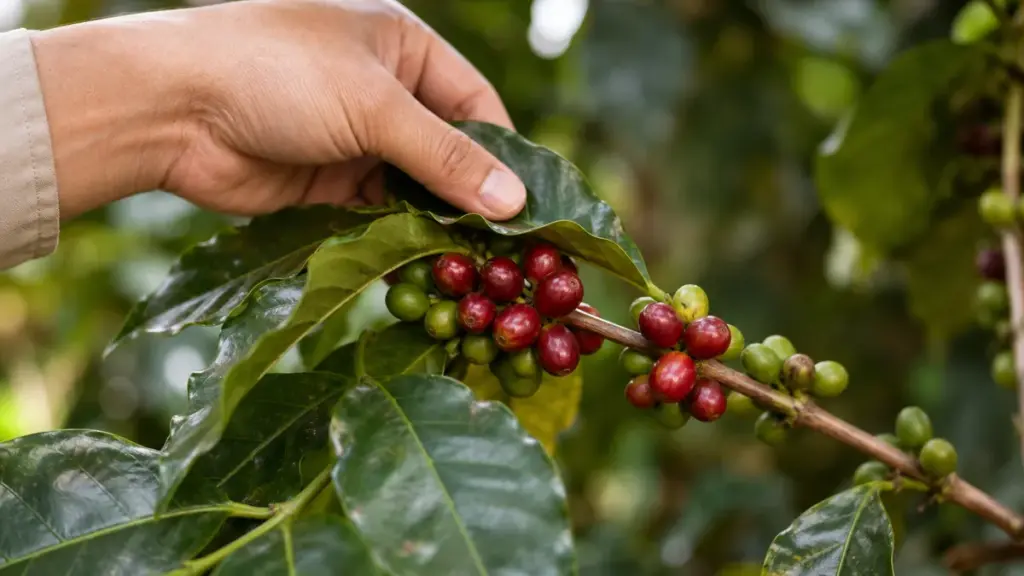
Origin destinations: see where coffee begins
An origin destination is a place where coffee is grown. Choose one when you want the agricultural context behind the drink, rather than simply another excellent café.
Colombia: coffee as a way of life
Colombia is our editorial choice for travellers interested in the relationship between coffee farming, communities and architecture. UNESCO’s Coffee Cultural Landscape of Colombia recognises a living farming culture, not simply attractive fields: its description connects small-plot cultivation with settlements and the ways people have adapted to mountain conditions.
That makes it worth choosing a visit which explains who grows the coffee and how the farm operates. Ask whether you will meet a producer, see processing facilities or taste coffee connected with the property.
Best fit: travellers who want coffee to provide the thread through a regional stay. The limitation is that a famous coffee region does not guarantee that every visitor experience offers equal depth.
Costa Rica: a useful first introduction to production
Costa Rica is our editorial recommendation for a first farm-focused coffee experience. Its tourism board describes farm walks, plantation visits, tasting experiences and excursions combining coffee with other interests.
Choose by content rather than by the attraction’s name. A broad introduction may be ideal for a mixed-interest group; someone already familiar with coffee might prefer more explanation of processing, drying and quality assessment.
Best fit: beginners and travelling companions who want a coffee activity within a wider holiday. Before booking, establish whether the visit involves a working production site, a demonstration, or both.
Ethiopia: culture first, with a substantial travel caveat
Ethiopia belongs on a coffee-cultural shortlist because of coffee’s place in everyday social life and ceremonial preparation. UNESCO describes roasting aromas, shared hospitality and coffee drinking as part of social relationships, rather than merely a beverage service.
It is not an unconditional travel recommendation. As checked on 2 November 2026, the FCDO advises against all travel to parts of Ethiopia and against all but essential travel to other parts.
Assess the actual route, not just the destination name. A producer’s reputation or a coffee region’s appeal does not override official warnings.
Best fit: a culturally motivated traveller, only where current advice and practical arrangements support the proposed visit. Our origin travel guide covers these destinations in greater detail.
Coffee cities: choose tradition or café exploration
A coffee city need not grow coffee to be worth visiting. For this shortlist, the distinction is between places where the main attraction is an established social tradition and places suited to exploring different cafés and roasters.
Vienna: choose time and atmosphere
Vienna is our pick for travellers who want to linger. The Austrian Commission for UNESCO describes traditional coffeehouse culture through its atmosphere and characteristic furnishings, including marble-topped tables, newspaper tables and alcoves.
There is a useful distinction behind the heritage label: Viennese coffeehouse culture entered Austria’s national inventory of intangible cultural heritage in 2011. That is not the same designation as inscription on UNESCO’s international Representative List.
Choose Vienna for the complete coffeehouse experience. If your main goal is discussing roast profiles or comparing brewing recipes, check that a particular venue offers that experience rather than assuming heritage implies it.
Istanbul: preparation and hospitality
Istanbul is our editorial choice for exploring Turkish coffee as a social practice. UNESCO’s international listing recognises Turkish coffee culture and tradition, including finely ground coffee, slow preparation in a pot, small-cup service and its association with hospitality and conversation.
Look for an opportunity to understand the preparation, not simply photograph the pot. Ask how the coffee is made and how sweetness is agreed when ordering.
Vienna and Istanbul suit different moods, but neither needs an exhaustive venue checklist. For their wider cultural context, see our historic coffee-city guide.
Tokyo: the pleasure of the coffeehouse
Tokyo earns its place through the traditional kissaten, an old-style Japanese coffeehouse. Tokyo Metropolitan Government’s guide describes these establishments as places for coffee alongside food such as toast, sandwiches and cakes; it also gives examples of hand-drip service.
Our recommendation is to explore by neighbourhood and allow time to sit. Choose Tokyo if the character of the room and the manner of service interest you as much as the coffee itself.
Avoid treating every traditional establishment as interchangeable. Check the actual menu and preparation methods before making a special journey.
Melbourne: compare cafés without making it a competition
Melbourne is our choice for travellers who want coffee woven through ordinary city exploration. The City of Melbourne’s official directory includes espresso bars, roastery cafés, specialist coffee shops and venues serving single-origin coffees, meaning coffees identified with a particular origin.
Build a small route around contrasting experiences: an espresso bar, a roaster’s café and somewhere to sit over breakfast. The objective is to notice differences, not declare a winner after a hurried sip.
For a UK-based reader, our editorial advice is to make Melbourne part of a wider Australian visit rather than assume coffee alone requires a dedicated journey.
Festivals: choose variety in one place
A festival suits readers who want access to different coffees, demonstrations and conversations within one visit. It serves a different purpose from a farm or coffeehouse: choose it for comparison and participation.
Two forthcoming examples were published by their organisers when checked in November 2026:
- The London Coffee Festival: 13 to 16 May 2027 at The Truman Brewery. The organiser identifies Thursday and Friday as industry days and Saturday and Sunday as the public celebration.
- The Amsterdam Coffee Festival: 8 to 10 April 2027 at NDSM. Its published programme includes tastings, workshops and brewing activities.
These are organiser-published dates, not a guarantee against changes. Reconfirm the venue, admission category and programme before making travel arrangements.
Choose a festival with a purpose. A brewing workshop, a conversation with a roaster or a focused comparison will give the visit more shape than simply sampling whatever is nearest.
Seasons: match your timing to the experience
For farm visits, ask two separate questions: what will be happening with the coffee, and will the visit operate as described?
Costa Rica illustrates why precision matters. USDA’s 2023 country report describes harvest as concentrated from November to February, while noting earlier starts in lower areas and later finishes at some higher sites. That is background for planning, not a prediction for an individual farm in 2026 or 2027.
Colombia’s tourism board describes harvesting across different parts of the country throughout the year. This does not mean every farm is harvesting whenever you arrive.
Use this checklist before choosing dates:
- Identify the activity you want to see. Picking, processing, drying, roasting and tasting are not interchangeable.
- Ask the host what should be happening during your visit. Request confirmation close to departure.
- Establish whether equipment will be operating. A tour may explain a process without showing live production.
- Check access and physical demands. Ask about paths, steps, shelter, toilets and transport arrangements.
- Keep a fallback activity. Agree what happens if the expected agricultural work cannot be shown.
For city visits, choose dates around your wider interests and verify individual opening arrangements. Festivals require the opposite approach: establish the event’s confirmed dates first, then build the trip around them.
Our guide to coffee plantation visits explains how to assess the experience itself.
Plan for depth, not a collection of stops
For a more knowledgeable coffee traveller, the useful question is not “How many places can I visit?” but “What comparison can I make?”
At origin, ask whether you can follow coffee from a named plot through the processing explanation and into the tasting. In a city, choose contrasting forms of service. At a festival, ask whether a tasting compares origins, processing methods or roast styles.
Do not assume one variable explains everything you taste. Instead, ask the host what has been kept consistent and what differs between samples. That turns a tasting from a list of flavour impressions into a clearer learning experience.
Before committing, obtain written confirmation of the visit’s language, group format, transport, accessibility, cancellation terms and inclusions. For organised trips, request an itemised written quotation rather than relying on a headline package description.
Finally, check current FCDO advice for every country and relevant region on your route. The best coffee destinations are those that match your curiosity and allow you to pursue it responsibly.
FAQ
Do I need specialist coffee knowledge to enjoy these destinations?
No, curiosity is enough. Tell a guide or host what you already know and what you would like explained. For a first visit, choose an experience that welcomes basic questions rather than one assuming professional knowledge. You do not need to identify tasting notes to enjoy seeing production or understanding a coffeehouse tradition.
What if my travelling companion is not interested in coffee?
Choose a trip with an independent appeal for both of you. A city visit can include one deliberate coffee stop rather than a full programme, while a farm excursion can sit within a wider holiday. Agree the amount of coffee-focused time beforehand and avoid expecting your companion to enjoy repeated tastings simply because you do.
How should I behave when visiting a farm or coffee ceremony?
Follow your host’s instructions and ask before photographing people, entering work areas or handling plants and equipment. Treat the visit as someone’s workplace or social setting, not a stage arranged for your camera. If participation is offered, ask what is appropriate rather than assuming that picking fruit or helping with preparation is welcome.
Where to go next
Read Coffee Travel in Ethiopia, Colombia and Costa Rica for a closer look at the origin destinations, or Coffee Travel in Italy, Vienna and Istanbul for historic coffee cultures. Coffee Plantation Tours will help you assess a specific visit, while Tours in Coffee-Growing Regions is the next read when you want coffee to shape a broader regional journey.
Sources
-
UNESCO World Heritage Centre, Coffee Cultural Landscape of Colombia, inscription 2011, current listing retrieved November 2026. Establishes the relationship between farming, settlements and cultural heritage.
https://whc.unesco.org/en/list/1121/ -
Colombia Travel, Coffee Regions, undated, retrieved November 2026. Used for the broad pattern of harvesting across different parts of Colombia, not its promotional flavour explanations.
https://colombia.travel/en/coffee-regions -
Costa Rica Tourism Board, Costa Rica Coffee Experience, undated, retrieved November 2026. Used for visitor-experience categories, not its botanical, historical or environmental claims.
https://www.visitcostarica.com/costa-rica-coffee-experience -
USDA Foreign Agricultural Service, Coffee Annual: Costa Rica, report CS2023-0004, 2023. Used as historical background on regional harvest variation, not a current-season forecast.
https://apps.fas.usda.gov/newgainapi/api/Report/DownloadReportByFileName?fileName=Coffee+Annual_San+Jose_Costa+Rica_CS2023-0004.pdf -
UNESCO, Ethiopia, the home of coffee, 2023, updated 26 June 2023. Used for coffee’s social and ceremonial context.
https://www.unesco.org/en/articles/ethiopia-home-coffee -
Foreign, Commonwealth & Development Office, Ethiopia travel advice, updated 30 October 2026, checked 2 November 2026; and Foreign travel advice, current directory. Used for regional warnings and pre-travel checking.
https://www.gov.uk/foreign-travel-advice/ethiopia
https://www.gov.uk/foreign-travel-advice -
Austrian Commission for UNESCO, Viennese coffee house culture, inventory entry inscribed 2011, retrieved November 2026. Used for characteristic features and the national heritage designation.
https://www.unesco.at/en/culture/intangible-cultural-heritage/inventory/element/article/viennese-coffee-house-culture -
UNESCO Intangible Cultural Heritage, Turkish coffee culture and tradition, inscription 2013, retrieved November 2026. Used for preparation, service and social customs.
https://ich.unesco.org/en/RL/-00645 -
Tokyo Metropolitan Government, TOKYO UPDATES, 7 Kissaten to Visit in Tokyo This Fall, 28 October 2024. Used for traditional coffeehouse characteristics and examples of hand-drip service.
https://www.tokyoupdates.metro.tokyo.lg.jp/en/post-1393/ -
City of Melbourne, What’s On Melbourne, Coffee shops, undated, retrieved November 2026. Used for the range of café and roaster formats, not a quality ranking.
https://whatson.melbourne.vic.gov.au/eat-and-drink/cafes/coffee -
The London Coffee Festival, Visit The London Coffee Festival, 2027 visitor information, retrieved November 2026. Used for forthcoming dates, venue and public versus industry days.
https://www.londoncoffeefestival.com/visiting -
The Amsterdam Coffee Festival, official homepage, 2027 event information, retrieved November 2026. Used for forthcoming dates, venue and advertised activities.
https://www.amsterdamcoffeefestival.com/
This guide was researched using heritage records, official tourism and municipal information, agricultural reporting, organiser websites and current FCDO advice; destination choices are editorial judgements, not first-hand testing.
Last checked: November 2026