You can see coffee art in museum collections, temporary gallery exhibitions and coffee festivals, but these offer different experiences: artworks made with coffee, art depicting coffee, or objects that tell its cultural history. For UK readers, the V&A is a useful starting point for coffee-related design, while temporary exhibitions and festival art programmes need checking against the organiser’s dated listings before you travel.
In short
- Search separately for coffee as an artistic material, coffee depicted in art and coffee history collections.
- A museum owning an object does not mean it is currently on display.
- The London Coffee Festival announces its next edition for 13 to 16 May 2027, but check its art programme separately.
- Bramah’s Tea and Coffee Museum is a historical reference, not a currently open London attraction.
- Keep an exhibition’s closing date with any saved listing, especially when finding it through social media.
What counts as a coffee art exhibition?
The phrase covers several subjects, so decide what you want to see before searching.
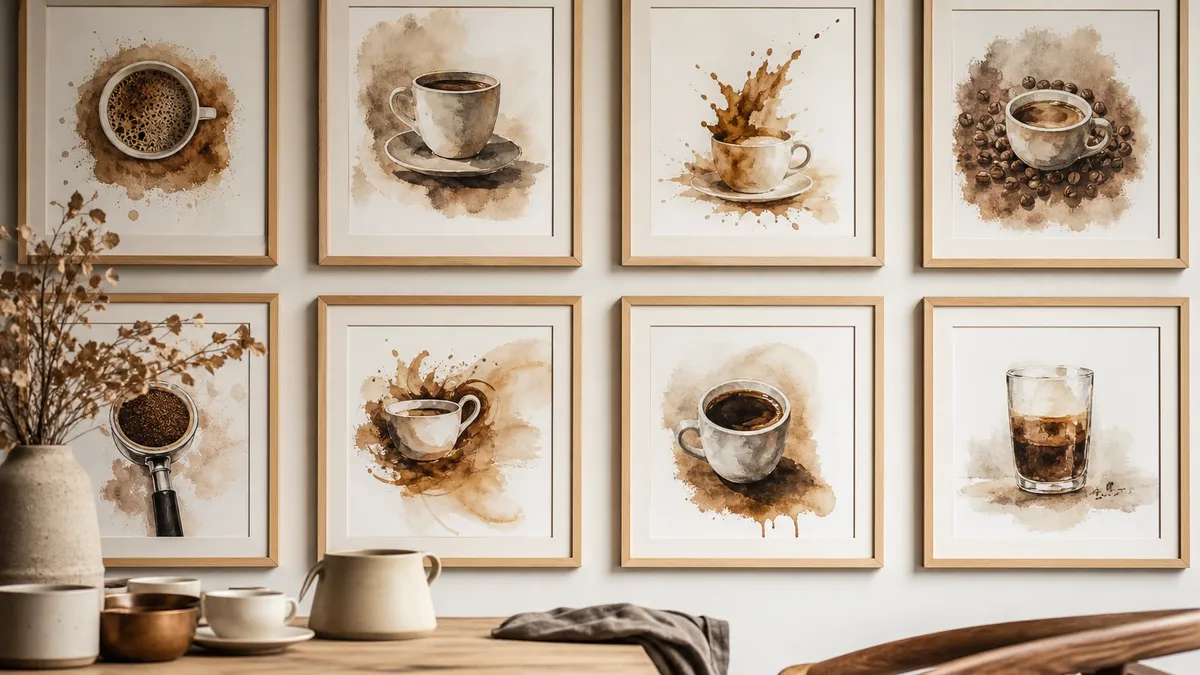
Art made with coffee uses the drink or grounds as part of the work itself. Coffee might provide brown washes, granular texture or a material connection to the subject being explored. Chase Hall’s paintings and a mixed-media work by Helen Frankenthaler provide verified museum examples.
Art about coffee depicts cups, pots, drinking rituals or social spaces. The material might be graphite, oil paint, photography or something else entirely. Here, coffee is the subject rather than the medium, meaning the material used to make the artwork.
Coffee material culture means the objects associated with making, serving and drinking coffee. Museum displays of coffee pots, cups, roasters and related images belong here. They can reward anyone interested in design, although they are not necessarily exhibitions of contemporary art.
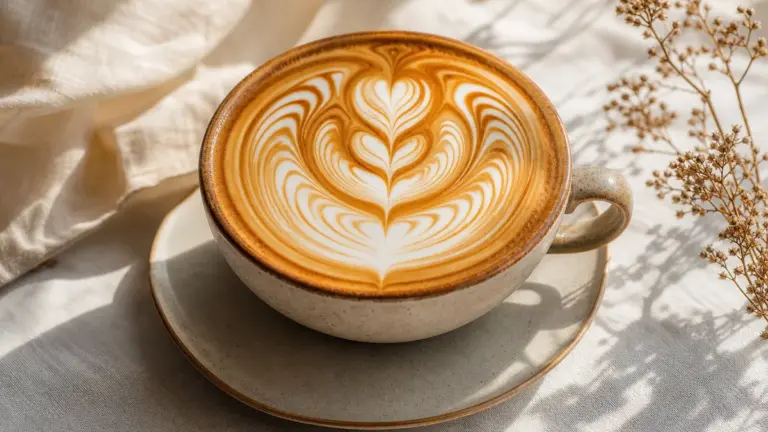
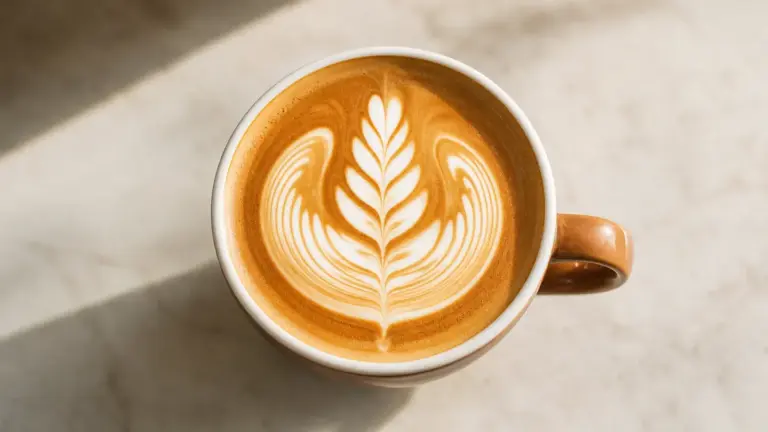
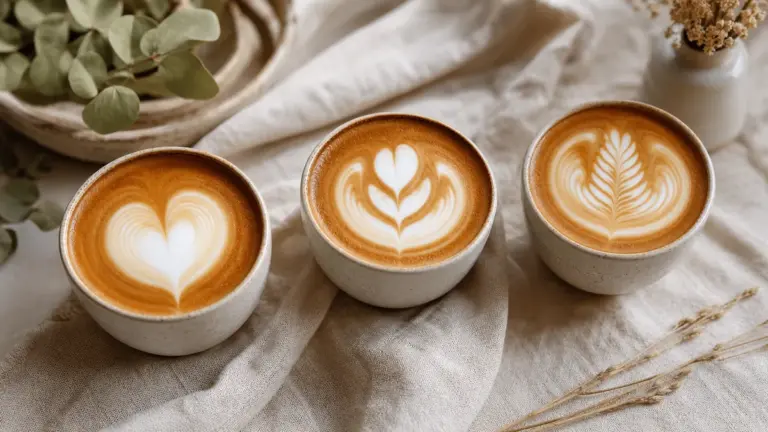
A fourth category is live coffee performance, including latte art demonstrations. For the wider relationship between visual creativity and the drink, start with coffee art and latte art. This guide concentrates on places, collections and exhibition records rather than pouring technique.
Where to see coffee-related collections
V&A, London: coffee as decorative art and design
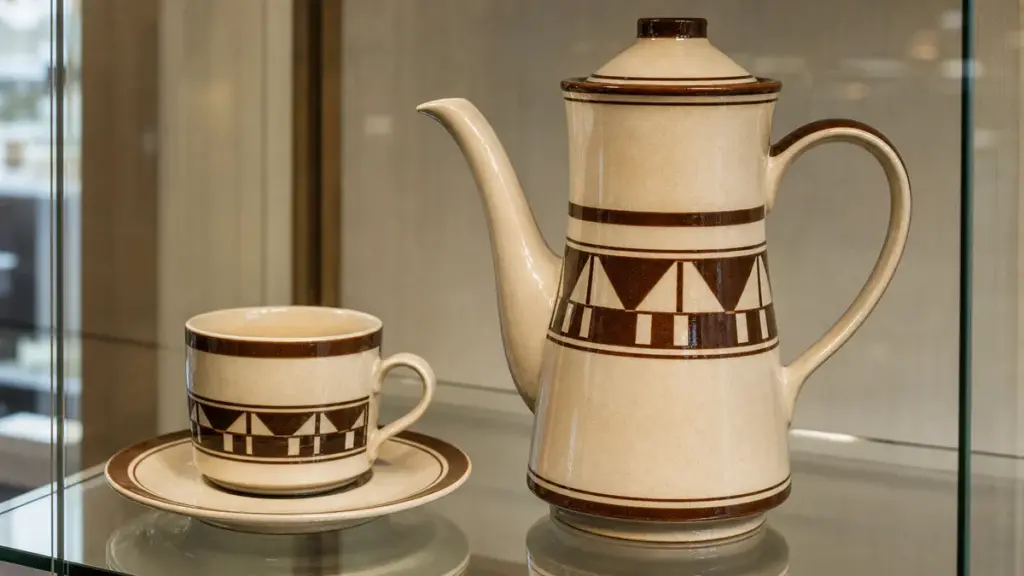
The V&A’s ceramics collection page identifies a Kestrel Coffee Set coffee pot, designed by Susie Cooper and manufactured by Susie Cooper Pottery in 1932, as on display when checked.
This makes the museum a useful starting point if your interest is the design of coffee equipment rather than paintings made with coffee. Look closely at the relationship between the handle, spout and body: an object intended for everyday service also gives a designer opportunities to explore shape and proportion.
Before visiting, check the collection record again and ask the museum about the object’s location if it is your main reason for going. Treat the display status as a dated observation, not a permanent promise.
British Museum, London: coffee objects and cultural history
The British Museum’s online collection includes coffee-related objects, but individual records require care. Its record for coffee pot 1989,0703.1, for example, was marked not on display when checked.
The museum also retains an online large-print guide to Life in a cup: coffee culture in the Islamic world. This documents coffee equipment and images of coffeehouse life, including a drawing by George Scharf of a coffeehouse on Museum Street.
Use that guide as an exhibition archive and research resource, not evidence that the same display remains installed. It is particularly useful for understanding why a coffee exhibition might combine practical equipment with drawings and other records of social life.
Neither the British Museum nor the V&A should be described as preserving a complete historic coffeehouse simply because their collections contain coffee-related material.
The Metropolitan Museum of Art, New York: a documented display example
For an international example, The Met lists Coffee Pot on Stand (part of a service), made by Digby Scott and Benjamin Smith II in 1805. Its collection page identified the object as on view at The Met Fifth Avenue in Gallery 516 when checked.
The museum records its materials as silver and ivory. This is coffee-related decorative art rather than an artwork made from coffee, and a useful reminder that a search limited to “coffee painting” misses much of the subject.
For an object-focused visit, save the title, makers and collection record. These give museum staff something precise to locate if the display changes.
Two names that need qualification
Johann Jacobs Museum, Zurich: do not rely on older descriptions when planning a coffee-focused visit. The Jacobs Foundation’s annual report records a change of direction in 2022, placing learning and education at the museum’s centre. The Zurich museums association now describes it as the home of the Digital Museum of Learning, with access upon request and during special events or open weekends.
Those sources support its present educational role, not a promise of a permanent coffee display. Ask specifically whether coffee-related collection material is available before arranging a visit.
Bramah’s Tea and Coffee Museum, London: this belongs in the history of coffee collecting, not a current itinerary. The Mapping Museums research project records it as opening in 1992 and closing in 2008; the local London SE1 listing also marks it closed to the public.
Do not infer that its collection is accessible elsewhere from an old museum listing. No present public display of that collection is recommended here.
Coffee-based artworks worth knowing
Chase Hall: coffee as pigment and subject
The SCAD Museum of Art’s exhibition The Close of Day presented Chase Hall’s work from 28 February to 21 August 2023.
The museum describes Hall using coffee grounds as pigment on raw cotton canvas, varying their coarseness and fineness to produce different tonal values. Its interpretation connects the works with race, labour and the histories of commodities including coffee and cotton.
That combination matters. The coffee is not merely an unusual replacement for brown paint: the museum presents the material as part of the work’s meaning. When looking for later exhibitions, search the artist’s name as well as “coffee art”, then read the venue’s description of the particular works included.
Helen Frankenthaler: coffee grounds within mixed media
The Smithsonian’s Hirshhorn Museum documents coffee grounds among the materials in Helen Frankenthaler’s Painted on 21st Street, dated 1950 to 1951. The work also contains oil, sand and plaster of Paris on canvas.
This is not a coffee watercolour. Coffee grounds contribute to a mixed-media surface, where texture matters alongside colour and gesture.
The distinction offers a better way to search: try “coffee grounds mixed media” or an artist’s name alongside a museum collection search. The Hirshhorn’s online educational page provides a documented example, but it does not establish that the painting is currently on public display.
Dated exhibitions and events
The following examples show different ways coffee enters an exhibition programme. The completed exhibitions are historical examples, not current visitor recommendations.
| Exhibition or event | Dates | Coffee connection | Status in November 2026 |
|---|---|---|---|
| The Close of Day, SCAD Museum of Art | 28 February to 21 August 2023 | Chase Hall’s paintings use coffee grounds on cotton canvas | Finished; exhibition archive available |
| Coffee and Tea in Art, Hood Museum of Art | 11 May to 7 July 2024 | Explored the drinks’ cultural symbolism through art | Finished; exhibition archive available |
| The London Coffee Festival, The Truman Brewery | 13 to 16 May 2027 | A festival with a documented history of artist programmes | Future event; verify the edition-specific art programme |
The Hood Museum exhibition, subtitled A Brew of Cultural Symbolism, Solace, and Introspection, drew on its permanent collection. It demonstrates the difference between an exhibition about coffee’s meaning in pictures and one featuring coffee as the physical material.
The London Coffee Festival’s artists page describes murals, installations and coffee-inspired artwork by people connected with the coffee industry. However, its website contains material from different editions. The announced festival dates do not, by themselves, confirm which artists or artworks will appear in 2027.
Likewise, a festival’s latte art stage is not interchangeable with a gallery display. If live work is your priority, use the demonstration timetable alongside our guide to latte art competitions, rather than assuming an art programme includes competitive pouring.
Art in coffee venues is a different category
A café can show worthwhile art without the art being made from, or depicting, coffee.
Hyde Park Art Club at Hyde Park Book Club in Leeds describes its purpose as presenting contemporary art in a non-traditional setting. Its published account emphasises encounters between artworks and people using the café and venue.
That makes it a useful place to investigate café-based exhibitions, but not evidence of a standing programme devoted to coffee-themed art. Read each show’s description before treating it as a coffee art exhibition.
Use the same distinction elsewhere: art in a coffee venue, art about coffee and art made with coffee are separate descriptions. Checking which one applies prevents a promising search result from becoming a disappointing visit.
How to find current coffee art exhibitions
Use this checklist before making a special journey:
- Choose the category. Search for “coffee painting exhibition”, “coffee grounds installation”, “coffee pot collection” or “coffeehouse art”, depending on your interest.
- Add a location and year. These make your intended place and period explicit, but still inspect the dates on every result.
- Open the venue’s own page. Confirm the exhibition title, location, opening date and closing date. Do not rely on a search snippet or undated photograph.
- Check what is actually shown. An artist known for coffee-based work may be exhibiting different materials. A coffee festival may feature illustration rather than coffee painting.
- Separate ownership from access. On museum records, look for “on display”, “on view” or “not on display”. For a temporary show, check whether the page sits in the exhibition archive.
- Confirm visitor arrangements. Check public access, booking requirements, accessibility, photography rules and whether a private view has been confused with ordinary opening.
- Ask a precise question if necessary. “Is this named work on public display on my visit date?” is more useful than asking whether the museum has coffee art.
For ongoing discovery, follow the venues and artists you have identified, rather than relying only on the broad phrase “coffee art”. If intricate designs in the cup are what first caught your attention, latte art masterpieces provides a more focused next step.
What to look for once you arrive
Start with the materials entry on the label. Does it name coffee, coffee grounds or another medium altogether? Then compare that information with what you can see: a pale wash, a gritty surface, an ordinary cup or an elaborately designed pot.
Next, ask what role coffee plays. In Hall’s SCAD exhibition, the museum linked coffee and cotton with the subjects under discussion. In the Hood exhibition, coffee and tea were explored through their cultural symbolism. These are different artistic uses, not competing definitions.
Finally, distinguish an interpretation from a documented fact. A museum may identify a pot’s maker and date while offering a broader reading of its significance. Enjoy both, but keep them separate in your notes.
The most useful coffee art exhibitions give you something specific to examine. Choosing between material, imagery, design and live performance makes finding that experience much easier.
FAQ
Can I explore coffee art without visiting a gallery?
Yes, museum collection pages and archived exhibition guides provide useful starting points. The British Museum’s Life in a cup guide and the Hirshhorn’s Frankenthaler educational page document different kinds of coffee-related material. They support online exploration, but neither should be treated as confirmation that the same objects are currently accessible in a gallery.
Does a coffee art exhibition include tastings?
Do not assume that it does. Check the organiser’s programme for a separately listed tasting, demonstration or workshop. A display of coffee-related ceramics or paintings is a different activity from drinking coffee, even when it takes place within a wider coffee event. Confirm any participation requirements before attending.
How can I find out more about a particular artwork?
Record the artist, title, date and materials, then look for the venue’s collection entry or exhibition text. For an object, add its museum number if available. These details help distinguish the exact work from similarly titled pieces and make a later enquiry to the museum or gallery much more useful.
Where to go next
Start with Coffee Art and Latte Art for the wider subject, then read Latte Art Masterpieces if your interest is visual work in the cup. Latte Art Competitions explains the competitive setting, while World Latte Art Championship focuses on that specific event.
Sources
-
Victoria and Albert Museum, Ceramics, undated collection page, retrieved November 2026. Identifies the Susie Cooper Kestrel coffee pot and its display status.
https://www.vam.ac.uk/collections/ceramics -
British Museum, coffee-pot, collection record 1989,0703.1, undated; and Life in a cup: coffee culture in the Islamic world, large-print exhibition guide, 2021 file.
https://www.britishmuseum.org/collection/object/H_1989-0703-1
https://www.britishmuseum.org/sites/default/files/2021-10/Life_in_a_cup_coffee_culture_in_the_Islamic_world_large_print_guide_1021.pdf -
The Metropolitan Museum of Art, Coffee Pot on Stand (part of a service), undated collection record, retrieved November 2026.
https://www.metmuseum.org/art/collection/search/875581 -
Jacobs Foundation, Annual Report 2022, published 2023; Zürcher Museen, Johann Jacobs Museum, undated current listing, retrieved November 2026.
https://jacobsfoundation.org/wp-content/uploads/2023/05/JF_AnnualReport22.pdf
https://zuercher-museen.ch/en/museums/johann-jacobs-museum -
Mapping Museums research project, Closed museums and their collections 2000 to 2025: a summary of the data, 2025, closure list; London SE1, Bramah’s Museum of Tea & Coffee, undated listing, retrieved November 2026.
https://mapping-museums.bbk.ac.uk/wp-content/uploads/2025/11/Closed-museums-and-their-collections-2000-25_a-summary-of-the-data-FINAL-1.pdf
https://london-se1.co.uk/places/bramah-museum-tea-coffee -
SCAD Museum of Art, The Close of Day, 2023 exhibition page.
https://www.scadmoa.org/exhibitions/the-close-of-day -
Hirshhorn Museum and Sculpture Garden, Smithsonian Institution, Paint with No Rules, undated educational page, retrieved November 2026.
https://hirshhorn.si.edu/explore/paint-with-no-rules/ -
Hood Museum of Art, Coffee and Tea in Art: A Brew of Cultural Symbolism, Solace, and Introspection, 2024 exhibition page.
https://hoodmuseum.dartmouth.edu/explore/exhibitions/coffee-and-tea-art -
The London Coffee Festival, Visit The London Coffee Festival and Artists, undated pages, retrieved November 2026.
https://www.londoncoffeefestival.com/visiting
https://www.londoncoffeefestival.com/whats-on/artists -
Hyde Park Book Club, HPAC, undated programme statement, retrieved November 2026.
https://www.hydeparkbookclub.co.uk/hpac
Research used museum collection records, archived exhibition pages, organisers’ listings and institutional reports, distinguishing historical examples from current display information and future announcements.
Last checked: November 2026