Coffea stenophylla is a West African coffee species that combines Arabica-like flavour with an ability to grow in substantially warmer conditions. Scientists are investigating it and other wild coffees as future crops and breeding resources, but promising taste and climate data are not yet proof of dependable farm-scale production.
In short
- Stenophylla was rediscovered in the wild in Sierra Leone in December 2018, not discovered as a new species.
- Research published in April 2021 associated it with mean annual temperatures about 6.2 to 6.8°C higher than Arabica.
- That temperature difference comes from climate profiling, not a controlled experiment establishing its maximum heat tolerance.
- Racemosa and zanguebariae offer evidence relevant to drier growing conditions; eugenioides contributes genetic and low-caffeine interest.
- Conservation, repeated harvest trials and reliable planting material matter as much as an impressive tasting result.
What makes wild coffee useful?
Wild coffee species are relatives of cultivated coffees that retain genetic diversity outside mainstream production. Researchers investigate them for useful characteristics, including adaptation to particular climates, pest resistance and distinctive flavour.
There are two broad routes to using that diversity. A species might become a crop in its own right, or breeders might cross it with another coffee to introduce useful characteristics. Neither route means that a wild plant can simply replace an established crop without selection and testing.
The distinctions matter when reading coffee labels. Stenophylla is a species, not an Arabica variety or a processing method. Our coffee varieties guide provides the wider framework; the familiar commercial comparison belongs in arabica vs robusta.
“Climate-resilient” also needs a specific meaning. A plant adapted to warmer, humid forest is not automatically suited to prolonged drought. Resilience should describe performance against an identified stress, rather than suggest immunity to every consequence of climate change.
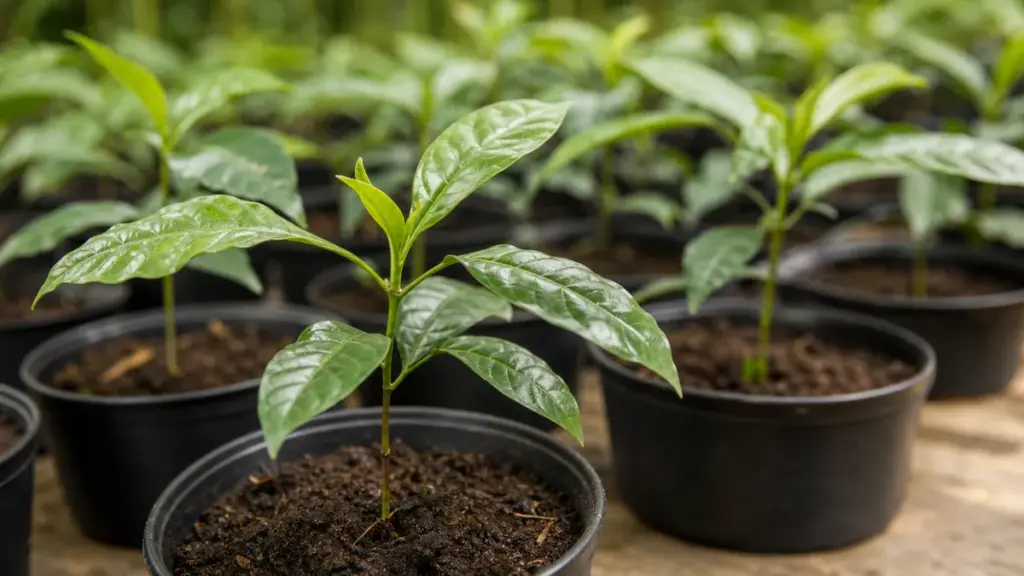
Stenophylla: rediscovery rather than a new discovery
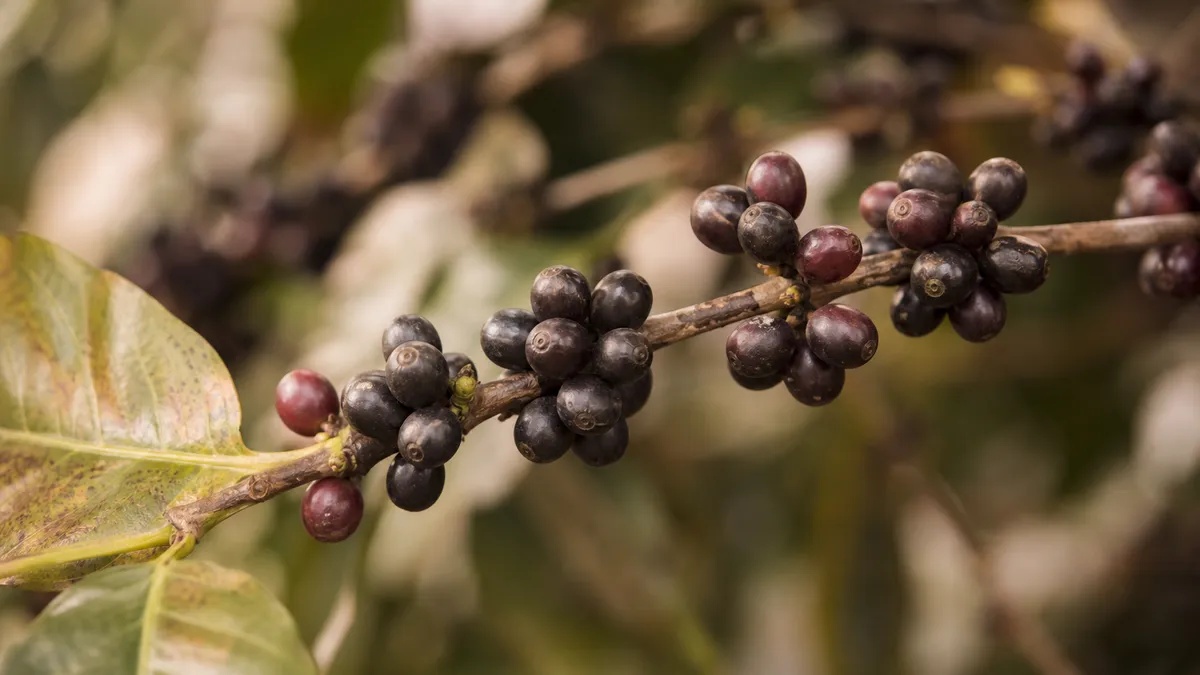
Coffea stenophylla is native to Guinea, Sierra Leone and Côte d’Ivoire. Its narrow leaves and dark ripe cherries distinguish it from many familiar coffee plants. It had previously been cultivated, so the modern story concerns recovering a neglected crop relative, not finding a coffee entirely unknown to science or local people.
In December 2018, Kew scientist Dr Aaron Davis and Professor Jeremy Haggar of the University of Greenwich worked with Sierra Leonean development specialist Daniel Sarmu to locate it in Sierra Leone. The expedition found a plant in the Kasewe Hills and a separate population in the Kambui Hills.
The distinction between rediscovery and extinction matters. The previous confirmed wild collection in Sierra Leone dated from 1954, but a long gap in scientific records did not establish that the species had vanished everywhere. The researchers’ fieldwork, herbarium investigation and subsequent identification work were published in 2020.
Stenophylla origin fact panel
Unlike an established coffee origin, stenophylla does not yet have a sufficiently documented production system to justify a standard growing or harvest calendar.
| Attribute | What the research supports |
|---|---|
| Native origin | Guinea, Sierra Leone and Côte d’Ivoire |
| Altitude records | Rediscovery sites at about 400 m in Sierra Leone; historical cultivation reported around 150 m. These are documented examples, not a validated species-wide altitude range |
| Main varieties | The research discussed here evaluates species material and research accessions, meaning separately maintained plant samples, rather than an established catalogue of commercial cultivars |
| Processing | Washed processing is documented for research samples; this should not be presented as an established dominant commercial method |
| Harvest months | No verified regional commercial calendar in the sources used. Research fruit collected on Réunion in October 2020 does not establish Sierra Leone’s harvest season |
| Reported cup profile | Natural sweetness, fruitiness, medium-high acidity and good body in the published sensory evaluation |
How strong is the heat-tolerance evidence?
The key study, published in Nature Plants on 19 April 2021, combined sensory evaluation with climate profiling. Climate profiling matches verified plant locations with environmental data to describe the conditions in which a species occurs.
The researchers associated stenophylla with a mean annual temperature of approximately 24.9°C, about 6.2 to 6.8°C higher than the Arabica comparisons used. This is compelling evidence that good coffee flavour need not be restricted to Arabica’s cooler growing conditions.
However, an annual mean is not an afternoon maximum. The study did not establish a temperature ceiling beyond which stenophylla fails, nor demonstrate that every population would maintain yield through increasingly severe heatwaves.
There is a similar distinction between heat tolerance and drought tolerance. Kew’s 2021 account explicitly identified reported drought tolerance and coffee leaf rust resistance as characteristics requiring further investigation. Historical reports are useful research leads, not substitutes for replicated trials.
For growers, the decisive question is therefore not simply whether a tree survives. It is whether it flowers, fills its seeds and produces acceptable harvests under the conditions actually experienced on their farms.
What does stenophylla taste like?
The 2021 research supported historical reports of attractive flavour. Blind sensory assessment, in which tasters did not know the sample’s identity, described sweetness, fruitiness, medium-high acidity and good body.
A small Sierra Leone sample received a consensus score of 80.25 using the SCA scoring approach employed at the time. That is a result for a particular sample under a particular protocol, not a permanent grade attached to the species.
Further research published in 2023 compared stenophylla and other wild coffees across roast levels. This helps move the discussion beyond a single unusual tasting, although samples from research collections still cannot represent every future farm, harvest or processing choice.
A possible chemical explanation
A 2025 laboratory study found similarities between stenophylla and Arabica in several green-bean compounds associated with flavour, including sucrose, trigonelline and citric acid. These findings offer a possible explanation for their sensory resemblance despite their botanical differences.
The researchers also found clear chemical differences, including theacrine in stenophylla. Chemical resemblance is therefore partial, and green-bean composition alone cannot predict the finished cup.
The useful conclusion is that stenophylla has demonstrated credible flavour potential. It has not demonstrated that every lot will resemble a high-quality Arabica. For the distinction between botanical identity and exceptional individual lots, see specialty coffee varietals.
Other wild species worth watching
Racemosa and zanguebariae: interest in drier conditions
Coffea racemosa and Coffea zanguebariae are separate species, despite a history of confusion between their names. Research published in 2021 combined botanical identification, field observations, climate modelling and beverage assessment.
Their modelled mean annual rainfall was approximately 807 mm for racemosa and 998 mm for zanguebariae, compared with about 1,600 mm for the Arabica and robusta datasets in that study. These are environmental associations, not irrigation prescriptions.
Their relatively short fruit-development period, around four months in the observations reported, is another useful research lead. A shorter reproductive cycle could help plants fit seasonal growing conditions, but its value must be assessed alongside harvest size and consistency.
Their flavour is not simply “Arabica, but hardier”. The study recorded herbal, spicy and savoury characteristics alongside more familiar floral and sweet notes. Some drinkers may find those attractive; others may find them challenging.
Eugenioides: useful ancestry, not proof of heat resilience
Coffea eugenioides is Arabica’s diploid maternal progenitor: a species with two chromosome sets that contributed the maternal side of Arabica’s ancestry. That makes it important to understanding coffee genetics, but does not itself establish suitability for hotter farms.
Published literature reports approximately 0.4% caffeine in its seeds on a dry-weight basis. Treat that as a reported bean-composition figure, not a guaranteed caffeine level in a brewed drink.
Its competition profile is also real. Producer Inmaculada Coffee Farms records eugenioides among the coffees associated with the leading competitors at the 2021 World Barista Championship, including winner Diego Campos. Competition success demonstrates sensory interest, not agricultural resilience.
Congensis and the broader search
Coffea congensis illustrates why resilience must extend beyond heat. The 2023 research review describes its association with riverine and seasonally flooded habitats, alongside investigation of its beverage potential.
Liberica and excelsa are also part of the wider discussion, but their identities and developing crop roles deserve separate treatment in liberica and excelsa coffee.
Conservation comes before a dependable new crop
Stenophylla is listed as Vulnerable in the IUCN information presented by World Flora Online. At its Sierra Leone rediscovery sites, researchers documented threats including forest clearance, logging and artisanal mining.
The wider problem is substantial. A global assessment published in 2019 classified 75 of the 124 coffee species assessed, approximately 60%, as threatened with extinction. That is a dated assessment of its study set, not a freshly calculated proportion of all species recognised today.
Protecting forest populations and maintaining living research collections serve different purposes. Forest conservation retains plants within their ecological setting; collections make material available for identification, comparison and carefully managed research.
Coffee conservation also cannot rely straightforwardly on conventional dry seed banking. The 2019 assessment identifies seed-storage limitations as a complication, strengthening the case for complementary conservation methods rather than a single solution.
Local communities belong at the centre of this work. Recovering a potentially useful crop should preserve both its biological diversity and the knowledge and participation of people living where it grows.
Realistic timelines: trials first, reliable supply later
Progress has moved beyond the initial rediscovery. In a project update dated 24 February 2025, research supporter Sucafina reported that approximately 5,600 stenophylla seedlings had been planted across eight trial plots by the end of 2023.
That is a sponsor’s project report, not an independently published demonstration of mature commercial performance. It is nevertheless evidence of practical crop-development work rather than a proposal confined to a laboratory.
A sensible development sequence is:
- Confirm identity and conserve diversity. Avoid building a crop programme around misidentified or overly narrow material.
- Evaluate plants across sites and harvests. Record survival, flowering, yield, pests and disease.
- Repeat processing and sensory assessment. Establish whether acceptable flavour can be reproduced.
- Develop dependable propagation and grower guidance. Promising plants must become usable planting material.
- Assess a workable supply chain. Growers need dependable production and buyers, not publicity alone.
These are development milestones, not a promised release schedule. First fruit, a successful tasting and reliable commercial supply are different achievements. The responsible expectation for stenophylla and climate-resilient wild species is a staged, multi-year process, with progress judged by published results rather than a countdown to replacing Arabica.
FAQ
Does “wild coffee” mean the beans were harvested from a forest?
No, the phrase can describe a species with wild populations even when the beans come from cultivated plants. Research collections and trial plots can contain wild coffee species. For a particular lot, ask separately about botanical identity, where the plants grew and whether the fruit was cultivated or collected from the wild.
Is stenophylla naturally low in caffeine?
It should not be assumed to be a low-caffeine alternative. The 2025 chemical study found caffeine levels broadly similar to Arabica in the samples examined. That differs from the low-caffeine interest surrounding eugenioides. Neither species identity nor a dry-bean percentage establishes the caffeine content of an individual prepared drink.
What information should a UK buyer request?
Ask for the scientific species name, producer, growing location, harvest and processing details. Request evidence behind any claim of exceptional heat or drought tolerance, and distinguish a published trial from promotional description. Traceability is particularly valuable where unfamiliar species names, small experimental lots and strong future-facing claims appear together.
Where to go next
Read Coffee Varieties for the botanical framework, then Arabica vs Robusta for the established commercial comparison. Liberica and Excelsa Coffee examines other developing crop options, while Specialty Coffee Varietals helps separate species identity from the quality of a particular lot.
Sources
- Royal Botanic Gardens, Kew and collaborating researchers, Davis et al., Lost and Found: Coffea stenophylla and C. affinis, the Forgotten Coffee Crop Species of West Africa, Frontiers in Plant Science, 2020. Full paper.
- Royal Botanic Gardens, Kew, CIRAD and collaborators, Davis et al., Arabica-like flavour in a heat-tolerant wild coffee species, Nature Plants, volume 7, 2021. Research manuscript.
- Royal Botanic Gardens, Kew, ‘Forgotten’ coffee species that grows at higher temperatures and boasts a superior flavour could help to futureproof the coffee industry under climate change, says new study, 19 April 2021. Research announcement.
- CIRAD and collaborating researchers, Bertrand et al., Potential beverage quality of three wild coffee species (Coffea brevipes, C. congensis and C. stenophylla) and consideration of their agronomic use, Journal of the Science of Food and Agriculture, 2023. Full paper.
- Royal Botanic Gardens, Kew and collaborating researchers, Metabolomic insights into the Arabica-like flavour of stenophylla coffee and the chemistry of quality coffee, 2025. Full paper.
- Royal Botanic Gardens, Kew and collaborating researchers, Davis et al., Hot Coffee: The Identity, Climate Profiles, Agronomy, and Beverage Characteristics of Coffea racemosa and C. zanguebariae, Frontiers in Sustainable Food Systems, 2021. Full paper.
- University of California, Davis and collaborating researchers, Assembly and annotation of Coffea arabica var. Geisha, G3, volume 15, 2025, article jkae262. Paper.
- Embrapa and collaborating researchers, Favoretto et al., Assisted-selection of naturally caffeine-free coffee cultivars: characterization of SNPs from a methyltransferase gene, 2017. Institutional repository copy.
- Inmaculada Coffee Farms, Awards, undated, recording 2021 competition results. Producer’s record.
- World Flora Online, Coffea stenophylla G.Don, 2026 database record, incorporating IUCN Red List information. Species record.
- Royal Botanic Gardens, Kew and collaborating researchers, Davis et al., High extinction risk for wild coffee species and implications for coffee sector sustainability, Science Advances, 2019. Full paper.
- Sucafina, stenophylla research project update, 24 February 2025. Project supporter’s report.
Research combined retrieved primary papers, Kew’s research reporting, a botanical database and clearly identified producer and project-supporter records, distinguishing measured findings from environmental associations and commercial-development expectations.
Last checked: November 2026