Panamanian coffee ranges from floral, tea-like Geisha to sweet, citrus-led Catuai, rounded traditional varieties and fruit-forward experimental lots. To understand Panama beyond Geisha, look for the farm, growing area, variety and processing method together: Boquete, Volcán-Candela and Renacimiento offer more useful detail than the country name alone.
In short
- Boquete is only part of the story. Look west towards Volcán-Candela and the farms of Renacimiento too.
- Catuai, Caturra, Typica, Bourbon, Pacamara, Chiroso and Laurina all feature in Panama’s wider coffee offering.
- Bajareque is the local name for fine misty rain associated with the highlands, not a processing method or variety.
- Harvest timing varies. Las Brumas in Renacimiento reports picking from late October to late February, peaking in December and January.
- Best of Panama auction lots are exceptional, separately identified coffees. Their results do not describe every coffee grown in Panama.
Panama coffee at a glance
This panel describes the western specialty-coffee highlands, rather than setting limits for every coffee-growing area in the country.
| Feature | Origin facts |
|---|---|
| Main areas | Boquete, Volcán-Candela and Renacimiento in western Panama |
| Altitude | Panama’s tourism authority describes its Chiriquí coffee circuit as covering plantations at approximately 1,000 to 2,100 metres above sea level. Individual lots need their own elevation |
| Main and notable varieties | Geisha, Catuai, Caturra, Typica and Bourbon, alongside Pacamara and smaller specialist plantings including Laurina and Chiroso |
| Processing | Washed, natural and honey, with some producers also using controlled fermentation |
| Harvest months | Farm-specific. Las Brumas reports late October to late February, with its peak in December and January |
| Cup profiles | Floral and peach-like Geisha; bright, sweet washed coffees; fuller, fruitier naturals. Read the lot description rather than assuming one national flavour |
The geographical and altitude information comes from PROPANAMA and Panama’s tourism authority. Variety, processing, harvest and sensory information comes from World Coffee Research, SCAP’s producer profiles and the producer records listed below.
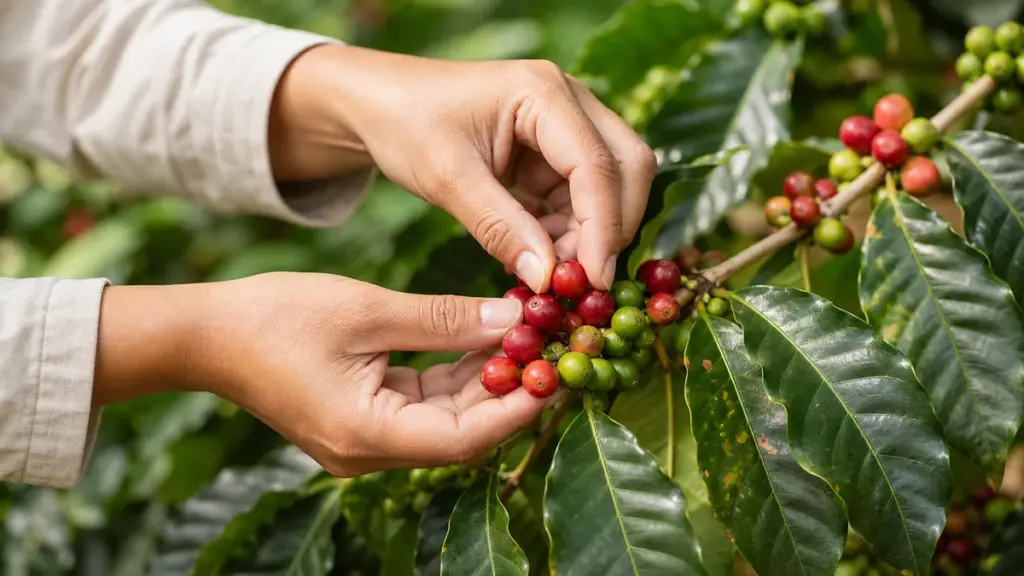
Boquete, Volcán and Renacimiento
Panama belongs within the wider Central American growing region, but its best-known specialty areas deserve a closer look. Terroir means the combination of growing conditions at a place, including climate, soil and exposure. In Panama, the useful scale is often a farm or hillside, not a whole district.
Boquete: more than a famous town name
Boquete lies on the eastern side of Volcán Barú. Panama’s tourism authority describes a district shaped by the volcano, the Cordillera Central and the Cerro Azul massif, with different soils and multiple microclimates.
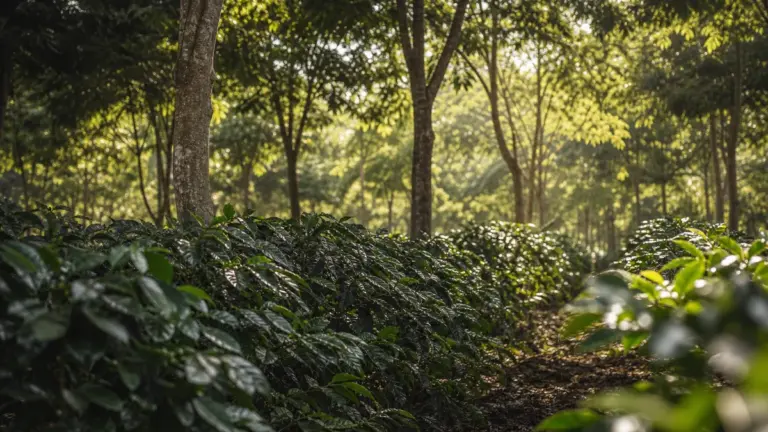
One characteristic feature is bajareque, fine misty rain. SCAP’s Berlina Estate profile identifies it as part of the growing environment. It helps explain why photographs of apparently sunny highland farms can also show drifting moisture, but it should not become a catch-all explanation for exceptional coffee.
Even neighbouring farms need not experience the same conditions. Hacienda La Esmeralda describes Jaramillo as humid throughout the year, whereas its Cañas Verdes farm has a distinct dry season. Damarli Estate describes its own location as one of Boquete’s driest microclimates.
That variation matters when reading a bag. “Boquete” tells you where to start, while the farm and plot tell you considerably more. Do not assume every Boquete coffee is delicate, intensely floral or even Geisha.
Volcán-Candela: the other side of Barú
Volcán-Candela is the other major highland area identified by SCAP around Barú. Panama’s official coffee circuit also groups farms under the district of Tierras Altas, so buyers will encounter both regional and administrative names.
This is not a secondary version of Boquete. The tourism authority’s account of Bambito Estate, for example, describes two protective ridges, springs and distinct microclimates within the property. Such details are more informative than a simple claim that one side of the volcano always tastes brighter or sweeter.
When comparing coffees, ask for the farm’s actual growing conditions rather than assigning a fixed flavour to “Volcán”.
Renacimiento: an essential part of the picture
Renacimiento should not disappear into a general description of farms around Barú. PROPANAMA identifies it separately, and SCAP documents producers in Santa Clara near La Amistad International Park.
Finca Bernardina is a useful example of Panama beyond the headline variety. Its profile lists Catuai, Caturra, Maragogype and Geisha, with Typica and Bourbon being introduced. It also reports washed, honey and natural processing.
This is a reminder that Panama’s diversity is not simply a collection of rare competition varieties. It includes established farming families working with several plants and several ways of preparing their harvest.
The varieties beyond Geisha
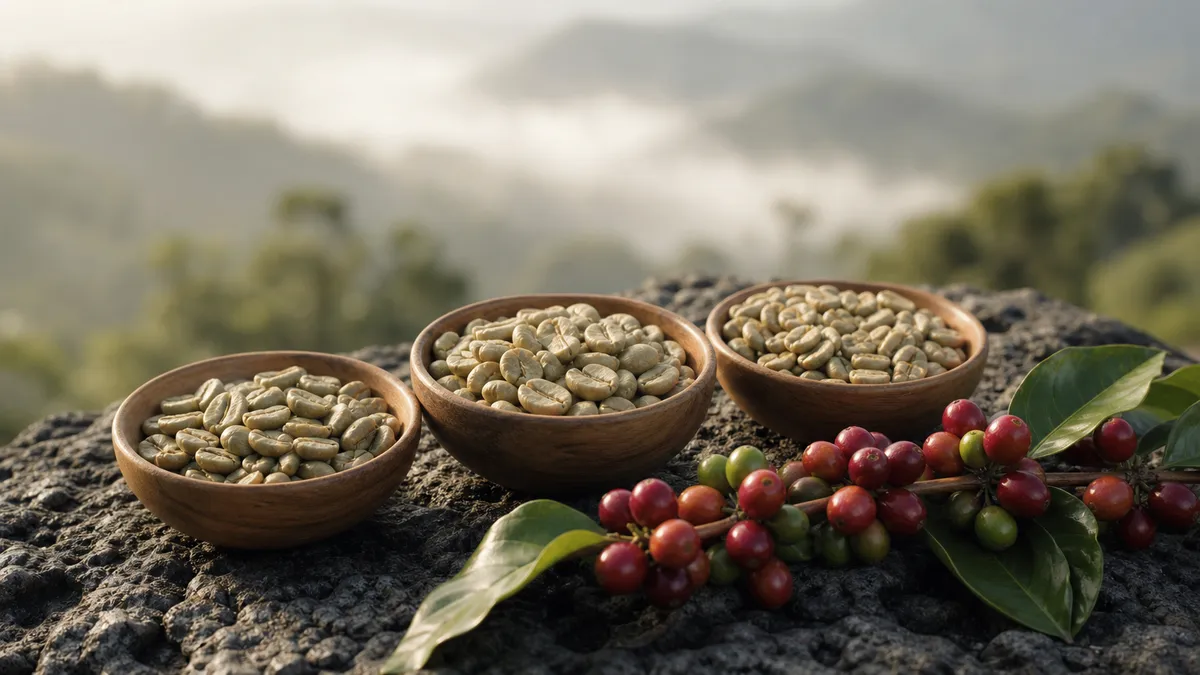
The varieties discussed here belong to Coffea arabica, the arabica species. A variety name describes the plant, not a guaranteed tasting note.
Catuai and Caturra
Catuai and Caturra deserve attention in their own right. World Coffee Research describes both as compact plants, with Catuai offering high yield potential. Their agricultural usefulness is part of their significance, not a reason to dismiss their cups.
Hacienda La Esmeralda maintains a separate Catuai collection, Diamond Mountain, alongside its Geisha offerings. Las Brumas and Finca Bernardina also list Catuai and Caturra among their plantings.
For a first purchase beyond Geisha, my recommendation is to seek a clearly identified washed Catuai or Caturra lot. It is a useful way to explore a producer’s work without making the rare-variety name the main event.
Typica, Bourbon and Pacamara
Typica and Bourbon remain part of Panama’s variety mix. SCAP’s farm profiles document them alongside newer specialist plantings, so “traditional” and “experimental” are not mutually exclusive descriptions of a farm.
Pacamara provides a different point of comparison. World Coffee Research identifies its very large beans and exceptional cup-quality potential, but also warns that the variety is not genetically uniform from one generation to the next. Large beans are therefore an identifying clue, not a quality certificate.
For the wider regional context, El Salvador is a useful companion read rather than a substitute for the Panamanian farm’s own information.
Chiroso and Laurina
Panama’s non-Geisha coffees have also attracted competition attention. SCAP reported that Black Moon Farm’s Constellation Chiroso achieved 94.13 points in the varietal category at Best of Panama in 2024, describing pronounced fruit and delicate floral characteristics.
Laurina is another documented part of the story. Hacienda La Esmeralda grows it at El Velo, and SCAP’s account of its 2025 auction lot describes sweetness, a silky texture, panela and white flowers.
These are specific producer and competition examples. They establish that the varieties are grown in Panama, not that they are widespread or that every lot will resemble those coffees.
Processing and the cup: what to expect
Processing is what happens to the harvested coffee fruit before the green beans are ready for roasting. It deserves as much attention as the variety name.
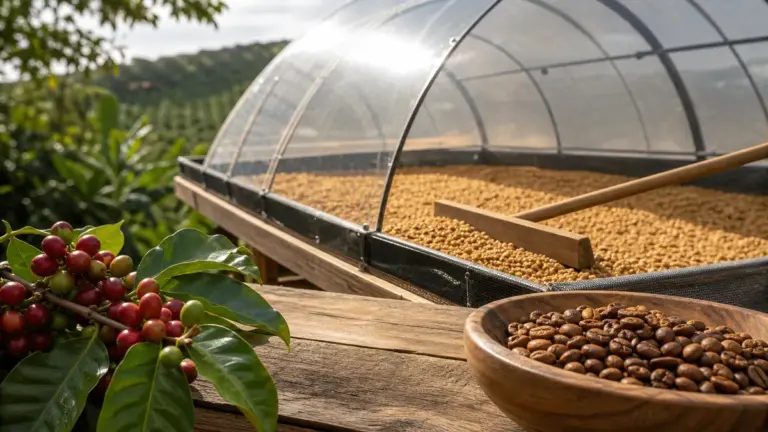
Washed coffees have the fruit pulp and sticky mucilage removed before drying. Hacienda La Esmeralda characterises its washed coffees as bright, sweet and clean. This makes a washed lot a sensible starting point when you want to compare varieties without choosing a strongly process-led style.
Natural coffees dry within the fruit. Esmeralda describes its examples as fuller-bodied, fruity and sometimes wine-like, with notes such as plum, prune and fig. These are producer descriptions, not promises attached to every natural coffee.
Honey processing retains some mucilage during drying. Finca Bernardina documents it alongside washed and natural production, illustrating the range available beyond the auction headlines.
Some farms also use controlled fermentation, including selected yeasts or oxygen-limited conditions. “Anaerobic” describes a fermentation environment, not a complete flavour specification. Ask what was fermented, how it was dried and what the finished coffee tastes like.
My practical buying rule is to choose the sensory direction first: clean and citrus-led, floral and tea-like, or fuller and fruitier. Then use variety and processing information to refine that choice.
How Geisha changed Panama’s reputation
Geisha’s importance needs acknowledging without allowing it to occupy the entire Panama story.
A short timeline establishes the essentials:
- 1953: World Coffee Research records the arrival of the Ethiopian-origin material at CATIE in Central America, registered as accession T2722.
- 1960s: CATIE distributed the material in Panama.
- 2004: Hacienda La Esmeralda dates its breakthrough at Best of Panama to this year.
- 2025: SCAP reported a new auction record for Esmeralda’s washed Geisha, sold as a 20 kg lot.
- 2026: The official auction platform lists Elida Geisha Torre, a washed Geisha offered in a 15 kg lot, as that year’s highest-priced lot.
There is a small discrepancy in the historical summaries: World Coffee Research dates Geisha’s rise to prominence to 2005, while Esmeralda’s own history and SCAP identify the breakthrough as 2004. This article follows the producer and competition organiser for the first competition breakthrough.
The important distinction is between a competition result, an auction result and ordinary production. A winning lot is a precisely selected coffee, not a representative sample of everything its farm, district or country produces. The 2026 auction’s leading result should not be confused with a new all-time record.
Production costs and the people behind quality
Production costs are better understood through the work involved than through an auction headline.
Producer accounts document selective picking, pruning, fertilisation, processing, drying and experimental lot preparation. Each activity needs labour, equipment or management. Keeping small lots separate adds further handling and record-keeping.
Harvest workers from Indigenous Ngäbe-Buglé communities are central to this account. Panama’s health ministry documents seasonal movement from the comarca towards coffee-growing areas including Tierras Altas and Renacimiento. SCAP’s Las Brumas profile identifies its harvest workforce as coming from Indigenous communities.
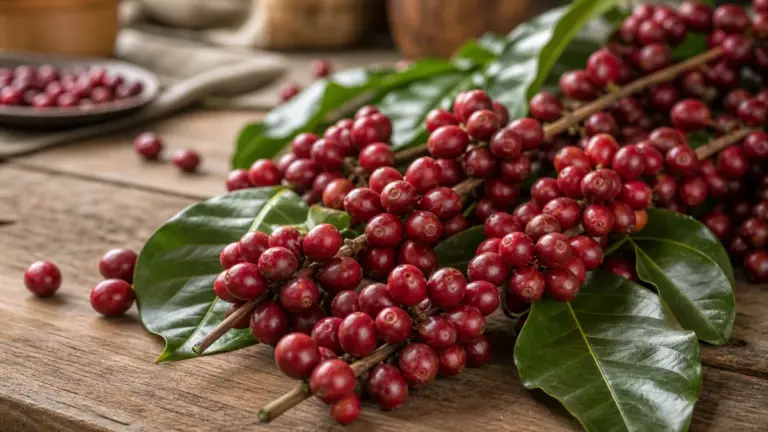
Selecting ripe cherries is skilled work. Esmeralda’s harvesting description stresses picking ripe fruit without disturbing cherries that are not ready. The quality narrative should therefore include the people making those decisions, not only the owner, variety and altitude.
For buyers seeking responsible sourcing, ask the roaster what evidence it has about employment conditions, accommodation and worker welfare. An impressive auction result does not, by itself, establish those conditions. Nor does a producer’s welfare statement amount to independent verification.
How to choose Panama coffee beyond the headlines
For UK buyers, I would prioritise traceability, sensory fit and clear processing information, in that order.
Use this short selection method:
- Identify the producer and area. Prefer a named farm and growing location over “Panama specialty coffee” alone.
- Check the variety. Establish whether the bag contains a single variety or a mixture.
- Read the process description. “Natural” and “anaerobic natural” are not interchangeable descriptions.
- Choose the flavour you actually enjoy. Do not select a floral coffee merely because its variety is celebrated.
- Check the precise lot claim. If a seller mentions Best of Panama, ask whether this is the actual competition lot or another coffee from the same producer.
For a revealing comparison, choose a washed non-Geisha and a washed Geisha from the same producer, if available. Keeping the producer and process similar makes the comparison more focused, although it is not a controlled experiment.
Panama coffee becomes much more interesting when the question changes from “Is it Geisha?” to “Which farm, which plant and what happened to the fruit?”
FAQ
Are Gesha and Geisha different coffees?
The spellings alone do not establish a difference. World Coffee Research says Gesha and Geisha are often used interchangeably, while also warning that genetically distinct plants have been called Geisha. For a traceable Panamanian lot, the producer’s planting records and the identity of the actual coffee matter more than the spelling on the bag.
Does volcanic soil make coffee taste mineral?
Do not read “volcanic soil” as a promise of a mineral flavour. SCAP identifies volcanic soils as part of Panama’s growing environment, alongside moisture, cloud cover and altitude. That describes cultivation conditions, not a direct transfer of rock flavour into the cup. Use the lot’s sensory description rather than treating geology as a tasting note.
Does a farm’s competition win mean its other coffees are award-winning?
No, an award belongs to the entered lot and category. A farm may produce several varieties, processes and separately managed lots, as Panama’s producer profiles demonstrate. Another coffee from the same estate can still be worth exploring, but it should not inherit a competition score or auction identity that belongs to a different coffee.
Where to go next
Read Central America to place Panama within the wider growing region. Continue with Honduras and Nicaragua to broaden your origin comparisons, then El Salvador for another useful perspective on Central American varieties.
Sources
Publication years are given where identifiable. Undated pages are marked accordingly.
- S1. PROPANAMA. Café, cacao y chocolate, undated. Official identification of the principal highland producing areas. URL: https://propanama.gob.pa/cafecacao/.
- S2. Panama Tourism Authority. 11 Coffee Farms in Boquete You Must Visit in Panama, 2026; and The Coffee Circuit, publication date unspecified, hosted in 2025. Geography, coffee-circuit elevations and farm microclimates. URLs: https://www.tourismpanama.com/blog/post/coffee-circuit-in-boquete-coffee-farms-to-visit/ and https://www.atp.gob.pa/wp-content/uploads/2025/03/7-El-Mejor-Cafe_ingles.pdf.
- S3. Specialty Coffee Association of Panama, SCAP. About Panama and Berlina Estate, undated. Highland geography, volcanic growing conditions and bajareque. URLs: https://scap-panama.com/about-scap/about-panama/ and https://scap-panama.com/berlinaestate/.
- S4. SCAP. Finca Bernardina and Las Brumas Panamá Coffee Farm, undated producer profiles. Varieties, processing, harvest timing and workforce information. URLs: https://scap-panama.com/finca-bernardina/ and https://scap-panama.com/las-brumas-panama-coffee-farm/.
- S5. SCAP. Hacienda La Esmeralda, undated producer profile. Farm differences, specialist varieties and El Velo plantings. URL: https://scap-panama.com/haciendaesmeralda/.
- S6. World Coffee Research. Coffee Varieties Catalog: Geisha (Panama), Catuai and Pacamara, live entries, undated. Botanical identity, plant characteristics, history and quality potential. URLs: https://varieties.worldcoffeeresearch.org/varieties/geisha-panama, https://varieties.worldcoffeeresearch.org/varieties/catuai and https://varieties.worldcoffeeresearch.org/varieties/pacamara.
- S7. Hacienda La Esmeralda. Home Page, Our Story and Harvesting, undated live pages. Current variety collections, the 2004 breakthrough, selective harvesting and processing descriptions. URLs: https://haciendaesmeralda.com/, https://haciendaesmeralda.com/our-story/ and https://haciendaesmeralda.com/hasvest-wash/.
- S8. SCAP. Geishas y Varietales estuvieron a la par en el BOP, 2024, and Café Geisha de Panamá sacude al mundo con impresionantes récords mundiales, 2025, retrieved in the official news archive. Competition and auction records, Chiroso and Laurina descriptions. URLs: https://scap-panama.com/category/news/page/3/ and https://scap-panama.com/category/news/page/2/.
- S9. Best of Panama. 2026 Auction: Timeless Resonance, The Trilogy, 2026. Official auction listing and leading lot. URL: https://app.bestofpanama.auction/.
- S10. Panama Ministry of Health, MINSA. Minsa Chiriquí en alerta por tránsito de recolectores de café, 2023. Seasonal movement of harvest workers. URL: https://www.minsa.gob.pa/centro-de-prensa/noticias/minsa-chiriqui-en-alerta-por-transito-de-recolectores-de-cafe.
- S11. Damarli Estate. Damarli Estate, undated live producer page. Farm-specific description of a relatively dry Boquete microclimate. URL: https://www.damarliestate.com/.
Researched using official Panamanian sources, World Coffee Research, producer records and the official auction platform; producer descriptions are distinguished from independent verification.
Last checked: November 2026