Costa Rican coffee is best known for a bright, balanced cup, often combining chocolate sweetness with fruit-like acidity. Its particular strength is variety within that familiar profile: washed coffees can be clear and precise, while honey-processed micromill lots can be rounder, silkier and more fruit-forward.
In short
- Start with a washed Tarrazú or West Valley coffee if you want to understand the origin before exploring experimental processing.
- Costa Rica’s eight classic coffee regions offer different growing conditions, not one guaranteed national flavour.
- Caturra and Catuaí are important arabica varieties; honey describes processing, not a variety or added ingredient.
- Micromills give producers greater control over processing and the identity of individual lots.
- The robusta story needs care: a 2018 decree created a conditional framework, but ICAFE’s December 2025 guidance still identified arabica as the only species authorised for national production and commercialisation.
What does Costa Rican coffee taste like?
A useful starting expectation is balance: enough acidity to make the cup lively, enough sweetness and body to keep it rounded. Chocolate is a recurring description in ICAFE’s profiles of the Central Valley and Los Santos, while its West Valley profile includes apricot or peach.
Here, acidity means the bright, fruit-like sensation in the cup, rather than a statement about how coffee affects your stomach. “Body” means its weight and texture on the tongue. A coffee can therefore be both bright and creamy, rather than fitting neatly into “sharp” or “smooth”.
Treat these descriptions as signposts, not promises. Region, variety and processing all help explain a coffee, but the named lot is the more useful buying unit.
For the wider geographical context, begin with Central American coffee. The separate guides to Guatemalan coffee and Honduran coffee cover those origins without reducing them to comparisons with Costa Rica.
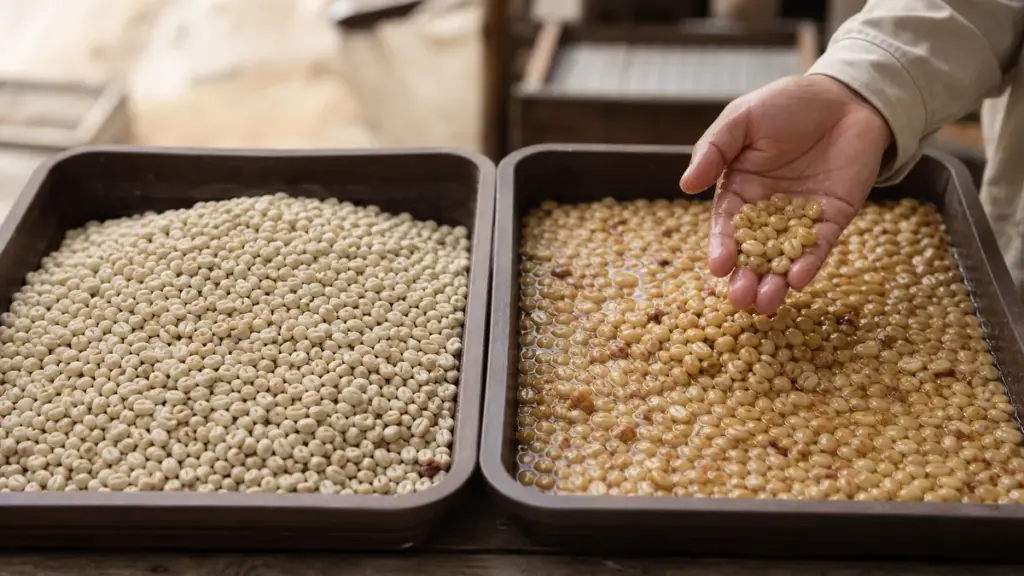
Costa Rican coffee fact panel
| Feature | Useful starting point |
|---|---|
| Species | Arabica dominates the established commercial sector. The conditional robusta framework is explained below. |
| Altitude | Representative published regional ranges extend from 600 metres in Guanacaste and Turrialba to 1,900 metres in Los Santos. These are regional guide figures, not absolute national limits. |
| Main varieties | Caturra and Catuaí are prominent in ICAFE’s regional descriptions. Other cultivated material includes F1 hybrids and selected specialty varieties. |
| Processing | Washed, honey and natural coffees are all represented; experimental processes also appear in competition lots. |
| Harvest months | ICAFE’s indicative harvesting calendar gives November to March for Tarrazú and West Valley, with earlier starts elsewhere. Actual timing varies by locality and season. |
| Typical cup | Balanced sweetness and acidity, with chocolate, stone-fruit or floral characteristics depending on region and lot. Honey processing can produce a silkier, fuller impression. |
The altitude, variety and cup descriptions above come from ICAFE’s regional profiles. Harvest guidance comes from its collection calendar; processing examples are confirmed by producer records and the 2026 Cup of Excellence results.
The regions: Tarrazú, West Valley and beyond
This guide follows ICAFE’s eight classic origin regions. These are useful names to recognise on a coffee bag, although production reports and individual sellers may use more specific localities or different administrative groupings.
| Region | Growing context | Cup expectations |
|---|---|---|
| Tarrazú and the wider Los Santos area | ICAFE’s Los Santos profile includes Dota, Tarrazú and León Cortés, with principal production described at 1,200 to 1,900 metres. | Pronounced but fine acidity, good body and a lightly chocolate-like flavour. |
| West Valley, or Valle Occidental | Includes places such as Naranjo, Palmares and San Ramón. ICAFE identifies Caturra and Catuaí as predominant varieties. | Balanced acidity and body, with apricot or peach among the institute’s descriptions. |
| Central Valley, or Valle Central | Coffee-growing areas in San José, Heredia and Alajuela, with volcanic influences. | A balanced cup, chocolate character and fine acidity. |
| Tres Ríos | A relatively small growing area east of San José, influenced by the Irazú volcano. | Fine, pronounced acidity with substantial body and good balance. |
| Orosi | Includes Orosi, Cachí and Paraíso, with both Atlantic and Pacific climatic influences. | A gentler profile, medium to light acidity and possible floral character. |
| Turrialba | Atlantic-influenced conditions and multiple flowerings contribute to an early, extended harvest. | ICAFE’s traditional profile describes lighter body and moderate acidity. |
| Brunca | The southern region encompasses Coto Brus and Pérez Zeledón, which should not be treated as identical growing environments. | Profiles vary: ICAFE describes more moderate characteristics in Coto Brus and stronger aroma, body and acidity in Pérez Zeledón. |
| Guanacaste | The classic coffee-region designation includes several northern and north-western growing areas beyond the province alone. | Generally mild and balanced in body, aroma and acidity. |
How to use those regional descriptions
Tarrazú is a sensible first reference point, but not a synonym for all Costa Rican coffee. Likewise, Los Santos is a wider geographical description, not merely an alternative spelling of Tarrazú.
West Valley deserves particular attention if you enjoy fruit character without wanting processing to dominate the cup. Its published regional description combines balance with stone-fruit notes, making it an interesting counterpart to a chocolate-led Central Valley lot.
None of this makes a regional name a quality grade. Use it to narrow your search, then look for the producer, variety, process and the roaster’s description of that particular coffee.
Why the micromill revolution matters
A micromill is a small coffee-processing operation, often associated with a producer or family business. Its importance is not simply its size: it can let growers retain control of their coffee after picking rather than handing over cherries for processing and sale within a broader regional offering.
Drop Coffee’s sourcing account places Costa Rica’s micromill shift in the early 2000s. It describes producers gaining more control over both processing and where their coffee was sold. World Coffee Research also identifies micromill processing as part of the country’s agricultural innovation.
That control makes differentiation possible. A producer can keep coffees separate, compare processing choices through tasting and present a recognisable lot to a buyer. ICAFE’s own producer accounts describe traceability and differentiated processing as reasons for innovation.
A producer example
Las Lajas offers a clear illustration. Its own history describes Óscar Chacón and Francisca Cubillo deciding during the 2000s to process coffee from their family’s farms. Its current process descriptions distinguish yellow, red and black honey through different drying and handling routines.
The useful lesson is producer agency, not that small equipment automatically makes better coffee. A micromill name tells you who processed the lot; it does not replace information about the farm, variety or method.
For the reader, this changes the buying question from “Is Costa Rica good?” to “What did this producer do with this coffee, and does that sound like something I will enjoy?”
Honey processing: what happens to the coffee?
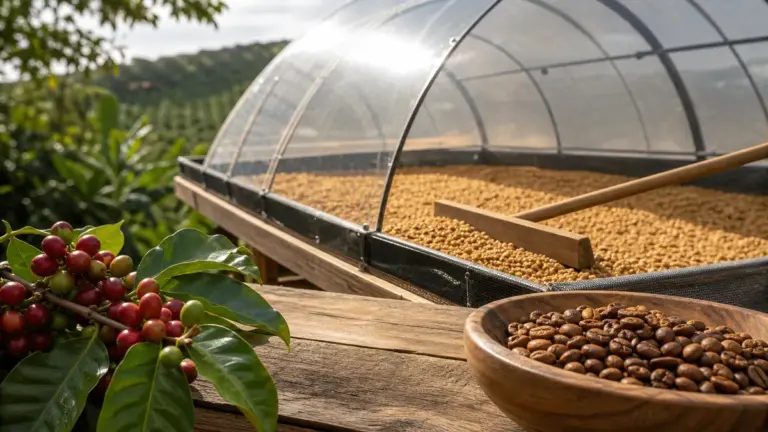
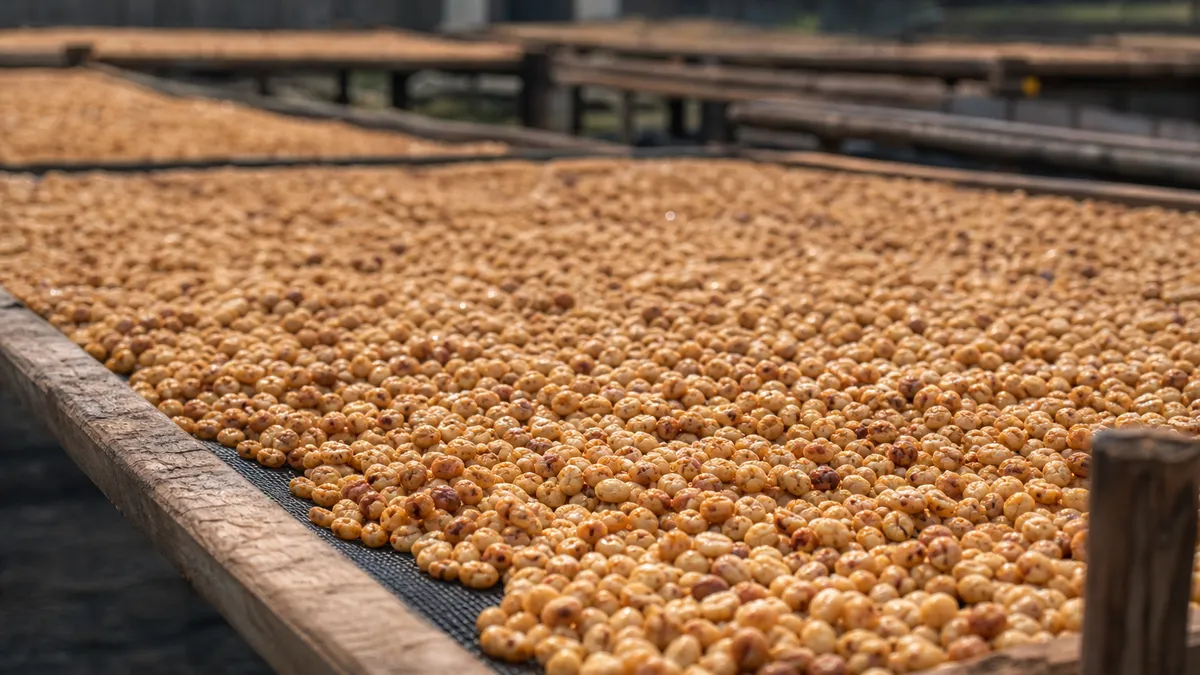
Honey processing involves removing the coffee cherry’s outer skin and pulp, then drying the seeds with some sticky mucilage, the fruit layer around them, still attached. The name refers to that sticky material, not to honey being added.
For comparison, washed processing removes the pulp and mucilage before drying. Natural processing dries the coffee within the fruit. These distinctions describe what happens after harvesting, not different coffee species.
The remaining mucilage and the way the coffee is dried create opportunities to change the resulting cup. Las Lajas describes its honey coffees using caramel, honey-like sweetness, silky or creamy body and fruit notes. Those are producer descriptions, not a guarantee that every honey coffee tastes that way.
What do the honey colours mean?
You may encounter white, yellow, red and black honey. They are useful process names, but should not be read as a universal numerical scale.
Some explanations emphasise how much mucilage remains. Producer descriptions also show that drying and movement matter: Las Lajas gives different handling routines for its yellow, red and black processes. Its black honey method includes a longer initial period without movement than its red honey method.
The practical inference is straightforward: ask what the mill actually did, rather than assuming every black honey follows the same recipe. Nor does a darker colour name mean a higher quality grade.
If you want to explore this difference, compare coffees from the same producer and harvest where possible. Keeping the variety and roast approach similar makes the process comparison more informative than comparing unrelated bags.
Is Costa Rican coffee legally arabica-only?
The familiar statement that “Costa Rica banned robusta in 1989” leaves out both earlier restrictions and later changes. The rules concern Coffea canephora, traded as robusta, rather than every species other than Coffea arabica.
The verified sequence is:
- 1988: Executive Decree 18135-MAG prohibited robusta planting, with an exception for research.
- 1989: Decree 19302 authorised removal of existing robusta plantings.
- 1998: Decree 27059-MAG maintained restrictions while allowing research cultivation.
- 2018: Executive Decree 41110-MAG, published on 16 May, created a conditional framework for robusta planting, cultivation, processing and commercialisation under ICAFE leadership.
- 2025: ICAFE clarified that the commercial conditions had not been completed. Its circular of 8 December reiterated that arabica remained the only species authorised for national production and commercialisation.
The distinction matters. The 2018 decree was not limited to research, but neither did it provide unrestricted permission for commercial planting. Its framework required approved planting material and official zoning, alongside controls to prevent mixing with arabica.
In February 2025, ICAFE specifically said commercial varieties had not been released and zoning still required approval and publication. The later December circular reinforced the operational position.
So avoid both shortcuts: an unchanged blanket ban is not the full legal history, and “robusta has been commercially legal since 2018” is not an adequate account of implementation.
Varieties and quality beyond the regional label
Caturra and Catuaí are important foundations of Costa Rican coffee, but they are not the whole story. ICAFE’s technical guidance also covers F1 hybrids, Venecia, Obatá and other planting material.
An F1 hybrid is the first generation from a deliberate cross between selected parents. World Coffee Research describes Centroamericano as an example, combining high productivity and leaf-rust resistance with strong cup-quality potential when well managed at high altitude.
This is a useful corrective to the idea that quality depends on preserving only familiar varieties. Farmers must consider disease, growing conditions and productivity as well as flavour.
Competition coffees show another part of the picture. Costa Rica’s 2026 Cup of Excellence results include washed, honey, natural and experimental entries. That diversity demonstrates possibilities, not a national flavour formula.
Choosing Costa Rican coffee in the UK
My suggested starting point is a clearly identified washed lot, followed by a honey coffee from the same producer if available. This gives you a reference for the coffee before asking processing to become the main point of interest.
Check the description for:
- Producer and mill: ideally distinguish the grower from the processing operation.
- Region and locality: look beyond “Costa Rica”.
- Variety: useful context, particularly when comparing lots.
- Process detail: especially where honey colours or experimental names are used.
- Roast date and intended use: ask the roaster which preparation the coffee suits.
Choose by the stated flavour profile rather than collecting processing labels. For Costa Rican coffee, the most rewarding information is often the combination of place, producer and method, not the country name alone.
FAQ
Is Costa Rican coffee always grown in volcanic soil?
No, volcanic soil is not universal across Costa Rica’s coffee regions. Although ICAFE describes volcanic influences in several regions, its Los Santos profile says soils there are predominantly sedimentary. “Volcanic” can therefore be useful geographical information, but it should not be treated as a compulsory feature or an independent guarantee of flavour.
What does SHB mean on a Costa Rican coffee bag?
SHB means Strictly Hard Bean, a trade classification associated with high-grown coffee. ICAFE uses the term in its Tres Ríos description. It provides background about the coffee’s growing and physical characteristics, but it is not a tasting score. For a buying decision, combine it with the producer, process and description of the actual lot.
Do competition winners represent everyday Costa Rican coffee?
No, competition winners are selected lots rather than a representative sample of national production. The 2026 Cup of Excellence results are useful evidence of the varieties and processing approaches producers are exploring. They should not lead you to expect every Costa Rican coffee to resemble an exceptional competition entry.
Where to go next
Read Central America for the regional framework, then Guatemala and Honduras to explore neighbouring origins in their own right. Nicaragua is another useful next step through the Nicaraguan coffee guide, extending your comparisons beyond Costa Rica’s micromill story.
Sources
-
ICAFE, regional coffee profiles, undated:
Los Santos, Valle Occidental, Valle Central, Tres Ríos, Orosi, Turrialba, Brunca and Guanacaste. Used for regional geography, altitude, varieties and indicative cup descriptions. -
ICAFE, “Preguntas frecuentes: Recolección”, harvest guidance referring to the 2020 to 2021 campaign, undated: collection calendar. Used as indicative seasonal guidance, not a forecast for a particular harvest.
-
ICAFE, “Buenas prácticas”, undated: producer accounts of processing and traceability.
-
ICAFE, “Política Cafetalera para la Siembra, Cultivo, Beneficiado y Comercialización del Coffea canephora”, 2024: policy document. Used for the history of restrictions and the conditional framework.
-
Costa Rican Legal Information System, Executive Decree 41110-MAG, 2018: decree record and Article 1.
-
ICAFE, Circular 3576, “Normativa vigente sobre Coffea canephora”, 21 February 2025: official clarification.
-
ICAFE, Circular 3634, “Mecanismos para resguardar la calidad, trazabilidad y prestigio del Café de Costa Rica”, 8 December 2025: official producer circular.
-
ICAFE, “Guía técnica para el cultivo de café”, 2020: technical cultivation guide. Used for planting material beyond Caturra and Catuaí.
-
World Coffee Research, “Costa Rica” and Arabica Coffee Varieties catalogue, “Centroamericano”, undated: country profile and variety entry.
-
Drop Coffee, Stephen Leighton, “Processing in Costa Rica”, 2022: sourcing account. Used for the micromill shift and a buyer’s account of processing differentiation.
-
Las Lajas, producer history and process descriptions, undated: Nosotros, Yellow Honey, Red Honey and Black Honey. Process details and sensory descriptions are the producer’s own accounts.
-
Alliance for Coffee Excellence, “Costa Rica 2026”, 2026: competition results. Used to confirm the range of processes and varieties represented among selected competition lots.
This article was researched through live searches of official regional guidance, legislation, ICAFE circulars, variety research and producer process records, with sourcing accounts used for the micromill context.
Last checked: November 2026