Guatemalan coffee often combines chocolate-like sweetness, lively fruit acidity and a satisfying body, although its growing regions produce distinctly different cups. Antigua is a useful starting point for balanced, sweet coffee; Huehuetenango offers brighter, sometimes wine-like profiles, while Atitlán is known for citrus acidity and fullness.
In short
- Anacafé, Guatemala’s national coffee association, identifies eight coffee-growing regions, not one national flavour.
- Its regional altitude profiles span approximately 1,310 to 1,980 metres above sea level. These are indicative bands, not boundaries covering every farm.
- Bourbon, Caturra, Catuaí, Pache and Typica are among the traditional arabica varieties grown in Guatemala.
- Washed processing predominates, but honey and natural lots offer further ways to explore the origin.
- Café Antigua is a protected geographical indication recognised in Great Britain. Ask for traceability to the producer, rather than relying on the regional name alone.
What does Guatemalan coffee taste like?
A useful starting description is sweetness with structure: chocolate in Nuevo Oriente, pronounced sweetness in Antigua, citrus in Atitlán, and fuller, wine-like fruit in Huehuetenango. Here, acidity means the bright sensation associated with fruit, while body means the weight and texture of the drink.
These descriptions are regional tendencies, not promises for every bag. Anacafé’s profiles are useful for deciding what to explore, but a named producer, variety and processing method give you a more specific coffee to judge.
For a first purchase, my suggestion is a traceable washed Antigua with tasting notes you already enjoy. If your interest is mainly fruit and brightness, compare it with a washed Huehuetenango. This is a tasting route, not a ranking of the regions.
Guatemala belongs within the wider growing area covered by our Central American coffee guide. Use that overview for neighbouring origins, rather than assuming that coffees grown across a national border will taste entirely different.
Origin fact panel
| Feature | Guatemala at a glance |
|---|---|
| Indicative altitude | Approximately 1,310 to 1,980 metres across Anacafé’s published regional profile bands, converted from feet and rounded |
| Traditional arabica varieties | Bourbon, Caturra, Catuaí, Pache, Pache Colís, Typica, Mundo Novo and Pacamara |
| Processing | Predominantly washed; honey and natural processing also practised |
| Harvest months | Roughly November to April nationally, with later picking in higher areas, according to producer-exporter Chalabal Estrella |
| Typical cup | Regional profiles include sweetness, chocolate, citrus, fresh fruit, floral aromas and wine-like notes, with differing acidity and body |
The altitude panel summarises Anacafé’s regional descriptions, not Guatemala’s absolute growing limits. The harvest window is likewise a planning guide: ask for the harvest information belonging to the actual lot.
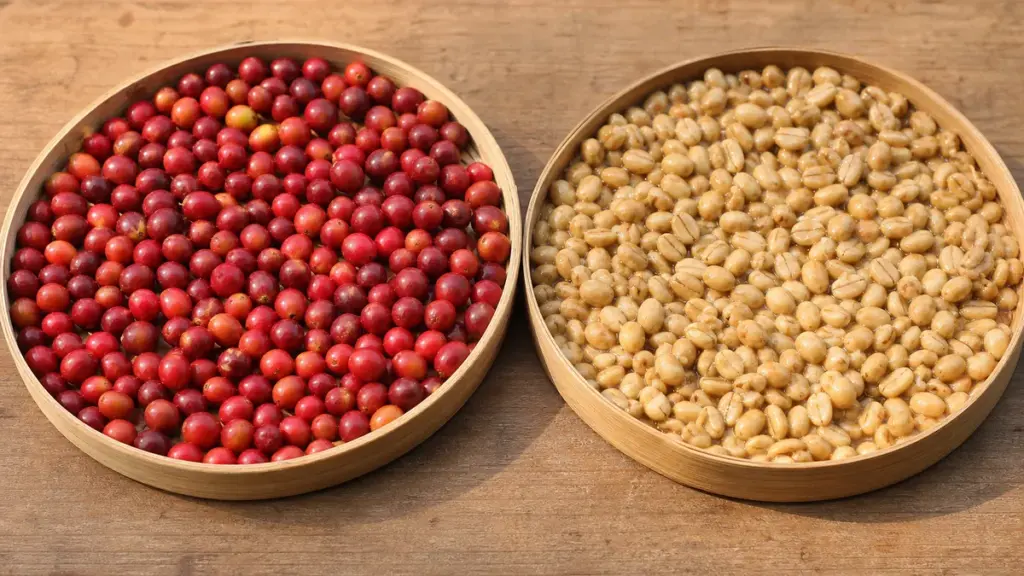
Guatemala’s eight coffee-growing regions
Anacafé’s eight recognised coffee regions are listed below. Some English-language bags use its promotional names, such as Highland Huehue or Rainforest Cobán, while others use the geographical name.
Altitudes are converted from Anacafé’s published feet using 0.3048 metres per foot, then rounded to the nearest 10 metres. They describe typical regional bands, not legal origin boundaries or maximum possible elevations.
| Region | Typical altitude, metres | Anacafé’s broad cup profile |
|---|---|---|
| Antigua | 1,520 to 1,710 | Sweet, balanced and richly aromatic |
| Huehuetenango, Highland Huehue | 1,520 to 1,980 | Intense acidity, full body and wine-like notes |
| Atitlán, Traditional Atitlán | 1,520 to 1,710 | Aromatic, bright citrus acidity and full body |
| Cobán, Rainforest Cobán | 1,310 to 1,710 | Fresh fruit, balanced body and pleasant aroma |
| Fraijanes, Fraijanes Plateau | 1,370 to 1,830 | Bright, persistent acidity and defined body |
| Nuevo Oriente, New Oriente | 1,310 to 1,710 | Balanced, full-bodied and chocolate-like |
| San Marcos, Volcanic San Marcos | 1,310 to 1,830 | Floral notes, pronounced acidity and good body |
| Acatenango Valley | 1,310 to 1,980 | Marked acidity, fragrant aroma and a clean, lingering finish |
Huehuetenango and Atitlán
Huehuetenango is one of Guatemala’s non-volcanic coffee regions. Anacafé describes it as the highest and driest of that group, with warm, dry winds from Mexico’s Tehuantepec plain helping protect the growing areas from frost. Its full-bodied, wine-like regional profile makes it a useful contrast with Antigua.
Atitlán’s coffee grows around the lake’s volcanic slopes. Anacafé identifies the daily Xocomil winds as an influence on the local microclimate, meaning the climate experienced within a relatively small growing area. Its combination of citrus brightness and full body is a reminder that a lively coffee need not feel thin.
Cobán, Fraijanes and Nuevo Oriente
Cobán offers a different growing environment: persistent cloud, rain and fine mist, with limestone and clay soils. This is a useful correction to the idea that all Guatemalan coffee grows in volcanic ash.
Fraijanes has volcanic pumice soils and a pronounced dry season that allows sun-drying despite frequent early-morning cloud and dew. Nuevo Oriente sits on a former volcanic range, but Anacafé describes its soils as metamorphic rock, distinct from regions with more recent volcanic activity.
San Marcos and Acatenango Valley
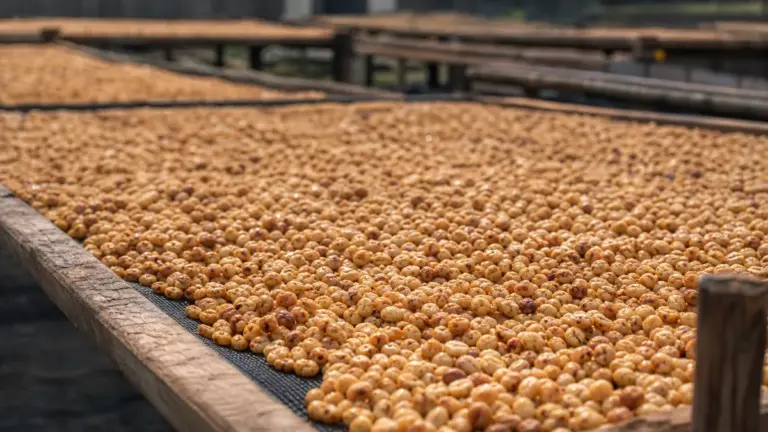
San Marcos is Anacafé’s warmest and rainiest coffee region. Unpredictable harvest-season rain means much of its coffee is initially sun-dried and then finished in mechanical dryers. Mechanical drying here is a practical response to conditions, not sufficient information on its own to judge a lot.
Acatenango Valley combines high-growing coffee, dense shade and volcanic soils. It deserves attention in its own right: do not treat Acatenango as another word for Antigua simply because the names occur together in descriptions of the surrounding volcanoes.
Antigua
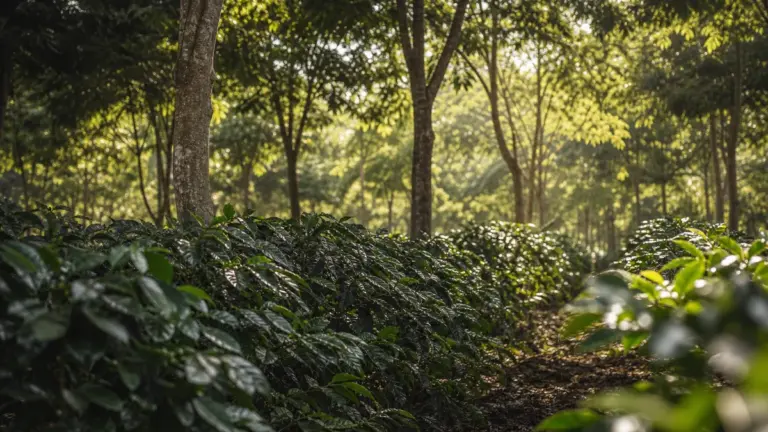
Antigua’s growing environment combines volcanic soils, sunshine, relatively low humidity and cool nights. The valley is surrounded by Agua, Fuego and Acatenango, and Anacafé describes particularly dense shade protecting coffee plants against occasional frost.
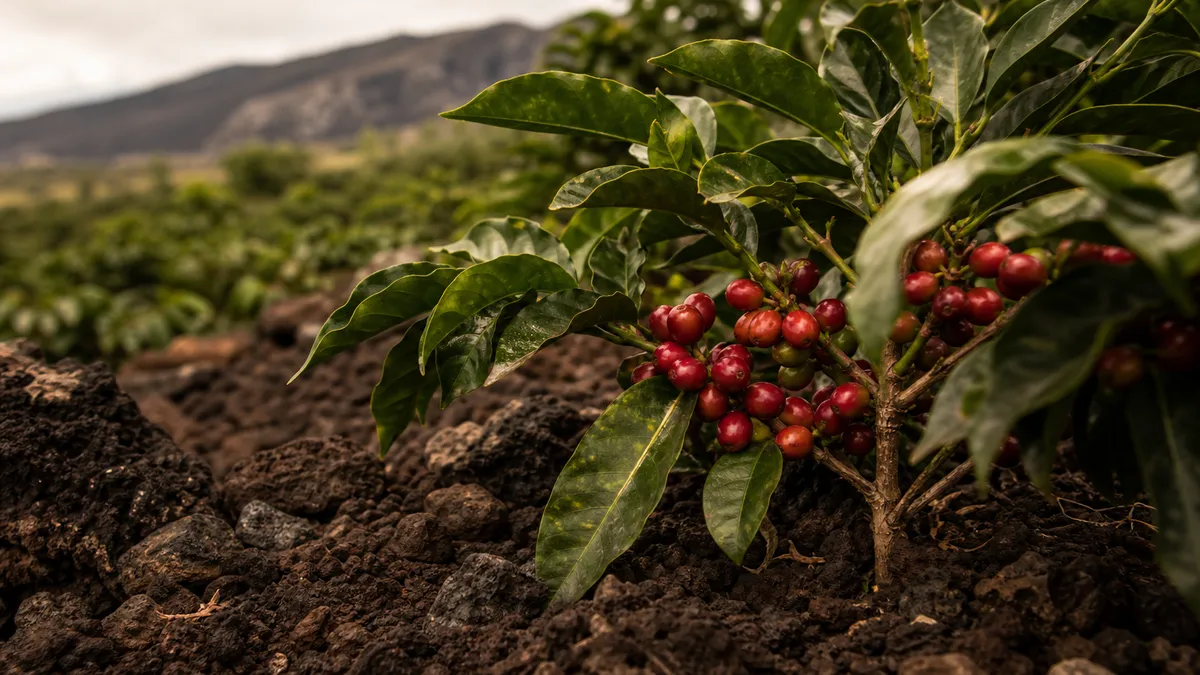
The soil’s pumice matters for a practical reason: this porous volcanic material retains moisture, helping offset relatively low rainfall. That is a more useful explanation than treating “volcanic” as a tasting note. It describes part of the growing environment, not a flavour you should automatically expect to identify.
Anacafé’s headline profile is sweet, balanced and aromatic. APCA, the Asociación de Productores de Café Genuino Antigua, also describes pronounced acidity combining with sweetness and chocolate flavour. Together, these give a useful expectation of balance rather than either blandness or aggressive sharpness.
When comparing Antigua lots, look beyond the region to the farm, variety and processing details. Try to compare like with like before attributing a difference to geography: two coffees with different varieties and processes are not a clean test of regional character.
Protected origin: what the name means
Café Antigua is both an established Guatemalan denomination of origin and a PGI recognised in Great Britain. These protections are separate from Antigua’s inclusion in Anacafé’s regional programme.
APCA’s 2022 presentation records certification of the Guatemalan denomination’s registration in December 2011, with the State of Guatemala as holder. It also documents an APCA collective mark and distinguishing hologram, alongside certificates of origin. These are related traceability tools, not interchangeable names for the legal protection.
There is a dating nuance: the EU’s published specification cites a Guatemalan registration decision dated 11 July 2008. That decision and the later registration certification are different documentary milestones, so neither date should be casually substituted for the other.
For Great Britain, Defra’s register lists Café Antigua as a PGI registered on 31 December 2020 under the UK-Central America association agreement. The UK scheme protects names sold in England, Scotland and Wales against misuse or imitation.
For buyers, this means the name is not simply a description available to any coffee styled after Antigua. Ask the roaster to identify the producer and explain the lot’s origin documentation. Protection supports authenticity and compliance with the relevant specification; it is not a guarantee that you will prefer the coffee.
The EU registration in 2026
The EU adopted the regulation registering Café Antigua as a PGI on 8 October 2026, publishing it on 15 October 2026. As checked on 2 November 2026, its entry into force was still pending under the regulation’s commencement provision.
The published EU specification requires growing, harvesting, wet-processing and drying within the defined area, but permits roasting and grinding elsewhere. A UK roasting address therefore does not, by itself, contradict the coffee’s Guatemalan origin.
Altitude and the SHB grade
SHB means Strictly Hard Bean, an altitude-related trade classification. Anacafé describes Guatemala’s strictly hard coffee as grown above 4,500 feet, approximately 1,370 metres.
You may encounter the threshold rounded to 1,350 metres in trade descriptions. That is not an exact conversion of 4,500 feet, so this article uses approximately 1,370 metres when explaining Anacafé’s figure.
SHB is not a tasting score, a variety or proof that a coffee comes from Antigua. Treat it as one piece of growing information, then look for the producer, region, processing method and lot details.
The regional table also shows why height alone cannot identify a cup. Several regions share overlapping altitude bands despite having different rainfall, soils and regional flavour descriptions.
Varieties and processing
Anacafé’s variety guide lists traditional arabicas including Caturra, Catuaí, Pache, Pache Colís, Bourbon, Mundo Novo, Pacamara and Typica. These are varieties within Coffea arabica, not separate coffee species.
Pache has a particular Guatemalan connection. World Coffee Research identifies it as a natural, compact-growing mutation of Typica, discovered in Guatemala in 1949. A Pache label tells you something about the plant’s genetics; “Antigua” identifies an origin, while “washed” identifies processing.
Washed coffee is the predominant style described by Guatemalan roaster Gento. In washed processing, the fruit is pulped and the sticky mucilage surrounding the seeds is removed before drying.
Other processes are well established enough for Anacafé to publish dedicated guidance:
- Honey: the cherry is pulped, then the seeds dry with mucilage still attached to their parchment covering.
- Natural: the whole coffee fruit dries with its outer layers intact.
Neither method tells the whole sensory story. For a useful comparison, seek coffees with clear process information and ask what the roaster actually tastes, rather than choosing on the process name alone.
Choosing Guatemalan coffee in the UK
My suggested buying order is traceability first, flavour preference second, regional reputation third. Begin with the producer or producer group, then check the region, variety, processing method and harvest information.
For an Antigua purchase, ask whether the supplier can substantiate the protected-origin claim. A familiar place name should invite a traceability question, not replace one.
For a home or workplace tasting, choose two traceable Guatemalan lots with contrasting regional descriptions. Keep the preparation consistent and record sweetness, fruit character, acidity and body separately. This makes the comparison more useful than simply deciding which tastes “stronger”.
When you want to widen the comparison, use our Costa Rican coffee guide and Honduran coffee guide for their own regional detail. The most useful Guatemalan coffee to buy is the one whose documented origin and described cup match what you want to drink.
FAQ
Does Guatemalan coffee contain robusta?
Yes, Guatemala grows both Coffea arabica and Coffea canephora, the species traded as robusta. Anacafé’s variety guide covers both, although the traditional varieties discussed in this article are arabicas. Do not treat “Guatemalan” as a species declaration: check the bag or ask the supplier if that distinction matters to your purchase.
Does “honey processed” mean honey has been added?
No, honey processing describes drying pulped coffee with sticky mucilage attached, not adding honey. Anacafé calls it a semi-washed process. It differs from natural processing, where the whole fruit dries intact, and from washed processing, where the mucilage is removed before drying.
Should every genuine Antigua retail bag have a hologram?
Do not use the presence or absence of a retail hologram as your sole authenticity test. APCA documents a distinguishing hologram for its collective mark and a certificate-of-origin system, but that does not establish a universal retail-packaging rule. Ask the roaster for producer identification and supporting origin information rather than judging an unfamiliar pack by appearance alone.
Where to go next
Read Central America to place Guatemala within the wider growing region. Continue with Costa Rica and Honduras to compare neighbouring origins through their own regions, producers and processing traditions.
Sources
- Anacafé, Guatemalan Coffees, regional profiles, undated, retrieved November 2026:
– Antigua Coffee
– Highland Huehue
– Traditional Atitlan
– Rainforest Coban
– Fraijanes Plateau
– New Oriente
– Volcanic San Marcos
– Acatenango Valley. - Anacafé, Guía de variedades de café, 2020. Variety guide.
- World Coffee Research, Arabica Coffee Varieties: Pache, online catalogue, undated. Pache entry.
- Anacafé, El Cafetal, edition 42, “55 años de la Anacafé y la dinámica de la caficultura 1960-2015”, 2015. Magazine PDF.
- Anacafé, Guía de buenas prácticas para la producción de café semi lavado y natural, undated. Processing guide.
- APCA, presentation on Café Antigua and its denomination of origin, hosted by IP Key Latin America, 2022. Presentation PDF.
- Defra, “Café Antigua”, protected food-name register entry, 2021; and “Protected geographical food and drink names: UK GI schemes”, updated 2024. Register entry; scheme guidance.
- European Commission, Café Antigua single document, C/2026/3343, 22 June 2026. Published specification summary.
- European Commission, Implementing Regulation (EU) 2026/2301, adopted 8 October 2026, published 15 October 2026, official text retrieved through Spain’s BOE. Regulation PDF.
- Chalabal Estrella, “How to buy and import green coffee from Guatemala: a guide for first-time buyers”, 24 September 2026. Producer-exporter’s harvest account.
- Gento Coffee Roasters, “Guatemalan Coffee Guide”, undated. Local roaster’s processing overview.
Regional descriptions were checked against Anacafé, variety information against Anacafé and World Coffee Research, origin protection against official records and APCA documentation, and harvest and processing context against the identified producer and roaster accounts.
Last checked: November 2026