Craft coffee subscriptions are regular deliveries of coffee from independent roasters, combining a convenient supply of beans with the chance to explore a roaster’s changing range. The key choice is between a familiar flavour profile and a discovery plan that puts different coffees in your parcel.
In short
- Choose the roaster’s flavour style before choosing the delivery schedule.
- Seasonal coffee and recently roasted coffee describe different stages of freshness.
- Check whether “rotating” means a new coffee every delivery or a repeating selection.
- Look for useful coffee information and brewing support, not just attractive packaging.
- Match deliveries to the coffee you actually use, with clear controls for skipping or pausing.
What makes a coffee subscription “craft”?
Here, “craft” describes subscriptions built around an independent roaster’s coffee selection, roasting approach and brewing advice. Treat it as a description to investigate, rather than a quality guarantee: the useful evidence is what the business tells you about the coffee and how well that information helps you enjoy it.
The appeal is a continuing relationship with one roaster’s judgement. Instead of choosing an unfamiliar bag from scratch each time, you let the roaster select within an agreed style, or repeatedly send a coffee you already enjoy.
That is different from a multi-roaster subscription, where a curator selects coffees from several roasting businesses. Neither model is automatically better. A direct subscription suits someone who likes a particular roaster’s approach; a multi-roaster service offers broader comparisons.
Our coffee subscription services hub explains the wider category. This guide concentrates on what makes a direct relationship with an independent roaster worthwhile.
How craft coffee subscriptions work
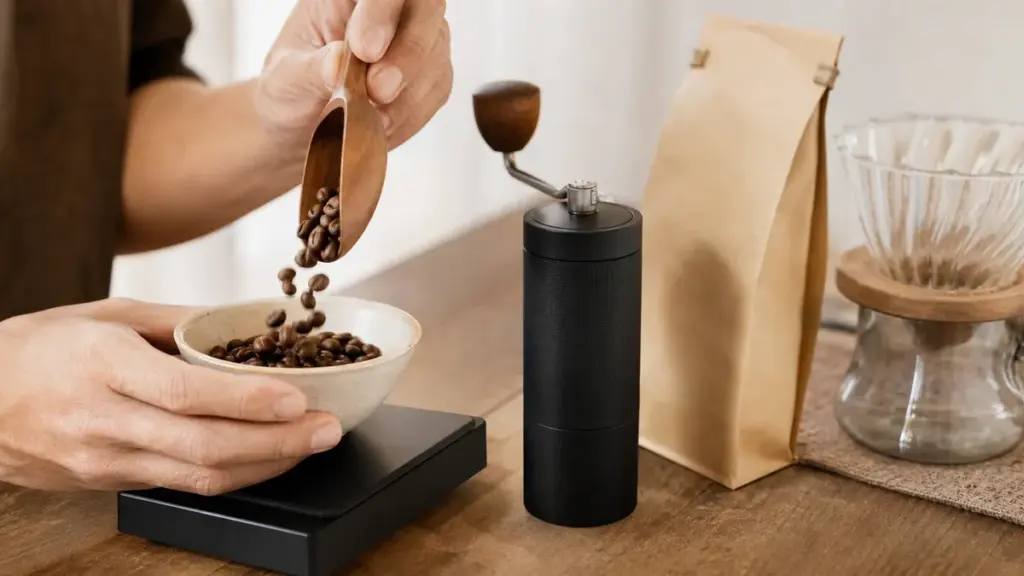
You choose a coffee or selection style, a quantity and a delivery interval. Depending on the service, you may also choose whole beans or ground coffee, an espresso or filter roast, and an ongoing or fixed-term arrangement.
Read the description of the selection carefully. A subscription can mean repeating the same named coffee, receiving different coffees within a familiar flavour range, or handing almost all selection decisions to the roaster.
Current roaster examples illustrate the distinction. North Star separates its Base Range subscription, described as smooth, sweet and balanced, from its Explore Range of more distinctive lots. Origin’s filter subscription rotates through three coffees, rather than promising an entirely unfamiliar coffee indefinitely. These are examples of service design, not a ranking or evidence of independent performance.
Account controls matter as much as the initial choices. Square Mile’s published subscription FAQ allows subscribers to skip, pause, move their subscription date and change frequency. Do not assume another service has identical controls, or that every gift plan works like an ongoing subscription.
Before subscribing, establish:
- Who selects each coffee.
- How often that selection changes.
- Whether you can exclude flavours or processing styles you dislike.
- When changes must be made before the next order is prepared.
- Whether the selected interval describes dispatch rather than guaranteed arrival.
For a fuller decision process, use choosing a UK coffee subscription.
Why seasonal coffees change
Seasonality begins at the farm, not at the roasting machine. Coffee harvests follow regional growing cycles, and processing, export preparation and transport take place before unroasted beans reach a roaster.
Royal Coffee’s buying guide explains that coffee commonly has a main annual harvest, with additional crops in some regions. It also describes the preparation and shipping stages between harvest and arrival. This is why a UK subscription’s seasonal releases should not be read as a calendar of what farmers are picking that week.
Two dates answer different questions:
- Harvest information concerns when the crop was collected.
- The roast date concerns when those unroasted beans were roasted.
A recently roasted bag does not, by itself, tell you the crop’s age. Ask for both kinds of information if following agricultural seasonality is part of the attraction.
Seasonality also does not require constant surprise. A roaster can change a blend’s component coffees while aiming to preserve its familiar character. Square Mile explicitly describes Red Brick this way: the ingredients change, while the intended profile remains centred on chocolate and caramel.
For discovery subscriptions, ask what happens when a lot finishes. Will the replacement stay within your preferred style, or could a restrained, sweet coffee be followed by something deliberately more unusual? Neither answer is wrong, but it should not be a surprise after delivery.
How to assess an independent roaster
Choose against stated criteria: flavour fit, coffee information, brewing support and practical flexibility. A compelling origin story is welcome, but it cannot answer those questions on its own.
Start with the flavour you want
Describe your ordinary cup before browsing. Do you want a rounded coffee for milk drinks, a bright black filter coffee, or a changing selection for tasting?
Look across the roaster’s current range rather than relying on one appealing description. Ask which subscription best matches your preference, and whether its boundaries remain consistent as coffees change.
If you dislike unexpected flavours, a repeat-coffee or familiar-profile plan is a more sensible starting point than an unrestricted discovery selection. That is a preference judgement, not a statement that adventurous coffee is better.
Look for information you can use
Useful details to request include the producing country and region, the producer or producer group where available, processing method, variety and roast date. Ask how much of this accompanies each delivery, rather than assuming the subscription’s introductory page will explain every future coffee.
Also ask what the roaster means by sourcing terms. Royal Coffee describes how producer relationships can involve exporters and importers performing essential work. “Direct” should therefore prompt a question about the actual relationship, not an assumption that nobody else participates.
Judge support by the answers
A helpful pre-subscription question is: “I use this brewer and prefer this sort of cup. Which plan would you suggest, and what should I adjust when the coffee changes?”
Look for a specific answer that acknowledges your equipment and preferences. No desk-researched guide can establish how consistently a roaster responds to customers, so try the contact route yourself before committing.
What useful brew guides should provide
A good brew guide turns an unfamiliar bag into a manageable starting point. Look for coffee dose, water quantity or espresso yield, grind guidance, temperature where relevant, and a target brewing time.
The measurements should be unambiguous. Filter ratios describe coffee to water by weight. Espresso ratios describe dry coffee dose to drink yield by weight.
For example, Square Mile’s published espresso guide uses 19 g in and 38 g out, a 1:2 ratio. That illustrates clear recipe writing, not a universal prescription for every coffee or machine.
Coffee-specific information is useful alongside the method. Square Mile says customers can retrieve coffee information cards through their order history, with blend cards updated when components change.
When assessing a subscription’s brewing support, look for:
- A starting recipe suited to your brewing method.
- An explanation of any recommended resting period after roasting.
- Advice on what to change if the result disappoints.
- A way to ask questions about the particular delivery.
For your own tasting notes, begin with broad descriptions: sweet or bitter, bright or rounded, light-bodied or full-bodied. World Coffee Research’s Sensory Lexicon provides a research-based vocabulary for coffee’s flavours, aromas and textures. You do not need to identify every fruit on a bag to decide whether you enjoy drinking it.
Assessing value and choosing your first plan
The useful comparison is not simply how much coffee arrives. Consider how much you will enjoy using, how well the selection matches your routine, and whether the supporting information earns your attention.
Compare services using the same criteria:
| Subscription approach | Main benefit | Main limitation | Best suited to |
|---|---|---|---|
| Repeat named coffee | Fewer selection decisions | Limited exploration | Drinkers who know their preference |
| Familiar-profile selection | Variety within an intended style | Individual coffees still change | Households seeking gentle variety |
| Roaster’s discovery selection | Exposure to unfamiliar coffees | Greater chance of a poor preference match | Curious drinkers happy to experiment |
| Method-specific selection | A clearer starting point for brewing | Less useful if you regularly switch methods | Dedicated espresso or filter drinkers |
These are editorial categories, not standardised product names. Check the actual subscription description against them.
A practical first-subscription checklist
- Measure your normal consumption. Record the grams you use over an ordinary week, including any coffee used while adjusting your grinder.
- Choose the experience. Decide whether the priority is reliable replenishment, gentle variety or deliberate discovery.
- Check equipment compatibility. Confirm the available grind options and whether the recommended coffee suits your brewer or machine.
- Inspect a sample information card or guide. Make sure the explanations are useful to you.
- Read the management rules. Locate the pause, skip and cancellation instructions before subscribing.
- Review after using the coffee. Note enjoyment, ease of brewing, unused beans and how much adjustment each delivery required.
If assessing the financial side privately, include coffee quantity, delivery, optional extras, introductory terms, later recurring terms and any minimum commitment. Divide the total you would pay over a chosen period by the amount of coffee you realistically expect to use. For workplace supply, request itemised written quotations rather than assuming a household subscription is the appropriate arrangement.
Our subscription box comparison is the next step when you want to compare named services rather than subscription styles.
Who craft coffee subscriptions suit
A direct-roaster subscription is a strong fit if you enjoy that roaster’s coffee and want someone else to handle regular selection or replenishment. It can also provide a useful learning routine: brew, taste, make notes and compare the next delivery.
My recommendation for beginners is to start with a clearly described flavour range, not the most surprising option. For experienced drinkers, the more revealing questions concern selection boundaries, crop information and the quality of coffee-specific guidance.
Be more cautious if your consumption changes sharply, you dislike adjusting brewing settings, or several people need the coffee to meet very different preferences. A repeat-coffee plan or occasional orders may fit better.
For a shared workplace, put consistency and machine compatibility ahead of novelty. Craft coffee subscriptions should make the coffee routine more rewarding, not create a queue of unfinished bags.
FAQ
Can I subscribe without owning a grinder?
Yes, provided the roaster offers ground coffee suitable for your brewing method. Availability differs: Origin lists grind choices for its filter subscription, while Square Mile states that its subscriptions use whole beans. Confirm the exact option before ordering, and ask for clarification if one grind description appears to cover several different brewers.
Are coffee tasting notes added flavourings?
Tasting notes describe perceived flavours and aromas, rather than serving as an ingredients list. World Coffee Research’s Sensory Lexicon documents sensory attributes present in coffee, including fruit, cocoa and floral characteristics. Nevertheless, check the product description and ingredients if you want to exclude added flavourings or coffees made with additional ingredients during processing.
Can I send a subscription as a gift without starting an indefinite plan?
Yes, some roasters offer fixed-term gift subscriptions. Square Mile distinguishes fixed-term subscriptions from ongoing arrangements and describes a recipient activation process for gifts. Before ordering, check who selects the coffee, whether the recipient can change delivery details, how activation works and whether the arrangement ends automatically.
Where to go next
Read Choosing a UK Coffee Subscription for a structured buying decision, then Top Coffee Subscription Boxes to compare named services. For more unusual discovery formats beyond a direct relationship with one roaster, explore unusual coffee clubs in Unique Coffee Clubs.
Sources
-
Square Mile Coffee Roasters, Coffee Subscriptions, undated live page, checked November 2026.
https://shop.squaremilecoffee.com/pages/coffee-subscriptions
Used for selection styles, seasonal blend composition and delivery intervals. -
Square Mile Coffee Roasters, Subscription & Rewards FAQs, undated live page, checked November 2026.
https://shop.squaremilecoffee.com/pages/subscription-faq
Used for account controls and gift activation. -
Square Mile Coffee Roasters, FAQ, undated live page, checked November 2026.
https://shop.squaremilecoffee.com/pages/faq
Used for information cards, whole-bean provision and fixed-term arrangements. -
Origin Coffee, Filter Coffee Subscription, undated live product page, checked November 2026.
https://www.origincoffee.co.uk/products/filter-coffee-subscription
Used for its three-coffee rotation and grind options. -
North Star Coffee Roasters, Subscriptions: All, undated live collection page, checked November 2026.
https://www.northstarroast.com/collections/subscriptions
Used for the Base Range and Explore Range distinction. -
Royal Coffee, Chris Kornman, Buying Green Coffee, 2024.
https://cdn.royalcoffee.com/wp-content/uploads/2024/07/11160626/Buying-Green-Coffee-Booklet.pdf
Used for harvest cycles, preparation, transport and sourcing relationships. -
World Coffee Research, Sensory Lexicon, version 2.0, October 2017.
https://worldcoffeeresearch.org/resources/sensory-lexicon
Used for the research basis of coffee sensory vocabulary. -
Square Mile Coffee Roasters, Espresso Brew Guide, undated document hosted in a May 2016 directory.
Used solely as an example of an explicitly stated dose-to-yield recipe.
This guide was researched from live roaster documentation, a coffee importer’s technical guide and World Coffee Research; service descriptions are supplier claims, not findings from first-hand testing.
Last checked: November 2026