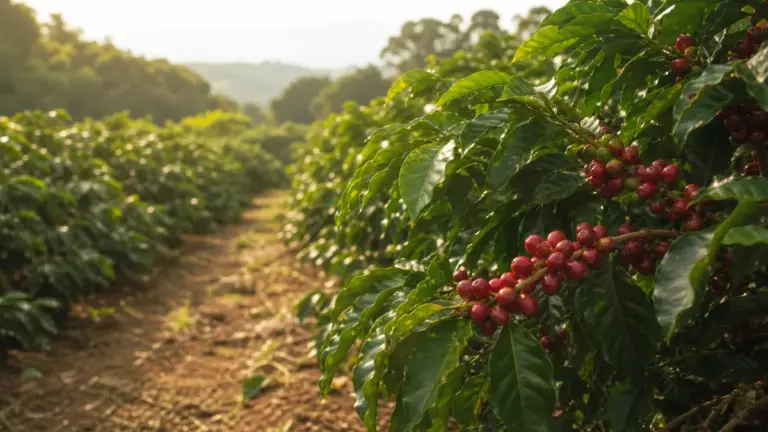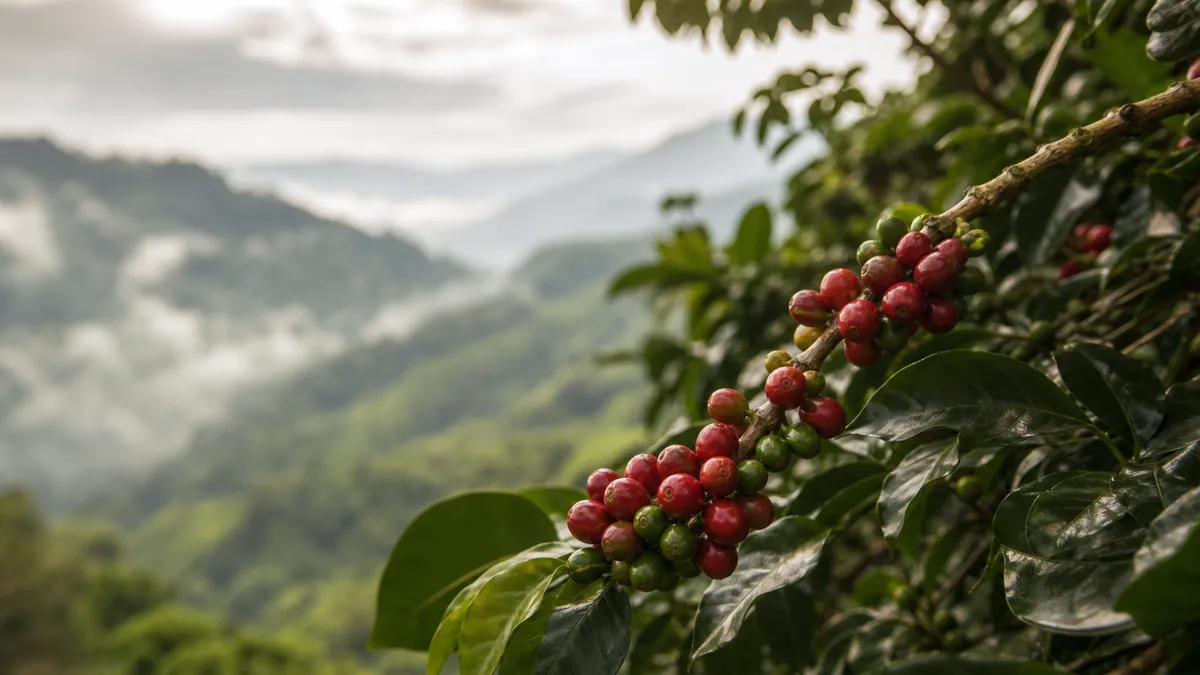
Coffee travel in Ethiopia, Colombia and Costa Rica offers three different ways to understand the drink: Ethiopian hospitality and coffee ceremonies, Colombian farming communities, and Costa Rican farm and mill visits. Choose the experience first, then check the harvest and the exact route, especially in Ethiopia and Colombia, where a famous coffee-growing name is not a guarantee of straightforward tourist access.
In short
- Ethiopia’s broad harvest window is October to January, but security checks must come before farm bookings.
- Colombia’s central coffee belt commonly has harvests in October to December and April to June; southern regions follow different patterns.
- Costa Rica’s Tarrazú and West Valley harvests generally run from November to March; the Central Valley can begin in October.
- Book farm access, guiding language and any working-mill visit explicitly. A tour demonstration does not guarantee machinery will be operating.
- Check current FCDO advice, every connecting road and your insurance cover before committing to an itinerary.
Choosing your coffee travel experience
The most useful distinction is between visiting somewhere that grows coffee and arranging a visit that explains it. Ask who will guide you, whether you will meet producers, and what you will actually see on your dates.
Our editorial recommendation is to begin with Colombia’s established central coffee route or a Costa Rican visitor programme if this is your first origin trip. Consider Ethiopian farm travel only after a particularly careful assessment of the proposed route.
| Destination | Main reason to choose it | Experience to prioritise | Planning caution |
|---|---|---|---|
| Ethiopia | Coffee’s place in everyday hospitality | A ceremony, followed by an arranged producer visit where appropriate | Assess each district and connecting road |
| Colombia | Farming communities and coffee heritage | A working finca, meaning a farm, with processing and tasting | Separate the central tourist route from southern extensions |
| Costa Rica | Following production from plant to finished drink | A farm and mill visit, ideally during harvest | Confirm live processing and local road conditions |
For the wider planning framework, start with coffee and travel. The sections below concentrate on what makes these destinations different.
Ethiopia: ceremonies, smallholder farms and careful route planning
Check the route before choosing farms
Safety and insurance check, November 2026: FCDO advises against all but essential travel to West Guji and Guji zones, except the Hawassa to Mega road. That road exception is not permission to make unrestricted farm excursions. FCDO also identifies conflict and travel disruption in Oromia, making the route to a farm as important as its location.
Before considering Sidama, Yirgacheffe or Jimma, obtain the farm locations and proposed roads from your operator, compare them with current FCDO advice, and ask your insurer to confirm cover for the itinerary and activities. Do not include Guji as a leisure farm extension while the applicable advice remains against all but essential travel. Travelling against FCDO advice can invalidate insurance.
Regions and visits to investigate
Subject to those checks, Sidama and Yirgacheffe are worth investigating for visits combining smallholder farms, washing stations and tasting with growers. A washing station receives coffee cherries and processes them towards the dried green beans that will later be roasted. Specialist operator itineraries advertise these combinations, but access and operations need direct confirmation.
Jimma, in south-western Ethiopia, offers a different focus. Published specialist itineraries combine local farms and forest visits with the area’s cultural history. Treat it as a separately planned journey, not an automatic addition to a southern route.
Guji belongs on a coffee education map, but the current warning makes it inappropriate to present it as an uncomplicated tourist recommendation. You can explore its coffees through tastings without visiting its farms.
Ceremonies and the best season
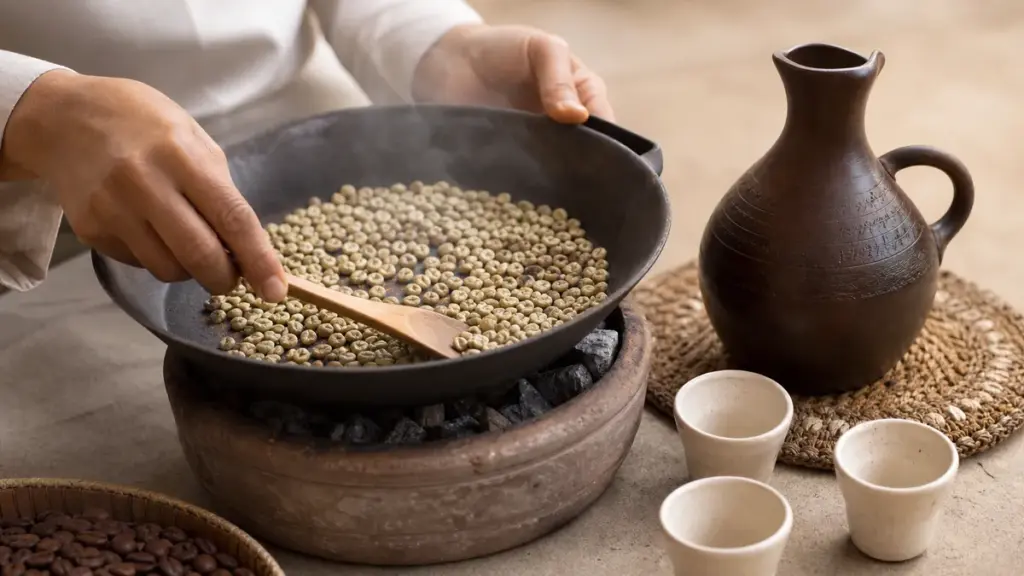
The Ethiopian coffee ceremony brings preparation and hospitality together. The Ethiopian Coffee and Tea Authority describes beans being washed, pan-roasted, ground with a pestle and mortar, and brewed before serving in small cups, traditionally through three rounds.
Accept an invitation as time with a host, not simply a demonstration to photograph. Ask permission before taking pictures, explain any need to leave early, and do not feel obliged to drink beyond your preference.
October to January is a useful broad harvest-planning window, supported by Ethiopian exporter guidance. Ask the actual producer when picking and processing are expected. A ceremony and regional tasting in Addis Ababa can be an alternative to rural travel, but the capital still requires its own security assessment.
Colombia: the central coffee belt and specialist southern trips
Check central and southern routes separately
Safety and insurance check, November 2026: read FCDO’s regional advice before booking any Colombian farm itinerary. In Nariño, it advises against all but essential travel to the South Pacific, Sanquianga and Telembi regions, with additional restrictions near the Ecuador border and specified exceptions. These warnings do not describe all of Nariño, but neither should they be ignored because a trip is coffee-focused.
For Huila or Nariño, obtain the precise municipality, farm access road and transfers, then confirm insurance cover. FCDO also warns about landmines in rural and remote Colombia, so do not improvise cross-country walks. The central coffee belt’s established tourism should not be used as evidence that a southern extension has equivalent conditions.
Start with the Eje Cafetero
For a first visit, investigate the Eje Cafetero, particularly Caldas, Quindío and Risaralda. Colombia’s Coffee Cultural Landscape, inscribed on UNESCO’s World Heritage List in 2011, recognises farming traditions, settlements and adaptation to mountainous terrain. It is a World Heritage property, not an intangible-heritage listing.
A practical approach is to choose one base and one substantial farm visit rather than collect several similar tours. Around Salento in Quindío, Finca Entrebosques advertises guided visits covering cultivation, harvesting, processing, drying and preparation.
Near Manizales in Caldas, Hacienda Venecia advertises plantation and mill visits, alongside separate cupping and barista activities. Its published information makes a useful distinction: mill machinery does not operate on Saturdays, Sundays or holidays, although the process is still explained. Confirm this when booking.
Huila, Nariño and harvest timing
Huila and Nariño deserve consideration for a more producer-focused trip, but our recommendation is to arrange them around confirmed local access rather than add them casually to the central circuit. Ask for a named host and a clear purpose, such as comparing coffees from neighbouring farms.
Colombia does not have one uniform national harvest. Cenicafé describes two crops in the central zone, commonly October to December and April to June, while southern areas have a principal harvest around April to June. Local variation matters, so do not assume “bimodal harvests” means two equally substantial crops on every farm.
Here, prioritise producer conversation, coffee-town heritage and tasting rather than expecting an Ethiopian-style ceremony.
Costa Rica: accessible visitor programmes and harvest-time mills
Central Valley, West Valley and Tarrazú
In the Central Valley, Hacienda Doka at Sabanilla, Alajuela, advertises a seed-to-cup visitor programme. It is a useful option to investigate when you want an organised introduction to cultivation and processing. Confirm the meeting point and transfers rather than assuming they are included.
For the West Valley, investigate Naranjo and its producer organisations. The municipality lists the Espíritu Santo Coffee Tour of Coopronaranjo as an introduction to production from harvest to serving. Contact the organisation directly for current availability.
In Tarrazú and the wider Los Santos area, consider a cooperative or smaller producer visit. Costa Rica’s official tourism material identifies Coopedota in Santa María de Dota and describes both cooperative-scale facilities and family micro-mills. A micro-mill is a small processing operation, but ask whether the visit includes the farm, the mill or both.
When to go and what to ask
ICAFE’s published regional calendar gives November to March for Tarrazú and the West Valley, and October to February or March for the Central Valley. These are estimated windows, not promises for a particular day.
Our suggested overlap for harvest activity and generally drier conditions is January or February, subject to farm confirmation. The tourism board places the broad dry season from mid-December to late April, while stressing local differences.
Ask whether cherries will be arriving, whether processing will be live, and whether tasting is included. Request a demonstration of local preparation if that interests you, rather than assuming every tour contains a formal ceremony.
Check Costa Rica’s FCDO advice too. Its road guidance warns that heavy rain can cause landslides and blocked roads. Avoid tying a rural visit tightly to an onward flight.
A checklist before you book
Use these steps once you have chosen a region. For more on selecting the visit itself, see tours in coffee-growing regions.
- Get an exact itinerary. Request farm names, municipalities, access roads, transport arrangements and the person responsible for each transfer.
- Check official advice yourself. Read FCDO warnings, regional risks, entry requirements and health guidance. Recheck before departure and during the trip.
- Confirm insurance in writing. Explain the destinations and activities, including rural walking, farm stays or picking demonstrations.
- Confirm what will be operating. Ask which activities are seasonal and whether your visit involves working production or an explanation using idle equipment.
- Clarify practical access. Ask about slopes, steps, toilets, seating, walking surfaces and guiding language.
- Get an itemised written quotation. Establish what is included, who hosts the visit, and the cancellation arrangements.
If these checks suggest a different destination, compare the broader choices in coffee destinations.
Getting beyond the standard farm tour
For a more revealing visit, ask the guide to follow one identifiable coffee through the process: who grew it, where it was processed, and whether the coffee being tasted comes from that producer.
Then ask for a comparison with a clear purpose. Two coffees from the same producer, prepared similarly, can make a more focused discussion than unrelated samples presented without context. Ask what changed between them and what remained the same.
This also helps distinguish a tasting from a sales presentation. A useful guide should explain what the comparison can show, what it cannot show, and which details are known rather than assumed.
Responsible tourism at origin
Choose visits with a named local host, clear consent and an explanation of who benefits. Ask how producers and guides participate in the programme rather than accepting “community-based” as sufficient evidence.
Treat farms as workplaces. Do not pick cherries, touch drying coffee or enter processing areas without permission. Ask about footwear-cleaning requirements before moving between farms, and respect any areas closed to visitors.
Photograph people only with permission, especially inside homes or during ceremonies. Let the host decide whether an invitation is appropriate for visitors, rather than pressing an operator to produce a supposedly more “authentic” encounter.
Finally, do not demand that a producer interrupt harvest work to fit an inflexible schedule. Responsible coffee travel in Ethiopia, Colombia and Costa Rica starts with accepting that the farm’s needs, local conditions and your safety take precedence over the itinerary.
FAQ
Do I need specialist coffee knowledge?
No, but explain your level when booking so the guide can pitch the visit appropriately. Ask for a clear account of how the fruit becomes a drink before requesting technical detail. One question you genuinely want answered is a better starting point than a list of specialist terms.
Can I enjoy a visit without drinking much coffee?
Yes, you can ask for a visit centred on farming, processing, aromas and conversation. Explain beforehand if you would prefer small tasting portions or no coffee at all. For a ceremony, discuss this politely with the organiser so your host understands your preference before serving.
Are these trips suitable for children?
Ask the individual operator rather than assuming that a farm tour is child-friendly. Describe the children’s ages and check walking distances, supervision near machinery, shaded rest stops and toilet access. Request an adapted visit if necessary, and do not make coffee tasting the condition for enjoying the experience.
Where to go next
Read Tours in Coffee-Growing Regions for help choosing the format of a producer visit. For a contrasting trip centred on drinking traditions, try Coffee Travel in Italy, Vienna and Istanbul, or use Coffee Travel in the UK to explore closer to home.
Sources
Publication years are given where available. Undated visitor and advisory pages were checked in November 2026.
-
FCDO, Ethiopia travel advice, including “Regional risks” and “Safety and security”, current November 2026.
https://www.gov.uk/foreign-travel-advice/ethiopia
https://www.gov.uk/foreign-travel-advice/ethiopia/regional-risks
https://www.gov.uk/foreign-travel-advice/ethiopia/safety-and-security -
FCDO, Colombia travel advice, including “Regional risks” and “Safety and security”, current November 2026.
https://www.gov.uk/foreign-travel-advice/colombia
https://www.gov.uk/foreign-travel-advice/colombia/regional-risks
https://www.gov.uk/foreign-travel-advice/colombia/safety-and-security -
FCDO, Costa Rica travel advice and “Safety and security”, current November 2026.
https://www.gov.uk/foreign-travel-advice/costa-rica
https://www.gov.uk/foreign-travel-advice/costa-rica/safety-and-security -
UNESCO World Heritage Centre, Coffee Cultural Landscape of Colombia, inscription 2011, current property record.
https://whc.unesco.org/en/list/1121/ -
Cenicafé, Oliveros Tascón, Ramírez and Sanz-Uribe, Cosecha del café, in Manual del cafetero colombiano, volume 2, 2013. Repository abstract retrieved through search.
https://biblioteca.cenicafe.org/handle/10778/4343 -
Ethiopian Coffee and Tea Authority, coffee information booklet, “Coffee Ceremony”, undated.
-
Ephtah Coffee, Supply Chain, “The Harvest”, undated. Producer/exporter guidance, not a farm-specific forecast.
https://ephtahcoffee.com/supply-chain/ -
Simien Ethiopia Tours, Sidama & Yirgacheffe Coffee; Jimma, the Coffee Kingdom; Coffee cupping & ceremony, undated. Used as evidence of advertised activities, not independent endorsement or safety assurance.
https://www.simienethiopiatours.com/tours/sidama-and-yirgacheffe-coffee
https://www.simienethiopiatours.com/tours/jimma-the-coffee-kingdom
https://www.simienethiopiatours.com/experiences/coffee-cupping-and-ceremony -
ProColombia, Colombia Travel, Paisaje Cultural Cafetero y reuniones, undated.
https://colombia.travel/es/reuniones/eje-cafetero -
Finca Entrebosques, official visitor website, undated.
https://www.fincaentrebosques.com/ -
Hacienda Venecia, official website and Coffee Tour, undated.
https://haciendavenecia.com/
https://haciendavenecia.com/coffee-tour/ -
ICAFE, Preguntas frecuentes: Recolección, regional harvest calendar, undated, with campaign material referring to 2020/21. Calendar text retrieved through search; used as estimated seasonal guidance.
https://www.icafe.cr/icafe/preguntas-frecuentes/ -
Costa Rican Tourism Board, Los Santos visitor brochure, undated; When to Visit, undated.
https://www.visitcostarica.com/sites/default/files/2024-10/SANTOS.pdf
https://www.visitcostarica.com/plan-your-trip/when-to-visit -
Hacienda Doka, official tour and location information, undated.
https://www.haciendadokatours.com/home
https://haciendadoka.cr/pages/tour-de-cafe-hacienda-doka-aventura-en-el-volcan-poas -
Municipalidad de Naranjo, Turismo, undated.
https://www.naranjo.go.cr/turismo/
Researched using current FCDO guidance, national coffee research and harvest information, official tourism publications and operators’ published descriptions, without first-hand testing or visits.
Last checked: November 2026