The art of coffee roasting is choosing how to apply heat to green coffee beans to create a particular flavour, then reproducing that result reliably. It combines scientific control of time, temperature and heat transfer with the roaster’s judgement about aroma, sweetness, acidity and bitterness.
In short
- Choose the intended cup character before choosing a roast colour.
- Heat reaches beans through hot air, contact with hot surfaces and thermal radiation; the balance depends on the roaster.
- Light roasting aims to limit dominant roast flavours, not leave coffee insufficiently developed.
- Dark roasting needs controlled heat and a deliberate stopping point, not simply a longer timer.
- Record the process, measure the result and taste it. A matching graph alone is not proof of matching flavour.
Roasting Styles
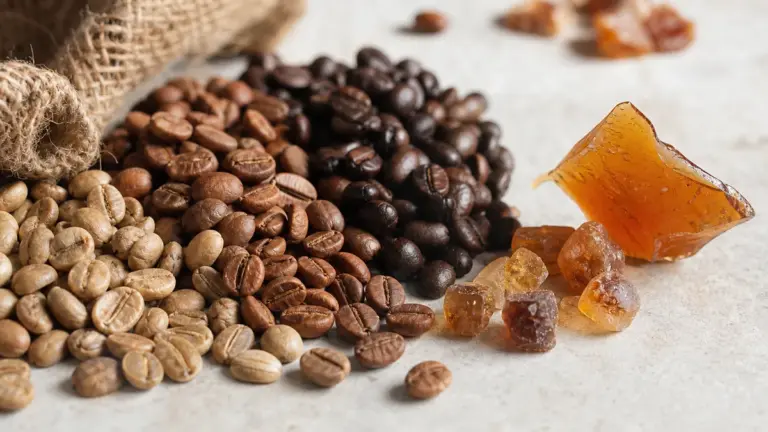
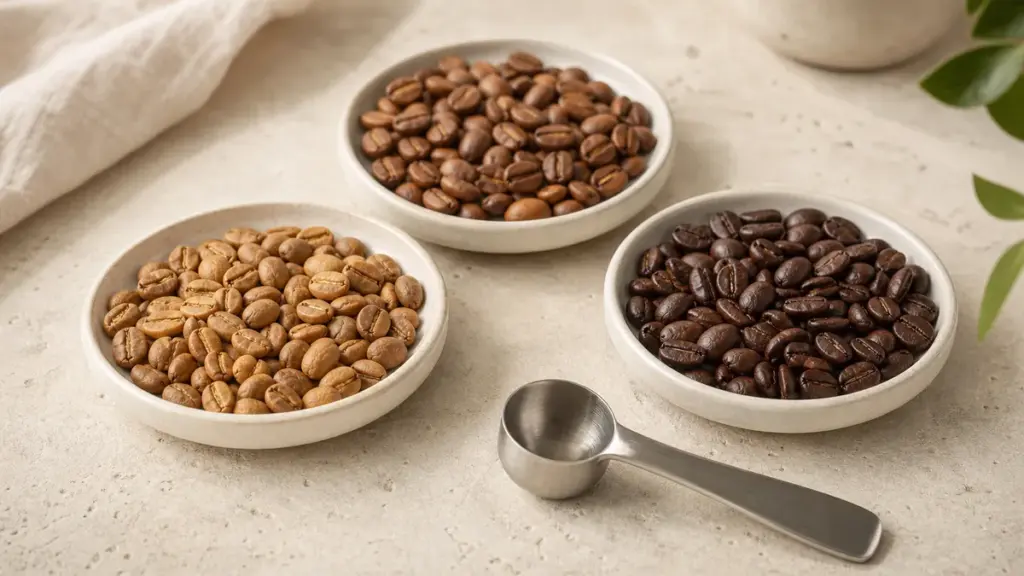
A roasting style is an intended sensory result: the balance of flavours and textures the roaster wants you to experience. Roast level describes how light or dark the coffee becomes, while a roast profile records its temperature over time. These ideas overlap, but they are not interchangeable.
For a beginner, the useful question is not “Which roast is best?” but “What do I want this coffee to taste like?” Start with the roaster’s flavour description, then use the roast label as supporting information rather than a guarantee.
The following comparison uses intended flavour emphasis and the judgement needed to achieve it. It is a guide to choosing a direction, not a set of universal colour boundaries.
| Style direction | Intended emphasis | Central roasting judgement | Who it may suit |
|---|---|---|---|
| Light | Brightness, fruit and clarity | Retaining these qualities without grassy, sharply sour underdevelopment | Drinkers seeking a distinct, lively cup |
| Medium | A balance between brightness and roast character | Finding a satisfying middle ground rather than merely splitting roasting time | Drinkers who want neither extreme |
| Dark | Pronounced roasted character and greater bitterness | Stopping before the intended intensity becomes an unwanted burnt character | Drinkers who actively enjoy roast-led flavours |
These are broad directions, not quality rankings. Nor should “light”, “medium” and “dark” be assumed to mean exactly the same thing between suppliers. The SCA’s roast-colour work identifies inconsistent measurement and terminology as an industry communication problem.
For the wider subject, begin with coffee roasting. The practical distinction to retain here is simple: colour describes an outcome, while craft includes deciding how to reach it.
How Heat Shapes the Roast
Roasting is not just warming beans until they look brown. Heat drives physical changes and chemical reactions, including browning reactions that contribute colour and aroma.
Heat reaches coffee through three mechanisms:
- Conduction: transfer through direct contact, such as beans touching hot metal.
- Convection: transfer from moving hot air to the beans.
- Radiation: transfer by thermal radiation from hot surfaces.
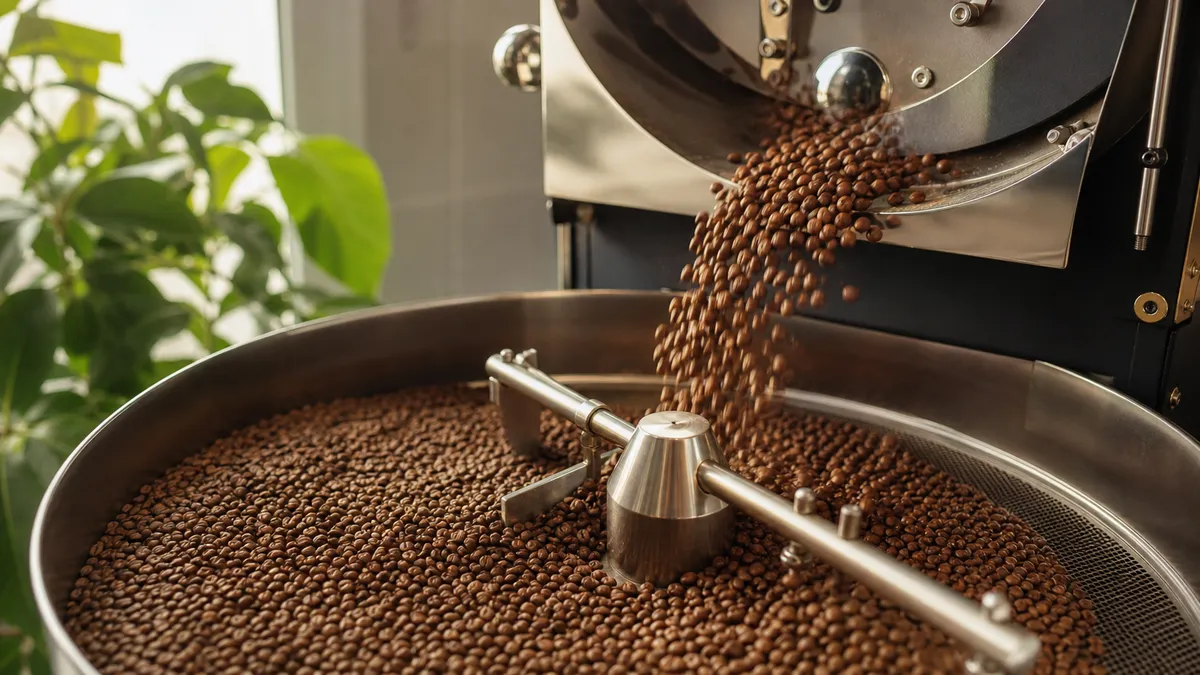
Different machines combine these mechanisms differently. A drum roaster can use hot air as well as contact with its heated surfaces; it should not automatically be described as a purely conductive machine. In a fluidised-bed roaster, moving hot gas both heats and suspends the beans.
Controls work together
The roaster’s adjustments influence the whole system. Heater power changes the energy supplied, while airflow changes the movement of air through the roasting chamber. Starting conditions also matter: ROEST’s operating guidance explains that a hotter chamber increases conductive heat transfer at the beginning of a roast.
Airflow is therefore not a universal “more is better” control. ROEST explicitly describes its effect as dependent on the overall profile and the coffee. A setting that works on one machine is not a transferable recipe for another.
The useful habit is to ask what a change actually does on the equipment in front of you. Record the adjustment, observe the response and taste the result before treating it as an improvement.
Light Roasting Trends
Light roasting is closely associated with an origin-focused approach: keeping dominant roasted aromas restrained so that differences between coffees remain perceptible. This is a roasting philosophy, not evidence that every market or drinker is moving towards lighter coffee.
One clear example is Tim Wendelboe’s published approach. The roastery describes seeking distinctive coffee flavours while avoiding both heavy roast aromas and the grassy flavours and sour acidity it associates with underdevelopment. That is a useful account of the intention, rather than independent proof that one style is superior.
Light does not mean unfinished
The difficult judgement is where to stop. Making the outside paler is not, by itself, a meaningful quality target. Ask whether the finished cup delivers the intended balance, rather than whether it qualifies for the lightest possible description.
Peer-reviewed research has examined deliberately altered roast profiles, including an underdeveloped treatment, using chemical analysis, trained tasting and consumer assessment. It supports evaluating development through the resulting coffee, not treating pale appearance as a certificate of quality.
For a drinker, the practical distinction is between brightness you enjoy and a cup that seems aggressively sour or grassy. Do not diagnose a roasting fault from one disappointing brew. Instead, compare the coffee under repeatable preparation conditions and ask the roaster what character they intended.
When choosing between bags, roast levels explains the labels in more detail. Here, the principle is to judge light roasting by its execution, not its lightness alone.
Dark Roasting Techniques
Dark roasting deserves the same deliberate approach. Research comparing roast colour and time found that darker or longer treatments generally increased bitterness and reduced perceived acidity, fruitiness and sweetness within the coffees tested. The roaster must decide how far that movement serves the intended drink.
A sensible dark-roast brief therefore describes a positive goal, not just “darker”. Specify the roasted character you want, the bitterness you find acceptable and the flavours you do not want. This gives tasting a purpose beyond confirming that the beans have changed colour.
Control the finish rather than chasing it
Plan the endpoint before the batch reaches it. Monitor the coffee’s progress and use the machine’s controls deliberately, rather than extending an unsatisfactory roast without a clear target.
First crack, the audible cracking of beans during roasting, is a useful process landmark. The time from its onset to the end of roasting is commonly called development time. It is a recording convention, not a claim that flavour development begins only at that moment.
The endpoint must also lead into a controlled cooling process. Manufacturer PROBAT warns that embers in roasted coffee can reach the cooling equipment and cause fire. Follow the machine’s operating, cleaning and emergency procedures; a desired dark colour is never a reason to disregard an overheating warning.
Avoid borrowing an endpoint temperature without its context. A temperature reading belongs to a particular sensor arrangement and process. It is more useful alongside that machine’s previous results than as a stand-alone instruction copied from elsewhere.
The Roaster’s Decisions
The central creative decision is the target. “Make this coffee good” is too vague to guide a useful experiment. “Retain its lively character while reducing an intrusive roasted finish” is a testable intention.
The next decision is what to change. Keep the question narrow enough that the result teaches you something. If several settings change together, you may prefer the next batch without knowing which adjustment helped.
Use this checklist as a development workflow, not an operating procedure:
- Write the sensory aim. Describe the desired acidity, sweetness, bitterness and finish in plain language.
- Identify the starting material. Give the green coffee a traceable lot reference and record the batch mass.
- Establish repeatable starting conditions. Use the machine’s recommended warm-up and between-batch routine.
- Record the roast. Log time, available temperature readings, control changes and observed milestones.
- Assess the result. Compare colour using the same method and taste samples under consistent conditions.
- Choose the next change. Keep, revise or reject the approach for a stated reason.
The SCA’s roasting curriculum pairs profile development with sensory assessment, roast logs and production quality control. That combination is more useful than treating either intuition or software as sufficient on its own.
For the mechanics of recording and interpreting the temperature path, continue to roasting profiles.
Consistency: Repeating the Cup, Not Just the Curve
Consistency means delivering an acceptably similar result, not merely replaying identical controls. ROEST’s technical explanation identifies changing room temperature and electrical supply variation as possible influences on power-controlled roasting. It also explains why sensor position affects what a temperature reading represents.
The production lesson is to check both process and product. Maintain the equipment, follow a repeatable between-batch routine and compare the finished coffee with an agreed reference. When the result drifts, investigate rather than immediately rewriting the recipe.
Why matching colour is not enough
Controlled sensory research found that roast colour predicted flavour more strongly than roasting time overall. However, changing time could still change flavour at the same colour, particularly when development time differed.
A separate experimental study found a consistent path of colour change across different profiles and coffees. That makes colour measurement valuable, but it does not turn colour into a complete description of taste.
Use several kinds of evidence together: the roast record, a repeatable colour assessment and tasting. Visual colour checks also need consistent conditions because illumination and viewing conditions affect perception.
This is where craft and science meet most clearly. Measurements help the roaster notice and repeat a process; tasting decides whether that process achieved the intended coffee. The art of roasting lies in making those decisions deliberately, then being willing to revise them.
FAQ
Can an automated roaster replace the roaster’s judgement?
Automation can repeat programmed actions, but it does not decide which flavour you should prefer. Treat it as a process-control tool: establish a target, check the finished coffee and adjust when needed. The SCA’s professional roasting curriculum includes software alongside sensory evaluation and quality control, rather than presenting software as their replacement.
Does research prove that most people prefer a medium roast?
No, the research cited here does not establish a universal preference for medium roasting. One consumer study preferred its balanced reference roast over deliberately altered treatments, but it used a particular coffee and experimental design. That finding cannot be extended to every coffee, roast style or group of drinkers.
Is “development time” the whole story of flavour development?
No, development time is a conventional label for the interval after first crack until roasting ends. It is useful for comparing batches, but earlier heat application also forms part of the roast profile. Read it alongside the complete process and the finished cup, not as an isolated quality score.
Where to go next
Read Coffee Roasting for the broader subject, then Roasting Profiles to understand how roasters record and adjust a batch. Use Roast Levels when comparing roast descriptions and deciding which direction best suits your taste.
Sources
-
Specialty Coffee Association, Coffee Skills Program Course Catalog, August 2021, Roasting module.
https://static1.squarespace.com/static/601aacb4a21207169ca47ad9/t/6127c422b5cbf75f98a96c31/1629996067918/SCA%2BCSP%2BCourse%2BCatalog.pdf -
Münchow, M., Alstrup, J., Steen, I. and Giacalone, D., Roasting Conditions and Coffee Flavor: A Multi-Study Empirical Investigation, Beverages, 2020, volume 6, article 29. University of Copenhagen research record.
https://researchprofiles.ku.dk/en/publications/roasting-conditions-and-coffee-flavor-a-multi-study-empirical-inv/ -
Bolka, M. and Emire, S., Effects of coffee roasting technologies on cup quality and bioactive compounds of specialty coffee beans, Food Science & Nutrition, 2020, volume 8. Article hosted by the University of Oregon.
https://pages.uoregon.edu/chendon/coffee_literature/coffee_lit_rev/2024_ep10_roasting_christopher_feran.pdf -
Anokye-Bempah, L. and colleagues, A universal color curve for roasted arabica coffee, Scientific Reports, 2025, volume 15, article 24192.
https://pmc.ncbi.nlm.nih.gov/articles/PMC12234775/ -
Giacalone, D. and colleagues, Common roasting defects in coffee: Aroma composition, sensory characterization and consumer perception, Food Quality and Preference, 2019, volume 71. University of Copenhagen research record.
https://researchprofiles.ku.dk/en/publications/common-roasting-defects-in-coffee-aroma-composition-sensory-chara/ -
Specialty Coffee Association, Developing Roast Color Standards for the Specialty Coffee Industry: A New Roast Color Measurement Approach, October 2025 white paper. Used for its account of measurement and terminology, not as an adopted standard.
https://sca.coffee/sca-news/coffee-decoded-4-roast-color -
ROEST, Adjustable roasting parameters, undated manufacturer operating guidance.
https://www.roestcoffee.com/support/getting-started/roasting-parameters-v2 -
ROEST, Introducing a new feature: Inlet Temperature Sensor, 2022 manufacturer technical explanation.
https://www.roestcoffee.com/blog/introducing-inlet-temperature-sensor -
Tim Wendelboe, FAQ, “Our Roasting Style”, undated roastery statement. Used as an example of its stated approach, not an independent performance assessment.
https://timwendelboe.no/pages/faq -
PROBAT, Temperatures under control, 3 January 2024, manufacturer safety explanation.
https://www.probat.com/newsroom/news/temperatures-under-control/
Research combined peer-reviewed roasting experiments, SCA educational material and primary manufacturer explanations; practical recommendations are editorial synthesis, not first-hand testing.
Last checked: November 2026