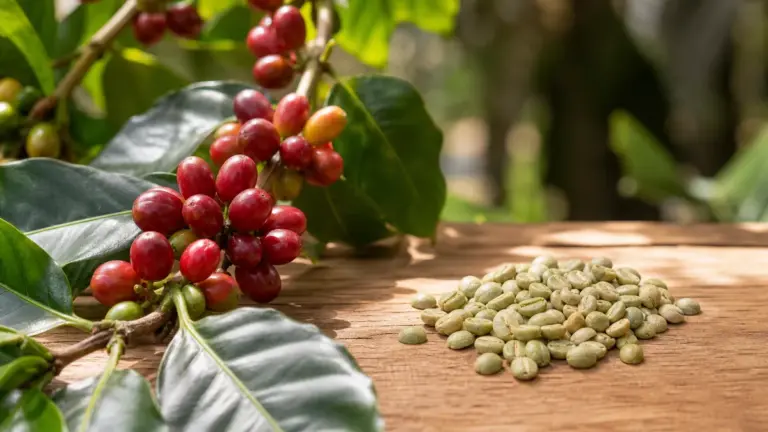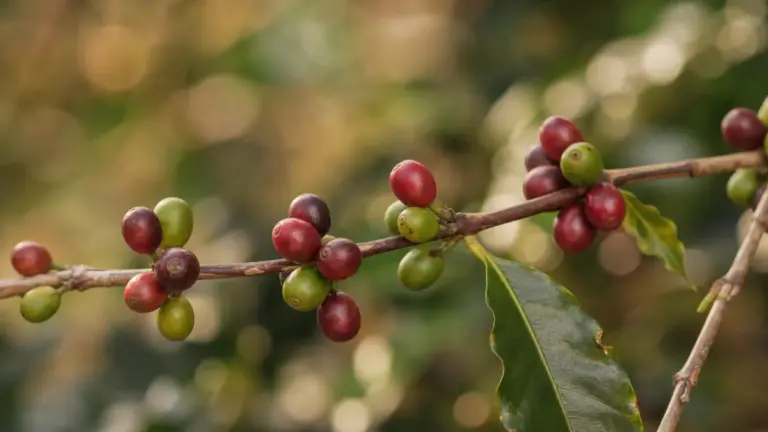
Zambian coffee is usually arabica with a clean, balanced cup, often combining citrus or berry notes with chocolate and caramel sweetness. It is a small, estate-led origin, so the farm, variety and processing method tell you more about an individual coffee than the country name alone.
In short
- Look first for a named estate and processing method, rather than relying on a general description of Zambian coffee.
- Documented northern estates grow coffee at approximately 1,300 to 1,650 metres above sea level.
- Catimor 129 is an important established variety; newer offerings include Marsellesa and Starmaya.
- May to September is the harvest window published for several northern estates, although calendars differ between farms.
- Fully washed coffee is the main starting point, but natural and honey-processed lots offer other expressions of the origin.
Zambian coffee at a glance
The panel below describes documented commercial coffees, not an exhaustive survey of every growing site. Altitude and harvest figures refer to identified estates, while flavour descriptions come from producers and their trading partners.
| Feature | What to expect | Evidence basis |
|---|---|---|
| Species | Arabica, Coffea arabica | Coffee Board of India’s ICO-sourced production tables and estate records |
| Documented altitude range | Approximately 1,300 to 1,650 metres above sea level across the northern estates described here | Northern Coffee Corporation estate booklet |
| Established varieties | Catimor 129, with F6, Castillo and Java recorded on particular estates | Northern Coffee Corporation estate records |
| Newer plantings | Marsellesa and Starmaya | Mount Sunzu’s published offerings |
| Processing | Predominantly fully washed; natural, honey and some anaerobic lots also documented | Algrano origin information and estate records |
| Harvest | May to September at the documented Northern Coffee Corporation estates; April to September at Munali | Estate and producer calendars |
| Broad cup profile | Balanced sweetness, citrus or berries, chocolate and caramel; individual lots vary | Olam’s estate tasting information and Algrano |
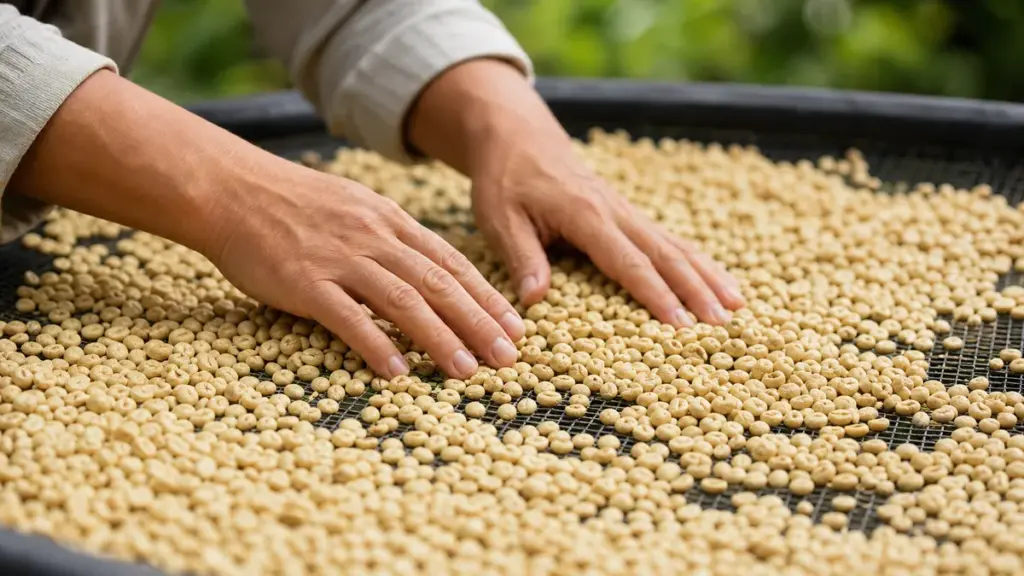
A washed coffee has its fruit removed before the seed finishes drying. Natural coffee dries within the whole cherry, while honey processing leaves some of the sticky fruit layer around the seed during drying. These are processing descriptions, not quality rankings.
For the wider geographical context, start with southern African coffee. Zambia deserves attention within that group, but it should not be treated as a flavour template for neighbouring origins.
Where coffee grows in Zambia
The northern coffee belt
The principal producing areas identified in Algrano’s origin information include Kasama, Mbala, Nakonde and Isoka. Together, they describe a northern and north-eastern coffee belt rather than one uniform growing environment.
Estate names are particularly useful here. Northern Coffee Corporation’s published records identify Kateshi, Isanya, Ngoli, Luombe and Nsunzu, with different elevations, plantings and processing arrangements. A bag carrying one of these names gives you a more precise starting point than “Zambia arabica”.
Mount Sunzu provides another example near Mbala. Its published offerings include Marsellesa and Starmaya, illustrating how Zambia’s variety mix extends beyond its established Catimor plantings.
Avoid confusing a mountain’s summit height with the altitude of the coffee fields. For buying purposes, ask for the elevation of the actual farm or lot, not the highest point in the surrounding district.
Beyond the north
Coffee also comes from farther south. Algrano identifies estates around Serenje and Lusaka, while Munali’s own account places its coffee production on the family-owned Mubuyu Farm south of Lusaka.
This matters because a country-wide description can hide meaningful differences between farms. Location, variety and processing should travel together on a useful origin label. If only the country is supplied, ask the roaster whether more detailed traceability is available.
Why estate farms matter
Zambia’s coffee industry is concentrated in a relatively small number of estates. “Estate-grown” means the coffee comes from an identified farming enterprise, but it does not automatically mean that every bag contains one variety, one picking date or one processing batch.
The distinction between an estate and a lot is worth understanding. An estate can offer several coffees from the same harvest, separated by variety, field, processing method or grade. The most informative description therefore identifies both the farm and what distinguishes the particular lot.
Northern Coffee Corporation’s records document irrigation, wet processing and central dry-milling arrangements. Its Isanya description, for example, explains that coffee is wet-processed on the estate before being prepared for export at Kateshi’s dry mill. A single-estate label does not necessarily mean every operation occurs within that estate’s boundary.
Water management is another recurring feature. Northern Zambia’s pronounced dry season makes irrigation important to many commercial farms, even though dry weather can help during the drying stage after harvest. The same season can therefore be useful for processing and demanding for the growing trees.
None of this makes estate coffee inherently better than smallholder coffee. For the reader, its practical advantage is the opportunity to ask specific questions: which estate, which variety, which process and which harvest?
Which varieties are grown?
Zambia is an arabica origin, but arabica is the species, not a complete description of the planting material. Variety names identify more specific genetic backgrounds within the crop.
Catimor 129 and established estate plantings
Catimor 129 appears repeatedly in Northern Coffee Corporation’s records. World Coffee Research identifies it as a selection from a Colombian Catimor breeding line derived from Caturra and Timor Hybrid 1343.
Catimor is a family of related breeding material, not one interchangeable variety. Where a supplier can identify Catimor 129 rather than simply “Catimor”, that is useful additional information.
F6, Castillo and Java also appear in the estate records. Their presence is a reason to read the individual lot description rather than assume that all Zambian coffee shares the same genetics.
SL28 is another variety associated with Zambian growing guidance. World Coffee Research describes SL28 as drought tolerant, with strong cup-quality potential but susceptibility to major coffee diseases. Those characteristics illustrate why variety selection is an agricultural decision as well as a sensory one.
Marsellesa and Starmaya
Mount Sunzu lists both Marsellesa and Starmaya among its offerings. They are distinct varieties, not alternative spellings or processing terms.
World Coffee Research places Marsellesa in the Sarchimor group. Starmaya is a first-generation, or F1, hybrid between Marsellesa and male-sterile Ethiopian or Sudanese landrace material.
The breeding detail is unusually relevant: professional seed producers can propagate Starmaya through managed seed production. Many other commercial coffee F1 hybrids depend on clonal multiplication instead. This does not guarantee a particular flavour, but it explains why Starmaya attracts attention beyond the tasting table.
Treat all these variety names as useful clues, not promises. A named variety cannot replace information about the farm, processing or the coffee actually offered.
Processing and the resulting cup
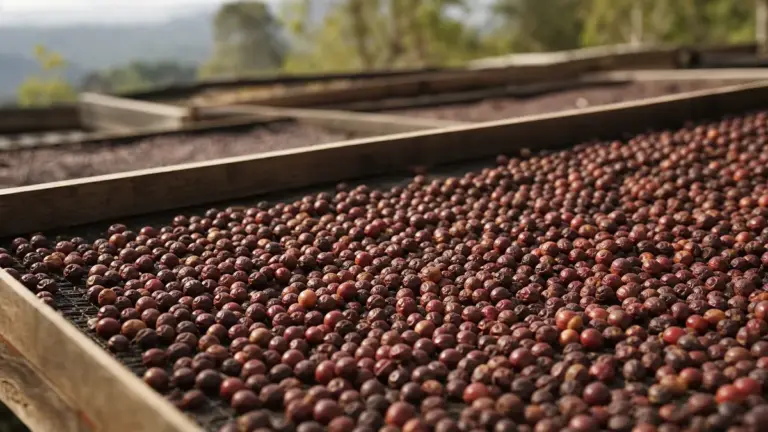
Fully washed coffee is the clearest starting point for understanding Zambia’s established commercial style. Munali describes selective hand-picking followed by pulping, fermentation, drying and removal of the protective parchment layer before grading.
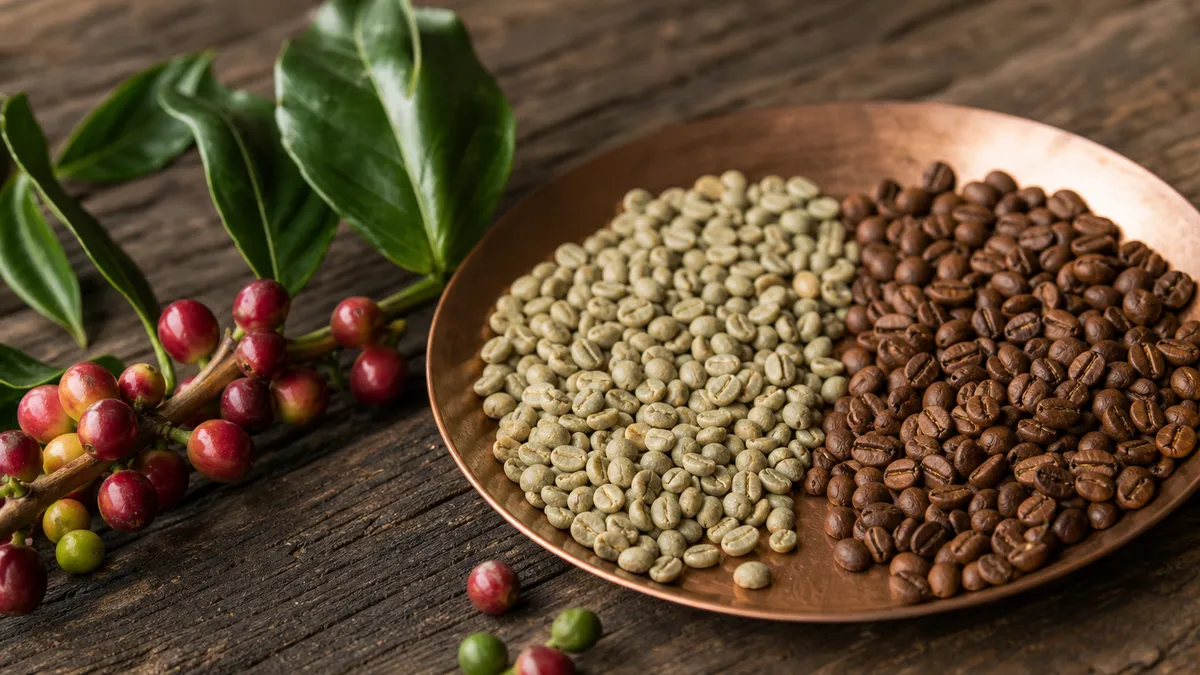
These stages serve different purposes. Pulping removes the outer fruit; drying prepares the seed for storage and subsequent handling; dry milling removes parchment and prepares the green coffee for sale. “Green coffee” means the unroasted seed.
Estate records also document natural and honey processing, alongside some anaerobic fermentation. Anaerobic here describes fermentation under restricted oxygen conditions, rather than a separate coffee species or variety.
The useful question is not whether one method is universally superior. It is what happened to this particular lot, and whether the resulting flavour suits you. A process name alone does not describe picking quality, drying care or the finished cup.
What does Zambian coffee taste like?
Olam’s published estate profile describes lemon, berries, milk chocolate and light caramel, with a balanced, sweet character. Algrano’s broader description similarly places washed Zambian coffees around citrus, fruit, chocolate and caramel, generally with medium body and noticeable acidity.
These are trade descriptions, not findings from our own tasting. They provide a sensible orientation, but not a national flavour specification.
Individual lots can move outside that outline. Covoya’s Kateshi natural from the 2023/24 harvest was described with lime-candy, boozy and toasted-nut notes. That is a useful reminder that “Zambian coffee” includes more than a gentle chocolate-and-citrus washed profile.
For a first purchase, my editorial preference would be a named washed estate lot with a clear tasting description. It offers a straightforward reference point before exploring more fermentation-led examples.
How much coffee does Zambia produce?
Zambia’s small scale is clear in published production data, but figures need their year and unit attached. A historical number should not quietly become a claim about the current harvest.
The Coffee Board of India’s July 2023 database reproduces ICO production figures as follows:
| Coffee-year column in the source | Production in 60 kg bags | Equivalent tonnes |
|---|---|---|
| 2017 | Approximately 22,000 | Approximately 1,320 |
| 2022 | Approximately 66,000 | Approximately 3,960 |
The conversion is bags multiplied by 60 kg, then divided by 1,000 to obtain tonnes. Because the source rounds production to thousands of bags, the converted figures remain approximate.
These figures establish scale and show an increase within that edition’s series. They are not a statement of Zambia’s 2026 output. Production and exports are also different measures: coffee grown during a reporting period is not necessarily shipped during that same period.
For readers, the useful conclusion is modest. Zambia is worth approaching through identifiable farms and lots, rather than expecting the breadth of choice associated with a much larger origin.
Choosing Zambian coffee in the UK
Use traceability and your preferred flavour style as the main criteria. Before ordering, look for:
- The estate name. It should identify the producer more precisely than the country alone.
- The processing method. Check whether the coffee is washed, natural, honey-processed or described more specifically.
- The variety, where known. Do not assume an estate grows only one.
- Harvest and roast information. Ask what period the harvest label covers and how the roaster recommends using the coffee.
- A useful flavour description. Choose the stated cup, not rarity for its own sake.
For an office purchase, ask the roaster about continuity of supply and a suitable replacement if the lot changes. That is a procurement precaution, not a claim that every Zambian coffee is difficult to obtain.
Keep neighbouring origins separate in your comparisons. Read Zimbabwe or Angola for their own growing histories, rather than transferring Zambia’s estate story to them. Likewise, Madagascar belongs in a wider regional exploration, not under the same assumed cup profile.
FAQ
Are chocolate and berry tasting notes added flavourings?
Not necessarily: in the source descriptions used here, they are tasting descriptors for the coffee. They describe perceived similarities, rather than an ingredient list. If you want unflavoured coffee, check the product’s ingredients and description separately, especially when buying a drink preparation rather than plain roasted beans.
Does a higher farm altitude guarantee better Zambian coffee?
No, altitude alone is not a quality guarantee. World Coffee Research’s variety guidance considers altitude alongside latitude, expected cup quality and disease performance. Use the actual growing elevation as supporting information, then assess the producer’s traceability and the roaster’s description of the lot rather than ranking bags by height alone.
Is an F1 hybrid such as Starmaya genetically modified?
No, “F1 hybrid” does not itself mean genetically modified. It describes the first generation produced by crossing parent plants. World Coffee Research identifies Starmaya’s parents as Marsellesa and male-sterile Ethiopian or Sudanese landrace material. Its distinctive seed-production system should not be confused with genetic engineering.
Where to go next
Read Southern Africa for the regional context around Zambian coffee, then Zimbabwe for a separate origin comparison. Angola and Madagascar are useful next reads for broadening that exploration without assuming that neighbouring countries share Zambia’s varieties, estate structure or flavours.
Sources
Producer and importer material is used for farm records and attributed flavour descriptions, not as independent verification of promotional claims.
-
Northern Coffee Corporation / Olam Specialty Coffee, Northern Coffee Corporation Ltd: Zambia, 2020 estate booklet. Estate names, elevations, varieties, processing and harvest calendars.
URL: https://www.olamspecialtycoffee.com/media/mageworx/downloads/attachment/file/z/a/zambia_nccl_2020_estates_a5_booklet.pdf -
Algrano, Source Green Coffee from Zambia, undated. Producing areas, estate concentration, water management and broad cup descriptions.
URL: https://algrano.com/origins/zambia -
Mount Sunzu, Mount Sunzu: Zambian Coffee, undated. Producer confirmation of Marsellesa and Starmaya offerings.
URL: https://mountsunzu.com/ -
Munali Coffee, Mubuyu Farm, undated. Family-farm identity and location south of Lusaka.
URL: https://www.munalicoffee.com/mubuyu-farm/ -
Munali Coffee, Our Coffee, undated. Harvest calendar and processing sequence.
URL: https://www.munalicoffee.com/our-coffee/ -
World Coffee Research, Arabica Coffee Varieties: Catimor 129, living catalogue, undated. Genetic background and lineage.
URL: https://varieties.worldcoffeeresearch.org/varieties/catimor-129 -
World Coffee Research, Arabica Coffee Varieties: SL28, living catalogue, undated. Drought tolerance, disease susceptibility and quality potential.
URL: https://varieties.worldcoffeeresearch.org/varieties/sl28 -
World Coffee Research, Arabica Coffee Varieties: Marsellesa, living catalogue, undated. Genetic grouping and altitude guidance.
URL: https://varieties.worldcoffeeresearch.org/varieties/marsellesa -
World Coffee Research, Arabica Coffee Varieties: Starmaya, living catalogue, undated. Parentage and seed propagation.
URL: https://varieties.worldcoffeeresearch.org/varieties/starmaya -
Olam Specialty Coffee, Zambia Estates, 2019. Attributed estate cup profile.
URL: https://www.covoyacoffee.com/mwdownloads/download/link/id/87 -
Covoya, Zambia Kateshi Estate Natural (2024), 2023/24 harvest listing. Lot processing, species and attributed tasting notes.
URL: https://uk.covoyacoffee.com/zambia-kateshi-natural-2426.html -
Coffee Board of India, Database on Coffee, July 2023, tables 9.1 and 9.2, source credited to ICO. Production figures, units and arabica classification.
URL: https://coffeeboard.gov.in/Database/DATABASE3_JULY2023.pdf -
Prospero Zambia, Growing Coffee in Zambia, undated PDF in June 2024 upload directory. Used only to confirm the inclusion of SL28 in Zambian growing guidance, not its production estimates.
URL:
This article was researched through live retrieval of producer records, trading-partner descriptions, World Coffee Research’s variety catalogue and ICO-sourced production tables; no first-hand tasting or farm inspection is claimed.
Last checked: November 2026