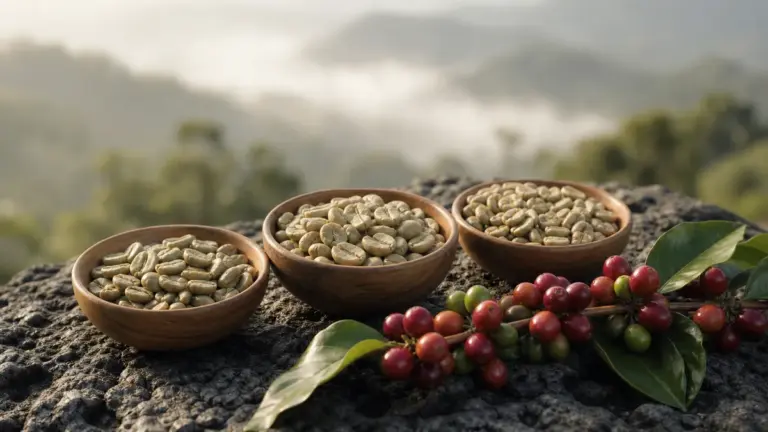
Nicaraguan coffee is often sweet and balanced, with chocolate, caramel and citrus flavours, although individual lots can be distinctly floral or fruity. Much of its arabica comes from the northern departments of Jinotega, Matagalpa and Nueva Segovia, where producers range from smallholders working through co-operatives to family-run estates.
In short
- Start with a washed lot if you want a useful introduction to the origin, then explore honey and natural processing.
- Jinotega, Matagalpa and Nueva Segovia are the key regional names to recognise, but none guarantees a particular flavour.
- Caturra and Bourbon are established varieties; Nicaragua also grows Pacamara, Maracaturra, Java and newer selections such as Marsellesa.
- Shade-grown coffee is an established farming tradition, not proof by itself of organic certification or a particular environmental outcome.
- Look for the producer or co-operative, process, harvest and tasting description, rather than choosing by country name alone.
What does Nicaraguan coffee taste like?
Sweetness and balance are useful starting points. Chocolate and caramel appear in producer descriptions, alongside citrus, yellow fruit and floral aromas. Body, the weight and texture of the drink in your mouth, can range from relatively light to creamy or silky.
There is no single national flavour, however. Nicaragua’s national coffee development commission, CONATRADEC, describes Matagalpa coffee in terms of sweetness, citrus acidity and a structured medium body. Its Jinotega description emphasises sweetness and a creamy medium body, while Nueva Segovia is characterised by sweetness, balance and medium acidity.
Those are regional sketches, not tasting promises. PRODECOOP’s own descriptions illustrate the variation within a producer organisation: one washed export line has chocolate and caramel notes, while another is described as floral and citrus-led, with yellow fruit and a silky texture.
For a first purchase, my suggestion is a washed coffee whose roaster describes chocolate or caramel alongside a fruit note you enjoy. That gives you a clear preference to follow without expecting every Nicaraguan coffee to taste alike. The wider Central American coffee guide puts the origin in its regional context.
Nicaragua coffee fact panel
The altitude band below is indicative, not a claim that every Nicaraguan farm falls within it. Harvest months likewise describe documented northern farms rather than a fixed nationwide calendar.
| Feature | Useful reference | Source basis |
|---|---|---|
| Altitude | CONATRADEC’s cultivation overview displays a band of 700 to 1,700 metres above sea level | S1 |
| Main varieties | Established plantings include Caturra, Bourbon and Catuaí; other documented varieties include Catimor, Pacamara, Maragogipe, Maracaturra, Java and Marsellesa | S3, S4 |
| Processing | Washed coffee is an established export offering; producers also document honey, natural and controlled-fermentation processes | S4, S6 |
| Harvest months | October to March across the northern farms documented by Fincas Mierisch; several higher sites list December to March | S5 |
| Typical cup profile | Sweet and balanced, with chocolate, caramel or citrus; some lots show floral aromas and yellow fruit, with light, creamy or silky body | S2, S4 |
The main coffee-growing regions
Jinotega
Jinotega is one of Nicaragua’s principal arabica-growing departments. It includes both co-operative smallholders and estates, so the regional name tells you where to begin looking, not how the coffee was organised or processed.
CONATRADEC highlights sweetness, aroma and a creamy medium body in its regional description. For more useful detail, look below the department name: a named farm, community or co-operative gives the roaster something more specific to explain.
Fincas Mierisch, for example, lists Las Delicias in Jinotega at 1,260 to 1,450 metres, with harvesting from December to March. That is information about one farm, not an altitude or harvest rule for the whole department.
Matagalpa
Matagalpa is another major northern producing area. Its coffee offers a useful illustration of why department-wide altitude claims can mislead: Fincas Mierisch lists El Encanto at 800 metres and El Suspiro at 1,350 to 1,450 metres, both within Matagalpa.
The national regional profile emphasises natural sweetness, balance and bright citrus acidity. Treat that as an orientation, then read the individual lot description. A department can contain different growing conditions and harvest schedules, even within one producer’s portfolio.
Nueva Segovia
Nueva Segovia is part of the northern arabica-growing core. CONATRADEC’s profile stresses sweetness, body and balance, with medium acidity, rather than presenting every coffee as intensely bright.
It is also important to Nicaragua’s co-operative story. PRODECOOP works with producers in Nueva Segovia as well as neighbouring Estelí and Madriz. A bag carrying its name may therefore identify the organisation responsible for bringing the coffee to market without identifying a single farm.
For a neighbouring origin to explore separately, see coffee from Honduras. Keep comparisons between individual coffees rather than assuming that a national border creates a clean sensory division.
Shade-grown traditions and what they mean
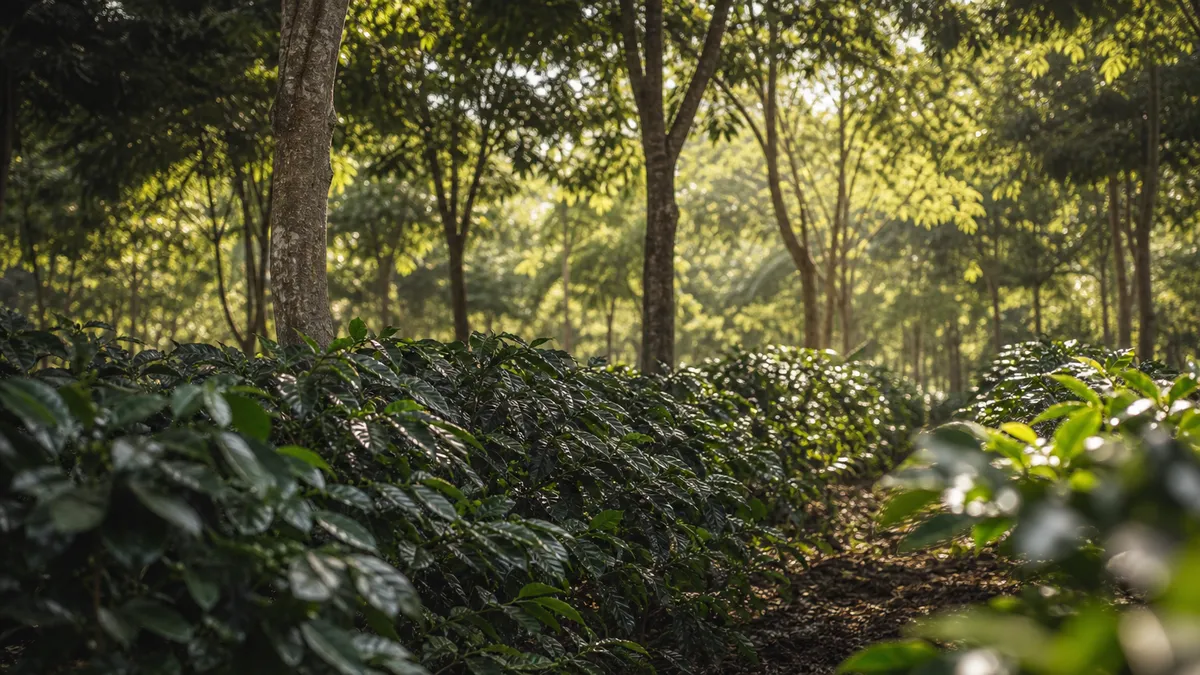
Shade-grown coffee grows beneath a canopy of other plants. In Nicaragua, this can be an agroforestry system, meaning coffee is deliberately grown alongside trees or other useful crops.
Research around Peñas Blancas, between Jinotega and Matagalpa, documents coffee beneath Inga shade trees and banana plants, with other tree species also present. The canopy is managed through pruning: this is a working agricultural system, not simply coffee left beneath untouched forest.
The environmental value depends on what farmers retain and how they manage it. A peer-reviewed study in San Ramón followed shade-coffee plots over a decade and found that shade-tree density declined while tree-species diversity remained stable. That distinction matters: the presence of shade does not tell you everything about canopy structure or habitat.
The practical lesson is to ask what “shade-grown” means for the particular producer. Which trees are present? Is the canopy diverse? Is there independent certification or documented farm management? Shade-grown and organically certified are different claims, and neither should be inferred from a photograph of green hills.
Varieties: familiar names and Nicaraguan connections
Most Nicaraguan production is arabica, Coffea arabica, although the country also produces robusta. Caturra, Bourbon and Catuaí are established names, alongside Catimor and other selections.
A variety is a genetically distinct type within the crop, not a region or processing method. Thus “Matagalpa, Caturra, washed” gives three different pieces of information: location, plant variety and post-harvest treatment.
Caturra is a natural mutation of Bourbon with a compact growth habit. World Coffee Research identifies it as susceptible to coffee leaf rust, a fungal leaf disease. Its presence on a bag is useful identification, not a guarantee of flavour or agricultural resilience.
Pacamara and Maracaturra deserve careful distinction. World Coffee Research records Pacamara as a cross between Pacas and Maragogipe, developed in El Salvador. It describes Maracaturra as a similar variety that probably arose from a natural cross between Caturra and Maragogipe in Nicaragua. The word “probably” matters because the documented certainty is different.
Marsellesa connects Nicaragua to deliberate breeding. World Coffee Research records selection work by ECOM and CIRAD in Nicaragua for rust-resistance traits, with release in 2009. It also describes notable acidity in the cup, a useful reminder not to dismiss newer varieties as necessarily dull-tasting.
To follow the neighbouring breeding story, the El Salvador origin guide is the next relevant read.
Processing: look beyond the word “washed”
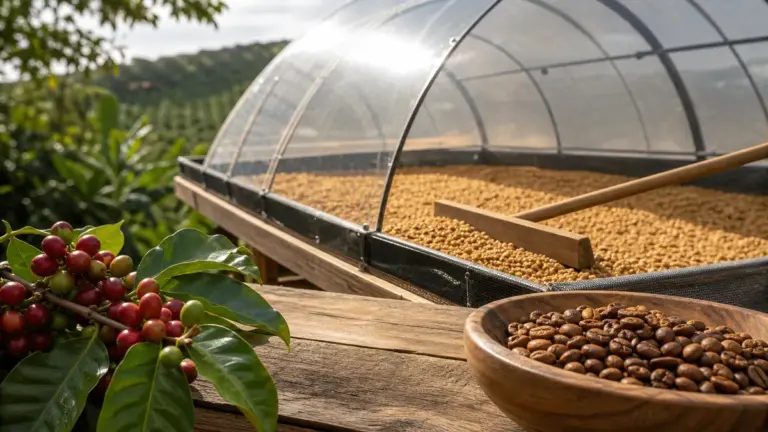
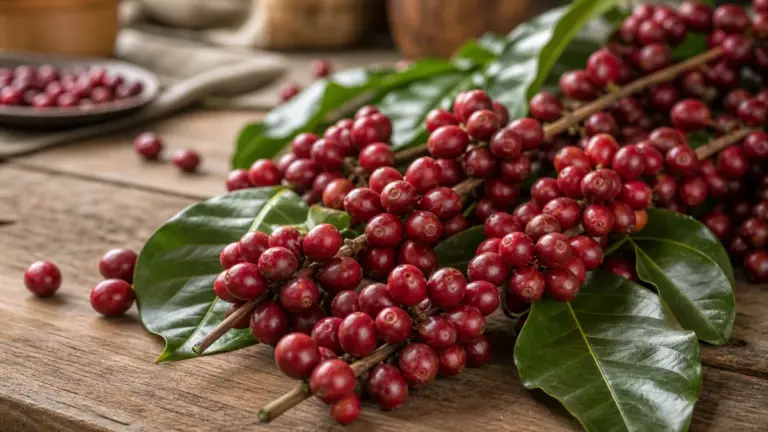
Processing describes how producers handle coffee cherries after picking and prepare the seeds for storage and export. Nicaragua offers more than one route: PRODECOOP lists washed export coffees, while Fincas Mierisch documents washed, honey, natural and controlled-fermentation processes.
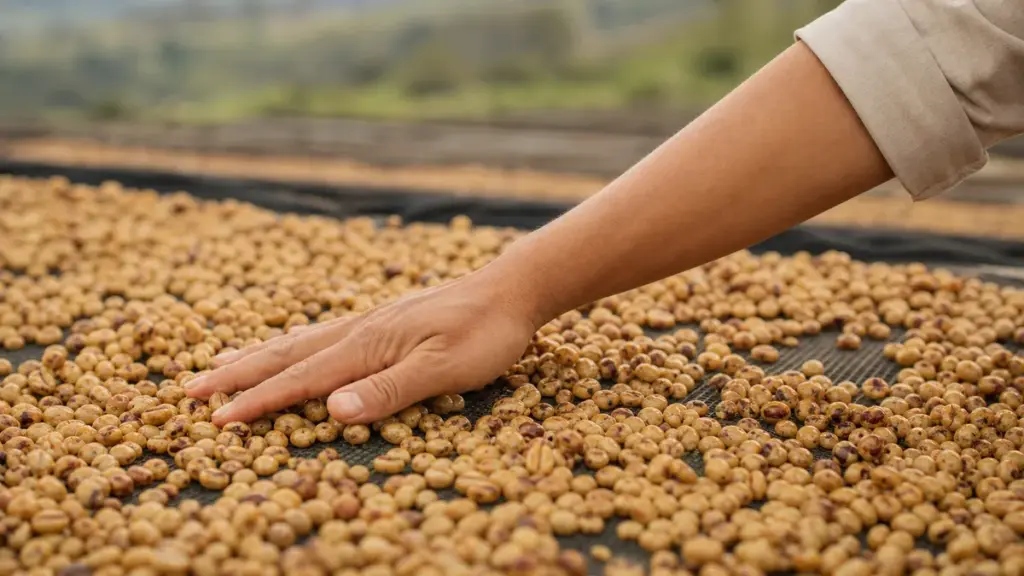
In washed processing, the skin and pulp are removed, followed by removal of the sticky fruit layer called mucilage, before the coffee is dried. That mucilage can be loosened biologically through fermentation or removed mechanically.
In honey processing, pulped coffee dries with mucilage remaining. No bee honey is added. In natural processing, the coffee dries within the whole cherry before the dried outer material is removed.
These descriptions explain the physical differences, but they are not complete flavour recipes. Nor does “washed” mean fermentation-free: fermentation can form part of the washed process.
For an enthusiast, the better questions concern the actual handling. Was the coffee fermented in an open tank or a controlled environment? How was it dried? Does the roaster explain the producer’s method, or merely repeat an intriguing process name? Nicaragua’s producers document enough variation that the details are worth seeking.
Co-operatives and the people behind the coffee
Co-operatives are part of the production and export infrastructure, not just a reassuring word on packaging. They can connect growers to technical advice, training, credit, processing and overseas buyers.
CAFENICA’s member directory describes PRODECOOP as a central organisation serving producers across Estelí, Madriz and Nueva Segovia. Its services include marketing, technical assistance, training and social projects. The same directory identifies UCA SOPPEXCCA in Jinotega as a union of local co-operatives producing and marketing coffee and other crops.
These organisational layers help explain a coffee label. A named co-operative lot may combine coffee from several growers; a separately identified producer lot may retain a narrower identity. Neither arrangement tells you the quality without further information.
PRODECOOP explicitly describes traceability by co-operative and lot for its export offerings. That is a useful purchasing question: can the roaster explain what its particular lot represents?
The work also takes place under practical constraints. USDA’s 2025 country report identified limited access to long-term credit, labour shortages and export delays, and reported harvest rains that slowed drying. These are documented pressures on producers, not reasons to assume that every shipment is affected.
How to choose a Nicaraguan coffee in the UK
Use the following as a reading checklist rather than a ranking:
- Identify the producer. Look for a farm, co-operative or clearly described producer group.
- Check the process. Choose a washed lot for an initial reference, then compare another process if you want to explore further.
- Read the specific flavours. “Chocolate and caramel” and “floral and yellow fruit” describe different buying directions.
- Ask about the harvest. A seasonal calendar cannot tell you when a particular shipment was picked or arrived.
- Match the roaster’s intended use. Ask whether the coffee was roasted for filter brewing, espresso or both, rather than inferring that from its origin.
The most useful Nicaraguan coffee label is not necessarily the one with the rarest variety. It is the one that lets you connect a flavour you enjoy with an identifiable producer and a clearly explained lot.
FAQ
Does “honey processed” mean the coffee contains honey?
No, honey processing does not mean bee honey has been added. The term describes pulped coffee dried with some of its sticky fruit mucilage still attached. It is a processing description, not an ingredient list or a promise that the brewed coffee will taste specifically of honey.
Is all Nicaraguan coffee arabica?
No, Nicaragua also produces robusta. USDA’s 2025 report describes production as predominantly arabica and records robusta cultivation in non-traditional growing areas. If the species matters to your purchase, check the particular product description rather than assuming that “Nicaragua” automatically means arabica.
What does SHG mean on a Nicaraguan coffee bag?
SHG means “Strictly High Grown”. PRODECOOP uses the designation for high-grown export coffees, alongside HG, “High Grown”. It is not a complete sensory description or a substitute for lot information. Ask for the actual growing altitude and tasting notes rather than treating the initials alone as a quality verdict.
Where to go next
Read Central America for the regional overview, then Honduras for a neighbouring origin. El Salvador is useful for following the Pacamara connection, while Costa Rica provides another origin to explore alongside Nicaragua without treating either country as a single flavour.
Sources
S1. CONATRADEC, Cultivo del Café, undated, current online version. Cultivation overview.
S2. CONATRADEC, Zonificación y Perfil de Taza, undated, current online version. Regional cup profiles.
S3. USDA Foreign Agricultural Service, Coffee Annual: Nicaragua, report NU2025-0004, 2025. Country report.
S4. PRODECOOP, Productos y Servicios, undated, current online version. Export coffees, varieties and traceability. Producer descriptions, not independent tasting results.
S5. Fincas Mierisch, Coffee Farms, undated, current online version. Farm elevations and harvest calendars. Producer-published farm information.
S6. Fincas Mierisch, Post-Harvest Processes, undated, current online version. Documented processing methods.
S7. CAFENICA, Asociadas, undated, current online version. Member organisations and services.
S8. Blanco-Sepúlveda and colleagues, An assessment of the shade and ground cover influence on the mitigation of water-driven soil erosion in a coffee agroforestry system, Agroforestry Systems, 2024. Research article.
S9. Goodall, Bacon and Mendez, Shade tree diversity, carbon sequestration, and epiphyte presence in coffee agroecosystems: A decade of smallholder management in San Ramón, Nicaragua, Agriculture, Ecosystems & Environment, 2015. University research record and abstract.
S10. World Coffee Research, Arabica Coffee Varieties: Caturra, undated, current online catalogue entry. Caturra.
S11. World Coffee Research, Arabica Coffee Varieties: Pacamara, undated, current online catalogue entry, including the Maracaturra comparison. Pacamara.
S12. World Coffee Research, Arabica Coffee Varieties: Marsellesa, undated, current online catalogue entry. Marsellesa.
S13. TechnoServe, Coffee Wet Mill Processing Guide, online PDF hosted in 2022, publication date not stated. Processing guide.
S14. Instituto Nicaragüense de Tecnología Agropecuaria, Mapa de Perfiles y Sabores del Café de Altura, undated. National map and variety index. The indexed variety list was retrieved through live search.
This article was researched using national coffee guidance, World Coffee Research’s variety catalogue, producer and co-operative documentation, a USDA country report and peer-reviewed field research; no first-hand tasting or farm visit is claimed.
Last checked: November 2026