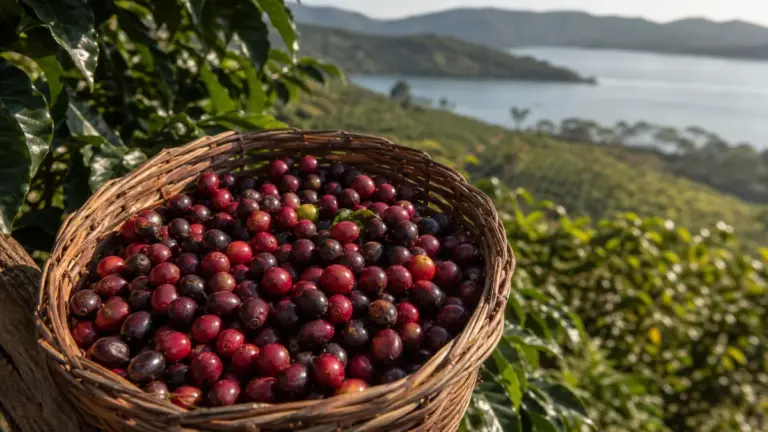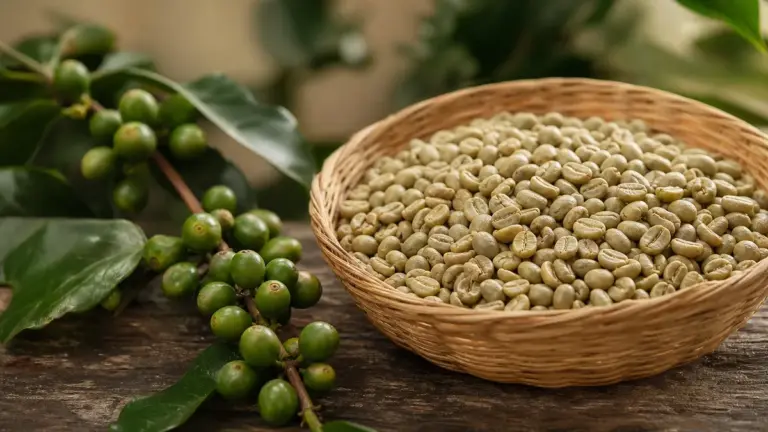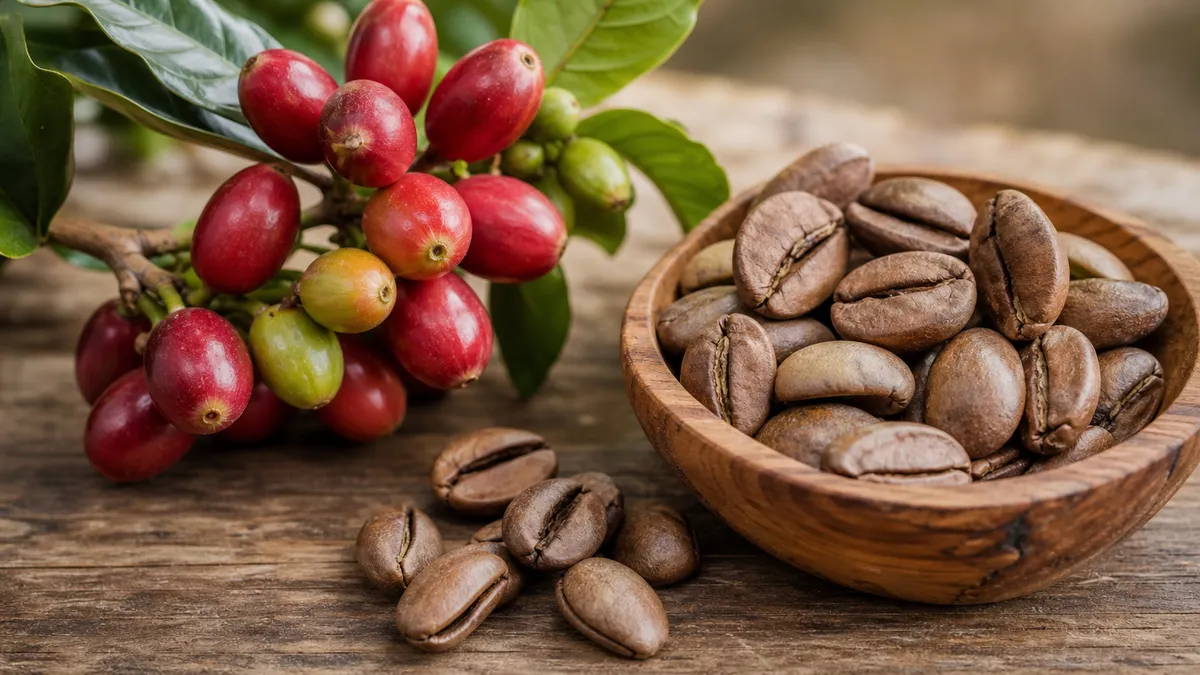
Liberia gives liberica coffee its name, and well-prepared liberica can offer pronounced sweetness, tropical-fruit aromas and a rich mouthfeel. However, Liberian coffee is an origin, not a species: the country also grows robusta, so a bag marked “liberica” does not necessarily contain coffee grown in Liberia.
In short
- Check both origin and species. “Liberia” identifies the country; Coffea liberica identifies the plant.
- Expect possibilities, not a fixed national flavour. Research describes liberica with chocolate, jackfruit and other fruit notes, but these are not verified tasting notes for every Liberian lot.
- Revival work is real, but still developing. IITA reported seedling distribution across five Liberian counties in August 2026. Planting activity should not be mistaken for an established increase in exportable coffee.
- Harvest information needs checking at lot level. A UK green-coffee supplier gives an approximate October start, rather than a complete, species-specific harvest calendar.
- Liberica and excelsa are now distinguished scientifically. A 2025 genomic study recognises Coffea dewevrei, commonly called excelsa, separately from Coffea liberica.
Liberia coffee: origin facts
The panel separates information about coffee grown in Liberia from broader knowledge about liberica. Where reliable national detail is missing, a neat-looking figure would be less useful than an honest limit.
| Feature | What the evidence supports |
|---|---|
| Altitude range | No reliable country-wide cultivated-coffee altitude range was verified in the sources consulted. Liberica is associated with warm lowland conditions, but a species-wide growing range should not be presented as Liberia’s measured farm range. |
| Main species and varieties | Liberian producer testimony identifies robusta, Coffea canephora, and liberica, Coffea liberica. A dependable national breakdown by named cultivar was not established. These species names are not cultivar names. |
| Main processing | Producer interviews published in 2023 describe predominantly sun-dried whole cherries, sometimes sent across the border for milling. This is a dated account, not a current national processing census. |
| Harvest months | Green Coffee Collective gives an approximate October start. A verified national end month, with separate calendars for robusta and liberica, was not established. |
| Typical cup profile | For liberica generally: sweetness, tropical fruit and sometimes chocolate, with body and acidity varying between assessments. No representative national sensory profile for Liberian-grown coffee was verified. |
For the wider geographical context, start with West and Central African coffee. Keep country, species and individual lot separate when comparing origins.
Why liberica takes its name from Liberia
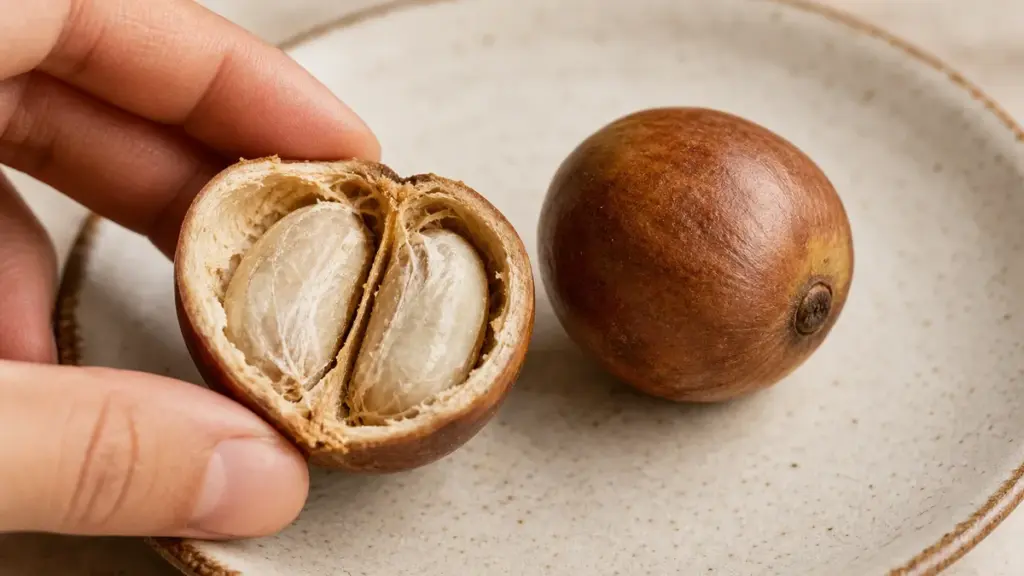
Liberica’s name preserves its connection with Liberia, but the species is not native only to that country. Current research places Coffea liberica in Upper West Africa, rather than treating Liberia as its entire natural range.
Its international commercial history gathered pace during the nineteenth century. Botanist Aaron Davis’s account for the Specialty Coffee Association dates small-scale coffee trade from Liberia to the United States to 1865 and the legitimate scientific naming of Coffea liberica to 1874. Liberica subsequently spread through tropical growing regions as coffee leaf rust damaged arabica plantations in Asia.
The attraction was understandable: it offered another coffee crop for hot, wet conditions. Yet large cherries and seeds brought processing difficulties, and liberica eventually lost ground as robusta became more widely established. Its early promise and subsequent retreat were therefore about farming and processing as well as consumer preference.
A short timeline
- 1865: small-scale Liberia-to-US coffee trade began, according to the SCA historical account.
- 1874: Coffea liberica was legitimately named scientifically.
- 2007: Liberia’s agricultural assessment documented ageing coffee stands and substantial abandonment among surveyed farms.
- 2025: genomic research revised liberica’s species boundaries; Liberia also launched its liberica-focused participation in FAO’s One Country One Priority Product programme.
- 2026: IITA reported further nursery and seedling-distribution activity.
What does coffee from Liberia taste like?
For a verified Liberian liberica lot, sweetness and fruit character are reasonable possibilities to investigate, not promises. Davis and colleagues’ 2022 research commentary describes contemporary liberica assessments featuring chocolate, jackfruit and other fruits, alongside a rich mouthfeel and low acidity.
A later SCA account describes tropical fruit as characteristic of liberica, with sweetness, medium body and medium acidity. The difference between those descriptions is a useful warning against reducing the species to one tasting formula. Neither account establishes the flavour of a particular Liberian harvest.
For a first purchase, ask the roaster what they actually tasted in that batch. “Sweet, tropical and rounded” is more informative when attached to a named producer and processing method than when copied from a general species description.
Also ask whether the coffee is liberica, robusta or a blend. Producer testimony confirms that Liberia grows both, so it would be misleading to apply liberica’s published sensory descriptions to all coffee from the country.
My buying preference would be a traceable sample with a clear roast description, rather than an anonymous bag sold mainly on rarity. That gives you something specific to assess: fruit clarity, sweetness, texture and whether you enjoy the finish.
Why production declined
Liberia’s coffee difficulties should not be confused with liberica’s earlier decline in international popularity. One concerns a national agricultural sector; the other concerns a species competing with other coffee crops.
The Ministry of Agriculture’s Comprehensive Assessment of the Agriculture Sector in Liberia, published in 2007, records coffee’s expansion before the sector’s deterioration. Its survey found that much of the coffee tree stock was 20 to 40 years old and reported that 40% of existing coffee farms had been abandoned to bush. Those are historical survey findings, not present-day national percentages.
The assessment also describes weak incentives to maintain coffee and competition from other agricultural activities. Later producer interviews report farms abandoned during years of conflict, limited processing facilities and difficult access to suitable equipment. Taken together, these sources describe a damaged production and trading system, not simply a coffee that consumers stopped liking.
For neighbouring production histories, read Côte d’Ivoire and Ghana. Their stories belong alongside Liberia’s, rather than being folded into a single account of West African coffee.
What revival efforts have actually achieved
There is documented activity behind the revival story. On 11 December 2025, Liberia launched FAO’s One Country One Priority Product programme with liberica selected as its flagship commodity, according to the Ministry of Agriculture’s announcement published the following day.
In August 2026, IITA described the EU-funded Seeds4Liberia project working with Liberian research, regulatory and farming organisations. It reported operations across Bong, Lofa, Nimba, Montserrado and Bomi counties, with distribution reaching roughly 1,000 farmers.
The composition of the planting material matters. IITA reported an inventory of nearly 750,000 seedlings, approximately 68% identified as pure liberica, with arabica and robusta making up the remainder. It would therefore be inaccurate to describe that entire inventory as liberica.
These are project-reported nursery and distribution results, not an independent measurement of mature-tree productivity. They demonstrate practical intervention, but do not yet prove consistent harvest volumes, cup quality or repeat export orders.
The distinction remains relevant: in October 2026, the Ministry of Agriculture was still requesting support to expand production, strengthen seedling supply and improve processing capacity. Revival is an ongoing programme of work, not a completed transformation.
Why processing matters so much
Liberica’s large fruit is visually impressive, but the useful product is the seed inside it. Research identifies thick fruit pulp and a relatively low conversion from fresh cherries to clean green coffee as practical disadvantages of large-fruited liberica. More fruit must be handled to obtain the finished beans.
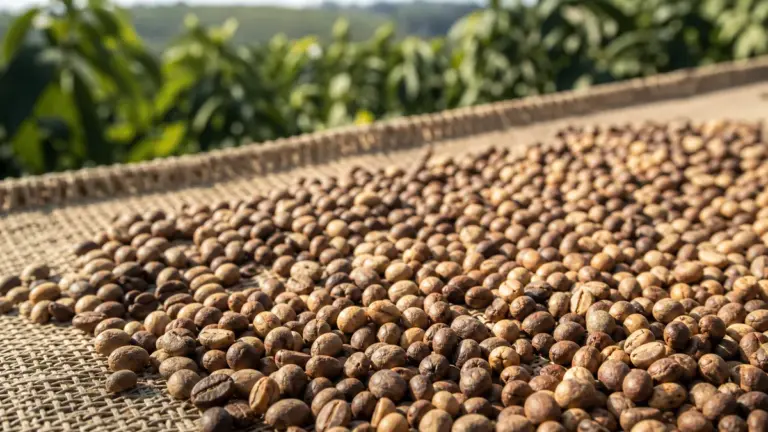
In natural processing, whole cherries are dried before their outer layers are removed. Liberian producer interviews published in 2023 describe sun-drying and the movement of some dried cherries to neighbouring countries for milling, illustrating why processing capacity is part of the revival challenge.
Climate adds another complication. A 2026 study of cultivated liberica explains that persistent rainfall can prolong drying and increase the risk of microbial deterioration. Its modelling identifies cultivation opportunities in Liberia, but climate suitability is not evidence that every farm will produce good coffee without appropriate management.
For a buyer, the practical question is therefore not just “Is this liberica?” Ask how the cherries were selected, dried, milled and stored. Those details help connect an interesting species to an enjoyable cup.
Finding Liberian coffee in the UK
Treat availability as something to verify for a particular harvest, rather than assuming a standing supply. The sources retrieved do not establish a dependable, continuously stocked UK retail offering of Liberian-grown coffee.
Start an enquiry with specialist roasters or green-coffee importers, and ask:
- Was the coffee grown in Liberia? Request the producer, cooperative or county.
- Which species does the lot contain? Ask whether identification is confirmed or simply inherited from a supplier description.
- Which harvest is it from? Request picking dates and arrival information.
- How was it processed? Ask for the actual method, not just “traditional”.
- Can the seller describe this batch? Prefer lot-specific tasting notes over a generic liberica profile.
Green Coffee Collective publishes Liberia sourcing guidance, including an approximate October harvest start. An origin page, however, is not proof of current stock or a guaranteed shipment. Confirm availability directly before making plans around it.
A coffee can be interesting without being suitable as your everyday choice. For Liberia, provenance and a sample are better starting points than an assumption that rarity guarantees quality.
Liberica, excelsa and climate claims
Older references frequently place excelsa under Coffea liberica as Coffea liberica var. dewevrei. The 2025 genomic study by Davis and colleagues instead recognises Coffea liberica, Coffea dewevrei and Coffea klainei as separate species, supported by genetic, morphological and geographical evidence. This article follows that treatment.
That revision matters when reading older farming advice. Evidence collected under a broad “liberica” label may concern plants now assigned to a different species. Do not automatically transfer excelsa’s reported characteristics to Liberian liberica.
Likewise, “climate-resilient” needs qualification. The 2026 climate study supports further development of liberica while identifying rainfall, disease and processing constraints. Its findings support diversification and testing, not a claim that liberica is climate-proof.
FAQ
Does a bag labelled “liberica” come from Liberia?
No, the species name does not establish where the coffee was grown. Liberica is cultivated outside Liberia, including in Southeast Asia. If your aim is to taste this particular origin, look for Liberia explicitly in the provenance information and ask for the producer or cooperative, rather than relying on the species name.
Must Liberian coffee be forest-grown?
No, you should not infer a production system from the country or species name. Producer interviews describe coffee growing wild in Liberia, while current revival work includes nursery-raised planting material distributed to farms. Ask how the particular lot was grown. Terms such as “wild”, “forest-grown” and “agroforestry” need evidence attached to the producer.
Should I use a special brewing recipe?
Start with the roaster’s recommendation for that batch rather than an invented national recipe. Ask which brewing method they used when developing its tasting notes, then record what you change. For a first comparison, keep your usual method consistent so that you can judge the coffee rather than several new brewing variables at once.
Where to go next
Read West and Central Africa for the regional framework, then Côte d’Ivoire and Ghana for neighbouring origin guides. The Democratic Republic of the Congo provides a separate country study for extending your exploration beyond Liberia.
Sources
-
Specialty Coffee Association, Aaron Davis. Beyond Arabica and Robusta: Research to Redefine Liberica and Excelsa Coffee, Issue 25, 2025.
https://sca.coffee/sca-news/25/issue-25-insight-liberica-excelsa-y8bx2 -
Davis, A. P. and colleagues. The re-emergence of Liberica coffee as a major crop plant, Nature Plants, volume 8, 2022. Retrieved publisher-formatted paper hosted by Scienovate.
https://www.scienovate.com/articles/s41477-022-01309-5.pdf -
Davis, A. P. and colleagues. Genomic data define species delimitation in Liberica coffee with implications for crop development and conservation, Nature Plants, volume 11, 2025.
https://www.nature.com/articles/s41477-025-02073-y.pdf -
Republic of Liberia, Ministry of Agriculture. Comprehensive Assessment of the Agriculture Sector in Liberia, volume 2.1, Sub-Sector Reports, 2007. FAO-hosted copy.
https://www.fao.org/docrep/pdf/010/ai563e/ai563e00.pdf -
IITA. Rediscovering Liberia’s coffee for global markets, 14 August 2026.
https://iita.org/news-item/rediscovering-liberias-coffee-for-global-markets/ -
Liberia Ministry of Agriculture. FAO Director-General Launches Two Flagship Agriculture Initiatives in Liberia, 12 December 2025.
https://www.moa.gov.lr/media/press-releases/fao-director-general-launches-two-flagship-agriculture-initiatives-liberia -
Liberia Ministry of Agriculture. Agriculture Minister Holds High-Level Talks with FAO Director-General on Agricultural Investment, 13 October 2026.
https://www.moa.gov.lr/media/press-releases/agriculture-minister-holds-high-level-talks-fao-director-general-agricultural -
Wild and colleagues. Climate requirements for cultivated Liberica coffee (Coffea liberica) and consequences for its use and development as a crop species, Plants, People, Planet, 2026.
https://nph.onlinelibrary.wiley.com/doi/10.1002/ppp3.70183 -
Perfect Daily Grind. How is specialty coffee produced in Liberia?, 14 February 2023. Used for original interviews with Liberian producers, not its secondary production statistics.
https://perfectdailygrind.com/2023/02/how-is-coffee-produced-in-liberia/ -
Green Coffee Collective. Liberia, undated origin and sourcing page, retrieved November 2026. Supplier guidance, not an official crop calendar or stock confirmation.
https://greencoffeecollective.com/pages/origin/liberia
Research combined botanical papers, Liberian government documents, project reports and original producer interviews, with supplier guidance explicitly distinguished from national data.
Last checked: November 2026