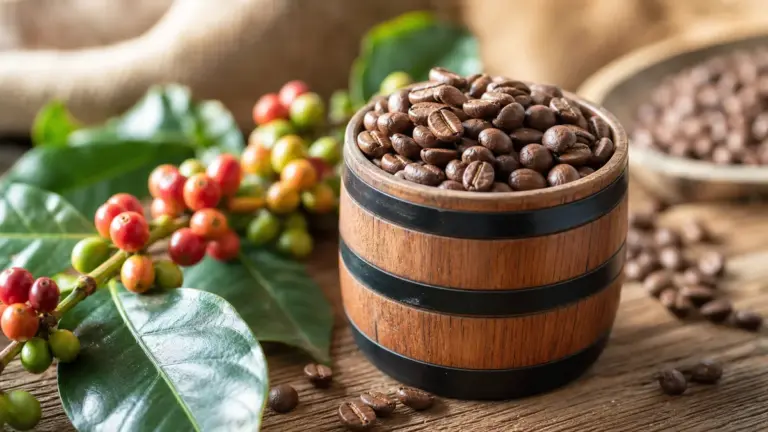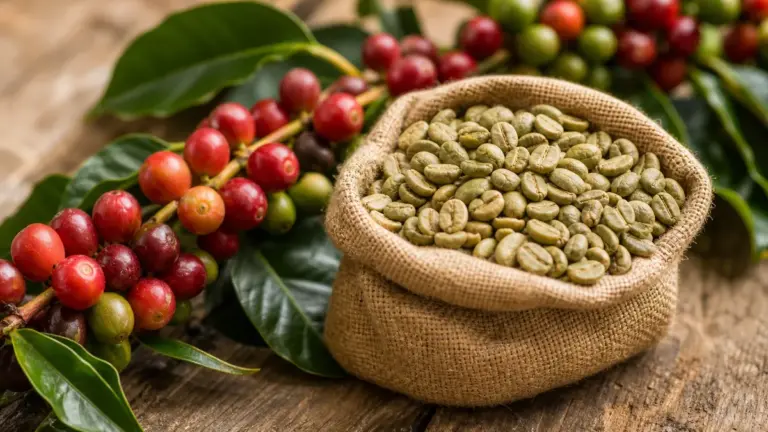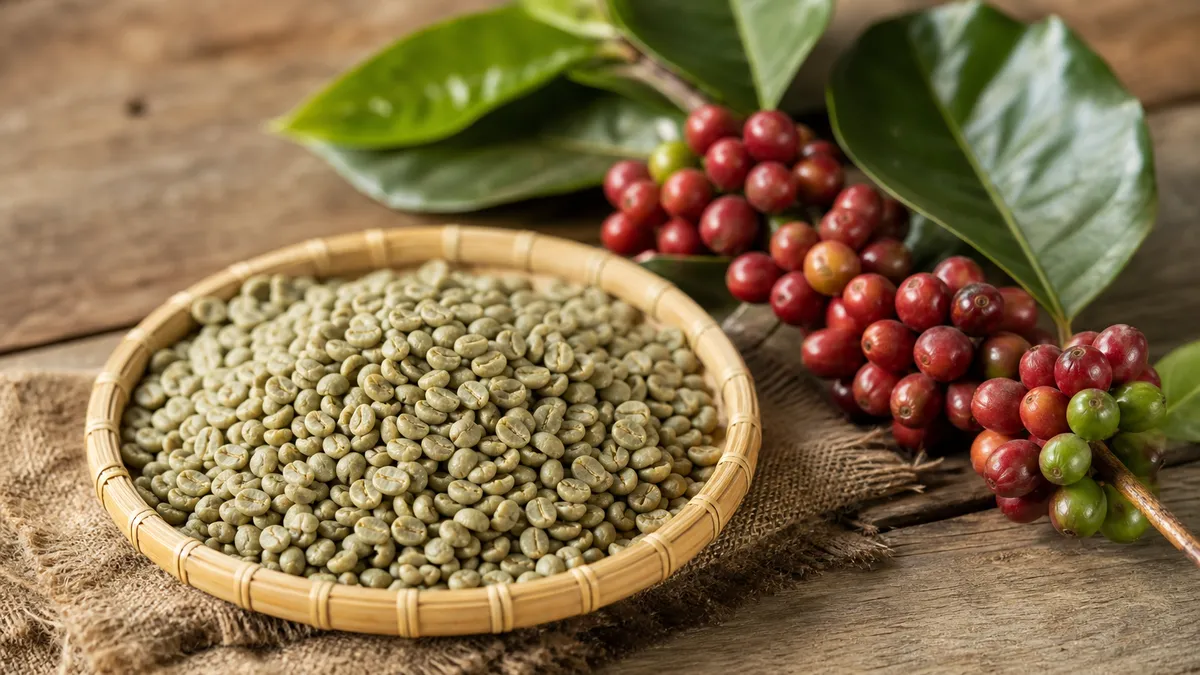
Coffee from Cuba and Haiti often appeals to drinkers who enjoy chocolate, nuts, rounded sweetness and restrained acidity, although the individual lot and roast matter more than the country name alone. Their histories are closely connected, but their modern coffee trades differ: Cuban coffee is not subject to a general UK import ban, while “Haitian Blue” needs checking as a commercial description rather than assuming it guarantees a certified origin.
In short
- Cuba’s Sierra Maestra and Escambray mountains are useful starting points when checking a coffee’s provenance.
- Haiti’s established growing areas include Thiotte, Beaumont, Baptiste and the northern districts around Dondon.
- Typica is an important arabica variety in both origins, but neither country’s coffee should automatically be described as entirely Typica.
- “Haitian Bleu” has a documented history as a producer federation’s brand. Modern “Haitian Blue” labels do not establish one universal specification.
- US restrictions are not UK law. Banking and shipping complications can nevertheless affect Cuban coffee reaching British buyers.
What coffee from Cuba and Haiti tastes like
Cuban export coffees commonly lean towards cocoa, roasted nuts, spice and tobacco-like aromas. Published descriptions range from smooth, sweet coffees with slight acidity to fuller-bodied examples with more pronounced acidity, so “Cuban coffee is always dark and heavy” is too simple.
Haitian coffees can offer a similarly approachable cup, with creamy texture, almond or hazelnut notes and gentle acidity. There are differences within that description: Café Kreyol describes its washed Haitian coffee in terms of almonds and butter, while a British roaster’s Haitian offering lists milk chocolate, caramel and soft citrus.
These are suppliers’ descriptions, not findings from our own tasting. Use them to shortlist a coffee, then ask about the particular harvest, processing method and roast.
For the wider regional context, start with our caribbean coffee guide. Shared island geography does not mean interchangeable coffee.
Origin fact panel
The figures below deliberately distinguish documented examples from national limits. Altitude and harvest information is uneven, and a supplier’s lot specification should not become a rule for an entire country.
| Feature | Cuba | Haiti |
|---|---|---|
| Growing areas | Sierra Maestra in the east; Escambray in central Cuba | Thiotte and Belle-Anse; Beaumont and surrounding Grand’Anse districts; Baptiste and Savanette; northern areas including Dondon |
| Documented altitude range | Supplier examples span 600 to 800 metres in Escambray and 1,300 to 1,400 metres in Sierra Maestra | A historical sector assessment records 400 to 1,300 metres; a current UK supplier describes a lot at 1,600 metres. Neither establishes a national upper limit |
| Varieties | Documented Sierra Maestra coffee includes Typica, Bourbon, Catuai and Mundo Novo | Typica is historically predominant; other varieties are also grown |
| Processing | Washed processing is documented for the export examples discussed here | Both natural and washed processing; do not assume all Haitian coffee is washed |
| Harvest months | October to March for Moka Trade’s Escambray offering, not a universal Cuban calendar | December to February for Café Kreyol’s COOPACVOD partner, not a universal Haitian calendar |
| Typical cup descriptions | Cocoa, nuts, spice and tobacco-like notes; medium to full body | Almond, creamy or buttery texture, chocolate, caramel and sometimes soft citrus |
Altitude and harvest figures are source-reported, checked in November 2026. Ask the seller for the specification of the coffee actually being supplied.
Cuba: mountains, export names and the cup
Where it grows
Sierra Maestra is the best-known mountain name to look for on Cuban coffee. Escambray is another established source: Moka Trade identifies its Serrano Superior offering with El Nicho in that central mountain range.
There is an immediate lesson here for buyers. “Serrano” does not, by itself, supply the same information as a named farm, cooperative or clearly identified producing district. Read the origin details behind the commercial name.
The varieties listed for Caroma’s Sierra Maestra coffee include Typica, Bourbon, Catuai and Mundo Novo. That is evidence for that offering, not proof that every Cuban export contains the same mixture.
What Serrano and Turquino tell you
Serrano Lavado and Turquino are names readers may encounter in the Cuban coffee trade. Lavado means washed: the fruit is removed and the coffee undergoes wet processing before drying.
Cubaexport’s published catalogue describes Serrano Selecto and Turquino Montañés as washed arabica coffees, but they are commercial products rather than interchangeable names for mountain ranges. Its descriptions also distinguish their body and acidity.
The useful questions are therefore straightforward: where was this coffee grown, what does the name mean in this seller’s specification, and is the bag entirely Cuban-grown coffee? Do not infer a precise altitude, variety or sensory score from the name alone.
Haiti: growing districts and the meaning of Haitian Blue
Where it grows
Haiti’s national coffee institute, INCAH, identifies several important producing areas. These include Thiotte and Belle-Anse in the south-east, Beaumont and neighbouring districts in Grand’Anse, Baptiste and Savanette in the central plateau area, and Plaisance, Pilate and Dondon in the north.
Baptiste is also discussed in sector literature in connection with Belladère. It should not be confused with the northern producing districts or with Thiotte: these are distinct places, not alternative names for one Haitian coffee region.
Coffee has long been grown within mixed farming systems, alongside fruit trees and food crops. The World Bank’s historical assessment describes these as “creole gardens”, where coffee contributes to household livelihoods rather than occupying a uniform, single-crop estate.
Typica remains central to Haiti’s coffee identity. However, older estimates of its prevalence should not be presented as a fresh national census.
Haitian Bleu was a brand, not simply a colour description
The spelling matters when tracing the history. Haitian Bleu was developed as a washed-coffee brand by FACN, the Fédération des Associations Caféières Natives.
A DAI case study published in December 2005 describes its quality-oriented commercial programme and controlled distribution arrangements. INCAH also explicitly identifies Haitian Bleu as FACN’s brand.
That is more specific than calling it a generic name for every high-grown Haitian Typica. Conversely, it does not establish that every present-day bag marked “Haitian Blue” comes through the historical FACN programme.
Modern sellers use related wording for their own offerings. Café Kreyol, for example, markets Haitian Blue coffee associated with its COOPACVOD partner and describes that coffee as washed Arabica Blue Mountain.
Treat the label as a prompt for questions, not a complete specification. Ask for the producer organisation, growing district, variety, processing method and any claimed certification. The reviewed sources do not establish a single current, nationwide certified geographical origin called “Haitian Blue”.
A connected history, without the plantation romance
The connection between these origins runs deeper than similar tasting notes. Coffee cultivation expanded through Caribbean colonial networks, and the movement of plantation owners from Saint-Domingue to Cuba helped reshape Cuban production.
UNESCO’s historical evaluation records that fleeing owners were accompanied by enslaved Africans. Their labour and knowledge belong in the story alongside the plantations’ buildings and processing systems.
A short timeline helps separate the events:
- 1748: World Coffee Research records the movement of Typica seed from Santo Domingo to Cuba.
- 1804: Haiti became independent, following the revolutionary upheaval that had driven plantation owners towards neighbouring Cuba.
- After the 1996/97 season: DAI dates the launch of the Haitian Bleu programme to this period.
- 2000: UNESCO inscribed the archaeological remains of early coffee plantations in south-eastern Cuba on the World Heritage List.
These histories should not become a shortcut for judging present-day beans. A historic plantation connection says nothing definite about the condition of a current shipment or the care taken during its processing.
For the neighbouring origin that shares Hispaniola with Haiti, read about dominican coffee separately rather than treating the island as one coffee industry.
Production and quality: what the country name cannot promise
Cuba’s current development priorities illustrate the difference between potential and dependable supply. FAO’s 2026 investment material identifies challenges in productivity, processing and access to higher-value markets, alongside proposals to improve pulping, fermentation, drying and traceability.
Those are proposed improvements, not proof that every producer already has upgraded facilities. Nor should a project’s output target be reported as national production.
Haiti also requires care with statistics. An Inter-American Development Bank study explicitly warned that unrecorded trade with the Dominican Republic complicated estimates of output, exports and consumption. That historical warning is a reason to label datasets carefully, not permission to invent a present-day total.
Quality depends on what happens between picking and shipment. A participatory assessment published by Catholic Relief Services identified weaknesses in processing infrastructure and in maintaining quality through drying and storage in southern Haiti.
For a buyer, this means looking beyond rarity. A named producer, clear processing information and a recent lot assessment are more useful than an unsupported promise of “the finest island coffee”.
Cuban coffee and the UK legal position
As checked in November 2026, the UK does not impose a general ban on importing or buying Cuban coffee. The UK government has consistently opposed the US embargo, including in its parliamentary statement on 8 June 2026.
That is not the same as saying every transaction is unrestricted. Commercial importers still need to check the parties involved, applicable sanctions, customs requirements and food-import obligations.
The United States maintains a different regime. Commercial dealings in Cuban-origin goods are generally prohibited unless authorised, with exceptions including certain goods produced by independent private-sector entrepreneurs. It is therefore inaccurate both to transplant the US embargo into UK law and to describe US restrictions as having no exceptions.
Practical obstacles can cross borders. UK government business guidance documents blocked payments involving Cuba, while US vessel restrictions can complicate shipping arrangements. These are constraints on completing trade, not evidence of a blanket British coffee ban.
The position also changes. US amendments effective on 30 September 2026 tightened aspects of financial transactions involving Cuba. UK Protection of Trading Interests legislation separately addresses specified extraterritorial US measures.
For a business arranging imports, obtain specialist advice before committing to a payment or shipping route. For an ordinary reader buying from a British roaster, the essential distinction is simpler: Cuban-grown coffee is not generally prohibited merely because it comes from Cuba.
Finding and choosing these coffees in Britain
British sellers do list these origins. Smith’s Coffee Co has a Cuban Serrano Lavado listing, while Coffee Bean Shop describes a Haitian coffee sourced from APCAB. Listings establish a route to enquiry, not guaranteed stock or a particular harvest.
Before ordering, check:
- Actual origin: ask whether the beans were grown in the named country, rather than merely roasted or prepared in a national style.
- Traceability: look for a producing district and, where available, a farm, cooperative or exporter.
- Processing and harvest: request the lot’s details rather than relying on a general country description.
- Roast and intended use: tell the roaster whether you want espresso, filter coffee or a coffee that remains distinct with milk.
- Evidence behind special claims: ask what “Blue”, “organic” or a named grade means for that particular offering.
Our buying preference is for the clearer specification, not the grander story. When comparing Cuba and Haiti, choose a documented lot whose flavour description suits you, then let the cup settle the question.
FAQ
Is Typica a separate coffee species?
No, Typica is a variety of Coffea arabica, not a separate species. World Coffee Research describes it as historically important, capable of good cup quality, low yielding and susceptible to major diseases. Its presence is useful information about a coffee, but does not guarantee how a particular lot will taste.
Is all Haitian coffee washed?
No, Haiti produces both naturally processed and washed coffee. Historical value-chain research describes substantial dry processing, while named export programmes document washed coffees. A washed Haitian Blue offering should therefore be understood as a particular product specification, not evidence that the country uses only one processing method.
Does Blue Mountain on a Haitian label mean the beans came from Jamaica?
No, a Haitian-grown coffee does not become Jamaican because a supplier describes its variety as Blue Mountain. World Coffee Research lists Blue Mountain among names associated with Typica. Keep the plant’s variety separate from its geographical origin, and ask the seller to identify where the coffee was actually grown.
Where to go next
Read the regional overview, Caribbean, to place these origins alongside their island neighbours. The Dominican Republic, available through our neighbouring origin guide, explains the other side of Hispaniola, while Puerto Rico, covered in our puerto rican coffee guide, offers another useful comparison of island coffee, history and availability.
Sources
Publication years are given where established. Undated commercial specifications describe the supplier’s own offering, not independently verified national standards.
-
World Coffee Research, Arabica Coffee Varieties: Typica, undated, current online catalogue.
https://varieties.worldcoffeeresearch.org/varieties/typica -
Institut National du Café d’Haïti, Zones caféières d’Haiti, 2012, including older underlying regional data.
https://www.incah-haiti.gouv.ht/index.php/component/content/category/79-cafe -
World Bank, Haiti Coffee Supply Chain Risk Assessment, March 2010.
https://farm-d.org/wp-content/uploads/2024/03/Haiti_SupplyChain_Risk_Assessment.pdf -
Catholic Relief Services, Rodríguez, Castañeda and Lundy, Assessment of Haitian Coffee Value Chain, 2011.
-
DAI, Tom Lenaghan, Haitian Bleu: A Rare Taste of Success for Haiti’s Coffee Farmers, DAIdeas, volume 1, number 4, December 2005.
https://www.files.ethz.ch/isn/100071/HaitianBleu-DAIdeasDec05.pdf -
Institut National du Café d’Haïti, coffee marketing discussion identifying FACN’s Haitian Bleu brand, undated page incorporating dated sector references.
https://www.incah-haiti.gouv.ht/index.php/component/content/category/81-marche -
UNESCO World Heritage Centre and ICOMOS, Archaeological Landscape of the First Coffee Plantations in the South-East of Cuba, listing and historical evaluation, 2000.
https://whc.unesco.org/en/list/1008/
https://whc.unesco.org/document/1076 -
Cubaexport, Exportable Products Offer, undated catalogue, Serrano Selecto and Turquino Montañés entries.
https://www.gaib.org.tr/tr/site/download-file/3099.html?class=AnnouncementFiles -
Caroma, Cuba Sierra Maestra, undated product specification.
https://www.caroma.info/en/pdf/3fd1a50a87274af6b2c3a97f86035373/Cuba%20Sierra%20Maestra -
Moka Trade, Cuba Serrano Superior, undated origin specification.
https://moka-trade.com/en/Coffie.aspx?ID=9 -
Café Kreyol, COOPACVOD and Organic Caribbean Blue: Haitian Blue Light Roast, undated producer and product specifications.
https://cafekreyol.com/farmer/haiti-coopacvod/
https://cafekreyol.com/product/organic-caribbean-blue-coffee-haitian-blue-light-roast/ -
Inter-American Development Bank, Arias, Brearley and Damais, Restoring the Competitiveness of the Coffee Sector in Haiti, April 2006.
https://cafekreyol.com/wp-content/uploads/Restoring_the_Competitiveness_of_the_Coffee_Sector_in_Haiti-Study-Cafe-Kreyol.pdf -
Food and Agriculture Organization of the United Nations, Cuba 2026, Hand-in-Hand Investment Forum material, 2026.
https://www.fao.org/hand-in-hand/investment-forum-2026/cuba-2026/en -
Foreign, Commonwealth & Development Office, Current UK sanctions regimes, updated 25 March 2026; and Overseas business risk: Cuba, updated 7 June 2023.
https://www.gov.uk/government/collections/uk-sanctions-regimes-under-the-sanctions-act
https://www.gov.uk/government/publications/overseas-business-risk-cuba/overseas-business-risk-cuba -
UK Parliament, Cuba, ministerial statement and questions, House of Commons, 8 June 2026.
https://hansard.parliament.uk/commons%E2%80%8F/2026-06-08/debates/46386452-06ab-4d58-8089-dd564afe2063/CommonsChamber -
Department for Business and Trade, Protection of Trading Interests, published 2023, current guidance.
https://www.gov.uk/guidance/protection-of-trading-interests -
US Treasury, Office of Foreign Assets Control, Cuba FAQs 770 and 779, current online guidance; and Cuban Assets Control Regulations, final rule effective 30 September 2026.
https://ofac.treasury.gov/faqs/770
https://ofac.treasury.gov/faqs/779
https://www.govinfo.gov/content/pkg/FR-2026-09-30/html/2026-19973.htm -
Smith’s Coffee Co, Cuba Serrano Lavado; Coffee Bean Shop, About Us, Haitian producer information, undated commercial pages.
https://www.smithscoffee.co.uk/shop/cuba-serrano/
https://coffeebeanshop.co.uk/pages/about-us
This article was researched through retrieved national coffee institute material, development studies, official trade guidance and explicitly attributed supplier specifications; no first-hand tasting or testing is claimed.
Last checked: November 2026