Anaerobic fermentation coffee is coffee fermented in a sealed or deliberately low-oxygen environment before drying. The method can produce distinctive fruity, floral or fermented flavours, but “anaerobic” describes a processing condition, not a guaranteed taste or quality grade.
In short
- Whole coffee cherries or depulped coffee can undergo anaerobic fermentation, with or without added water.
- A sealed tank does not necessarily contain no oxygen from the start; in self-induced systems, microorganisms consume the oxygen initially available.
- Fermentation time needs context: temperature, fruit condition and microbial activity matter alongside the hours on the label.
- Fruity intensity is possible, not compulsory. Controlled experiments have also produced woody, nutty and herbaceous descriptions.
- Ask how the coffee was fermented, what was added and how it was dried, rather than relying on the word “anaerobic”.
What anaerobic fermentation means in coffee
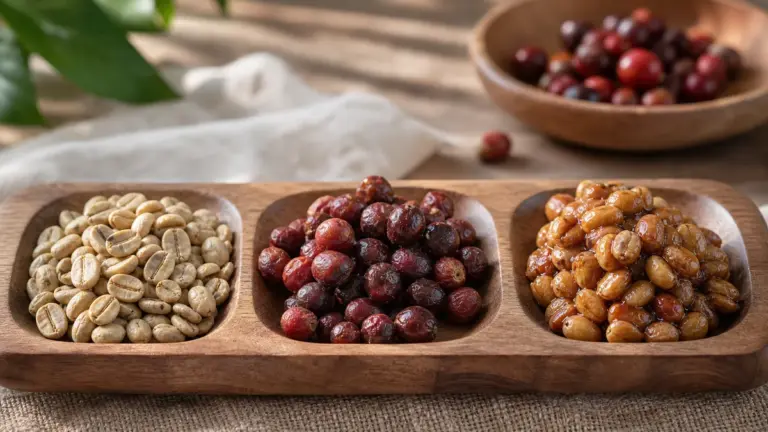
Coffee fermentation involves microorganisms transforming sugars and other compounds in the fruit material surrounding the seeds. Yeasts and bacteria produce substances including organic acids, alcohols and aroma compounds, helping change the eventual cup. The coffee beans are the seeds, not the fruit flesh being fermented around them.
In coffee processing, “anaerobic” usually identifies a deliberately oxygen-restricted fermentation stage. That is more useful than the absolute description “oxygen-free fermentation”, because sealing a container does not establish its oxygen concentration. In self-induced anaerobic fermentation, often abbreviated to SIAF, microorganisms consume available oxygen while carbon dioxide accumulates.
Nor is an open tank necessarily oxygen-rich throughout. Oxygen availability can differ within the coffee mass, so the contrast is not simply “ordinary fermentation with oxygen” versus “special fermentation without it”. The vessel, its contents and the management of air all need describing.
For the broader relationship between fermentation, washing and drying, start with coffee processing methods.
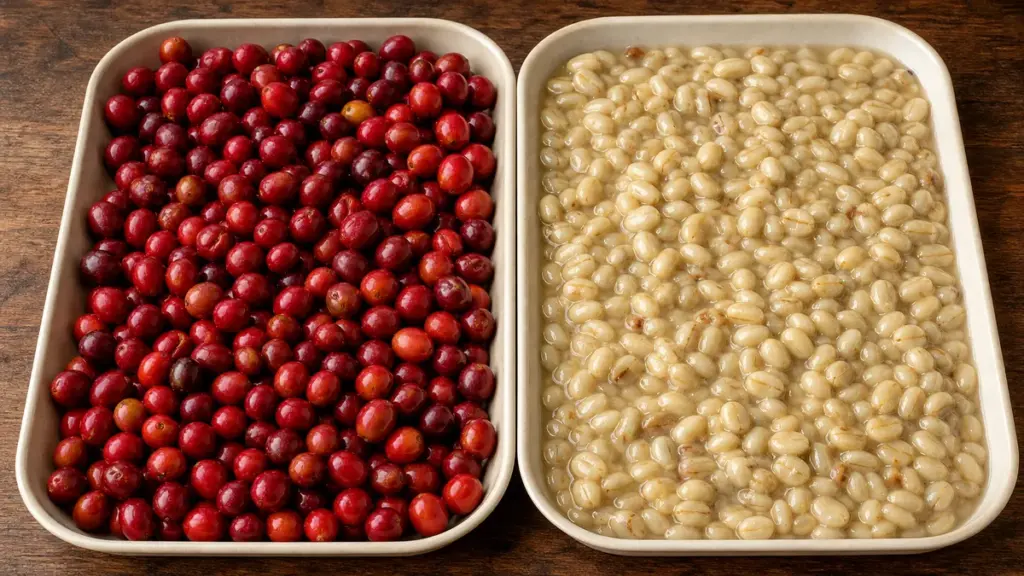
What goes into the tank?
Producers can ferment whole cherries, retaining the skin and fruit flesh, or depulped coffee, where the outer skin and much of the flesh have been removed. Depulped seeds can still carry mucilage, the sticky fruit layer surrounding their parchment covering. Experiments have used both materials in sealed vessels, with and without added water.
These are meaningful differences, not interchangeable versions of one recipe. A controlled study using Catiguá MG2 coffee compared whole-fruit and depulped treatments in submerged and non-submerged conditions, finding different chemical and sensory results. “Anaerobic” alone leaves all of those distinctions unstated.
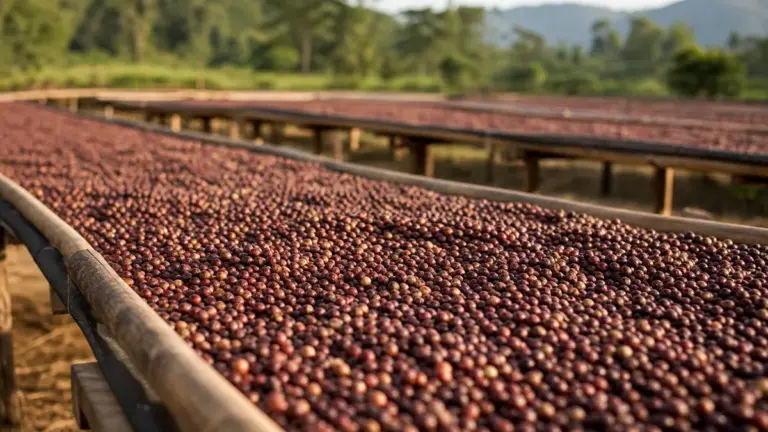
The fermentation environment also does not tell you how the coffee was subsequently dried. Whole cherries may be dried intact, while other coffees are depulped or washed before drying. An anaerobic stage can therefore sit within different processing sequences rather than replace the familiar natural, honey and washed categories.
Our honey processing guide explains the separate question of retaining mucilage during drying.
How the sealed-tank method works
The following is a process outline, not a fermentation recipe. Individual producers use different equipment and operating conditions.
- Prepare the coffee. Select and sort the fruit, then retain the whole cherries or depulp them according to the intended process.
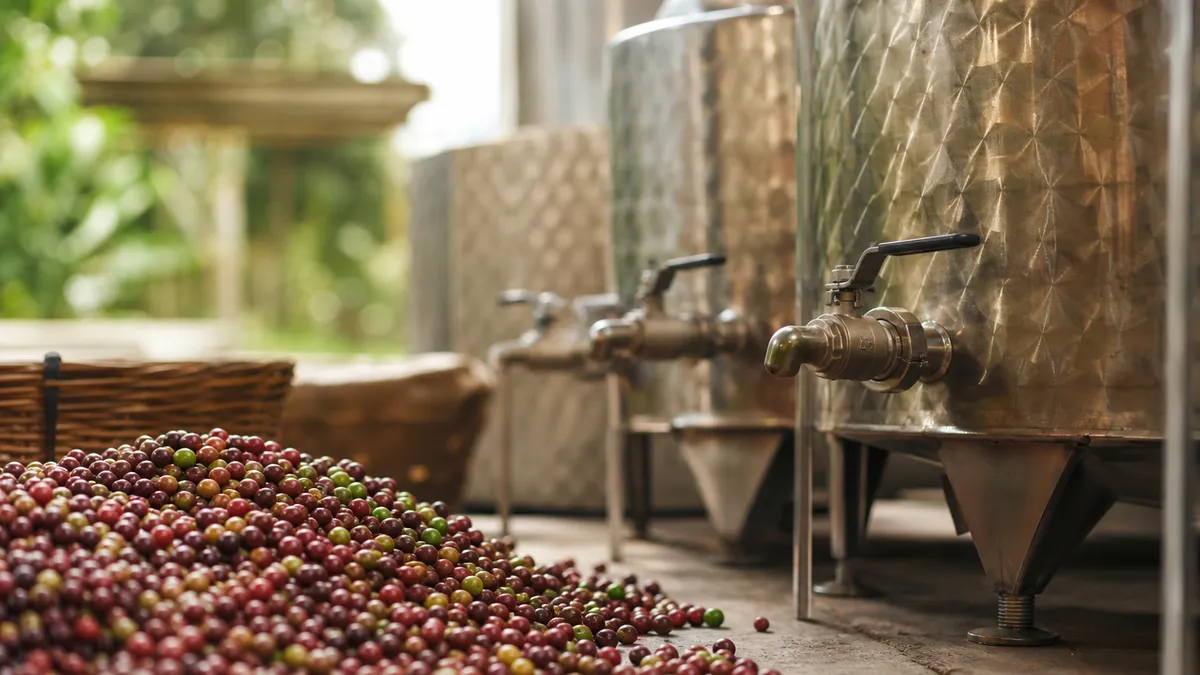
- Load the vessel. Place the coffee in a suitable fermentation container, with water if the protocol calls for it.
- Restrict incoming air. Close the vessel. In an airlock system, fermentation gas can escape while outside air is restricted.
- Monitor the batch. Record the fermentation duration and relevant measurements, such as temperature and pH, a measure of acidity.
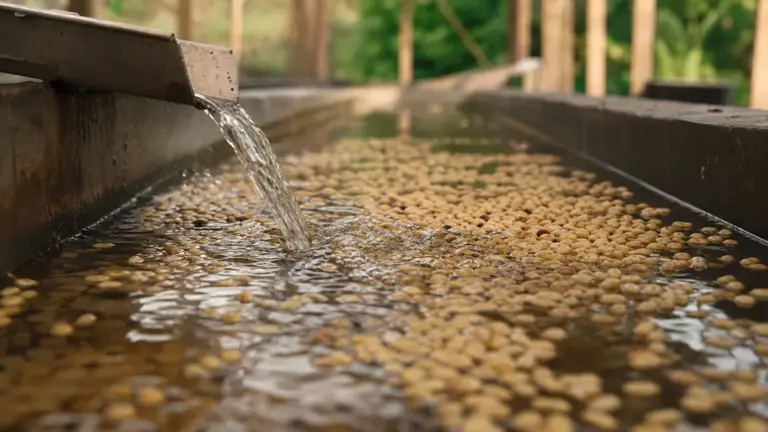
- Move to the next processing stage. Depending on the intended coffee, this can involve depulping, washing or proceeding to drying.
The valve is a significant detail. The airlocked vessels described in research allow carbon dioxide to leave; they are not simply containers with gas trapped indefinitely inside. “Sealed” should not be read as an instruction to improvise an unvented pressure vessel.
Carbon dioxide can also be introduced deliberately. One controlled carbonic-maceration experiment removed air from bags and injected carbon dioxide before fermentation. That differs from relying on microbial activity to change the atmosphere, although both approaches restrict oxygen. See carbonic maceration for that distinction in more detail.
Why time and temperature belong together
There is no single correct duration for anaerobic fermentation. Published experiments illustrate the variety: one Brazilian study compared 24, 48 and 72 hours, while a separate whole-fruit and depulped-coffee experiment followed fermentation over 96 hours. These are study conditions, not recommended timings for every farm.
Temperature makes a duration meaningful. A controlled carbonic-maceration study tested 18, 28 and 38 degrees Celsius, alongside different fermentation times, and found that the combination affected sensory results. Those temperatures should not be borrowed as a universal operating range for all anaerobic coffee.
It also matters which temperature is reported. Room temperature and the temperature inside the coffee mass are different measurements. In a Cenicafé experiment, researchers maintained the room at 20 ± 1 degrees Celsius while separately logging temperature within the fermenting coffee.
For a buyer, the practical question is therefore not “How many hours is best?” Ask whether the reported duration describes one tank stage or several stages, whether temperature was controlled, and whether the figure refers to the room or the coffee itself. A long fermentation time is information, not an achievement in its own right.
What does anaerobic coffee taste like?
It can taste vividly fruity, but there is no exclusive anaerobic flavour. A study comparing coffees from different Brazilian growing environments found more pronounced fruity character under self-induced anaerobiosis. Another experiment found that fermentation time and yeast inoculation could shift the dominant descriptions between fruit, caramel, wood, chestnut and herbaceous notes.
That range matters when choosing a bag. If you want a fruit-led cup, look for a clear tasting description rather than assuming every anaerobic coffee will provide one. If you prefer restrained flavours, do not reject the entire category on the strength of one unusually intense example.
What changes the flavour?
Fermentation changes the chemical material available in and around the seeds. Researchers have measured changes in organic acids, alcohols and volatile compounds, meaning compounds that can enter the air and contribute to aroma. Some fermentation products can move into the seeds, while roasting subsequently creates further chemical changes.
This is not a simple chain in which one microorganism produces one recognisable fruit flavour. Measuring a compound in fermentation liquid is also not equivalent to proving that it determines the flavour of brewed coffee.
Keep sensory description separate from approval. World Coffee Research’s sensory vocabulary includes fruity, winey, fermented, overripe and sour-related attributes; these describe perceptions rather than automatically awarding quality. The SCA likewise distinguishes describing a coffee from judging how much it is liked.
When tasting, ask: is the fruit character pleasant, does acidity feel balanced, and is the finish enjoyable? “Unusual” need not mean “better”, and “fermented” need not mean “defective”.
How to read anaerobic fermentation labels
Treat the label as the beginning of a process description. The SCA’s June 2024 Coffee Value Assessment document explicitly noted the absence of standard definitions for popular fermentation terms including anaerobic, lactic and carbonic maceration. It recommended recording further processing information, including whether something was added.
| Label wording | Useful interpretation | What to ask next |
|---|---|---|
| Anaerobic natural | An oxygen-restricted stage combined with whole-fruit drying | Were cherries intact throughout fermentation? |
| Anaerobic washed | An oxygen-restricted stage within a washed sequence | Was fermentation before or after depulping? |
| Self-induced anaerobic | The atmosphere changes through microbial activity | What vessel and gas-release arrangement were used? |
| A stated fermentation duration | Time associated with a processing stage | At what temperature, and does it cover one stage or several? |
| Anaerobic with added yeast | A starter culture was introduced | Which culture, and were any other ingredients added? |
These are reading aids, not formal product definitions. The distinctions reflect the fruit treatments, vessels, cultures and processing sequences documented in experiments.
A useful product description should let you distinguish:
- The fruit condition when fermentation began.
- How oxygen was restricted.
- Whether water or a microbial starter was added.
- The duration and any temperature control.
- What happened before drying.
Keep tasting notes and processing additions separate. “Pineapple” as a sensory description does not establish that pineapple was added. Equally, “anaerobic” does not establish that nothing was added. Our guide to experimental and infused processing explores those disclosure questions.
Controversy, quality and consistency
The useful debate is not whether producers should influence flavour: processing already does that. It is whether the process is described honestly, whether the result is enjoyable, and whether claims of improvement stand up to comparison.
Evidence does not support an automatic quality upgrade. The Catiguá MG2 experiment reported improvements under particular fermentation treatments. By contrast, Cenicafé’s controlled comparison of open and sealed systems found no statistically significant sensory-score effect from its tested treatments. Different raw materials, protocols and assessment conditions limit direct comparisons between studies.
Consistency is another challenge. A sealed vessel controls one part of the environment, not every variable. In a controlled trial, changing the fermentation duration and adding a selected yeast altered the sensory results. Repeating the same number of hours therefore cannot, by itself, guarantee the same flavour.
For enthusiasts, the strongest evidence would be a clearly documented comparison using the same starting coffee and comparable drying, roasting and sensory assessment. For everyday buying, favour a producer’s process account and a roaster’s specific tasting description over dramatic language.
Choose anaerobic fermentation coffee for the cup you want to drink, not for the longest tank time.
FAQ
Does anaerobic fermentation mean fruit or flavouring was added?
No, the term describes the fermentation environment, not an ingredient list. Research includes spontaneous fermentation and treatments with added microbial cultures. Other additions are a separate disclosure question. Ask the seller to distinguish naturally occurring tasting notes, starter cultures and any fruit, spices or flavouring materials used during processing.
Is anaerobic fermentation only used for arabica?
No, oxygen-restricted fermentation has also been studied in Coffea canephora, the species traded as robusta. A controlled Conilon experiment used carbon dioxide-enriched conditions and tested different times and temperatures. That demonstrates its use beyond arabica, but does not mean the same protocol will produce equivalent flavours in different coffees.
Does a fruity flavour prove that coffee was anaerobically fermented?
No, taste alone cannot verify the processing method. Fruity attributes occur within coffee’s wider sensory vocabulary, while experimental anaerobic coffees have shown several different flavour profiles. Use traceable processing information to establish the method, then use tasting to decide whether you enjoy the result.
Where to go next
Read the processing overview, Coffee Processing Methods, to place tank fermentation within the full journey from cherry to dried seed. Carbonic Maceration explains deliberate carbon dioxide treatment, while Experimental and Infused Processing helps distinguish fermentation management from added ingredients.
Sources
-
Cenicafé, Peñuela-Martínez et al. “Development of Fermentation Strategies for Quality Mild Coffee Production (Coffea arabica L.) Based on Oxygen Availability and Processing Time.” Foods, 2025, 14, 3001.
Research paper. -
Da Silva Vale et al., Federal University of Paraná and collaborators. “Understanding the Effects of Self-Induced Anaerobic Fermentation on Coffee Beans Quality: Microbiological, Metabolic, and Sensory Studies.” Foods, 2023, 12, 37, published online December 2022.
Research paper. -
Rocha et al. “Enhancing Sensory Quality of Coffee: The Impact of Fermentation Techniques on Coffea arabica cv. Catiguá MG2.” Foods, 2024, 13, 653.
Research paper. -
Pereira et al., Federal University of Lavras and collaborators. “Self-induced anaerobiosis coffee fermentation: Impact on microbial communities, chemical composition and sensory quality of coffee.” Food Microbiology, 2022, 103, 103962.
Research abstract. -
Palumbo et al. “Impact of different fermentation times on the microbiological, chemical, and sensorial profile of coffees processed by self-induced anaerobiosis fermentation.” Brazilian Journal of Microbiology, 2024, 55.
Research paper. -
Gomes et al. “Changes in the Chemical and Sensory Profile of Coffea canephora var. Conilon Promoted by Carbonic Maceration.” Agronomy, 2022, 12, 2265.
Research paper. -
Specialty Coffee Association. A System to Assess Coffee Value: Understanding the SCA’s Coffee Value Assessment, June 2024 edition, particularly processing information and descriptive versus affective assessment.
SCA document. -
World Coffee Research. Sensory Lexicon, version 2.0, 2017, and accompanying resource page.
Lexicon and resource page.
This article was researched using controlled coffee-processing experiments, a national coffee research centre’s findings, and SCA and World Coffee Research reference documents; no first-hand testing is claimed.
Last checked: November 2026