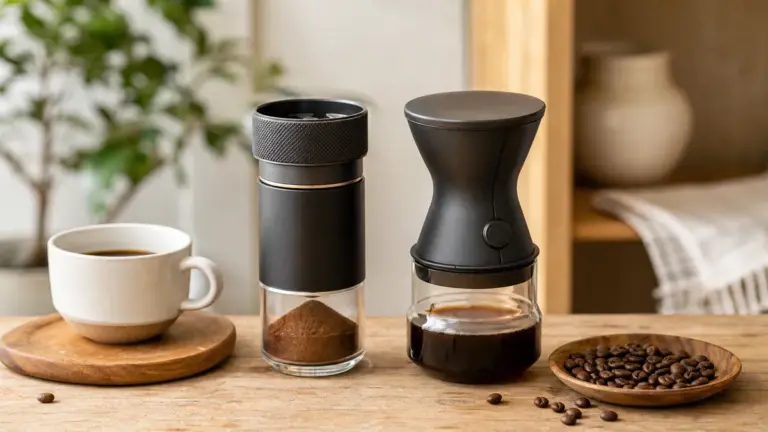
The key coffee industry trends in November 2026 are changing supply conditions, weather-sensitive harvests, sustained specialty demand, more automated processing and approaching sustainability deadlines. The useful distinction is between a measured change, a supplier’s claim and a forecast: each deserves a different response.
In short
- Watch the reporting period: this edition covers developments from November 2025 to 2 November 2026, not long-term market forecasts.
- Supply pressure is changing: the ICO’s September 2026 report associated weaker benchmark prices with increased Brazilian availability.
- Specialty remains significant: the latest retrieved US consumer survey recorded past-day specialty consumption at 48% of adults, not 48% of coffee sales.
- Check the next deadlines: EU deforestation rules begin applying to large and medium operators on 30 December 2026.
- Separate grounds from packaging: England’s workplace food-waste guidance includes coffee grounds but excludes compostable packaging from ordinary food-waste collections.
Coffee industry trends: what this edition measures
This is a rolling watch of supply, consumer research, processing technology and sustainability rules. It concentrates on developments during the past year, while identifying older requirements that now need action.
For individual announcements, use latest updates. The purpose here is different: to explain which developments have enough evidence behind them to influence a purchasing, sourcing or operational decision.
Three distinctions keep the evidence useful:
- Publication date versus observation date: a report published in September may describe research conducted in June.
- Geography: an American consumer survey cannot establish British drinking habits.
- Availability versus performance: a manufacturer announcing equipment does not prove that it performs better in independent testing.
| Area to watch | Recent evidence | Sensible response |
|---|---|---|
| Supply and prices | ICO reporting links increased Brazilian availability with weaker September benchmarks | Review supply terms without assuming a permanent direction |
| Consumer habits | US research shows home and out-of-home drinking coexisting | Measure your own workplace demand |
| Technology | Dated manufacturer announcements describe automation and image-based sorting | Ask for application-specific demonstrations |
| Sustainability rules | EU application dates and England’s micro-firm recycling deadline are approaching | Confirm responsibilities and collection arrangements |
These are monitoring priorities, not predictions that every coffee business will change in the same way.
Prices and supply: distinguish a market movement from your next delivery
The International Coffee Organization’s September 2026 Coffee Market Report described declining benchmark prices as Brazil’s harvest reached the market. It also identified low certified arabica stocks and uncertainty surrounding El Niño as supporting factors. The picture was therefore more complicated than either “shortage” or “surplus”.
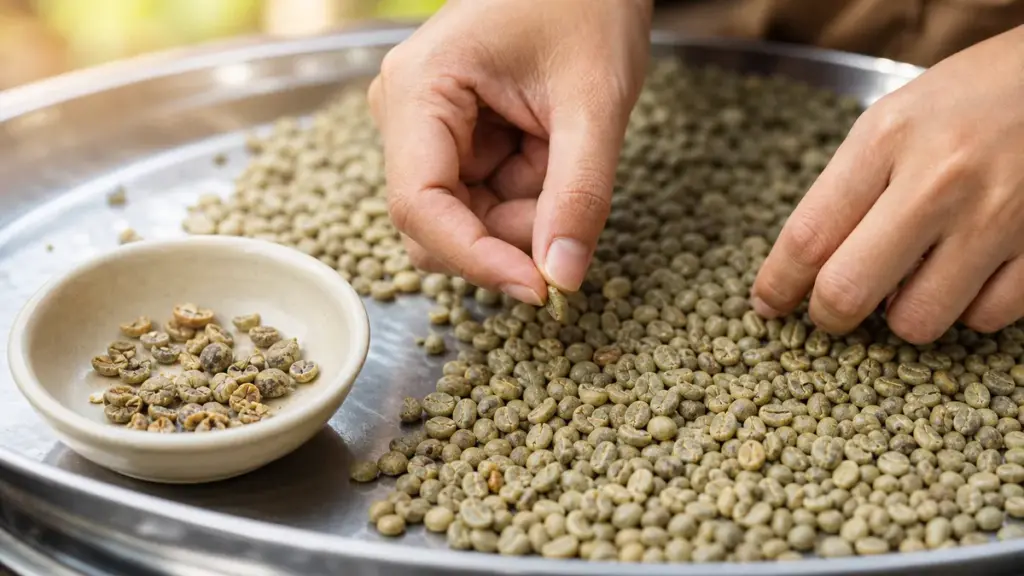
The ICO also reported higher global green-coffee exports in August than a year earlier. Green coffee means beans before roasting; export figures describe shipments, not the quantity of a particular coffee available to a particular buyer.
For procurement, treat benchmark movements as a reason to ask questions, not as an instruction to change suppliers. Request an explanation of the coffee specification, shipment window and terms behind any revised quotation.
For your own workplace calculation, include beans, milk, cleaning materials, filters, equipment, servicing, energy and waste collection. Divide the relevant total by drinks actually served, using a consistent VAT basis. Obtain itemised written quotations rather than comparing headline offers with different inclusions.
Editorial assessment: the immediate trend is changing supply pressure, not evidence that future purchasing conditions are settled.
Climate: follow the crop stage, not just the weather headline
A useful recent example comes from Brazil’s national meteorological institute, INMET. Its bulletin of 26 August 2026 explained that returning rain could interrupt harvesting and drying while also stimulating flowering for the next production cycle.
That apparent contradiction is central to understanding coffee weather. Rain that helps flower buds open can be unwelcome where harvested coffee is drying. Prolonged moisture during drying can encourage unwanted fermentation and threaten cup quality.
INMET also explained that flowering alone does not secure a crop. Soil moisture and continued rainfall after flowers open matter to early fruit establishment.
This is weather-risk evidence, not proof that a particular episode was caused by climate change. A seasonal forecast should not be presented as a verified harvest loss.
When reading an origin update, ask:
- Which producing area is affected?
- Is the coffee flowering, developing fruit, being harvested or drying?
- Is the statement a forecast, a field observation or a revised production estimate?
- Does it concern total volume, quality or delivery timing?
That approach is more useful than treating national rainfall headlines as a verdict on every lot from that country.
Consumer habits: convenience does not mean abandoning home coffee
The National Coffee Association’s Fall 2026 findings were published on 15 September, using research collected in June. Among US past-day coffee drinkers, 83% had coffee at home and 38% had coffee outside the home. Those groups can overlap.
The survey also recorded app ordering among 40% of past-week out-of-home coffee buyers. Its summer cold-coffee result was higher than its winter result, which the association explicitly recognised as seasonal.
These are American findings, not UK forecasts. They suggest questions worth investigating locally rather than a ready-made office drinks menu.
Before adding equipment or another drink category, record what colleagues actually choose. Include drink type, preparation location, time of day and unfinished drinks. Ask separately about occasional preferences and everyday requirements: wanting an iced drink sometimes is not the same as needing a dedicated cold-coffee system.
The practical lesson is to avoid forcing a choice between convenience, home preparation and out-of-home drinking. Investigate how they coexist among your own users.
Specialty growth: check what the category includes
The same Fall 2026 US release put past-day specialty consumption at a record 48% of adults. That is evidence of participation in a consumer category, not a measure of market revenue, farm income or independently assessed bean quality.
The NCA’s specialty-report methodology explains why the distinction matters. Its category includes premium traditional coffee, espresso-based drinks, other beverages such as cold brew, and ready-to-drink coffee. It also acknowledges that consumers may understand “specialty” differently from coffee professionals.
Consequently, a popular milk-based drink and a carefully sourced filter coffee can appear within the same broad consumer category. Do not interpret category growth as proof that demand for every origin, processing method or roast style is increasing.
For a workplace, define the intended improvement before choosing a product: clearer flavour, better consistency, more origin information or a drink range people will use. “Specialty” alone is not a sufficiently precise purchasing specification.
Technology: separate automation from artificial intelligence
Recent announcements support a watch on automated processing, but not every automated machine uses artificial intelligence.
On 27 April 2026, PROBAT announced an integrated roasting facility for Luckin Coffee, describing automation and intelligent data management across the production chain. This is evidence of a named deployment reported by its supplier. It is not independent verification of every performance or environmental claim attached to it.
Image-based sorting is another area to watch. Bühler’s September 2026 explanation of its AI700 describes deep learning applied to difficult grain-sorting tasks. Its coffee-processing material separately documents optical-electronic sorting and integrated measurement.
Those sources should not be combined into an invented coffee trial. A result demonstrated on oats does not establish the same result on green coffee.
The distinction is straightforward:
- Automation executes a programmed process.
- AI-based image analysis uses trained models to classify what cameras observe.
- Quality assurance must establish whether the resulting coffee meets the buyer’s requirements.
Before accepting claims about AI sorting or roasting, ask what was measured, which coffee was used, what the comparison was and whether the result was independently assessed. Ask to see accepted material as well as rejected material.
For model-specific announcements rather than this evidence assessment, see new product releases.
Sustainability rules: the next deadlines need practical preparation
EU deforestation requirements
The European Commission’s current implementation page gives these application dates:
- Large and medium operators: 30 December 2026.
- Micro and small operators: 30 June 2027.
It identifies an earlier application date for the particular micro and small operators already covered by the EU Timber Regulation. Businesses should check their own classification rather than relying on a general small-business summary.
Coffee is among the covered commodities. The Council explains that traceability back to production plots is part of demonstrating that covered products meet the regulation’s requirements.
These are EU market rules, not a blanket requirement imposed on every British office purchasing coffee. UK businesses supplying relevant products into the EU should establish their role and responsibilities in that supply chain.
For buyers, a sensible preparation question is: what traceability information can the supplier provide, and to which coffee does it relate? Do not substitute an attractive origin story for documented evidence.
England’s workplace recycling deadline
England’s workplace separation requirements began on 31 March 2025. Micro-firms with fewer than 10 full-time-equivalent employees have until 31 March 2027; the employee count applies across the business, not separately at each location.
Coffee grounds belong in food waste. Compostable packaging does not belong in that collection under the published guidance, so arrange an appropriate separate route. These are England-specific rules, not a UK-wide timetable.
Environmental claims still need substantiation
The CMA’s Green Claims Code is established guidance, not a newly announced coffee rule. It remains a useful test of current claims: environmental statements should be clear, supported and appropriately qualified.
Ask whether a claim concerns the beans, roasting, packaging, transport or the whole product. For disposal claims, ask which collection route is actually available.
Turn the evidence into a short watchlist
Use a small record rather than collecting headlines without decisions attached:
- Record the source and both dates. Keep the publication date and the period measured.
- Label the evidence. Use categories such as official statistics, consumer survey, legal guidance, supplier announcement or forecast.
- State the consequence. Identify whether the development affects supply continuity, drink demand, equipment suitability or compliance.
- Assign an action. Request documentation, check a collection arrangement or run a limited workplace trial.
- Set a review trigger. Revisit the decision when the relevant report, law or supplier specification changes.
The most useful coffee industry trends are the ones you can connect to a clear question and a proportionate action. Keep coffee industry news as the broader starting point, but retain the dated evidence behind each decision.
FAQ
Does a successful coffee product prove that the whole industry is changing?
No, an individual product’s success does not establish an industry-wide trend. Look for evidence beyond its launch announcement, such as comparable consumer research or documented adoption across businesses. For your own workplace, test whether the product solves an identified need before treating its popularity elsewhere as a purchasing requirement.
Should an office replace its coffee machine because of these trends?
Not on the strength of a trend headline alone. First identify a problem with the existing arrangement, such as an unsuitable drink range, inconvenient operation or inadequate support. Then ask suppliers to demonstrate how a replacement addresses it. Request itemised written quotations and judge the complete service arrangement, not just a feature list.
What would justify changing this article before its next annual review?
A change to an application date, a materially different official supply report or new independent technology evidence would justify an earlier update. A manufacturer’s announcement may warrant a news item without changing the overall assessment. Each revision should retain the observation period so readers can distinguish new evidence from newly published commentary.
Where to go next
Read Coffee Industry News for the wider editorial route through industry developments, and Latest Updates for individual dated announcements. New Coffee Product Releases is the useful next read when you want to investigate particular equipment or drink launches rather than broader coffee industry trends.
Sources
-
International Coffee Organization, Coffee Market Report: September 2026, 2026.
https://ico.org/documents/cy2025-26/cmr-0926-e.pdf -
INMET, Previsão indica retorno da chuva e aumenta a atenção na colheita e secagem do café no Sudeste, 26 August 2026.
https://portal.inmet.gov.br/noticias/previs%C3%A3o-indica-retorno-da-chuva-e-aumenta-a-aten%C3%A7%C3%A3o-na-colheita-e-secagem-do-caf%C3%A9-no-sudeste -
National Coffee Association, Coffee Tops Beverage Charts Again, Specialty Coffee Hits New High, 15 September 2026. Public findings and methodology from the Fall 2026 NCDT.
https://www.ncausa.org/Newsroom/NCA-Coffee-tops-beverage-charts-again-specialty-coffee-hits-new-high -
National Coffee Association, 2026 NCDT Specialty Coffee Report, public methodology and category definitions, 2026.
https://www.ncausa.org/Specialty -
PROBAT, PROBAT and Luckin Coffee set a new standard in industrial coffee roasting, 27 April 2026. Manufacturer account.
https://www.probat.com/newsroom/news/probat-and-luckin-coffee-set-a-new-standard-in-industrial-coffee-roasting/ -
Bühler, Seeing the difference: AI redefines optical sorting, September 2026. Manufacturer explanation.
https://www.buhlergroup.cn/global/en/stories/inspiration-hub/sortex-ai-700.html -
Bühler, Coffee Processing Equipment, undated manufacturer application page, retrieved November 2026.
https://www.buhlergroup.com/global/en/industries/coffee.html -
European Commission, Regulation on Deforestation-free products, current implementation guidance, retrieved November 2026.
https://environment.ec.europa.eu/topics/forests/deforestation/regulation-deforestation-free-products_en -
Council of the European Union, EU deforestation-free products regulation, current policy explanation, retrieved November 2026.
https://www.consilium.europa.eu/en/policies/deforestation-free-products/ -
DEFRA and Environment Agency, Simpler recycling: workplace recycling in England, current guidance, retrieved November 2026.
https://www.gov.uk/guidance/simpler-recycling-workplace-recycling-in-england -
Competition and Markets Authority, Making environmental claims on goods and services, 2021, current online guidance retrieved November 2026.
https://www.gov.uk/government/publications/green-claims-code-making-environmental-claims/environmental-claims-on-goods-and-services
This article was researched using retrieved official reports, public survey findings, regulatory guidance and manufacturer publications, with supplier claims distinguished from independent evidence.
Last checked: November 2026