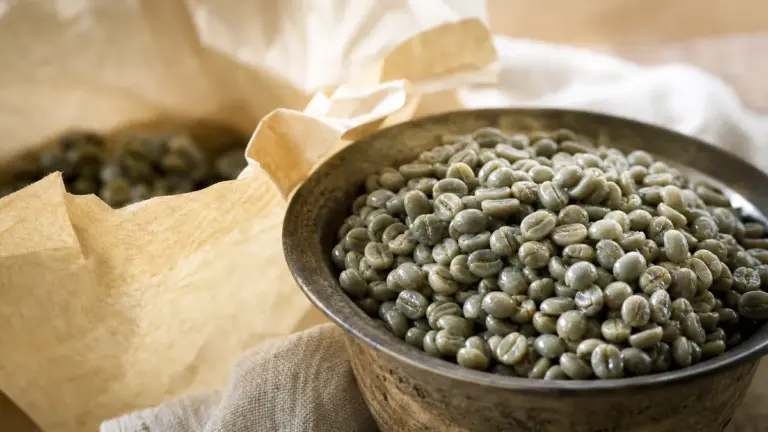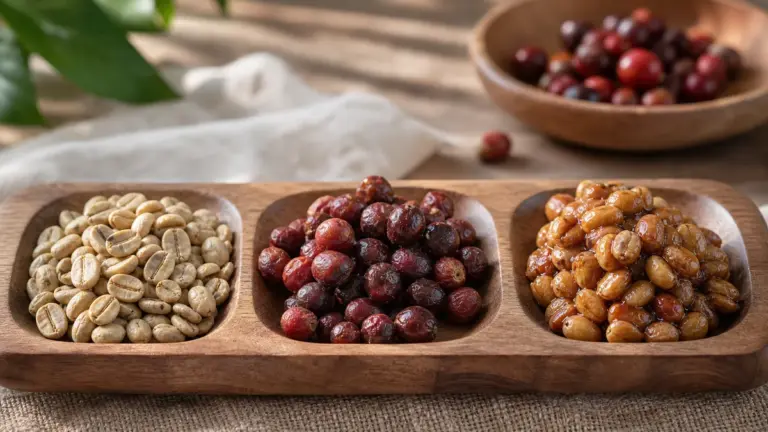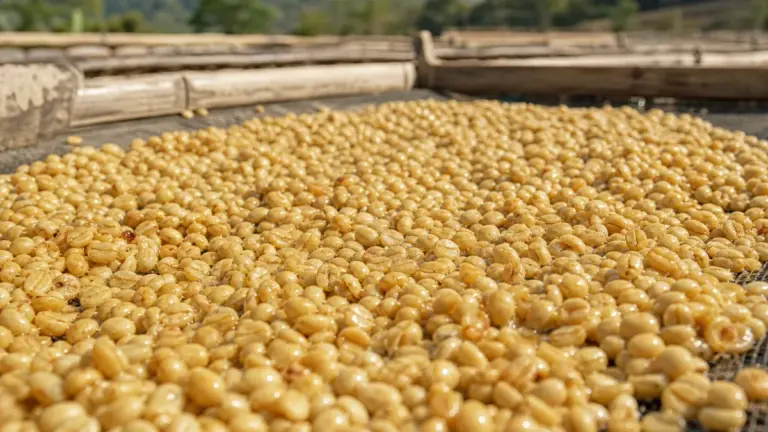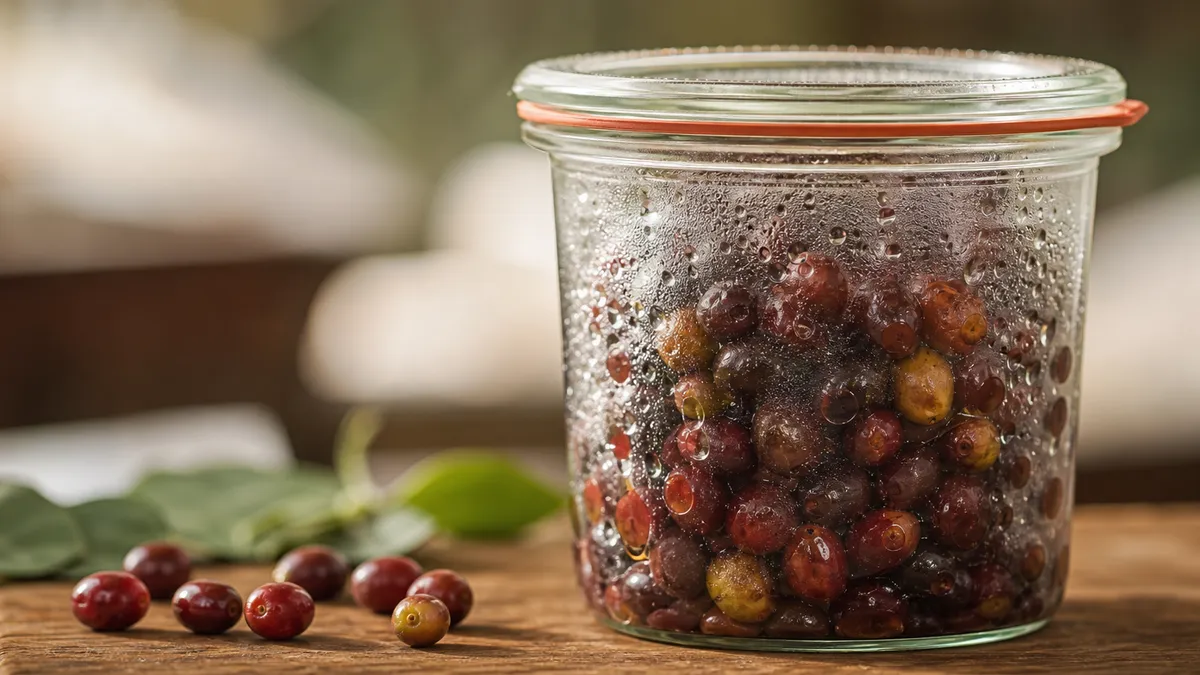
Carbonic maceration coffee is fermented in a vessel deliberately flushed with carbon dioxide (CO₂) to displace air and create a low-oxygen environment. Borrowed from winemaking, its closest wine-style version begins with whole, intact coffee cherries, although coffee suppliers also use the name for CO₂-treated pulped coffee. It can produce striking fruit flavours, but the processing label alone does not guarantee a particular taste or higher quality.
In short
- Added CO₂ is the key distinction: simply closing a fermentation tank is not the same intervention.
- Whole cherries matter to the wine analogy: pulped coffee under CO₂ is a related treatment, not an exact equivalent.
- Fermentation and drying are separate decisions: a CM treatment can be combined with different subsequent processing routes.
- Saša Šestić helped popularise it: his winning 2015 World Barista Championship presentation brought the technique international attention.
- Ask for the actual protocol: cherry condition, gas addition, fermentation controls and drying tell you more than “CM” on a bag.
What carbonic maceration means in coffee
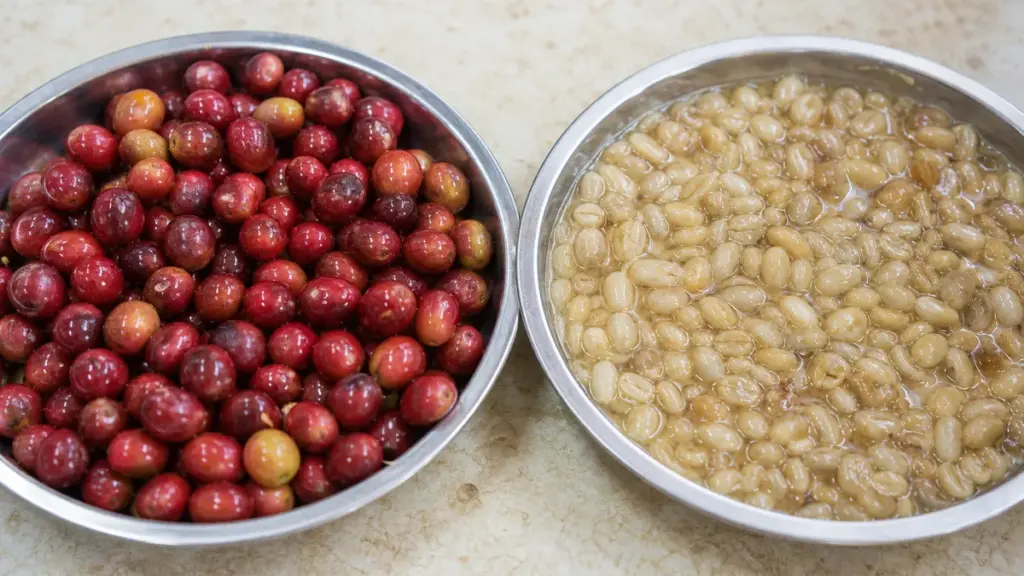
Carbonic maceration, often shortened to CM, describes a controlled fermentation environment rather than a complete journey from picked cherry to export-ready coffee. In the whole-cherry version, the fruit enters a vessel without first having its skin and flesh mechanically removed. Carbon dioxide is introduced to establish the fermentation atmosphere.
That distinction matters when reading a coffee description. “Whole-cherry fermentation” tells you what went into the vessel; “CO₂-flushed” tells you how its atmosphere was established. Neither phrase, by itself, tells you how the coffee was subsequently dried.
For the wider sequence of harvesting, fruit removal and drying, start with coffee processing methods. Here, the useful question is narrower: what changes when the producer deliberately supplies CO₂?
A label with more than one usage
Commercial terminology is broader than the strict wine-derived description. Project Origin explicitly describes both whole-cherry natural CM and washed CM in which coffee is pulped before entering the CO₂-flushed tank.
Consequently, “washed carbonic maceration” does not necessarily mean whole cherries were fermented and then washed. It may mean the cherries were pulped first. Ask which sequence the producer used rather than trying to reconstruct it from the name.
This is a difference in terminology, not proof that either coffee has been processed badly.
Borrowed from wine, especially Beaujolais
In winemaking, carbonic maceration has a precise biological meaning. Intact grapes held under carbon dioxide undergo an initial phase of intracellular fermentation, meaning changes driven by the grape’s own enzymes inside its cells, without yeast conducting that initial transformation.
The intact fruit is therefore essential to the wine mechanism. Fermentation of juice released from damaged grapes is not the same thing.
The technique is strongly associated with Beaujolais. Jules Chauvet, the Beaujolais wine merchant, winemaker and researcher, studied yeasts, malolactic fermentation and carbonic maceration. He belongs in its history, but should not simply be credited with inventing either carbonic maceration or its coffee adaptation.
Coffee borrowed the vessel atmosphere and whole-fruit approach. That does not establish that a coffee cherry behaves identically to a grape.
How competitions helped spread it
A short chronology separates the competition story from subsequent research:
- 2015: Saša Šestić won the World Barista Championship. His competition coffee was a Colombian Sudan Rume from producer Camilo Merizalde, and his presentation brought carbonic maceration to a prominent international audience.
- 2022: Gomes and colleagues published experimental work on carbonic maceration of conilon coffee, examining chemical and sensory outcomes.
- 2023: Da Silva and colleagues published research connecting fermentation conditions, bacterial communities and sensory results in arabica coffee.
Šestić describes collaborating with winemakers before his championship appearance and subsequently sharing the approach through seminars and producer projects. This supports crediting him with popularising CM in specialty coffee, rather than treating a competition win as evidence of sole invention.
Producers also developed their own approaches. Panama producer Jamison Savage describes refining different fermentation formulas and using both natural and washed finishing routes. The championship supplied visibility; producers supplied the continuing practical development.
How carbonic maceration coffee is processed
The following sequence explains the whole-cherry version. It is a process overview, not a production recipe: the research does not establish one universally suitable temperature or fermentation duration.
- Select and clean the fruit. Remove unsuitable cherries and extraneous material before fermentation.
- Load whole cherries. Leave the skin and flesh attached for the closest wine-style interpretation.
- Establish the CO₂ atmosphere. Deliberately introduce carbon dioxide, displacing or first removing air according to the equipment and protocol.
- Manage fermentation. Monitor the chosen conditions and endpoint rather than relying on elapsed time alone.
- Finish processing and dry. The producer may dry the fruit whole or remove fruit material for a washed finishing route.
Commercial practice is not necessarily static throughout the batch. Savage reports that cherries can open during fermentation and release juice, particularly under the weight of fruit above them. Starting with intact cherries does not mean every cherry remains intact until unloading.
Likewise, a CO₂-rich atmosphere is not a guarantee that oxygen is absent everywhere throughout the process. Without measurements, “oxygen-free” is better understood as the intended operating condition than as a verified result.
Carbonic maceration versus sealed-tank anaerobic fermentation
Anaerobic means without oxygen, although coffee descriptions often use it more loosely for oxygen-restricted fermentation. Conventional sealed-tank fermentation can become low in oxygen through biological activity: oxygen is consumed and CO₂ is produced within the vessel.
Carbonic maceration adds another intervention by deliberately supplying CO₂.
| Feature | Whole-cherry, CO₂-flushed CM | Self-induced sealed-tank fermentation |
|---|---|---|
| Establishing the atmosphere | CO₂ deliberately introduced | Oxygen consumed and CO₂ generated within the batch |
| Starting material | Whole cherries in the strict wine-style description | Whole cherries or pulped coffee |
| Defining information | Gas addition and condition of the fruit | Closure, oxygen restriction and fermentation protocol |
| What the name cannot prove | A particular flavour or grape-like cellular mechanism | A particular flavour or complete absence of oxygen |
Both approaches can involve microbial fermentation. The distinction is not “fermented” versus “unfermented”, nor “scientific” versus “traditional”. It is how the atmosphere is established and managed.
See anaerobic fermentation for the broader family of sealed and oxygen-restricted methods.
What does carbonic maceration coffee taste like?
There is no single CM flavour. Project Origin’s own commercial categories span dark fruit and chocolate through red, orange and yellow fruit, with different intended levels of intensity.
For buying purposes, read those as descriptions of particular lots, not a guaranteed result of adding CO₂. A useful tasting note should help you decide whether you want a delicate, clearly separated fruit character or a more forceful fermentation-led cup.
My advice is to judge clarity, balance and finish, not aromatic intensity alone. Ask whether the fruit character remains pleasant as the drink cools and whether you would enjoy a full mug, rather than only an intriguing first sip.
Why fermentation changes flavour
Microorganisms can break down compounds in the fruit and produce metabolites, the substances formed through their activity. These changes can influence flavour precursors, which are compounds involved in the development of flavour during roasting.
Research on fungal communities under coffee CM also shows that time and temperature influence the organisms present. The tank atmosphere is therefore only part of the explanation: the starting fruit, microbial community and subsequent roasting still matter.
CM does not automatically mean infused
Carbon dioxide treatment does not, by definition, require added fruit, spices or flavourings. However, a producer can combine CM with other treatments, so the name is not a complete ingredient disclosure.
Ask separately about starter cultures, added ingredients and flavourings. A selected fermentation microorganism is not the same intervention as adding a flavouring ingredient. The distinctions are covered in experimental and infused processing.
What makes production more involved?
The equipment and management behind a CM lot deserve scrutiny, but there is no useful universal production-cost figure.
For a producer or green-coffee buyer, an assessment should include the vessel and gas supply, cleaning, monitoring equipment, temperature management where used, staff time, tank occupancy, drying capacity and treatment of unsuccessful batches. These are assessment headings, not evidence that every CM producer incurs the same requirements.
Project Origin says it generally supplies equipment and guarantees producer payment within its own CM Selections programme. That is a programme-specific commercial arrangement, not a rule for the industry.
For UK workplace buyers, request itemised written quotations covering the coffee, delivery, supply continuity and any purchasing commitments. Compare samples using your intended drinks and equipment. If evaluating your own cost per cup, divide the total relevant expenditure by the number of drinks actually served, accounting for dose, dialling-in and discarded drinks.
My recommendation is to choose CM for an enjoyable, documented cup profile, not because a more elaborate processing description sounds inherently better.
What the science supports, and what remains uncertain
The strongest distinction is between observed coffee fermentation and an assumed grape-like mechanism.
Da Silva and colleagues tested arabica fermentation at 18, 28 and 38 degrees Celsius over 24 to 120 hours. Six professional tasters assessed the coffees. At 38 degrees Celsius, sensory scores increased across fermentation time, while the relative abundance of bacteria identified as Lactobacillus correlated positively with score.
That is experimental evidence about those treatments, plus an association between bacterial abundance and sensory outcome. It does not prove that those bacteria alone caused the improvement, or that the same conditions suit another producer’s coffee.
The cited coffee studies do not establish the wine-style intracellular mechanism through direct measurement inside intact coffee fruit. For that reason, this article uses “wine-inspired CO₂-controlled fermentation”, not an assertion that coffee reproduces grape biology.
For deeper reading, keep three questions separate:
- Was CO₂ deliberately introduced?
- Did the coffee improve against a suitable comparison treatment?
- What biological mechanism produced the difference?
A positive answer to the first does not automatically answer the others.
Reading a bag or green-coffee specification
Ask the supplier for:
- Whether cherries entered whole or pulped.
- Whether CO₂ was added or generated only within the batch.
- The fermentation duration, temperature management and endpoint.
- Any starter cultures, fruit, flavourings or other additions.
- The subsequent washing and drying sequence.
Prefer a description you can follow over an impressive collection of processing terms. For the underlying drying distinctions, use washed, natural and honey compared.
FAQ
Can a coffee be both carbonic maceration and natural?
Yes, a coffee can undergo CO₂-controlled fermentation and then be dried as whole fruit. In that description, CM identifies the fermentation treatment and natural identifies the whole-fruit drying route. Ask for the sequence, because a combined label is more useful when the supplier explains what happened at each stage.
Does a very fruity CM coffee prove that fruit was added?
No, a fruity description alone does not establish that fruit or flavouring was added. Fermentation can influence coffee’s sensory profile, while added ingredients are a separate processing decision. Ask for explicit disclosure rather than assuming either that an unusual flavour proves infusion or that “CM” guarantees no additions.
Should a workplace choose it because it appeared in competitions?
No, competition history is not a substitute for testing whether your colleagues enjoy the coffee. My recommendation is to sample it in the drinks your workplace actually serves, alongside a familiar alternative. Carbonic maceration is useful information about processing, but enjoyment and a clear supplier explanation are better purchasing criteria than championship associations alone.
Where to go next
Read Coffee Processing Methods to place carbonic maceration within the full post-harvest sequence, then Anaerobic Fermentation to understand the wider group of oxygen-restricted treatments. Experimental and Infused Processing explains how to distinguish fermentation choices from added ingredients when assessing a carbonic maceration coffee.
Sources
-
Australian Wine Research Institute, Winemaking treatment: Carbonic maceration, undated technical guidance. The reference for the wine mechanism and the importance of intact fruit.
https://www.awri.com.au/industry_support/winemaking_resources/winemaking-practices/winemaking-treatment-carbonic-maceration/ -
Inter Beaujolais, Un vin bien, undated publication, hosted in a 2020 directory. Includes its account of Jules Chauvet’s research.
https://www.beaujolais.com/wp-content/uploads/sites/2/2020/09/Carnet-Beaujolais-FR-1.pdf -
World Barista Championship, 2015 World Barista Championship Official Rankings, 2015.
https://static1.squarespace.com/static/65fb773fac2112270b71798a/t/668214271524342bc223b67e/1719800871921/2015%2BWBC.pdf -
Sprudge Live, 2015 WBC Competitor Sasa Sestic, Ona Coffee, Australia, 2015 competitor questionnaire. Used for Šestić’s own identification of his coffee and collaboration theme.
https://sprudgelive.com/2015-wbc-competitor-sasa-sestic-ona-coffee-australia/ -
Saša Šestić, What’s the problem with infused coffees?, undated first-person article. Used for his account of wine collaboration, championship exposure and subsequent knowledge-sharing, not as independent validation of performance claims.
https://sasasestic.com.au/whats-problem-infused-coffees/ -
Barista Hustle, PC 4.04 An Interview with Jamison Savage, undated producer interview. Used as first-person evidence of production practice.
https://www.baristahustle.com/lesson/pc-4-04-an-interview-with-jamison-savage/ -
Project Origin, CM Selections, undated commercial process description. Used for its own terminology and claimed flavour categories.
https://projectorigin.coffee/cm-selections/ -
Project Origin, Frequently Asked Questions, undated, CM Selections section. Used for its stated producer-support arrangements.
https://projectorigin.coffee/frequently-asked-questions/ -
Gomes and colleagues, Changes in the Chemical and Sensory Profile of Coffea canephora var. Conilon Promoted by Carbonic Maceration, Agronomy, volume 12, article 2265, 2022.
https://www.mdpi.com/2073-4395/12/10/2265/pdf?version=1663829850 -
Da Silva and colleagues, Bacterial community and sensory quality from coffee are affected along fermentation under carbonic maceration, Food Chemistry Advances, volume 3, article 100554, 2023.
https://biblioteca.incaper.es.gov.br/digital/bitstream/item/4511/1/1-s2.0-S2772753X23003751-main.pdf -
Palumbo and colleagues, Impact of different fermentation times on the microbiological, chemical, and sensorial profile of coffees processed by self-induced anaerobiosis fermentation, Brazilian Journal of Microbiology, volume 55, 2024.
https://pmc.ncbi.nlm.nih.gov/articles/PMC11405557/ -
Entringer and colleagues, Genetic diversity of the fungal community that contributes to the sensory quality of coffee beverage after carbonic maceration and fermentation, 3 Biotech, volume 14, article 272, 2024.
https://pmc.ncbi.nlm.nih.gov/articles/PMC11490598/
This article was researched using retrieved wine technical guidance, official competition records, first-person producer accounts and peer-reviewed coffee studies, distinguishing commercial descriptions from experimental findings.
Last checked: November 2026