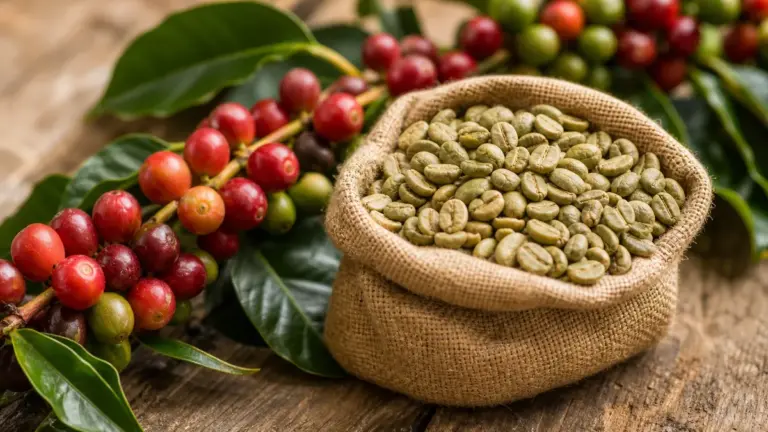
Jamaican Blue Mountain coffee is arabica coffee from a legally defined growing area in eastern Jamaica, subject to the country’s regulated certification and trademark system. Its reputation rests on a gentle, balanced cup, but the essential buying distinction is between certified origin, a labelled blend and coffee merely described as “Blue Mountain”.
In short
- Check the origin, not just the name: JACRA regulates the industry and licenses authorised trademark users.
- Read “blend” carefully: Jamaica’s regulations set a minimum Blue Mountain content of 30% by weight for Jamaica Blue Mountain Blend Coffee.
- Typica is the dominant variety: growing the same variety elsewhere does not confer Jamaican origin.
- Japan’s importance is well established: the exporters’ association reports that it received 70% of Jamaica’s coffee exports in 2017/18, a historical figure rather than a current annual share.
- A barrel is not proof: traceable supply and authorised use of the mark matter more than decorative packaging.
What qualifies as Jamaican Blue Mountain coffee?
Blue Mountain is a protected origin name, not simply shorthand for smooth coffee. The Jamaica Agricultural Commodities Regulatory Authority, or JACRA, oversees coffee businesses, certification and trademark licensing. It took over the Coffee Industry Board’s functions on 1 January 2018, so older references to the board describe the predecessor regulator.
Coffee Marks Limited, JACRA’s wholly owned subsidiary, owns the Jamaica Blue Mountain trademark. The protection includes certification marks, which indicate that products meet specified requirements rather than merely identifying a particular producer.
For a beginner, the useful distinction is between where the coffee grew, whether its supply chain is authorised, and what the finished product contains. A familiar name on the front of a packet does not answer all three questions. JACRA’s licensing system covers dealers, processors, foreign importers and trademark users, with approved sub-licensing also possible.
Jamaica sits within the wider Caribbean coffee region, but Blue Mountain has its own regulated identity. Treat it as a specific origin to investigate, not a description that applies to Jamaican coffee generally.
The Blue Mountains area and its boundaries
The growing region lies in eastern Jamaica. Its cool, misty conditions contrast with the warmer image many readers associate with the island’s coast. Abundant rainfall and a cooler mountain microclimate are central to published accounts of its coffee-growing conditions.
The legal definition is more precise than a mountain name: the First Schedule to the 2018 regulations describes a boundary through named places, beginning and ending at Skibo. It does not define eligibility simply by parish or elevation.
Published descriptions do not entirely agree. WIPO’s older account names Saint Andrew, Saint Thomas, Portland and Saint Mary; JACRA’s current coffee overview names Saint Thomas, Saint Andrew and Portland. This article follows the statutory boundary for legal eligibility and JACRA for current administration, rather than treating either parish list as a farm-level test.
The Jamaica Tourist Board describes cultivation between approximately 910 and 1,680 metres, converted and rounded from its published 3,000 to 5,500 feet. That is useful regional context, but it should not replace verification of a producer’s registered location.
Origin fact panel
| Feature | Reference information |
|---|---|
| Published altitude band | Approximately 910 to 1,680 metres; the statutory growing boundary remains decisive. |
| Main species and variety | Coffea arabica, predominantly Typica. |
| Main processing method | Washed, also called wet processed. |
| Harvest months | Extended and farm-dependent: Rocksteady reports mid-August to the end of May; a trade specification describes cycles extending into June. |
| Typical cup profile | Balanced and smooth, with chocolate, floral suggestions and lingering sweetness in the tourist board’s description. These are expectations, not guaranteed tasting notes. |
Growing conditions, varieties and processing
Cool conditions slow the ripening of coffee fruit, according to WIPO’s account of the region. This helps explain the association between mountain growing conditions and the coffee’s character, but it is not a guarantee that every harvest or producer will deliver an identical cup.
Typica is central to Jamaica’s coffee identity. World Coffee Research describes it as a tall, low-yielding arabica variety with good quality potential and high susceptibility to major coffee diseases. JACRA identifies it as the dominant variety propagated in Jamaica’s industry.
That combination matters beyond the tasting cup. Low productivity and disease susceptibility create practical difficulties for growers; JACRA specifically identifies coffee leaf rust as an industry concern and describes collaborative work to address it. A famous origin is still an agricultural crop, with vulnerable plants and variable harvests.
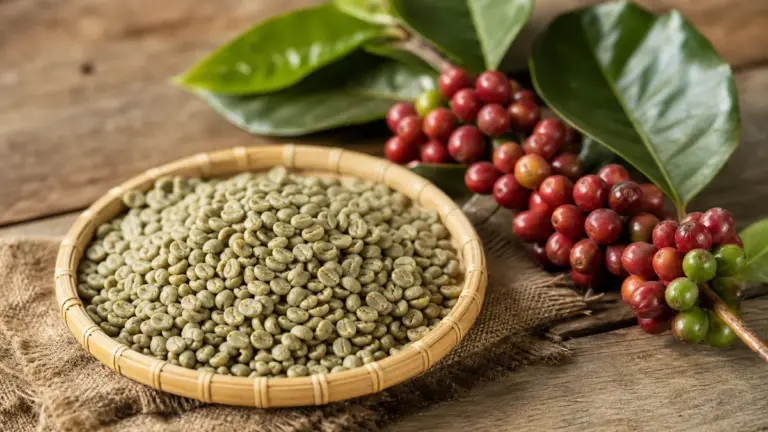
Picking is labour-intensive. The Jamaica Coffee Exporters Association describes hand harvesting on the mountain slopes, while Rocksteady explains that its pickers select ripe cherries and leave others to mature. The extended picking season reflects fruit becoming ready at different times, rather than a single harvest day.
The established processing route is washed: fruit material is removed, and the coffee is dried before final preparation for export. Published trade specifications describe both sun and mechanical drying, followed by sorting. This is the traditional reference point for the origin, though buyers should still request processing information for their particular lot.
For neighbouring island origins, read Puerto Rican coffee separately rather than assuming that a shared Caribbean setting means the same growing conditions, production system or identity.
What does Jamaican Blue Mountain coffee taste like?
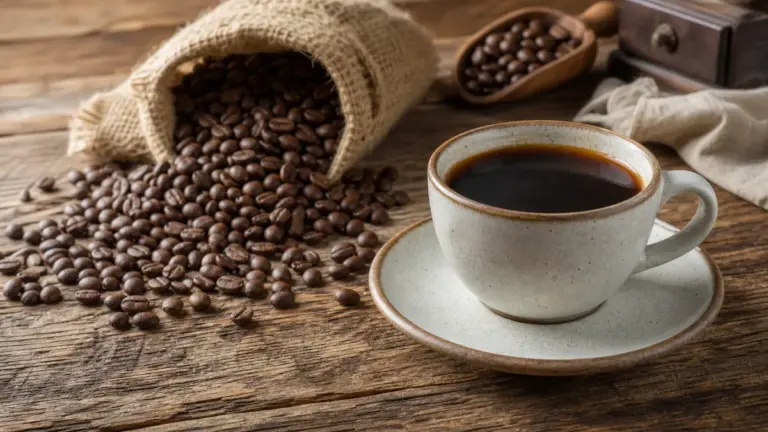
The classic description emphasises balance rather than a single dominant flavour. The Jamaica Tourist Board describes chocolate, floral notes and a subtle, lingering sweetness; WIPO’s account adds delicate acidity and aroma. These are published sensory descriptions, not results of testing undertaken for this article.
For someone buying a first bag, “gentle” is a more useful expectation than “spectacular”. Look for a harmonious relationship between aroma, sweetness, texture and acidity, rather than demanding one dramatic tasting note. That is a tasting approach, not a certification test.
Nor should “smooth” be interpreted as a chemical measurement. A flavour description cannot establish a drink’s pH or a personal health benefit. The sources used here support sensory expectations, not a special health claim for this origin.
There is also no objective obligation to prefer it. The Specialty Coffee Association’s Coffee Value Assessment separates sensory description from preference and from information such as origin and certification. That distinction is particularly helpful with a celebrated coffee: knowing that a bag is authentic and deciding how much you enjoy it are different judgements.
Our editorial view is to approach Blue Mountain as an opportunity to explore balance, not as a compulsory favourite. Keep notes on what you actually taste before returning to the producer’s description.
Blue Mountain, High Mountain and blends
Several similar names answer different questions.
Jamaica Blue Mountain coffee identifies the regulated geographical origin. Jamaica High Mountain Supreme refers to premium grades grown outside that Blue Mountain area; it is not another name for the same origin.
Jamaica Blue Mountain Blend Coffee is a separately defined product containing at least 30% Blue Mountain coffee by weight. A properly labelled blend is not automatically counterfeit, but it is not equivalent to an entirely Blue Mountain product. Ask for the actual proportion rather than assuming that the minimum tells you the recipe.
Blue Mountain as a variety name is another distinction. World Coffee Research lists Blue Mountain among names associated with Typica. A plant’s variety and the geographical origin of its harvested beans are separate facts: the name in a variety description does not establish Jamaican provenance.
Likewise, “roasted in Jamaica” describes processing location, not necessarily where the beans grew. When authenticity matters, request growing origin as well as roasting information.
The same care with country, region and variety is useful when exploring Dominican coffee.
Exports and Japan’s role
Japan is fundamental to Blue Mountain’s international story. The Jamaica Coffee Exporters Association reports that Japan received 70% of Jamaica’s coffee exports in 2017/18. Notice the scope: that is a dated figure for Jamaican coffee exports, not a verified current percentage specifically for Blue Mountain.
It would therefore be misleading to repeat “70% to 80% goes to Japan” without a year, a defined product and a clear denominator. Export volume, production and exports of one certified origin are not interchangeable measures.
The relationship remains active. In January 2026, Japan’s embassy in Jamaica reported discussions with Jamaica UCC Blue Mountain Coffee Company about farms and the countries’ long-standing coffee partnership. UCC also documents its directly operated Craighton estate, demonstrating involvement in production as well as purchasing.
For UK readers, the practical implication is to ask about a specific shipment and harvest rather than infer availability from an old national export percentage. The historical strength of Japanese demand explains part of the origin’s international reputation; it does not authenticate a particular bag.
Spotting fakes and checking a UK supplier
JACRA identifies brand infringement, both locally and overseas, as a recognised industry problem. Its published licensee register is a useful starting point, but checking a name is only one part of tracing the coffee.
Use this sequence:
- Read the complete product description. Establish whether the seller promises entirely Blue Mountain coffee, a blend or merely a similar style.
- Ask who supplied it. Request the Jamaican producer or processor and the importer, rather than accepting an unexplained origin claim.
- Check the relevant authorisation. Consult JACRA’s register for the supplier or trademark user, checking the licence category and displayed expiry date. An unclear or apparently expired entry warrants confirmation with JACRA, not an immediate accusation.
- Ask how the retail bag connects to the shipment. Request available origin and lot documentation. This is a recommended traceability check, not a claim that every retail packet must contain an original certificate.
- Keep authenticity and preference separate. Authorisation supports provenance; it cannot decide whether you will enjoy the coffee.
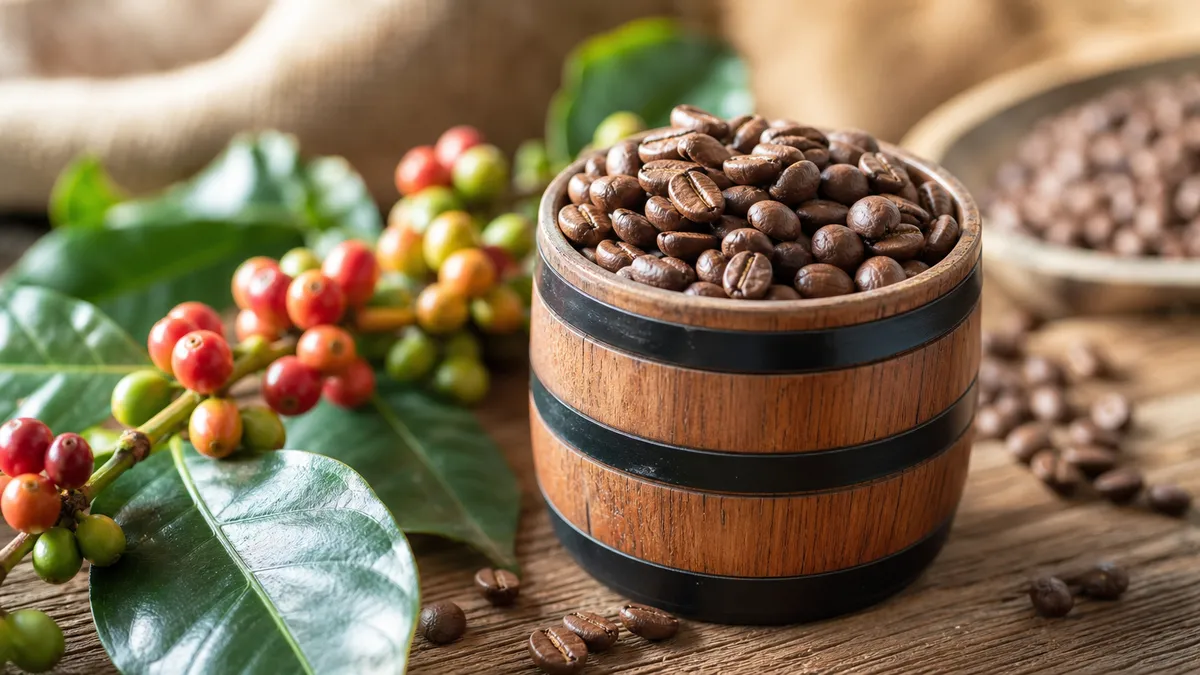
Do not make wooden packaging the deciding test. A trade specification lists traditional green-coffee barrels of 15 kg, 30 kg and 70 kg, but also describes Blue Mountain Select shipped in jute bags. The blanket claim that genuine Blue Mountain is never shipped in sacks is therefore unsafe. A miniature retail barrel proves still less.
For a workplace order, request itemised written quotations identifying the exact product, blend status, pack weight, roast information, delivery terms and supporting provenance. Choose on declared criteria, particularly traceability and the cup profile your workplace wants, rather than the name alone.
FAQ
Must genuine Blue Mountain coffee be roasted in Jamaica?
No, Jamaican growing origin and roasting location are separate matters. JACRA’s licensing arrangements cover foreign importers trading in green or roasted beans, including authorised trademark use. A UK-roasted product should therefore be assessed through its supply chain and origin evidence, not rejected merely because it was roasted outside Jamaica.
Does “No. 1” mean it will be my favourite?
No. Published trade specifications distinguish numbered Blue Mountain grades partly through bean size, alongside other quality checks. A grade is not a personal preference ranking. The SCA’s assessment framework likewise separates physical characteristics, sensory descriptions and liking, so use the designation as product information rather than a promise of your favourite cup.
Does Blue Mountain certification also mean organic or Fairtrade?
No, do not infer either claim from Blue Mountain origin certification. JACRA’s coffee system concerns regulated origin, quality and authorised trademark use. If a separate production or ethical certification matters to your purchase, ask for evidence covering that particular product rather than assuming one certification includes another.
Where to go next
Read Caribbean to place Jamaican Blue Mountain coffee within the wider region. Continue with Puerto Rico and The Dominican Republic to explore those origins on their own terms, rather than treating Jamaica’s best-known name as a template for every Caribbean coffee.
Sources
-
Government of Jamaica, The Jamaica Agricultural Commodities Regulatory Authority Regulations, 2018, especially regulation 2 and the First Schedule, 2018. FAOLEX-hosted text and scanned boundary schedule.
https://faolex.fao.org/docs/pdf/jam221800.pdf -
JACRA, Introduction and Background, undated current webpages. Trademark ownership, regulatory responsibilities and transfer of functions.
https://jacra.org/divisions/coffee/introduction/
https://jacra.org/divisions/coffee/background/ -
JACRA, About Coffee and Known Industry Concerns, undated current webpages. Regional description, dominant variety, disease and infringement concerns.
https://jacra.org/divisions/coffee/about-coffee/
https://jacra.org/divisions/coffee/known-industry-concerns/ -
JACRA, Licensing & Permits, Licensees and Core Processes & Services, undated current webpages. Authorisations, register and certification responsibilities.
https://jacra.org/divisions/coffee/licensing-permits/
https://jacra.org/resources/licensees/
https://jacra.org/about/core-processes-services/ -
World Intellectual Property Organization, In Search of a Perfect Cup, updated 2010. Historical certification-mark account and growing conditions; superseded administrative references were not adopted as current.
https://www.wipo.int/en/web/ip-advantage/w/stories/in-search-of-a-perfect-cup -
Jamaica Intellectual Property Office, About Trade Marks, undated. Certification-mark explanation and Blue Mountain example; historical regulator name treated accordingly.
-
Jamaica Tourist Board, Blue Mountain Coffee, undated current webpage. Published elevation band and sensory description only.
https://www.visitjamaica.com/discover-jamaica/cuisine/blue-mountain-coffee/ -
World Coffee Research, Arabica Coffee Varieties: Typica, current online catalogue, undated.
https://varieties.worldcoffeeresearch.org/varieties/typica -
Rocksteady Coffee Company, Harvest, undated producer account. Farm-specific picking and harvest information.
https://rocksteadycoffee.com/en-us/pages/harvest -
Blue Mountain Coffee Group, Specifications & Quality, undated trade specification. Processing, harvest cycles, grades and shipping formats, not an independent regulatory standard.
https://www.bluemountaincoffeejamaica.com/en/specifications-quality -
Jamaica Coffee Exporters Association, What We Do, undated webpage containing 2017/18 export data.
https://jamaicacoffee.org/what-we-do/ -
Embassy of Japan in Jamaica, Courtesy Call on Ambassador Maruyama by Jamaica UCC Blue Mountain Coffee Company, 23 January 2026; UCC Ueshima Coffee, Coffee Estates, undated corporate account.
https://www.jamaica.emb-japan.go.jp/itpr_ja/11_000001_00623.html
https://www.ucc.co.jp/eng/company/about/estates/ -
Specialty Coffee Association, Coffee Value Assessment, current framework overview, undated. Used for assessment distinctions, not numerical grading thresholds.
https://sca.coffee/value-assessment
Research compared the regulations and JACRA guidance with botanical, intellectual-property, producer and trade sources, retaining explicit qualifications where published descriptions differ.
Last checked: November 2026