Castillo, Catimor and Sarchimor are names associated with arabica coffee bred using Timor Hybrid ancestry, principally to improve resistance to coffee leaf rust. Catimor and Sarchimor are groups of related varieties, while Castillo is a named Colombian composite variety and a family of regional selections. Their ancestry does not settle how they taste: the particular variety, growing conditions and handling of the coffee all matter.
In short
- Catimor: descendants of crosses between Caturra and Timor Hybrid, not one uniform variety.
- Sarchimor: descendants of Villa Sarchi and Timor Hybrid, including Parainema, Marsellesa and Obata.
- Castillo: developed by Colombia’s Cenicafé from Caturra and Timor Hybrid CIFC 1343, and released in 2005.
- Resistance is specific: protection against leaf rust does not mean protection against every disease or pest, or permanent immunity.
- Judge the lot, not just the pedigree: blind comparisons have challenged the assumption that Castillo must taste worse than traditional arabicas.
What distinguishes Castillo, Catimor and Sarchimor?
The names operate at different levels. A cultivar is a cultivated variety selected and maintained for particular characteristics; a breeding group can contain numerous cultivars with different performance.
| Name | What it describes | Core parentage | What the name alone cannot tell you |
|---|---|---|---|
| Catimor | A group of related varieties | Caturra × Timor Hybrid | The exact selection, present resistance or flavour |
| Sarchimor | A group of related varieties | Villa Sarchi × Timor Hybrid | Whether every member suits the same farm |
| Castillo | A Colombian composite cultivar, with regional derivatives | Caturra × Timor Hybrid CIFC 1343 | The sensory quality of an individual harvest |
World Coffee Research explicitly warns that Catimor and Sarchimor are not single distinct varieties. Calling every Catimor identical is rather like judging an extended family from one relative.
For the wider terminology, see species and cultivar distinctions. The parent coffee varieties guide places these breeding groups alongside other cultivated coffees.
Timor Hybrid: their shared ancestor
Timor Hybrid originated through a spontaneous cross between Coffea arabica and Coffea canephora, the species traded as robusta. World Coffee Research places its appearance on Timor in the 1920s; coffee rust researchers commonly identify 1927 as the discovery year.
Its significance was practical. It provided resistance inherited from robusta in material that breeders could cross with arabica. The tetraploid Timor Hybrid material used in breeding has four sets of chromosomes, compatible with arabica’s chromosome organisation.
Breeders crossed this material with established arabica varieties, then selected descendants over successive generations. This introduction of genetic material from another species is called introgression. It does not mean that a bag of Castillo contains robusta beans mixed into arabica.
The accession numbers identify particular breeding material, not percentages of robusta ancestry:
- Catimor: Caturra crossed with Timor Hybrid. The influential T8667 lineage uses accession 832/1; Colombian breeding also used 1343.
- Sarchimor: Villa Sarchi crossed with Timor Hybrid 832/2.
- Castillo: Caturra crossed with Timor Hybrid 1343, followed by selection in Colombia.
The abbreviated family trees are useful, but they are not exhaustive. World Coffee Research also records an early Caturra cross using 832/2, so “832/1 means Catimor, 832/2 means Sarchimor” is too rigid.
Colombia’s Castillo programme
Cenicafé, Colombia’s national coffee research centre, began its rust-resistance breeding programme in 1968. Castillo followed the earlier Colombia variety, drawing on the same broad Caturra and Timor Hybrid breeding approach.
Castillo was officially released on 13 May 2005. It is a composite, or multiline, cultivar: seed from several selected lines is combined rather than supplying one genetically identical line throughout a planting.
The aim is to retain useful agricultural characteristics while distributing resistance across different genetic combinations. Regional Castillo selections were also developed for particular growing environments, including Naranjal, El Rosario and other experimental-station areas. These are agricultural adaptations, not guaranteed flavour editions.
“Variedad Castillo” simply means “Castillo variety” in Spanish. It is not a separate predecessor that Castillo replaced.
A short breeding timeline
- 1920s: Timor Hybrid appears through natural arabica and robusta crossing.
- 1968: Cenicafé starts its Colombian rust-resistance breeding programme.
- 2005: Castillo is released, with regional derivatives documented alongside the general cultivar.
- 2024: the Federación Nacional de Cafeteros reports the release of Castillo 2.0, showing that the programme continues to evolve.
The later release should not be treated as proof that every existing Castillo planting has the same composition or resistance characteristics.
Leaf rust resistance: valuable, but not permanent
Coffee leaf rust is caused by the fungus Hemileia vastatrix. Infection damages leaves and can cause premature leaf fall, weakening the tree’s productive capacity.
Resistance changes the interaction between plant and pathogen. Some resistance mechanisms prevent successful infection by particular rust races; others slow disease development and reduce damage rather than stopping infection completely. A race is a form of the pathogen distinguished by which coffee plants it can infect.
This explains two qualifications that matter on farms.
First, resistance is not a universal shield. A plant selected against leaf rust may remain vulnerable to insects, root pests or another fungal disease. World Coffee Research describes Parainema as resistant to leaf rust and some nematodes, but that combination cannot be assumed for every Sarchimor.
Second, rust populations change. Research presented by Portugal’s coffee rust research centre at the 2025 ASIC conference identified rust races capable of infecting important Timor Hybrid parent material. The researchers also found that the tested descendants did not all show the same disease severity.
That is not evidence that every Catimor, Sarchimor or Castillo has suddenly become useless. It is evidence against describing any of them as permanently rust-proof.
For growers, local research and extension advice should therefore take precedence over a general variety description. The relevant question is not merely “Was this bred for resistance?” but “How does this material perform against the rust population here?”
Growing and origin fact panel
These names span breeding programmes and producing countries, so there is no defensible single altitude range, harvest calendar or processing method for all three. The panel separates a sourced cultivation example from broader origin context.
| Field | Verified example or qualification |
|---|---|
| Altitude range | For Parainema, World Coffee Research gives an optimal range of 1,000 to 1,600 metres near the equator, 700 to 1,300 metres at latitudes 5 to 15 degrees north or south, and 400 to 1,000 metres beyond 15 degrees. These are variety-specific recommendations, not limits for the whole family. |
| Main named varieties and selections | Catimor examples include Costa Rica 95, Lempira and Catisic. Sarchimor examples include Parainema, Marsellesa and Obata. Castillo has general and regional composite selections. |
| Processing | Processing is a separate production decision, not part of the parentage. The Colombia Sensory Trial compared Castillo and Caturra harvested and processed identically within each farm pair. |
| Harvest months | Colombia’s broad harvest peaks are October to December and April to June, according to USDA’s 2026 country report. Timing varies by region; these are not genetic harvest dates for Castillo. |
| Typical cup profile | No single family-wide profile is justified. In the Colombia Sensory Trial, Castillo and Caturra overlapped substantially, although descriptive analysis distinguished some flavour intensities. |
For a UK buyer, the useful information is therefore the combination of variety, origin, harvest and processing, rather than a variety name standing alone.
Do resistant varieties taste worse?
The debate deserves more than either dismissal or reassurance.
Resistance and sensory quality are different traits. A breeder can select for both, but success against rust does not automatically establish exceptional flavour. Equally, robusta ancestry does not demonstrate that a finished coffee will taste coarse, bitter or inferior.
The strongest answer comes from comparisons that conceal variety identities and control growing or processing differences as far as possible.
What the Castillo evidence shows
Cenicafé’s 2005 technical bulletin reported double-blind comparisons of ripe Castillo coffee with Typica, Bourbon, Caturra and Colombia. Under comparable, favourable processing, roasting and preparation conditions, its panel found no significant difference in beverage quality. This is relevant evidence, although it comes from the institution that developed Castillo.
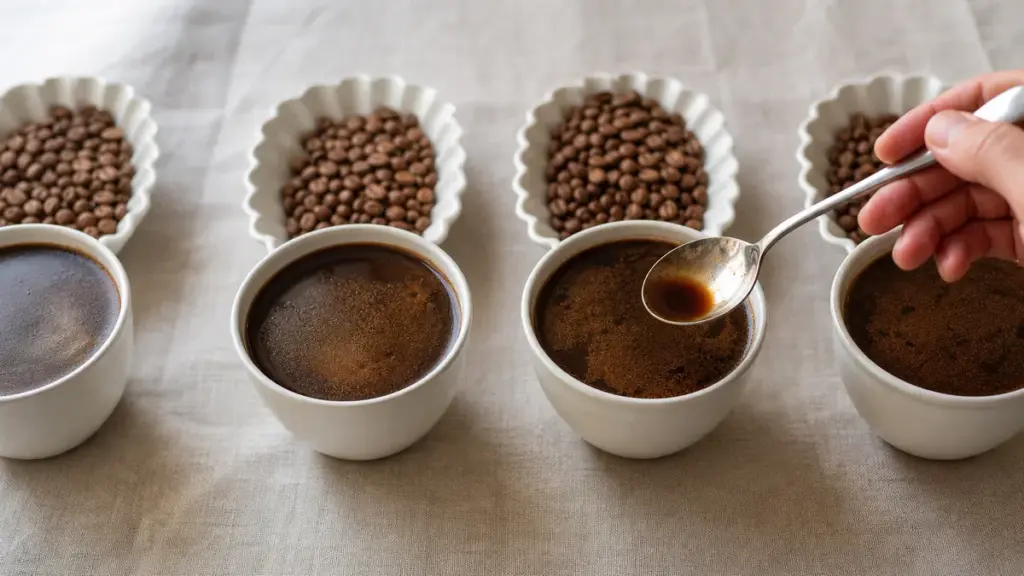
The separate Colombia Sensory Trial, organised by Catholic Relief Services with World Coffee Research and other partners, compared Castillo and Caturra from 22 farms in Nariño. Samples were blindly evaluated across panels held in October 2014 and January 2015.
The organisers reported no statistically significant difference in overall cupping scores. They also stressed that this was a small study of one region and one harvest, not a universal verdict.
A further descriptive assessment at Kansas State University found differences in the intensity of some sensory attributes despite considerable overlap. There is no contradiction: two coffees can receive similar quality scores without tasting identical.
What that evidence does not show
It does not establish that every Catimor matches every traditional arabica. Nor does it prove that altitude or ripe picking alone guarantees equal quality. The trial compared Castillo with Caturra, not every descendant of Timor Hybrid.
Experienced buyers can still prefer particular traditional varieties or individual flavour profiles. The reasonable objection is to a blanket judgement made before tasting, not to an honestly stated preference.
Our buying judgement is straightforward: Castillo, Catimor and Sarchimor are reasons to ask more precise questions, not reasons to reject a coffee automatically.
Their role on farms
A variety must function as a crop before it reaches a cupping table. Farmers need suitable growth, dependable production, manageable disease pressure and a coffee they can sell.
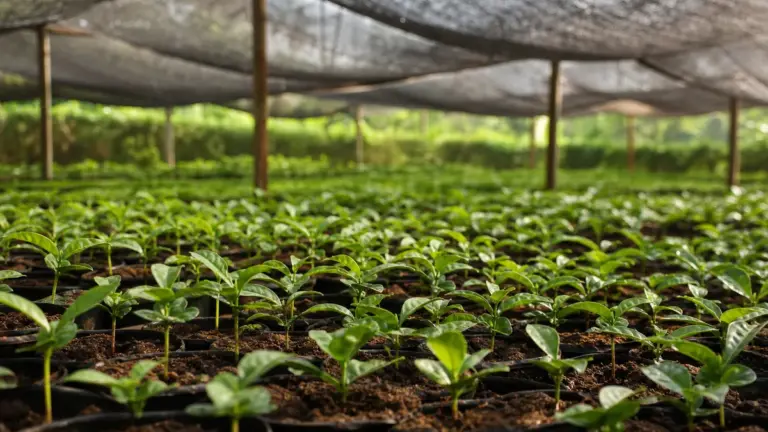
Compact stature was an explicit objective in the early Catimor and Sarchimor breeding work because it permitted denser planting. Resistance adds another practical advantage, but does not remove the need for nutrition, pruning and monitoring.
Requirements also differ within the groups. World Coffee Research, for example, describes T8667 as requiring high nutrition and records a specific recommended elevation range for it in Peru. That is a useful reminder that a successful selection in one country is not automatically the correct planting material elsewhere.
For readers interested in other approaches to combining agronomic performance and quality, Ruiru 11, Batian and F1 hybrids provide a useful comparison.
When buying roasted coffee, ask for the named selection where known, the farm or producer group, processing details and actual tasting notes. When a label says only “Catimor”, treat it as incomplete identification rather than a quality grade. Likewise, origin names and grading terms answer different questions from a cultivar name.
FAQ
Are these coffees genetically modified?
These names refer to conventional crossing and selection programmes, not genetic engineering. Timor Hybrid arose naturally, and breeders crossed its descendants with arabica varieties and selected subsequent generations. “Hybrid” describes parentage, while “genetically modified” in its usual regulatory sense describes a different set of techniques; the words are not interchangeable.
Can a coffee labelled Catimor be identified more precisely?
Sometimes, but the word Catimor alone is insufficient. World Coffee Research lists distinct descendants and selections, including Costa Rica 95, Lempira and Catisic. Ask the roaster whether the producer supplied a more specific cultivar name. If records stop at Catimor, it is better to preserve that uncertainty than invent a precise identity.
Does a healthy-looking leaf prove that a plant is rust-resistant?
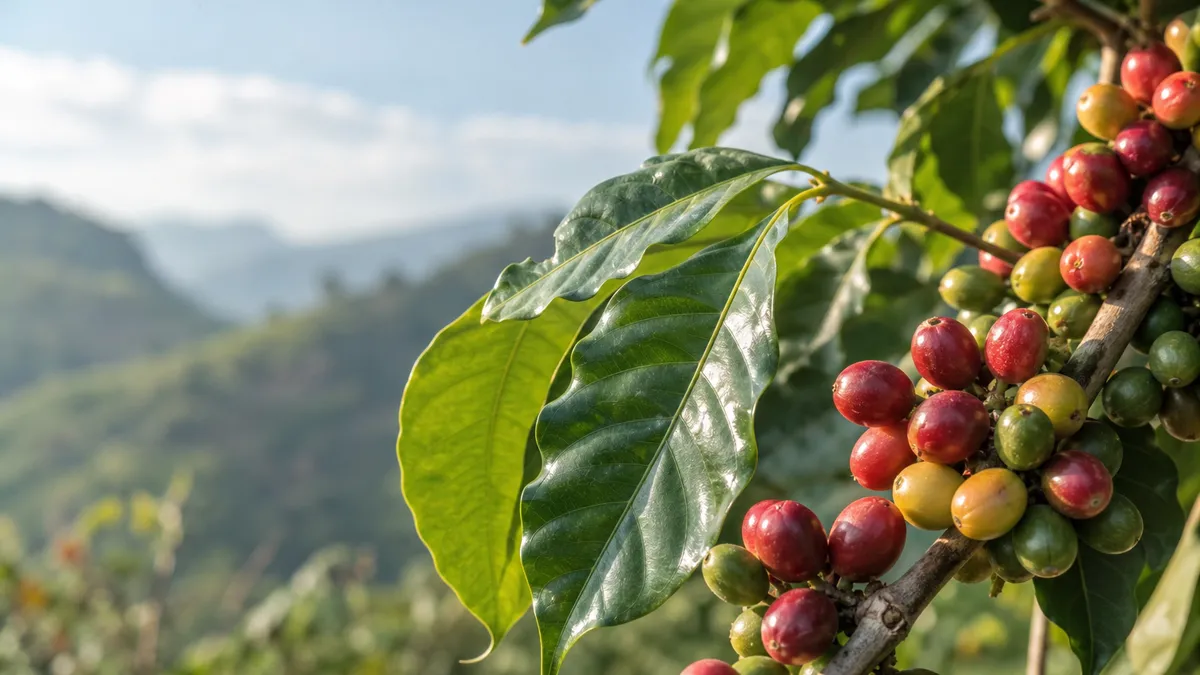
No. An unmarked leaf is not a resistance test. Researchers evaluate resistance using pathogen exposure and field observations, sometimes against several rust races. A photograph can show a healthy-looking plant, but it cannot establish the cultivar’s identity, demonstrate its resistance genes or guarantee how it will respond under different disease pressure.
Where to go next
Read Coffee Varieties to place Castillo, Catimor and Sarchimor within the wider variety picture, then Ruiru 11, Batian and F1 Hybrids for other breeding approaches. Ethiopian Yirgacheffe and Colombian Supremo Explained clarifies why an origin name or bean-size grade tells you something different from a cultivar.
Sources
- World Coffee Research, Arabica Varieties Catalog, maintained online edition, publication dates not stated:
T8667, T5296, Parainema and Marsellesa. Parentage, group definitions and agronomic descriptions. - Cenicafé, Alvarado-Alvarado, Posada-Suárez and Cortina-Guerrero, Castillo: Nueva variedad de café con resistencia a la roya, Avances Técnicos 337, July 2005.
https://publicaciones.cenicafe.org/index.php/avances_tecnicos/issue/view/96 - Cenicafé, Características fenotípicas de componentes de variedad Castillo en dos ambientes, 2005, repository abstract. Composite structure and regional derivatives.
https://biblioteca.cenicafe.org/handle/10778/120 - McCook and Vandermeer, The Big Rust and the Red Queen: Long-Term Perspectives on Coffee Rust Research, Phytopathology, 2015. Historical and breeding review.
https://apsjournals.apsnet.org/doi/10.1094/PHYTO-04-15-0085-RVW - Silva and colleagues, An Overview of the Mechanisms Involved in Coffee-Hemileia vastatrix Interactions: Plant and Pathogen Perspectives, Agronomy 12(2), 326, 2022.
https://www.mdpi.com/2073-4395/12/2/326 - CIFC researchers, ASIC 2025 conference poster on coffee rust races in Timor-Leste, 2025. Preliminary conference evidence on virulence against Timor Hybrid material.
https://www.alphavisa.com/asic/2025/documents/eposters/S2/S2_SILVAm.pdf - Catholic Relief Services, A Simple Question: Castillo or Caturra?, 9 April 2015, and Equal. Different., 16 June 2015. Primary organiser reports of the Colombia Sensory Trial.
https://coffeelands.crs.org/2015/04/a-simple-question-castillo-or-caturra/
https://coffeelands.crs.org/2015/06/equal-different/ - Federación Nacional de Cafeteros, Informe de Gestión 2024, 2024. Castillo 2.0 release announcement.
- USDA Foreign Agricultural Service, Coffee Annual: Colombia, report CO2026-0008, 2026. Regional harvest context.
https://apps.fas.usda.gov/newgainapi/api/Report/DownloadReportByFileName?fileName=Coffee+Annual_Bogota_Colombia_CO2026-0008.pdf
Research combined live checks of breeding catalogues, Colombian research publications, peer-reviewed rust literature and primary sensory-trial reports, distinguishing measured findings from buying judgement.
Last checked: November 2026