Venezuelan coffee is chiefly arabica, with documented cups ranging from a balance of acidity and bitterness to more distinctly fruity flavours. Its story combines a major historic export industry, a prolonged decline and renewed specialist activity, but evidence of a nationwide production recovery remains contradictory.
In short
- Look for the producer, region, variety and processing method, rather than expecting one national flavour.
- Important growing areas include Táchira, Mérida, Trujillo, Lara, Portuguesa and the eastern mountains around Caripe.
- October to January is the principal harvest period in USDA reporting, with substantial regional variation.
- Caripe is both a growing area and the name of a Venezuelan arabica variety selected from Typica.
- Venezuelan coffee reaches specialist UK roasters, but a product listing does not guarantee current stock.
What does Venezuelan coffee taste like?
The most useful answer is balanced, sometimes fruity, and more varied than its limited international visibility suggests. There is evidence for that description, but not enough to assign every Venezuelan region a dependable flavour signature.
Research on coffees from Biscucuy, in Portuguesa state, found a balance between acidity and bitterness, with perceptible fruity or green notes in some samples. Here, acidity means the bright, tart impression in the cup, rather than a measurement of how a drink might affect someone’s stomach.
The researchers also found substantial differences between cultivars, meaning cultivated plant varieties. In their samples, those differences mattered more to the sensory profile than differences associated with altitude or location. That is a useful warning against buying solely on a mountain name or elevation.
Contemporary specialist lots can offer a different expression again. UK roaster Andes Project describes a washed Geisha from Finca El Tirol in Táchira with yellow peach, wildflower honey and shortbread notes. Those are the seller’s descriptions of one coffee, not independently verified tasting results or a national template.
For a first purchase, choose a lot whose stated flavours appeal to you. Treat “Venezuela” as the beginning of the description, not the whole description.
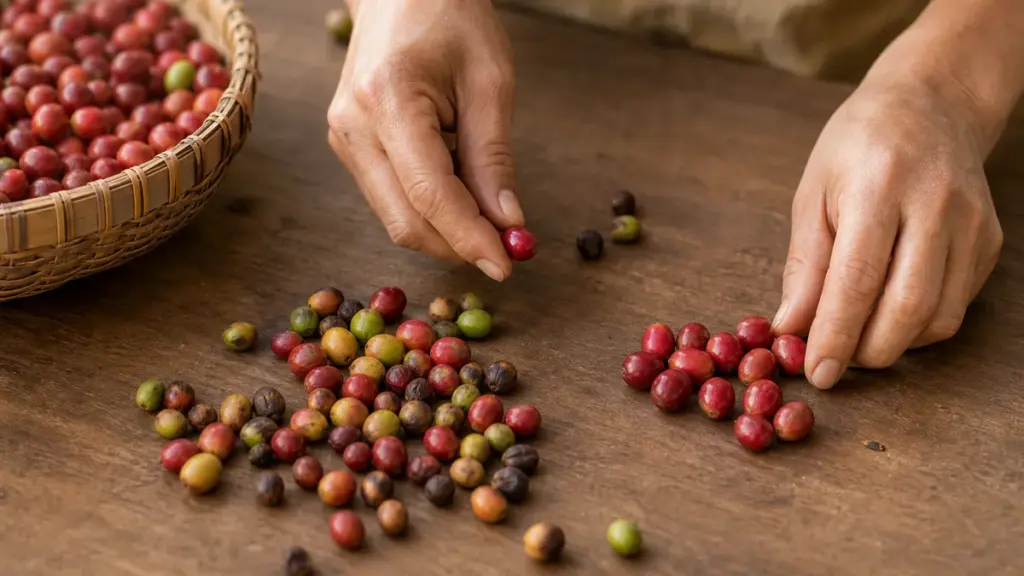
Venezuelan coffee at a glance
The panel below separates established growing information from the limits of the available evidence. Older agricultural reports remain useful for geography and harvest patterns, but should not be mistaken for a current farm census.
| Feature | Origin reference |
|---|---|
| Species | Predominantly Coffea arabica, according to USDA’s historical country reporting. |
| Altitude | USDA’s 2008 report placed most cultivation at 600 to 1,500 metres; its 2005 report described higher growing zones reaching 1,800 metres. These are reported growing ranges, not national limits. |
| Established varieties | Typica, Bourbon, Caturra and Catuaí are documented in Biscucuy research. World Coffee Research identifies Caripe as an important regional variety in Monagas. No current national variety-share census is implied. |
| Processing | Washed processing is documented in research and current supplier listings; natural processing also appears in specialist suppliers’ farm records. |
| Harvest months | Principal harvest October to January in USDA’s 2014 report. Earlier reporting describes regional and altitude-related harvesting outside that window. |
| Cup profile | Biscucuy research found balanced acidity and bitterness, sometimes with fruity or green notes. Current specialist lots have their own seller-described profiles. |
“Washed” describes processing that removes the fruit around the seed before drying; “natural” describes drying coffee within the fruit. Ask which method applies to the actual lot rather than assuming that all Venezuelan coffee follows the same route.
Where coffee grows in Venezuela
Coffee production is associated principally with the western and northern mountain belts, including the Venezuelan Andes and the Cordillera de la Costa. For the wider geographical context, start with our guide to South American coffee.
The western Andes
Táchira, Mérida and Trujillo are central names in Venezuela’s coffee history and remain represented in specialist sourcing records. USDA identifies Boconó in Trujillo and Santa Cruz de Mora in Mérida among established producing centres.
These names help locate a coffee, but they do not tell you everything about it. A farm’s variety, harvest selection and processing details are more useful buying information than an unsupported promise that all coffee from one state tastes alike.
Current supplier records illustrate the diversity within the Andes: ORIGIN2U lists washed coffees from Mérida and both washed and natural processing among its Trujillo producers. These are records of that supplier’s network, not a representative survey of every farm.
Lara and Portuguesa
In the centre-west, established centres include Sanare in Lara and Biscucuy, Ospino and Chabasquén in Portuguesa. Biscucuy sits in the Andean foothills and has attracted research into improving and describing coffee quality.
Its significance is not simply that coffee grows there. The Biscucuy work documents an effort to connect agricultural practice, selective harvesting, processing and sensory evaluation, giving producers more specific information about what their coffees can offer.
Caripe and the eastern mountains
Caripe, in Monagas state, belongs to a separate eastern growing area. It deserves particular attention because its name appears both geographically and botanically.
A bag labelled “Caripe” might identify the growing area, the plant variety, or both. Look for those details separately. World Coffee Research places the Caripe variety within the Typica-related group of arabica, rather than treating it as a distinct coffee species.
From export crop to prolonged decline
Venezuela’s coffee history began before the better-known plantation stories around Caracas. Fundación Empresas Polar’s historical dictionary records introduction through religious missions in the Orinoco region in 1730 and José Gumilla’s written account of cultivation in 1741.
Coffee subsequently expanded into a major export crop. During the nineteenth century, production spread and the Andean industry grew substantially. The historical dictionary distinguishes large coastal haciendas from the smaller family-farm structure associated with the Andes.
A short timeline helps separate that long development from the more recent crisis:
- 1730: introduction in the Orinoco mission region, according to Fundación Empresas Polar.
- 1741: Gumilla’s account records successful cultivation.
- 1919: the historical dictionary identifies a peak in coffee exports.
- 2014: USDA documents a struggling sector affected by input shortages, price regulation, labour availability and coffee leaf rust.
- 2026: specialist exports and retail listings coexist with sharply conflicting national production accounts.
Oil was part of the longer change in Venezuela’s economy, but it is too simple to say that oil alone destroyed coffee production. The historical account also identifies wars, the economic crisis of the 1930s and competition from Brazilian coffee among the pressures on the industry.
The later agricultural decline had more immediate mechanisms. USDA’s 2014 assessment described reduced fertiliser applications and farm maintenance, alongside shortages of agricultural inputs and labour. Coffee leaf rust added another burden: a disease outbreak is harder to manage when growers cannot obtain the materials and support they need.
These are dated findings about the sector’s deterioration. They should not be used to declare that every Venezuelan farm today is poorly maintained or incapable of producing good coffee.
Is Venezuelan coffee recovering?
There is evidence of renewed specialist activity, but the scale of national recovery cannot be stated confidently from the sources checked. Three different kinds of evidence need separating.
First, USDA’s Coffee: World Markets and Trade, published in July 2026, lists Venezuelan production at 500,000 bags of 60 kg for 2025/26 and forecasts the same quantity for 2026/27. Its published series therefore does not show a recent production surge.
Second, a Venezuelan government statement published on 1 June 2026 reports approximately four million quintals for 2025 to 2026 and describes an exportable surplus. That is a government-reported claim, not an independently audited result presented here.
The sources do not provide a reconciled explanation of their differences in coverage, measurement or methodology. Converting units alone would not settle those questions, so the figures should not be combined into a single growth estimate.
Third, specialist suppliers publish named farms, varieties and processing methods, while a UK roaster lists Venezuelan single-origin coffees. This supports a narrower conclusion: identifiable Venezuelan coffees are reaching specialist international channels.
That is meaningful progress for the producers involved. It does not establish how much the whole country produces, how widely improvements are shared, or whether export growth can be sustained. “Renewed specialist trade” is better supported than “complete national recovery”.
Varieties, processing and the limits of altitude
Caripe provides a particularly clear example of Venezuelan coffee identity. World Coffee Research describes it as a Typica selection with large beans and very good quality potential at higher altitude.
Its history begins with the identification of productive plants in 1956, followed by a selection programme beginning in 1958. It remains an important regional variety in Monagas.
Quality potential is not a guarantee of cup quality. World Coffee Research also records susceptibility to coffee leaf rust, illustrating a practical tension between desirable cup characteristics and agricultural vulnerability.
Nor should altitude be treated as a score. The Biscucuy sensory study found cultivar-related differences more influential than altitude-related differences within its sample. It was preliminary regional research, not proof that elevation never matters.
For buying purposes, the sensible hierarchy is: identify the lot, understand how it was grown and processed, then consider the altitude as supporting information. A complete description is more informative than a high elevation printed prominently on a bag.
Finding Venezuelan coffee in the UK
Venezuelan coffee is available through specialist channels rather than being merely a historical curiosity. Andes Project’s website lists several Venezuelan coffees, although availability varies and some listings are marked sold out.
Use those listings as leads, not promises of stock. Before ordering, check:
- Origin detail: is the state, community, farm or producer identified?
- Harvest information: can the seller identify the crop or picking period?
- Variety and process: are these stated separately and clearly?
- Roasting information: is the roast date or roasting schedule available?
- Flavour description: does it describe this lot, rather than repeating a generic national profile?
For a first taste, my preference would be the best-documented lot with flavours you enjoy, not simply the rarest variety. That recommendation prioritises an understandable purchase over collecting an unusual origin name.
If you are comparing origins, read Peru for another country-level reference and Bolivia for a separate Andean perspective. Keep the comparison at lot level: Venezuelan coffee deserves to be judged by the beans in the bag, not by either nostalgia for its export past or optimism about its recovery.
FAQ
Does coffee roasted in Venezuela necessarily contain Venezuelan-grown beans?
No, the place of roasting does not establish where the coffee was grown. USDA’s historical reporting documents coffee imports into Venezuela, making that distinction relevant rather than merely theoretical. If agricultural origin matters to you, look for an explicit country-of-origin statement and, preferably, a named producer or growing area rather than relying on the roaster’s address.
Is Caripe coffee a separate species?
No, Caripe is an arabica variety, not a separate species. World Coffee Research identifies it as a selection of Typica, within the Typica-related genetic group. The name also identifies a Venezuelan growing area, so a seller should make clear whether it refers to the variety, the origin of the beans, or both.
Does a rare Venezuelan lot automatically mean exceptional quality?
No, rarity alone does not demonstrate quality. A named farm, clear processing information and a useful description of the actual lot provide a better basis for choosing. Research from Biscucuy shows sensory differences within one producing area, while World Coffee Research describes quality potential for Caripe rather than guaranteeing the result of every harvest.
Where to go next
Read South America to place Venezuela within the continent’s coffee-growing geography. Continue with Peru and Bolivia for distinct origin guides that help you compare growing regions and buying information without treating Andean coffee as one flavour category.
Sources
-
USDA Foreign Agricultural Service, Venezuela: Coffee Annual, report VE5011, 23 May 2005. Historical species, altitude, harvest and import context.
https://apps.fas.usda.gov/newgainapi/api/Report/DownloadReportByFileName?fileName=Annual_Caracas_Venezuela_05-23-2005.pdf -
USDA Foreign Agricultural Service, Venezuela: Coffee Annual, 15 May 2008. Growing ranges and producing centres.
https://apps.fas.usda.gov/newgainapi/api/Report/DownloadReportByFileName?fileName=Annual+Report_Caracas_Venezuela_05-15-2008.pdf -
USDA Foreign Agricultural Service, Venezuela: Coffee Annual, report VE1406, 14 May 2014. Decline, harvest period, regions and agricultural constraints.
https://apps.fas.usda.gov/newgainapi/api/Report/DownloadReportByFileName?fileName=Coffee+Annual_Caracas_Venezuela_5-14-2014.pdf -
USDA Foreign Agricultural Service, Coffee: World Markets and Trade, July 2026, production table, page 7.
https://apps.fas.usda.gov/psdonline/circulars/coffee.pdf -
Fundación Empresas Polar, Eduardo Arcila Farías and Humberto Fontana, “Café”, Diccionario de Historia de Venezuela, online edition, publication year not displayed.
https://bibliofep.fundacionempresaspolar.org/dhv/entradas/c/cafe/ -
World Coffee Research, “Caripe”, Coffee Varieties Catalog, live entry, publication year not displayed.
https://varieties.worldcoffeeresearch.org/varieties/caripe -
Aguilar and colleagues, CIRAD and Alcaldía de Sucre, “Venezuelian coffee from Biscucuy: the first sensorial evaluation of its aroma potential”, 24th International Conference on Coffee Science: Programme and Abstracts, 2012, abstract PC424, page 123. Conference research, not a national sensory survey.
-
Venezuelan Ministry of Foreign Affairs, Embassy in Qatar, “Comunas cafetaleras elevan la producción nacional a cuatro millones de quintales”, 1 June 2026. Government-reported recovery claim.
-
ORIGIN2U, “Our Farmers”, live supplier records, publication year not displayed. Used for its own sourcing network, not national production shares.
https://origin2u.eu/ourfarmers/ -
Andes Project, current catalogue and “Jose Luis Orduz: Venezuelan Single Origin Coffee”, live pages, publication year not displayed. Used for listings and seller-described lot characteristics.
https://andesproject.co.uk/
https://andesproject.co.uk/products/jose-luis-orduz-venezuelan-single-origin-coffee-200g
Research combined historical reference material, USDA reports, World Coffee Research’s catalogue, regional sensory research and current supplier pages, keeping national estimates separate from government claims and individual lot descriptions.
Last checked: November 2026