The best coffee quotes and sayings capture something recognisable: the comfort of a quiet cup, the pleasure of company or the disappointment of a poor brew. This selection separates traceable quotations from everyday sayings, with the author, work and context given wherever an attribution can be verified.
In short
- Choose Trollope for comfort, Pope or Twain for humour, and Eliot for a more reflective mood.
- A line spoken by a fictional character is not automatically the author’s personal opinion.
- Treat “Life Begins After Coffee” and “Espresso Yourself” as sayings, not quotations from named personalities.
- Keep a quotation’s wording intact, and identify any translation or shortened extract.
- If you cannot establish who first used a saying, leave the attribution open rather than guess.
Inspirational and Funny Quotes
A useful coffee quotation should do more than contain the word coffee. It should suit the occasion, carry a clear meaning and remain enjoyable once you know where it came from.
The selections below are editorial choices, not a ranking by popularity. Some are affectionate, some satirical, and one is distinctly melancholy. That variety matters: a line for a cheerful message to a friend need not be the line you would choose for a thoughtful piece of writing.
For comfort: Anthony Trollope
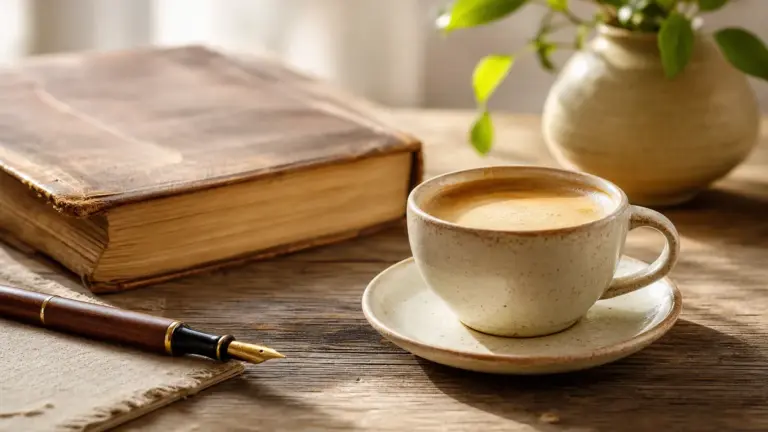
“What on earth could be more luxurious than a sofa, a book, and a cup of coffee?”
Attribution: Anthony Trollope, The Warden, Chapter XVI, “A Long Day in London”.
This is our choice for a reader who wants a warm, uncomplicated celebration of coffee. The objects are ordinary, but together they make a convincing picture of contentment.
In the novel, the passage follows Mr Harding into a welcoming establishment during an anxious day in London. The surrounding narration describes books, sofas, attentive service and coffee. Its appeal comes from that small refuge, rather than any grand claim about what coffee can achieve.
Use it for a book-club message, a reading-corner caption or a note accompanying a coffee-related gift. Attribute it to the novel rather than presenting it as something Trollope said in an interview.
For dry humour: Alexander Pope
“Coffee (which makes the politician wise,
And see through all things with his half-shut eyes)”
Attribution: Alexander Pope, The Rape of the Lock, Canto III.
Pope’s praise has a raised eyebrow attached. The politician’s supposed wisdom sits beside the wonderfully deflating image of half-shut eyes.
The surrounding passage describes coffee service before the Baron develops his scheme to cut Belinda’s lock of hair. Read in that setting, the couplet is satire, not a serious argument that drinking coffee produces good judgement.
It suits a literary gathering or a gently teasing message about discussion over coffee. Keep both lines: the second supplies much of the joke.
For a complaint about a disappointing cup: Mark Twain
“You can get what the European hotel-keeper thinks is coffee, but it resembles the real thing as hypocrisy resembles holiness.”
Attribution: Mark Twain, A Tramp Abroad, Chapter XLIX, “Hanged with a Golden Rope”.
This is the sharpest complaint in the selection. Twain turns a disappointing drink into a comically large moral distinction.
The passage belongs to a longer grumble about European food and his longing for familiar American meals. He also takes a swipe at American hotel coffee nearby, so the humour is less comfortably patriotic than this isolated sentence might suggest.
Treat it as travel satire, not a judgement on present-day European coffee. For more humour without the literary context, move to coffee jokes.
For reflection rather than motivation: T. S. Eliot
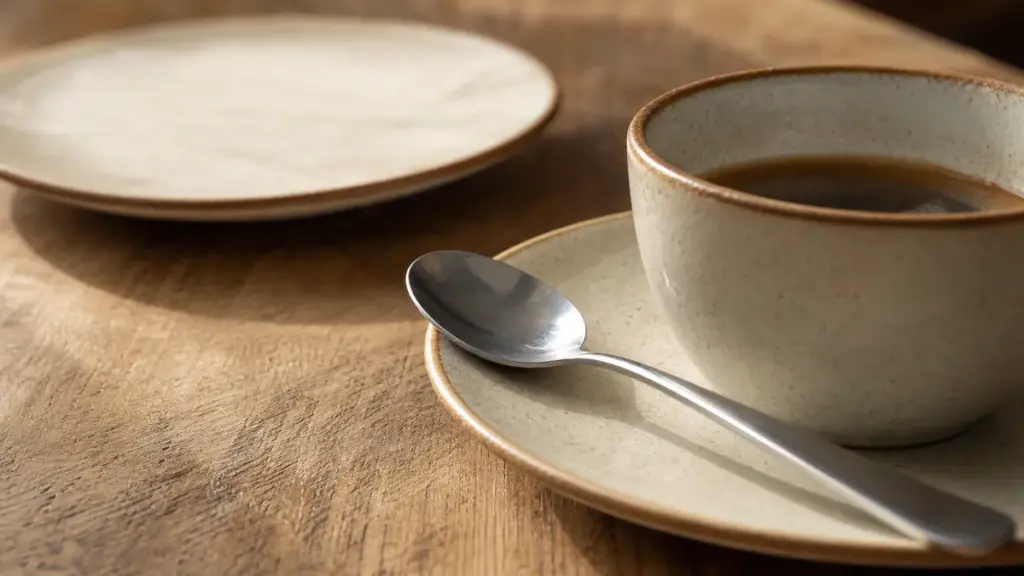
“I have measured out my life with coffee spoons;”
Attribution: T. S. Eliot, “The Love Song of J. Alfred Prufrock”, collected in Prufrock and Other Observations.
This is a striking image, but not a straightforward celebration of a coffee-loving life. In the surrounding poem, repeated social occasions and the speaker’s hesitation give it an uneasy, inward-looking quality.
Our reading is that the coffee spoons suggest life counted in small, familiar repetitions. That makes the line suitable for reflective writing about routine, time or habit, rather than an uncomplicated motivational message.
Notice the wording: with, not in. A small preposition is still part of the quotation.
Quotes from Coffee Lovers
The safest way to assemble quotes from coffee lovers is to distinguish enthusiasm expressed in a work from evidence about its creator’s personal habits. A narrator, character or singer can love coffee without proving that the author drank it in the same way.
That distinction need not spoil the pleasure. Fictional enthusiasm can be just as companionable as a personal declaration, provided the credit is honest.
For shared encouragement: Hannah in Little Women
“Come and have a cup of coffee all round”
Attribution: Hannah, in Louisa May Alcott’s Little Women, Chapter Sixteen, “Letters”. This is an extract from a longer speech.
Hannah offers coffee after Mrs March’s departure, when the sisters are distressed. Her invitation is followed by encouragement to get on with their work.
It is a good choice when the message is less “achieve everything” and more “sit down together, then make a start”. The warmth lies in all round: nobody is left outside the invitation.
If you use the extract, make the speaker clear. “Hannah, in Louisa May Alcott’s Little Women” is more informative than simply putting Alcott’s name underneath it.
For the pleasure of a well-timed cup: Alcott’s narrator
“Coffee was a treat, and Hannah showed great tact in making it that morning.”
Attribution: Narration in Louisa May Alcott’s Little Women, Chapter Sixteen, “Letters”.
The next passage supplies a different kind of coffee appreciation. What matters is not a tasting note or a brewing achievement, but the judgement involved in offering something welcome at the right moment.
We would choose this for writing about hospitality or looking after others. It gives the person making the coffee as much attention as the drink itself.
Do not turn it into a claim that coffee resolves distress. The scene describes an act of care within a story, not evidence for a health effect.
For theatrical enthusiasm: Liesgen in the Coffee Cantata
“wie schmeckt der Coffee süße”
Plain English translation for this article: “How sweet the coffee tastes.”
Attribution: Liesgen, in the Coffee Cantata, BWV 211, music by Johann Sebastian Bach, text by Picander. This is an extract from a longer line.
The Netherlands Bach Society dates the cantata to 1734 and reproduces this line in the soprano aria. Its account describes Liesgen’s determination to keep drinking coffee despite her father’s objections.
This is exuberant character writing, not a personal declaration by Bach. Credit Picander for the words and Bach for the music, rather than folding both into “Bach said”.
Translations also need care. The English wording above is our plain translation of the German extract, not a quotation from a named published translator. If you select another translation, retain its wording and identify its source.
For a collection organised around real people and their documented remarks, see quotes by famous personalities.
“Life Begins After Coffee” – “Espresso Yourself”
These two phrases belong in a coffee sayings collection, but neither needs a famous name attached.
Commercial use can demonstrate that a phrase circulates. It does not, by itself, establish who coined it, when it began or whether a particular person deserves the credit.
“Life Begins After Coffee”
Status: Coffee saying; no original author established by the sources checked for this article.
Stubbs Mugs uses this phrase as a product title. That verifies an example of its use on coffee merchandise, not its origin.
The phrase exaggerates the contrast between the start of the morning and the moment a coffee drinker feels ready to engage with it. Read it as playful shorthand, not a literal statement about needing coffee to function.
We would use it for an informal morning message. We would not attach a novelist’s or comedian’s name without a source showing that person actually used those words.
“Espresso Yourself”
Status: Coffee wordplay; no original author established by the sources checked for this article.
Pampered Chef uses the phrase as a heading on its coffee collection page. Again, that establishes use, not authorship.
Its mechanism is simple: espresso stands in for express. It suits a playful caption or an invitation to share a coffee preference, but it is a saying rather than a sourced personal observation.
There is no need to dress either phrase up as an ancient proverb. A short, unattributed saying can stand on its own.
How to Choose and Check Coffee Quotes and Sayings
Start with the tone you want, then check what the words mean in their original setting. A quotation can be accurate word for word and still become misleading when detached from its speaker or surrounding passage.
This short comparison uses tone and intended use as its criteria.
| Intended use | Suggested selection | Tone | Context to retain |
|---|---|---|---|
| A message to a book-loving friend | Trollope’s sofa, book and coffee passage | Comfortable | It comes from The Warden |
| A literary joke | Pope’s politician couplet | Satirical | The apparent praise is teasing |
| A complaint about a poor brew | Twain’s hotel-coffee passage | Exaggerated | It is historical travel satire |
| Reflective writing | Eliot’s coffee-spoon line | Uneasy | It is the poem’s speaker, not a personal motto |
| A casual morning caption | Either saying above | Playful | Leave the authorship unspecified |
A practical attribution checklist
- Find the underlying work. Look for the book, poem, recording, letter or other identifiable source, rather than stopping at an image with a name beneath it.
- Compare the exact wording. Check small words as carefully as memorable ones. Do not silently replace an unfamiliar expression with a smoother version.
- Identify the voice. Separate the author from a narrator, fictional character, performer or translator.
- Read around the passage. Establish whether it is affectionate, sarcastic, despairing or deliberately exaggerated.
- Record what you know. Give the author and work for a quotation. For a saying with no established origin, say so without inventing a history.
For a personal collection, keep a simple source note beside each saved quotation. Recording the chapter or poem title makes it easier to find the passage again and prevents a useful line becoming detached from its source.
A smaller selection with sound credits is more useful than a long list of doubtful names. The wider coffee fun and community guide provides the next route into coffee’s more sociable side.
FAQ
Can I replace “coffee” with another drink in a quotation?
You can write an adaptation, but do not present the altered wording as the original quotation. Label it “adapted from” and retain the original author and work in your source note. For a casual message, it may be clearer to write your own sentence instead of putting a familiar author’s name beneath words they did not write.
Should I modernise the spelling in an older coffee quotation?
Prefer the spelling in the edition you are quoting, or state that you have modernised it. Different editions can present older writing differently, so keep a record of the version used. In this article, the German cantata extract retains the spelling printed by the Netherlands Bach Society, including “Coffee”.
Which selection would you choose for an office message?
We would choose Hannah’s invitation for a friendly team message because it emphasises sharing rather than productivity. For a quieter staff reading corner, Trollope’s passage is a better fit. Keep the author and work alongside the words, and choose a tone that welcomes colleagues who do not drink coffee too.
Where to go next
Read Coffee Quotes by Famous Personalities for the person-led companion to these coffee quotes and sayings, or Coffee Jokes and Humour when you want a joke rather than a literary extract. Coffee Fun and Community brings the wider collection together and helps you choose what to explore next.
Sources
-
Project Gutenberg, Anthony Trollope, The Warden, Chapter XVI. Digital text revised 2010.
URL: https://www.gutenberg.org/files/619/619-h/619-h.htm -
Project Gutenberg, Alexander Pope, The Works of Alexander Pope, Volume II, edited by Whitwell Elwin, 1871. “The Rape of the Lock”, Canto III; digital edition updated 2024.
URL: https://www.gutenberg.org/cache/epub/43271/pg43271-images.html -
Project Gutenberg, Mark Twain, A Tramp Abroad, 1880. Chapter XLIX, “Hanged with a Golden Rope”; digital edition updated 2024.
URL: https://www.gutenberg.org/files/119/119-h/119-h.htm -
Project Gutenberg, T. S. Eliot, Prufrock and Other Observations. “The Love Song of J. Alfred Prufrock”; digital edition updated 2024.
URL: https://www.gutenberg.org/cache/epub/1459/pg1459.txt -
Project Gutenberg, Louisa May Alcott, Little Women, Chapter Sixteen, “Letters”. Undated digital text, accessed 2026.
URL: https://www.gutenberg.org/files/514/514-h/514-h.htm -
Netherlands Bach Society, All of Bach, “Kaffeekantate”, BWV 211. Undated work information and original vocal text, accessed 2026.
URL: https://www.bachvereniging.nl/en/bwv/bwv-211 -
Stubbs Mugs, “Life Begins After Coffee Mug”. Undated product page, accessed 2026; used only to verify an example of the saying’s use.
URL: https://stubbsmugs.co.uk/products/life-begins-after-coffee-mug -
Pampered Chef, “Coffee Collection”. Undated company page, accessed 2026; used only to verify an example of “Espresso Yourself” in use.
URL: https://www.pamperedchef.com/coffee-collection
Research compared the selected wording with retrieved literary texts and the published cantata text; commercial pages were used as evidence of sayings in circulation, not evidence of their origins.
Last checked: November 2026