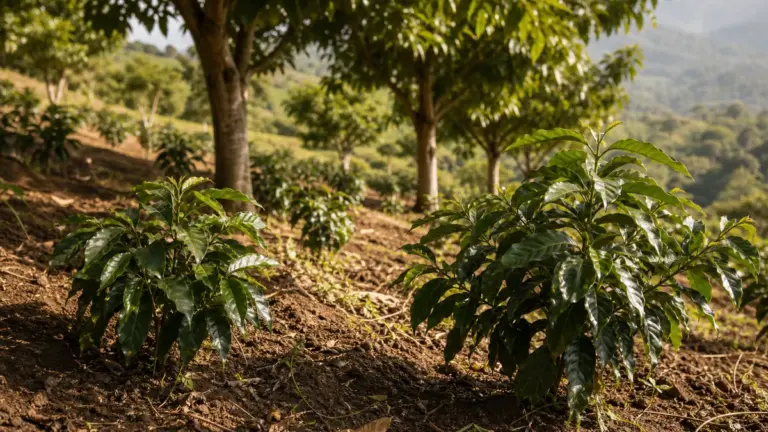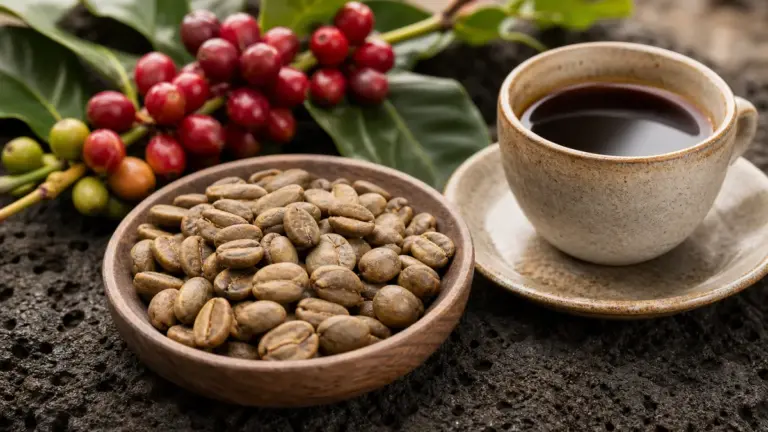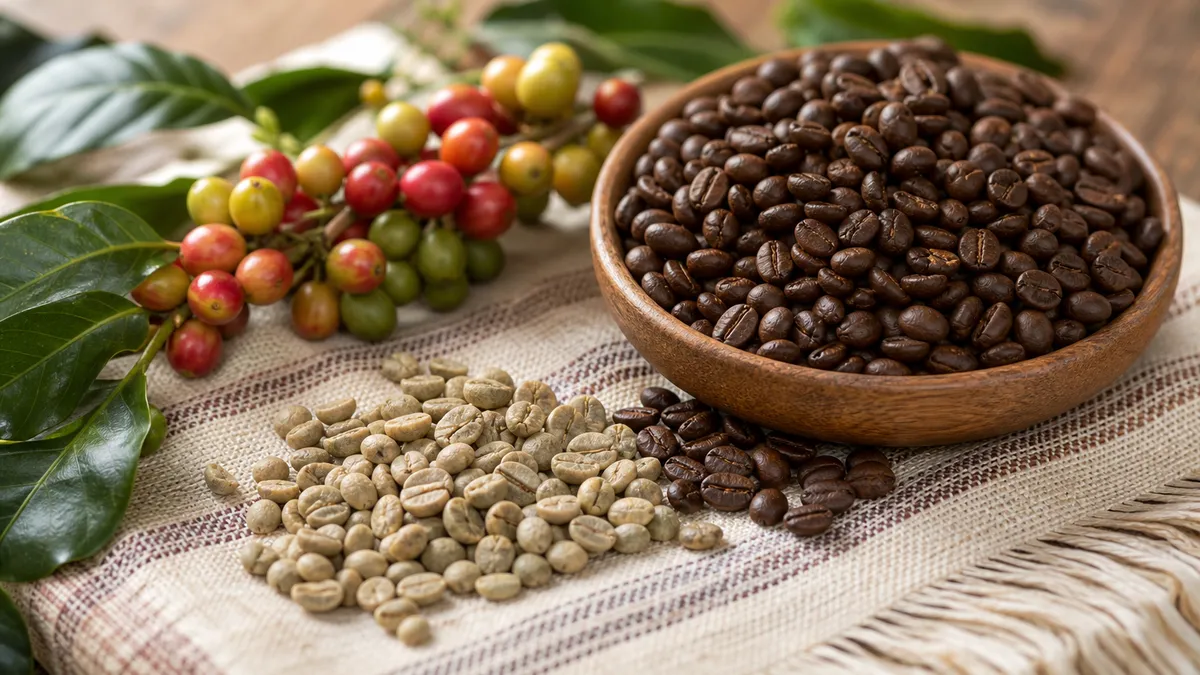
Mexican coffee often combines chocolate, caramel and nut-like flavours with a clean, citrus lift, but the country produces much more than one gentle, easy-drinking style. Chiapas, Veracruz, Oaxaca and Puebla are the main states to know, while the producer, variety and processing method tell you more about an individual bag than the country name alone.
In short
- Start with a washed coffee whose tasting notes match what you enjoy, rather than choosing by state alone.
- Typica, Bourbon and Caturra sit alongside newer cultivars such as Marsellesa and the Mexican-bred Oro Azteca.
- Most harvesting takes place from November to March, spanning two calendar years.
- Smallholders, Indigenous communities and producer co-operatives are central to understanding Mexico’s coffee.
- Organic certification, shade cultivation and cup quality describe different things. Do not treat one as proof of the others.
Mexican coffee at a glance
Mexico belongs within the wider story of North American coffee, but its producing areas deserve attention individually. The following panel gives a starting point, not a specification that every Mexican coffee must meet.
| Feature | What to expect |
|---|---|
| Main producing states | Chiapas, Veracruz, Puebla and Oaxaca |
| Altitude | A published regional range of 600 to 1,600 metres above sea level for the southern Pacific coffee belt, covering Chiapas, Oaxaca and Guerrero. This is not a national minimum or maximum |
| Main varieties to recognise | Typica, Bourbon, Caturra, Marsellesa and Oro Azteca; other varieties occur, including Gesha |
| Processing | Predominantly washed arabica, with honey, natural and experimental lots also produced |
| Harvest | Mainly November to March; local timing varies |
| Typical cup profile | Chocolate, caramel, nuts and citrus are useful starting descriptors, with substantial variation between lots |
The altitude range comes from published agronomic research, the harvest window from Mexico’s agricultural statistics service, and the variety and processing information from World Coffee Research and official competition records. The flavour summary is an orientation drawn from documented origin descriptions, not a national tasting standard.
What does Mexican coffee taste like?
A useful starting expectation is sweetness resembling caramel or chocolate, some nut-like character and a fresh rather than aggressively sharp acidity. Here, acidity means the bright sensation associated with fruit, not necessarily an unpleasant sour taste.
Tenejapa in Chiapas provides a specific example. Its official geographical indication description includes chocolate, caramel, hazelnut or almond, citrus and a medium to creamy texture. It also allows for floral and fruit notes, recognising that variety, processing, roasting and preparation change the result.
Do not turn that example into a rule for the whole country. Veracruz’s official origin documentation describes pronounced acidity, intense aroma, spice-like flavour and appreciable body, meaning the weight or texture of the drink in the mouth.
For buying purposes, “Mexican coffee” is therefore a useful first filter, not a finished flavour description. If you dislike bright coffee, look for a roaster’s explicit description of restrained acidity. If you enjoy floral or fruit-led cups, do not dismiss Mexico because another bag tasted mainly of cocoa.
My suggested first purchase would be a traceable washed lot with clear tasting notes. It gives you a reference against which to compare a natural or honey-processed coffee later.
The four main coffee states
Chiapas
Chiapas is Mexico’s largest producing state by volume. It contains both the washed arabica associated with many exported coffees and lower-altitude robusta production, so “from Chiapas” does not by itself identify the species or style.
Tenejapa demonstrates why more precise origin information matters. Its documented combination of citrus, chocolate, caramel and creamy texture is more informative than a generic promise of “smooth Mexican coffee”.
Look for the municipality, community, farm or producer organisation on the bag. These details let you follow a particular source rather than repeatedly starting again at country level.
Veracruz
Coatepec, Huatusco and Córdoba are important names in Veracruz’s coffee geography. The state’s origin documentation describes mountain cultivation, shade-grown production and an established wet-processing tradition.
Veracruz is not simply the mild counterpart to Chiapas. Its documented emphasis on acidity and aroma makes it worth considering when you want a more vivid cup.
Nor is it limited to traditional varieties. Mexico’s 2026 Cup of Excellence results include Veracruz coffees made from Gesha, Marsellesa, Anacafé 14, Typica, Bourbon and Caturra, across several processing styles.
Oaxaca
Oaxaca brings together coffee-growing communities and a strong co-operative tradition. Pluma Hidalgo and the wider Sierra Sur are useful geographical names to recognise, while UCIRI is an important producer organisation in the state.
“Pluma” needs careful reading. It is a protected designation of origin, not simply a loose synonym for all Oaxacan coffee or a guarantee that a bag contains only one variety.
The official Pluma standard centres its botanical description on arabica, particularly Typica and the locally identified Pluma Hidalgo material, while permitting several other named varieties. Ask the roaster what the particular lot contains rather than assuming the designation supplies the complete answer.
Puebla
Puebla is another major producer, with coffee-growing communities in the Sierra Norte. It deserves attention in its own right rather than being treated as an unnamed component of a national blend.
Its quality potential is not merely theoretical. A washed Puebla lot listed as Marsellesa and Colombia placed third in the washed results of Mexico’s 2026 Cup of Excellence.
That is evidence about one carefully prepared competition lot, not every coffee from Puebla. It is nevertheless a useful reason to look beyond the most familiar state names.
Smallholders, co-operatives and organic production
The people behind Mexican coffee are part of its identity, not an optional paragraph beside the tasting notes. Smallholder farming and Indigenous producer organisations have played an important role, particularly in the development of organic coffee in Chiapas and Oaxaca.
A co-operative brings producers together through a shared organisation. Its role may extend beyond selling coffee: Conservation International documents UCIRI’s involvement in transport, credit, health and training services as well as certified organic coffee production.
UCIRI was founded in 1982 by Indigenous farming communities in Oaxaca. Its history helps explain why coffee labels may name an organisation representing many households rather than a single estate.
Collective identity does not tell you how narrowly a coffee was selected. When traceability matters to you, ask whether the bag represents an organisation-wide blend, a community selection or a separately maintained producer lot.
What organic does, and does not, tell you
Mexico’s organic coffee movement has a long history. A World Bank background paper published in 2002 documented its development through smallholder production, farmer organisations and direct trading relationships.
However, distinguish farming practices from certified status. Tenejapa’s official documentation itself separates certified organic coffee from coffee grown using practices described locally as organic but lacking certification.
For a UK buyer, an organic claim should be supported by the relevant certification. GOV.UK guidance requires inspection and certification for food marketed as organic.
Do not use “organic” as shorthand for a particular flavour, a high sensory score or proof of every possible environmental benefit. Equally, shade-grown describes cultivation beneath trees, while co-operative describes organisation. Ask for evidence relevant to the claim you actually care about.
Altitude, varieties and the changing coffee farm
Altitude is useful context, but it is not a quality score. The published 600 to 1,600 metre range for the southern Pacific coffee belt describes a broad production area, not the limits of Mexican specialty coffee.
World Coffee Research also makes an important distinction: suitable altitude depends on latitude. An elevation figure cannot be interpreted independently of where the farm lies.
The variety names on a bag need similar care. Arabica, Coffea arabica, is a species; Typica, Bourbon and Caturra are varieties within it. Robusta is the trade name generally used for Coffea canephora, another species grown in Mexico.
Newer cultivars reflect practical farming needs as well as cup preferences. Oro Azteca was bred by Mexico’s INIFAP research institute and belongs to the Catimor group, with Timor Hybrid and Caturra ancestry. Marsellesa belongs to the Sarchimor group and was selected by ECOM-CIRAD in Nicaragua for rust resistance.
Coffee leaf rust is a fungal disease that damages leaves and can cause serious crop losses. Resistance is not permanent immunity: World Coffee Research cautions that disease populations change.
For buyers, the sensible response is curiosity rather than a hierarchy of “old good, new bad”. Read the lot description and taste the coffee instead of rejecting a cultivar because its breeding history includes disease resistance.
Processing and harvest
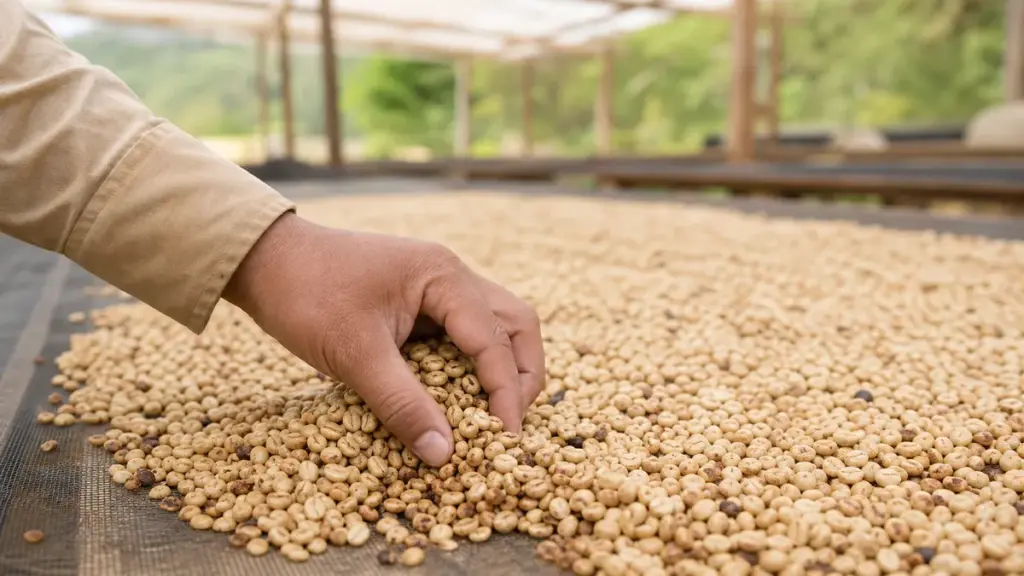
Washed arabica remains the mainstay of Mexican production. In wet processing, the fruit skin and pulp are removed, the sticky mucilage around the seeds is removed through fermentation or mechanical means, and the coffee is washed and dried.
Other approaches are established too. Natural processing dries coffee within the fruit; honey processing removes the skin but retains some mucilage during drying. “Honey” describes the process, not an added ingredient.
Mexico’s competition records include washed, honey, natural and experimental coffees. Treat these as different production approaches, not ascending grades of quality.
Mexico’s agricultural statistics service reports that most cherry picking takes place from November to March. That is a national seasonal guide, not a promise that every farm harvests throughout those months.
For a UK purchase, ask for the harvest season as well as the roast date. They answer different questions: when the crop was gathered and when the green coffee was roasted. Neither replaces a clear description of the lot.
A short history of Mexican coffee
Mexico’s coffee story combines introduced plants, local farming knowledge and producer organisation. A few verified milestones help put the modern bag into context:
- Late eighteenth century: Mexico’s Secretariat of Culture places coffee’s arrival in this period.
- Nineteenth century: Coffee consumption spread, although chocolate remained the predominant drink during that century.
- 1982: UCIRI was founded in Oaxaca, an important milestone in Indigenous producer organisation.
- 2020: The Pluma designation of origin was protected on 4 February.
- 2023: Mexico joined World Coffee Research’s Innovea breeding network through the University of Chapingo.
This history is a reason to ask who grew and prepared the coffee, not merely where it grew. A named community or co-operative can provide a more meaningful connection to the origin than decorative national imagery.
Choosing a Mexican coffee
Use this order when comparing bags:
- Choose the flavour direction. Look for the sweetness, acidity and texture you enjoy.
- Check the producer information. Prefer an explanation of the farm, community or organisation over an unexplained origin claim.
- Identify the process and varieties. Use them to guide comparison, not to predict the entire cup.
- Check certification separately. Ask what supports any organic or environmental claim.
- Ask about harvest and roasting. A helpful roaster should explain both without treating them as interchangeable.
For your next comparison, keep one factor similar and change another. You might compare washed coffees from different states, or different processes from one producer.
The separate guides United States (Hawaii) and United States (California) cover those neighbouring origins. For Mexico, begin with the particular people and lot behind the bag.
FAQ
Does Mexican coffee contain cinnamon?
Plain Mexican coffee does not automatically contain cinnamon. Origin descriptions may mention spice-like flavours without describing added ingredients. Check the ingredients list if you want unflavoured coffee, especially where a product is presented as a prepared drink mixture rather than simply roasted beans.
Is every coffee from Chiapas arabica?
No, Chiapas also produces robusta. World Coffee Research identifies the state among Mexico’s lower-altitude robusta-producing areas. If species matters to your choice, look for an explicit arabica statement or ask the roaster. The state name alone is not enough to establish the contents of the bag.
Should I choose a single farm over a co-operative coffee?
Not automatically: choose according to the information available and the cup you want. UCIRI’s example shows that a producer organisation can have substantial agricultural and community functions. Ask what the lot represents and how it was selected, rather than treating a single farm name as inherently better traceability.
Where to go next
Read North America for the regional overview. United States (Hawaii) and United States (California) are useful next reads for comparing Mexico with two other North American coffee origins without assuming they share the same growing conditions or production story.
Sources
-
World Coffee Research, Mexico, undated country profile, retrieved November 2026. Production geography, species, renovation and research partnerships.
https://worldcoffeeresearch.org/countries/mexico -
Secretaría de Agricultura y Desarrollo Rural, SIAP, Panorama Agroalimentario 2018-2024, 2024, coffee section. Producing states and harvest season.
-
Olvera-Vargas, L. A., Contreras-Medina, D. I. and Aguilar-Rivera, N., Cálculo de grados días de Hypothenemus hampei a través de imágenes satelitales, Revista Mexicana de Ciencias Agrícolas, volume 11, number 3, 2020. Regional cultivation context and altitude range.
https://cienciasagricolas.inifap.gob.mx/index.php/agricolas/article/download/2041/3127/13447 -
Instituto Mexicano de la Propiedad Industrial, Declaración de Protección de la Indicación Geográfica “Café de Tenejapa, Chiapas”, 2025. Sensory description and distinction between certified and uncertified production.
https://sidof.segob.gob.mx/notas/docFuente/5769330 -
Instituto Mexicano de la Propiedad Industrial, Extracto de la solicitud de declaración general de protección de la denominación de origen Café Veracruz, 2000. Regional names, processing and historical origin description.
https://sidof.segob.gob.mx/notas/docFuente/2055071 -
Secretaría de Economía, NOM-255-SE-2022, Café Pluma: Denominación, especificaciones, información comercial y métodos de prueba, 2022. Pluma designation, permitted plant material and protection date.
https://dof.gob.mx/normasOficiales/9284/seeco/seeco.html -
Alliance for Coffee Excellence, Mexico 2026, 2026 results; and Mexico 2025, 2025 processing category definitions.
https://allianceforcoffeeexcellence.org/mexico-2026/
https://allianceforcoffeeexcellence.org/mexico-2025/ -
Conservation International, Union de Comunidades Indigenas de la Region del Istmo (UCIRI), undated project profile, retrieved November 2026. Founding, certified production and community services.
https://www.conservation.org/ci-ventures/uciri -
Sorby, K., World Bank, Coffee market trends, background paper to Agricultural Technology Note 30, June 2002. Historical development of smallholder organic coffee.
https://documents1.worldbank.org/curated/en/898681468765565578/pdf/295960Coffee0m10also02453501public1.pdf -
World Coffee Research, Arabica Coffee Varieties: Oro Azteca and Marsellesa, undated live catalogue entries, retrieved November 2026. Breeding, lineage, altitude interpretation and disease-resistance caveats.
https://varieties.worldcoffeeresearch.org/varieties/oro-azteca
https://varieties.worldcoffeeresearch.org/es/variedades/marsellesa -
Secretaría de Cultura, El café mexicano, undated cultural reference entry, retrieved November 2026. Arrival and consumption history.
https://sic.cultura.gob.mx/ficha.php?table=gastronomia&table_id=60 -
Government of Puebla, Secretaría de Turismo, Presentación Bioruta del café, 25 January 2023; and Government of Oaxaca, Invita Sectur Oaxaca a recorrer y disfrutar la Ruta del Café Pluma Aromas de la Sierra Sur, 1 October 2025. Regional geography.
https://aperturainstitucional.puebla.gob.mx/turismo/presentacion-bioruta-del-cafe
https://www.oaxaca.gob.mx/comunicacion/invita-sectur-oaxaca-a-recorrer-y-disfrutar-la-ruta-del-cafe-pluma-aromas-de-la-sierra-sur/ -
DEFRA and associated UK authorities, Organic food: labelling and advertising rules, live guidance retrieved November 2026. Certification requirements for organic claims.
https://www.gov.uk/guidance/organic-food-labelling-rules
Researched through live retrieval of agricultural statistics, official origin documents, variety catalogues, published agronomic research, competition records and organisational histories; no first-hand tasting or farm visits are claimed.
Last checked: November 2026