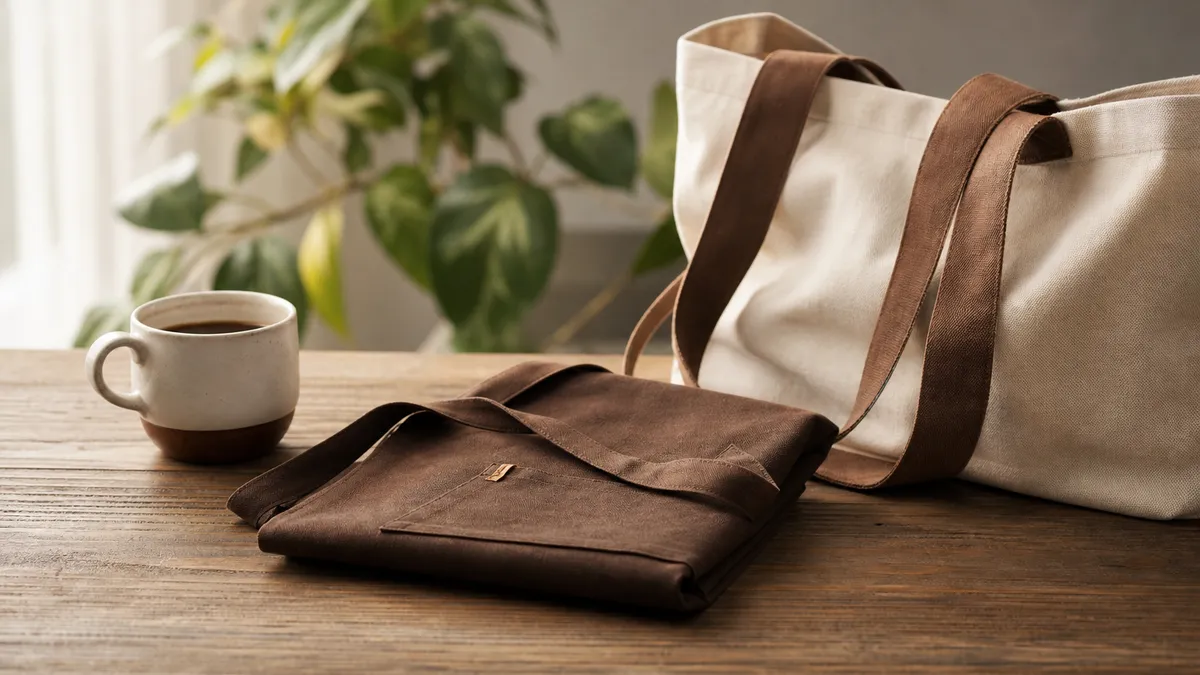
Coffee apparel and accessories include roaster T-shirts, caps, tote bags, aprons and small collectables such as enamel pins. T-shirts, caps and totes are well represented in the UK roaster shops checked for this guide, although those listings do not establish which products sell most. Choose something you will actually wear or carry, then check its construction, care instructions and production claims.
In short
- Start with the job: everyday clothing, carrying coffee purchases, brewing at home or collecting a favourite roaster’s artwork.
- For bags and aprons, inspect attachment points, pockets and adjustability before choosing the design.
- Read the complete material description, including straps, linings and trims.
- GOTS, Fairtrade Cotton and OEKO-TEX STANDARD 100 address different questions, so do not treat their labels as interchangeable.
- Check live availability before ordering. A product page can remain online after an item has sold out.
Which coffee apparel and accessories should you consider?
The useful distinction is between merchandise that expresses an interest in coffee and accessories that help with a coffee-related task. A cap can simply celebrate a favourite roaster; an apron needs to work when you bend, reach and clean up.
UK roaster collections offer several starting points. Dark Arts Coffee lists graphic T-shirts, several cap styles, tote bags and outerwear, while Origin’s merchandise collection includes T-shirts and an enamel pin badge set. These are examples of the range available, not a popularity ranking or an independent assessment of quality.
Use the comparison below to choose a category before comparing individual products. The criteria are intended as buying checks, rather than claims that every product in a category shares the same construction.
| Product | Who it suits | What to check | Main compromise |
|---|---|---|---|
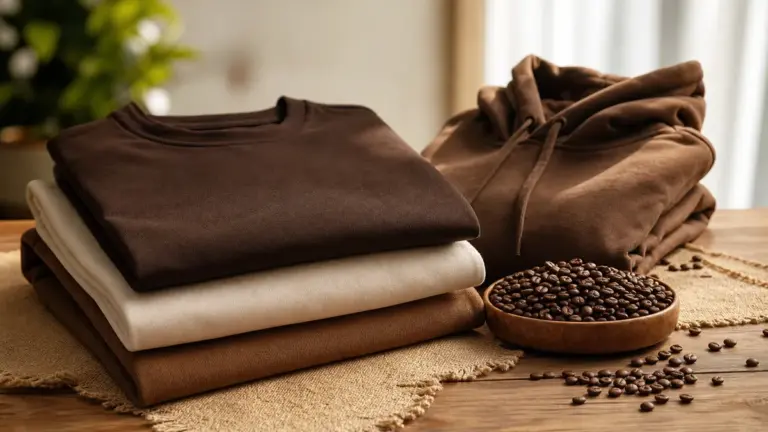
| T-shirt or sweatshirt | Someone who wants everyday coffee-themed clothing | Garment measurements, fibre composition, seams and decoration care | Getting the fit right |
| Cap | Someone who prefers a smaller piece of branded clothing | Adjustment range, internal finish and cleaning instructions | Shape and fit are personal |
| Tote bag | Someone carrying beans, shopping or light daily essentials | Handle attachment, opening, base shape and pockets | An open top may not suit every journey |
| Apron | A home brewer or someone choosing practical workwear | Coverage, strap adjustment, pocket position and laundering | Care requirements may rule out an attractive design |
| Enamel pin or badge | A collector or someone adding a small detail to a bag | Fastening, edges and reverse finish | It needs a suitable place to attach |
Our recommendation is to choose the object before the artwork. If you never wear caps, a beautifully embroidered coffee cap is still unlikely to become a useful purchase.
For the wider choice beyond wearables, start with coffee merchandise and gifts.
Quality and materials: read beyond the photograph
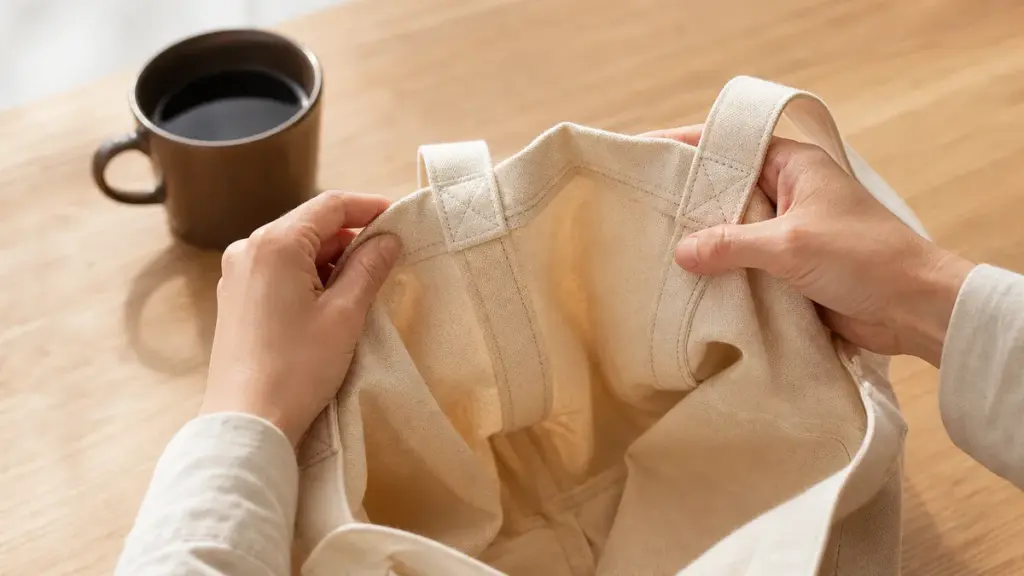
A useful product page should help you judge the item without relying entirely on styled pictures. Look for material composition, measurements, photographs of the reverse or interior, care instructions and a clear description of the decoration.
Where information is missing, ask the seller. “Canvas tote” is not enough detail to decide whether a bag suits your daily routine.
Clothing and caps
For clothing, compare the seller’s garment measurements with an item you already like wearing. Pay attention to where the measurements are taken, rather than assuming the same size label means the same fit across different sellers.
Look closely at the neckline, seams and inside finish. For a cap, ask whether the adjustment is suitable for you and whether the seller provides a useful view of the fastening. These are more practical checks than deciding from the front-facing graphic alone.
Printed and embroidered designs should both come with appropriate care information. Do not assume that either method guarantees durability without evidence about the particular product.
The dedicated guide to coffee T-shirts and hoodies covers clothing choices in more detail.
Tote bags
For a tote, make a list of what it needs to hold. A bag for beans and a notebook has a different brief from one expected to carry lunch, a reusable bottle and shopping.
Check whether the handles are shown clearly where they join the body. Ask for dimensions if they are absent, and consider whether you need an internal pocket or a closing top.
Also separate the material of the body from the material of the handles. Square Mile’s Herd Tote listing, for example, describes a body made using recycled plastic bottles and cotton handles, rather than an all-cotton bag. This is the seller’s specification, not an independently tested finding.
Aprons
Try to assess an apron in a brewing position, not just standing upright. Can you reach the pockets? Do the straps stay where you want them? Does the coverage suit the task?
For an office coffee point or workplace purchase, decide how the apron will be cleaned before choosing its appearance. Ask the supplier to confirm that its care instructions suit the intended cleaning routine.
Waxed canvas deserves particular attention. Hudson Durable Goods advises against machine washing, hot water and conventional detergents for its waxed canvas aprons because these can break down the wax finish. That is product-specific guidance, but it illustrates why “canvas” alone is not a sufficient care description.
Ethical production: understand what the evidence covers
Treat “ethical” as a question to investigate, not a complete product specification. Ask which part of production a claim concerns: growing the fibre, processing the fabric, making the garment or decorating the finished item.
A named certification can help, provided you check its scope. A coffee brand’s sourcing policy for beans does not, by itself, tell you how its merchandise was made.
GOTS: certified organic textiles
The Global Organic Textile Standard, usually shortened to GOTS, has distinct label grades. The “organic” grade requires at least 95% certified organic fibres, while the “made with organic” grade starts at 70%. Its labelling system also requires certified processing and compliance with the standard, rather than simply a seller choosing to describe cotton as organic.
When a seller mentions GOTS, ask whether the finished item is certified. Look for the complete product label and certification information, rather than accepting a loose reference to the fabric supplier.
Fairtrade Cotton: a specific cotton claim
The FAIRTRADE Cotton Mark identifies raw cotton that has been fairly produced and traded, with physical traceability and separation from non-Fairtrade cotton during processing. Fairtrade also has a separate Textile Production Mark addressing compliance with its Textile Standard across the textile supply chain. Do not substitute one claim for the other.
This distinction matters for merchandise: evidence about cotton sourcing and evidence about garment production answer related but different questions.
OEKO-TEX STANDARD 100: testing for harmful substances
OEKO-TEX STANDARD 100 identifies textiles tested for harmful substances. The organisation provides a Label Check facility where buyers can check certification using the certificate number or the label’s QR code. It should not be read as a substitute for evidence about organic farming or workers’ pay.
Recycled content and broad environmental claims
Ask what proportion is recycled, which component contains it and what evidence supports the statement. “Recycled bag” should not leave you guessing whether the claim concerns the body, handles or packaging.
The Competition and Markets Authority’s Green Claims Code says environmental claims should be clear, accurate and substantiated. It also warns that broad descriptions such as “green” or “eco-friendly” can mislead when their meaning and basis are not explained. Apply that same scrutiny to coffee merchandise.
Where to buy coffee apparel and accessories
Choose sellers using four criteria: a design you want, enough product information, credible production evidence where claimed, and clear delivery and returns information. The examples below are browsing starting points, not a tested shortlist.
Roasters’ own shops
Buying through a roaster’s official shop is a straightforward way to find its own merchandise.
- Dark Arts Coffee: worth browsing for graphic clothing, caps and tote bags. Its checked collection includes several distinct cap styles and outerwear as well as T-shirts.
- Origin Coffee: a starting point for illustrated merchandise. Origin says its range features artwork from creators it has worked with; the checked collection includes clothing and an enamel pin badge set, with availability varying by item.
- Square Mile Coffee Roasters: another place to check for accessories, but confirm availability on the individual listing. The Herd Tote page retrieved for this guide was marked sold out.
Do not assume a roaster’s merchandise has been assessed to the same criteria as its coffee. Read the item’s own specification.
Independent makers and specialist suppliers
For an independently illustrated accessory, consider buying directly from the maker where possible. Ask who created the artwork, who makes the underlying item and where the decoration is applied.
For an apron intended for regular use, prioritise a supplier willing to explain fit, materials and laundering. Request photographs of the reverse, strap attachments and pockets if the listing does not show them.
Marketplaces can be useful discovery tools, but assess the individual seller. A polished mock-up is not a substitute for photographs and specifications of the finished product.
If you are choosing for somebody else, the broader coffee-themed gifts guide helps you decide whether a wearable is the right category at all.
A practical checklist before ordering
Work through these checks in order:
- Name the use. Write down what the item needs to do and how often you expect to use it.
- Check fit or dimensions. Compare clothing with an existing garment, or check a bag against the objects it must hold.
- Read the full composition. Include handles, linings, trims and removable parts.
- Inspect construction. Look for clear views of seams, attachment points, fastenings and the reverse of decoration.
- Read the care instructions. Reject an item if its cleaning routine is unrealistic for you.
- Verify specific claims. Ask for the certification details or supporting evidence, not another general assurance.
- Confirm the order details. Check live stock, dispatch arrangements and the seller’s returns policy.
For workplace merchandise, ask for an itemised written quotation and a sample before approving a larger order. Specify the garment or accessory, decoration, size mix, packaging and delivery requirements so you can compare proposals on the same basis.
The strongest choice in coffee apparel and accessories is not necessarily the boldest design. It is the one that combines artwork you enjoy with an object you have a reason to keep using.
FAQ
Is coffee-themed clothing suitable for an office?
Yes, if it fits the workplace’s dress expectations. For personal wear, check the policy before choosing prominent slogans or graphics. For staff merchandise, seek views on fit and design rather than assuming everyone wants the same garment. A tote or another non-sized accessory is worth considering when clothing preferences differ.
Can I judge quality from fabric weight alone?
No, fabric weight should not be your only buying criterion. Ask for construction photographs, composition, measurements and care information as well. If comparing two items, decide whether you want a substantial feel or something easier to fold and carry, then judge the complete product against that purpose.
Does “printed in the UK” explain the whole production chain?
No, that wording only identifies the stated printing stage. Ask separately where the underlying garment or bag was manufactured and what evidence supports any sourcing claims. For a clear comparison, request the same information from each seller instead of treating different phrases, such as “designed”, “printed” and “made”, as equivalent.
Where to go next
Read Coffee Merchandise and Gifts to explore the wider range, then Coffee T-Shirts and Hoodies if clothing is your priority. Coffee-Themed Gifts is the useful next read when you are choosing for someone whose preferred fit, style or favourite roaster you do not know.
Sources
- Dark Arts Coffee, Merch, live collection, undated, retrieved November 2026.
URL: https://www.darkartscoffee.co.uk/collections/types?q=merch - Origin Coffee, Merchandise, live collection, undated, retrieved November 2026.
URL: https://www.origincoffee.co.uk/collections/merchandise - Square Mile Coffee Roasters, Herd Tote Bag, product listing, undated, retrieved November 2026.
URL: https://shop.squaremilecoffee.com/products/herd-tote-bag - Global Standards, GOTS Labelling, current guidance, undated, retrieved November 2026.
URL: https://global-standards.org/our-standards/gots/labelling - Fairtrade, How does the label work?, current UK guidance, undated, retrieved November 2026.
URL: https://www.fairtrade.net/uk-en/why-fairtrade/how-we-do-it/how-does-the-label-work.html - OEKO-TEX, OEKO-TEX STANDARD 100, current programme guidance, undated, retrieved November 2026.
URL: https://www.oeko-tex.com/en/our-standards/oeko-tex-standard-100 - Competition and Markets Authority, Environmental claims on goods and services, 2021, live guidance checked November 2026.
URL: https://www.gov.uk/government/publications/green-claims-code-making-environmental-claims/environmental-claims-on-goods-and-services - Hudson Durable Goods, Care Instructions for Your Apron, undated, retrieved November 2026.
URL: https://hudsondurablegoods.com/pages/care-instructions
This guide was researched using official retailer listings, certification organisations and UK environmental-claims guidance; products were not physically tested and no sales-ranking data was used.
Last checked: November 2026